Monday, March 25, 2019

ANAT COHEN & KENDRICK SCOTT SHOW THEIR MELLOW SIDE AT THE PARADISE JAZZ SERIES


Clarinetist Anat Cohen
I’m not sure if the Israeli native and jazz clarinetist Anat Cohen is considered a household name in jazz circles. If my opinion is worth anything, I dare to assert Cohen deserves to be one. Pressed for proof why she’s deserving, I’d point to her body of recordings, and most recently her debut set at Detroit’s Paradise Jazz Series Friday evening at Orchestra Hall. Cohen shared a double bill with drummer Kendrick Scott. During her hour-plus set, Cohen redefined what’s understood and often belittled by jazz purist as smooth jazz. I’ve heard Cohen on two other occasions. Some years ago, at the Detroit Groove Society’s house concert series, and shortly after that as a headliner at the Detroit Jazz Festival. Cohen is a swinger by nature, and her chops are on par with the greats of the clarinet Pee Wee Russell and Barney Birgard. Friday evening Cohen didn’t swing as much as she’s capable of swinging. Her set was on the mellow side and in spots even melancholic. Cohen had a terrific group pianist Gadi Lehavi, bassist Tal Mashiach, and drummer Ferenc Nemeth. What Cohen offered was a generous helping of prime choice virtuosity, opening her set with “Happy Song,” which has become her anthem, then segueing nicely into “Song Without Words.” She displayed some of her swing ability on “Waltz for Alice” and the set's closer “Jitterbug Waltz.” The concert wasn’t the best context I’ve seen Cohen. Honestly, I readied myself before the concert for some unadulterated swing, but I thoroughly enjoyed hearing Cohen’s mellow side.

Drummer Kendrick Scott
The jazz drummer Kendrick Scott followed Cohen, and the concert was also his first set as a bandleader at the Paradise Jazz Series. The great jazz trumpeter Terence Blanchard has called Scott the heir apparent to the great drummers of the past Elvin Jones, Tony Williams, and Art Blakey. Hearing that comparison, I wondered if Blanchard was bias given Scott is a former student of his, and Scott is a fixture in Blanchard’s award-winning band. Anyway, Scott is a damn fine jazz drummer, and his set was similarly mellow and smooth as Cohen’s set. Scott also had a wonderful group named Oracle guitarist Mike Moreno, pianist Taylor Eigsti, bassist Harish Raghavan, and saxophonist Walter Smith III. The band has been together a long time. And like longstanding jazz bands, the members were able to delve into each other's musical psyches at will. Scott gave the audience a taste of his new project “A Wall Becomes a Bridge,” due out in early April.  Scott opened with the title cut, and guided the band through amazing tunes such as “Apollo” and “Voices.” The pianist Taylor Eigsti shouldered most of the workload and put together a string of bold solos. Surprisingly Scott only soloed once. Although I was hard pressed to hear the Jones, Williams, and Blakey connection, I awoke the next morning with Scott’s licks ringing inside my head, and I found myself humming some of his tunes throughout the day. Honestly, Cohen’s and Scott’s sets weren’t the most exciting I’ve heard at the Paradise Jazz Series, but it was a lot of damn good mellow jazz presented by two bandleaders deserving of household status.

Monday, March 18, 2019

JOSE JAMES, THE SELF-STYLED JAZZ VOCALIST OF THE HIP HOP GENERATION, SINGS BILL WITHERS' HITS AT THE CUBE


Vocalist Jose James
Jose James started his career as a self-styled jazz vocalist for the hip hop generation. For anybody who’s caught him live during the formative leg of his career understands that title. He used hand gestures peculiar to rappers and even dress like them. It was an odd sight because his voice is a mix of  vocalists Joe Williams and Johnny Hartman. James has outgrown that label. That was clear Saturday evening at the Cube in the Max M. Fisher Music Center in Detroit during his two-hour concert. He traded the baseball cap fancied by rappers for a retro-seventies inspired look complete with a fierce Afro. James was in Detroit for the first leg of his tour promoting “Lean On Me,” his marvelous album celebrating the music of singer/songwriter Bill Withers.  This stop was the first time he's held court as a collective with drummer Aaron Steele, guitarist Marcus Machado, keyboardist Takeshi Ohbayashi, and guitarist and vocalist Aneesa Strings. They must’ve invested a lot of time rehearsing because the band mixed well with James’ booming voice which he can change on a dime to be gentle as snow melting on cotton.  The set opened with “Ain’t No Sunshine,” and “Grandma’s Hands,” and it was scary how much James resembled Withers. Midway through James explained how the album came about, noting he initially planned to record 60 of Wither’s hits, but the president of Blue Note Records, Don Was, asked him to whittle the 60 to 12. The songs James went with are beloved such as “Lean On Me,” “Who Is He,” “Better Off Dead,” and “Just The Two of Us,” which James sang with soul and panache. James didn’t see it fit to remake any of the songs. He delivered each as Withers originally conceived them. Over the years, James has developed a ton of stagecraft. He had the capacity audience sprung from the first song to the encore. During one song, he walked through the audience and poked fun at a couple who showed up late. The crowd didn’t seem to mine James' gratuitous cursing one bit. He asked if any children were in attendance, and then apologized for his choice of words. It was all in good fun. James put on a terrific concert complete with a few wardrobe changes. His voice was perfectly suited for Wither’s hits. Doing covers has become James’ forte. A few years back, he released a tribute album commemorating the centennial of the great Billie Holiday. There were too many awe-inspired moments of the performance Saturday night to pinpoint a favorite. But if forced to select one at gunpoint it would be James’ handling of “Hello Like Before.”

Sunday, March 10, 2019

EVEN UNDER THE WEATHER JAZZ VOCALIST DEE DEE BRIDGEWATER DELIVERS AN AMAZING SHOW WITH THE GATHERING ORCHESTRA AT THE CARR CENTER

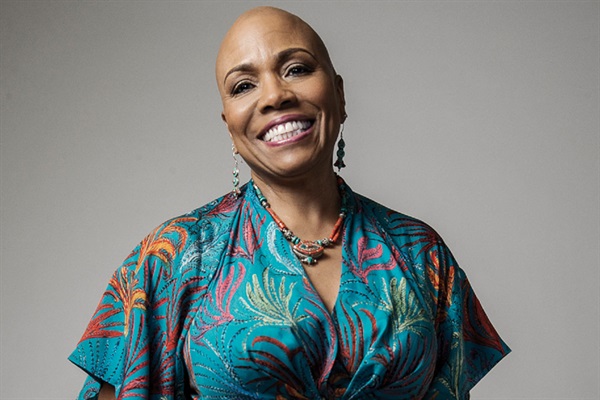
Dee Dee Bridgewater
Friday evening at the Detroit School of the Arts Grammy-winning jazz vocalist Dee Dee Bridgewater performed with Detroit’s Gathering Orchestra, which is comprised of some of Detroit’s top jazz musicians. The performance was part of the Carr Center’s 2019 concert series, and Bridgewater was wrapping up a weeklong residency at the DSA, mentoring members of the school’s jazz vocal orchestra. Bridgewater was visibly under the weather although her voice, which is one of the best in jazz, was still in top form. Being sick didn’t hinder Bridgewater from giving the near-capacity audience a wonderful show. Bridgewater divided the concert into two parts, dedicating the first half to tunes the great Ella Fitzgerald immortalized such as “A-Tisket, A-Tasket” and “Undecided,” and the second half to some of Billie Holiday’s staples such as “God Bless the Child.” A few times Bridgewater flubbed. Once starting with the wrong tune, and the second stopping the orchestra to check that she was in the right key. Bridgewater has such a stage-presence the audience didn’t care about her flubs. Each time Bridgewater recovered nicely. It’s amazing watching her work an audience. During the performance, Bridgewater seemed to have tapped the spirits of both Fitzgerald and Holiday. I have never been a big fan of a vocalist backed by an orchestra. Orchestras tend to overwhelm, but that wasn’t the case with the Gathering Orchestra, which has only been around for a few years but sounds as good as any noted jazz orchestra making the rounds these days. What’s wonderful about the Gathering Orchestra is it is comprised of a cross-section of jazz musicians such as vets Michael Deas, Dwight Adams, and Diego Rivera, and some young lions such as Kasan Belgrave, Trunino Lowe, and Ian Finkelstein. The orchestra didn’t step on Bridgewater’s toes as she belted hit after hit.  Hell, it appeared Bridgewater has been touring with the orchestra for years. The evening was full of highlights, and some humorous banter from Bridgewater and the orchestra’s director bassist Rodney Whitaker. One memorable section was when Bridgewater invited the DSA Vocal Jazz Orchestra on stage to perform two selections. The orchestra looked good and sounded even better. It’s good to witness a group of teenage musicians who take the jazz music seriously. The audience rewarded the youngsters with an ovation. After the vocal orchestra exited the stage, Bridgewater returned to work stripping the paint from Billie Holiday staples and modernizing them. Although Bridgewater was under the weather, she delivered a damn good show, which honestly wasn’t surprising

Monday, March 4, 2019

JAZZ VOCALIST URSULA WALKER SEASONED VOICE TAMES CLIFF BELL'S AUDIENCE

Vocalist Ursula Walker

The jazz club Cliff Bell’s in downtown Detroit has never been a vocalist friendly venue. Saturday, the club’s busiest night, the noise can be unbearable for patrons there to enjoy live music from top regional and mid-west jazz acts. Bell’s doesn’t ask that patrons keep talking to a minimum during performances like the jazz club the Dirty Dog Jazz CafĂ© demands. Occasionally, however, Cliff Bell’s books veteran jazz musicians and vocalists who know how to tame a noisy audience. One such vocalist graced Cliff Bell’s bandstand Saturday night for two sets. The vocalist was Ursula Walker, who’s been a mainstay on Detroit’s jazz scene over five decades, performing mostly with her husband the jazz pianist and arranger Buddy Budson. Although Walker is in her mid-seventies and she only performs occasionally, she remains of excellent voice and amazingly embodies the stagecraft of a global pop star. Cliff Bell’s was packed and very noisy Saturday, but when Walker hit the bandstand backed by Budson’s quintet trumpeter Dwight Adams, saxophonist Marcus Elliot, drummer Dave Taylor, and bassist Jeff Halsey, Walker had the audience’s undivided attention after her first song. For the past two years, one of Walker and Budson’s pet projects has been writing lyrics for well-known jazz classics by jazz greats such as Wayne Shorter, and Horace Silver. Walker sang of a handful of those gems such as “Footprints,” and “Sister Sadie,” and a few Motown favorites slipped in for good measure. The audience was most attentive while Walker re-worked Smokey Robison’s hit “Shop Around.” Walker is a caretaker of songs. She treats the material she performs as if it’s freshly minted. Her voice is lovely and soothing, so much so when she’s in the throes of a love song, for example, you want to curl up in her lap. Walker was the featured attraction, but she wasn’t shy about putting the zoom lens on her bandmates. There was wonderful soloing by Dwight Adams and Marcus Elliot. Elliot was the youngest band member. In recent years, he’s graduated from a young lion to a bona fide commodity on Detroit’s jazz scene. Elliot could easily be considered the late saxophonist Joe Henderson’s heir apparent. Like Henderson, Elliot has an elegant and expansive tone, and he fits nicely into any musical situation he finds himself in. He’s like the star player who makes his teammates better. Cliff Bell’s wasn’t the best venue to experience a jazz vocalist of Walker’s depth and allure, but like any well-experienced performer, Walker made do.

Saturday, January 19, 2019

PONCHO SANCHEZ & JAMES CARTER DOUBLE-BILL AT THE PARADISE JAZZ SERIES FALLS SHORT OF A REAL JOHN COLTRANE TRIBUTE


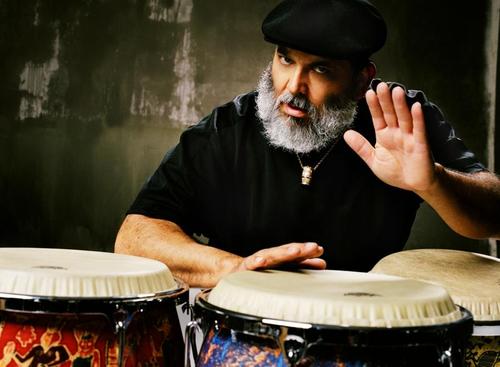
Poncho Sanchez
Long live John Coltrane! That’s what the Detroit saxophonist James Carter yelled to a capacity crowd Friday evening at the Paradise Jazz Series at Detroit’s Orchestra Hall minutes before he performed a soul-numbing solo set of some of Coltrane’s signature works. The concert was the third of the 2019 series, featuring a double-bill with Carter and Latin jazz honcho the multi-percussionist Poncho Sanchez and his Latin jazz band. Both Carter and Sanchez were there to pay tribute to Coltrane. The audience got to witness the breadth of Carter’s virtuosity as he put Coltrane’s “Blue Train," ”Naima,” and “ My Favorite Things,” a standard that Coltrane immortalized, through death-defying improvisational feats.  This solo outing wasn’t the first time Carter has tackled Coltrane’s music solo. Carter gave a similar performance two years back in Philadelphia as part of Coltrane’s 90th birthday celebration. The footage is available on YouTube. Carter had the audience wrapped around his horns the entire set, but 30  minutes into making his horns honk, squeal, pop and signify, the improvisational horseplay became redundant, and I felt as if I was watching Carter in the throes of an unnecessarily long practice session. Strangely, though the concert was billed as a salute to Coltrane, neither Carter nor Poncho Sanchez said nary a word about Coltrane's influence on them musically or otherwise. Not one  single word  uttered by the musicians about Coltrane’s massive and lasting stamp on jazz. Sanchez was all over the place, opening his hour-plus set with “Blue Train,” followed by “Trane’s Delight,” the title cut from his upcoming album. From that point Sanchez’s set veered left, but not necessarily in a bad way. The music was wholesome, even delicious at times, and Sanchez’s band was tighter than Super Glue. The band has been together a whopping 35 years. Although the set was supposed to be all about Coltrane, Sanchez didn’t play hardly enough of Coltrane’s music, no "Cousin Mary," no "A Love Supreme,"  no "Alabama" no "Giant Steps". Coltrane favorites you wouldn't be wrong to expect for a Coltrane tribute. Instead, there were some original compositions by Sanchez’s bandmates and a medley of Sanchez’s music. Oddly, what aroused the audience most was the band’s Latin-infused take of a James Brown number. Had me wondering if Sanchez was attempting to make some Coltrane and James Brown connection. And, of course, it wouldn’t have been a Sanchez show without working in some obligatory Salsa music and dancing. To Sanchez’s credit, the audience was all in. Nonetheless, the performance came up short of remotely resembling a John Coltrane tribute.

Friday, December 21, 2018

JAZZ VOCALIST SHAHIDA NURULLAH TREATS AUDIENCE TO GEMS FROM THE GREAT AMERICAN SONGBOOK AT DIRTY DOG JAZZ CAFE

Vocalist Shahida Nurullah
It’s shameful the jazz vocalist Shahida Nurullah doesn’t have a weekly residency at one of the many jazz venues in Detroit. Nurullah is inarguably one of the most well-rounded vocalists in the game, and she’s a masterful interpreter of the great American songbook, which she’s currently treating audiences to during her four-night engagement at the Dirty Dog Jazz CafĂ© with a wonderful rhythm section that includes bassist Jaribu Shahid, drummer Sean Dobbins, and pianist Ian Finklestein, an in-demand young lion on Detroit’s jazz scene who Nurullah has an obvious affinity for. Nurullah let the capacity audience know that Thursday night during her two-hour set, praising Finklestein after several of his solos. Nurullah’s voice was potent and lovely as she rejuvenated familiar standards. Nurullah’s rhythm section opened with Duke Ellington’s “Don’t Get Around Much Anymore,” after which Nurullah joined them. In the spirit of the holiday, she sang the Christmas classic “This Christmas” with such feeling her voice would’ve given the song’s author Donny Hathaway goosebumps. After that Christmas favorite, Nurullah, Shahid, Dobbins, and Finklestein jumped feet first into the deep end of the American songbook, reworking classics written by Cole Porter, Duke Ellington, and George Gershwin. Nurullah is four-decades into her career, and her voice remains intoxicating. She made standards such as “Nice Work If You Can Get it,” and “I Was Doing All Right” seemed fresh off the assembly line. That’s Nurullah’s most glaring gift. Also, when Nurullah dug her heels into love songs, she possessed the magic to make the devil fall in love. Don’t get it twisted, Nurullah isn’t all polish and glam. She has a playful streak which the audience witnessed when she sassed things up, belting “I Can Cook Too”. The other attraction was the terrific piano playing of Finklestein who’s matured into a wonderful jazz pianist. Finklestein understands the nuts and dynamics of backing a vocalist of Nurullah’s genius. A hallmark of a well-rounded jazz pianist is the ability to accompany a vocalist. If Nurullah is ever given a residency at a top jazz club in Detroit, I beg Finklestein will be her regular pianist.

Sunday, December 9, 2018

YOU'RE UNLIKELY TO EXPERIENCE 'A CHARLIE BROWN CHRISTMAS' THE WAY PIANIST CYRUS CHESTNUT PERFORMED IT AT THE PARADISE JAZZ SERIES ANNUAL CHRISTMAS CONCERT


Pianist Cyrus Chestnut
The jazz pianist Cyrus Chestnut is no stranger to cover projects. Two of Chestnut’s popular cover albums are “Cyrus Chestnut Plays Elvis” and “A Charlie Brown Christmas,” the latter which Chestnut recorded sixteen years back. Friday evening at the Paradise Jazz Series at Detroit’s Orchestra Hall, Chestnut’s quartet performed cuts from a “Charlie Brown Christmas” and cuts from his latest High Note release “Kaleidoscope.” The concert was the Paradise Jazz Series annual Christmas hit, which over the years have been performed by female jazz vocalists. Chances are nobody there gave a rat’s ass this time around a jazz pianist was performing because Chestnut is one of the top pianists in jazz, and he rarely performs in Detroit.  Chestnuts has long been considered the leading jazz pianist of his generation. A generation that includes Jason Moran, Orrin Evans, Marc Cary, Anthony Wonsey, and Jacky Terrasson. Before Friday’s evening concert started, Chestnut warned the near-capacity audience the music they were about to hear would have melodies, rhythms, and changes they have never witnessed or would likely witness again. Then Chestnut, drummer Chris Beck, bassist Eric Wheeler, and saxophonist Steven Carrington turned selections from “A Charlie Brown Christmas such as “Skating,”  "My Little Drum,”  "Me and Charlie Brown,”  “ What Child Is This” into the blues, so much so you wondered if those compositions were blues originally. Hell, Chestnut even infused “Jingle Bells” with blues changes. When Chestnut performed cuts from his new record the audience got to hear his virtuosity unencumbered and hopefully the audience left the concert with a clearer understanding of why for decades now Chestnut has been so lavishly praised for his improvisational genius. Chestnut fingers at times zoomed across the piano keys. There’re beautiful flourishes that left the audience members cheering and wondering how in the devil he pulled that off. Chestnut’s band-mates were equally stunning too, particularly saxophonist Steven Carrington. Carrington has a meaty tone on tenor, and there’re many choice exchanges between him and Chestnut.