Wednesday, September 30, 2026

ALTO SAXOPHONIST DONALD HARRISON BRINGS NOUVEAU SWING TO THE ARETHA JAZZ CAFE

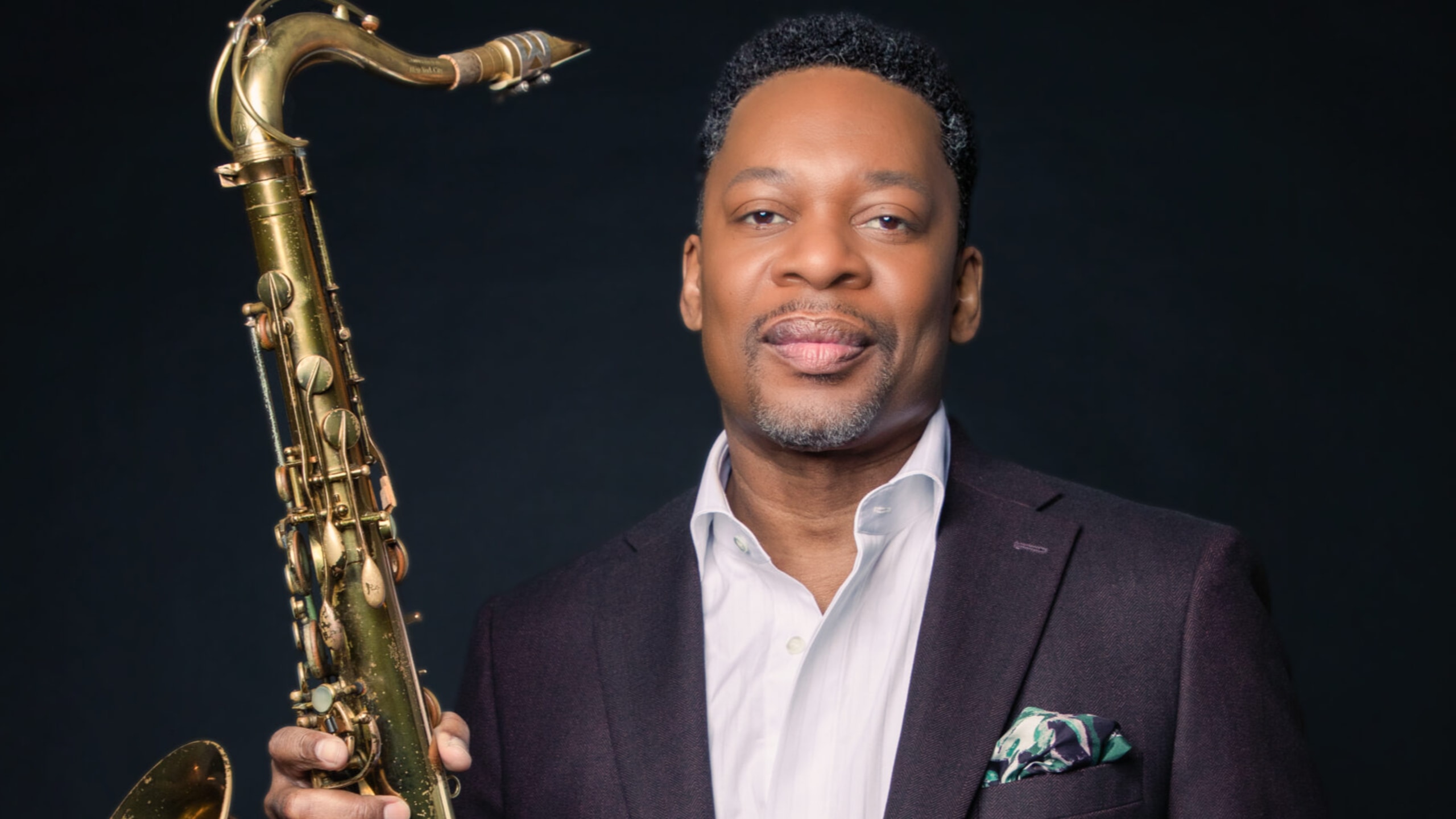
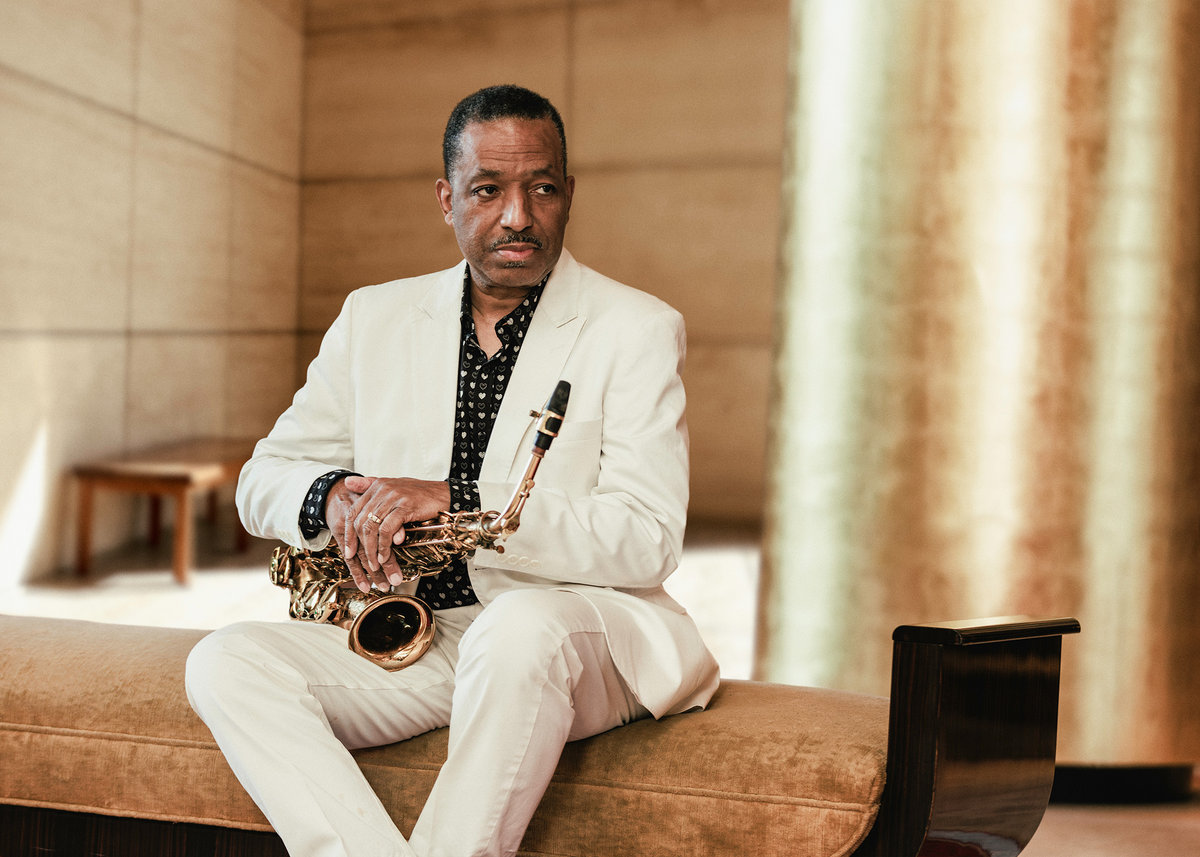
Tuesday evening at the Aretha Jazz Café in downtown Detroit, alto saxophonist Donald “Big Chief” Harrison delivered the best jazz concert I have seen this year. Despite limited promotion, the café was packed as Harrison and his band, pianist Dan Kaufman, bassist Nori Naraoka, and drummer Rehaan Rouege, served up two hours of Nouveau Swing, Harrison’s mix of jazz, funk, and hip-hop built on a recognizable New Orleans swing foundation. Harrison created this eclectic musical style over two decades ago, and much to his surprise, it has become a global hit. The New Orleans native has recently overcome health issues, but on Tuesday night, his chops were in pristine shape. The band opened with Harrison’s original composition “Free to Be,” immediately setting the swing level the capacity crowd could expect for the entire set. From there, the musicians moved through jazz spanning the 1920s, ’30s, ’40s, and ’50s before offering a mini tribute to Miles Davis, John Coltrane, and Sonny Rollins. After burning through “Trail of Fire,” “One for Bird,” “Bye Bye Blackbird,” and “Impressions,” Harrison called cuts from the band’s new date, “Magic Touch,” which explores ten variations of a single composition. At the Aretha, the band offered stripped-down takes inspired by second line, salsa, soul, and Motown music. Two centerpieces of the band were Kaufman and 19-year-old drummer Rouege, who already possesses a veteran jazz drummer’s command of his instrument. He is the latest young talent to emerge from one of Harrison’s bands, which over the decades have included musicians such as Sullivan Fortner, Christian Scott, Esperanza Spalding, and Robert Glasper. Rouege’s rimshots and ride-cymbal work were meticulous. His rhythm-section partner, Kaufman, proved solo after solo that he is everything a bandleader could hope for in a jazz pianist, cutting straight to the marrow of a tune while pushing his bandmates beyond their comfort zones without ever becoming overbearing. Harrison, meanwhile, blew with murderous intent, wolfing down the changes on the grown-folks-tempo numbers the band performed, like a starving man a hot meal. He is a complete saxophonist, equally at home in every area of jazz while remaining fluent in other musical genres. At heart, Harrison is a musical unifier, and that quality shone at the Aretha. He can be over the top, but never to the point of being excessive or distracting. Instead, his stylistic range gave the evening much of its verve. What made the two-hour concert the best I have seen so far this year was the feeling that I had witnessed three concerts in one. It was at once a jazz performance, a tour through musical history, and a celebration of New Orleans’ music. Near the end of the evening, Harrison invited drummer Ali Jackson to sit in. Jackson played the tambourine on Frankie Beverly’s “Before I Let Go” and stayed for two original New Orleans numbers that closed the concert.


Sunday, September 20, 2026

TRUMPETER TERENCE BLANCHARD OPENS THE 2026-2027 PARADISE JAZZ SERIES WITH A DISAPPOINTING TRIBUTE TO MILES DAVIS AND JOHN COLTRANE

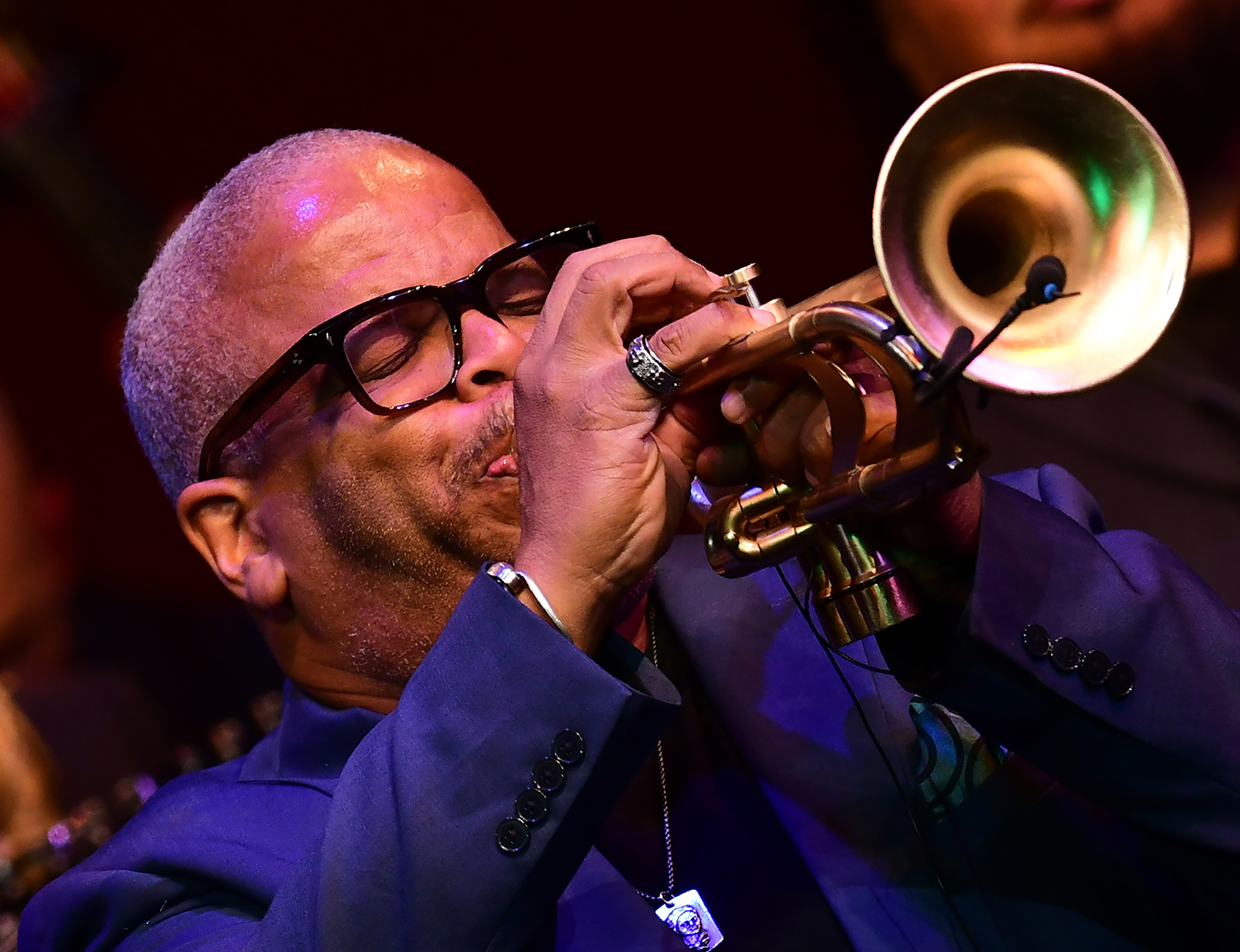
If I could have asked the jazz trumpeter Terence Blanchard one question after the opening concert of the 2026–2027 Paradise Jazz Series—a tribute to Miles Davis and John Coltrane—it would be this: How do you honor Coltrane without performing any of his music? During Friday's 90-minute concert at Detroit's Orchestra Hall, Blanchard played none of Coltrane's signature compositions. It was the second time I had seen his Davis-Coltrane tribute. The first, in February at Hill Auditorium in Ann Arbor, even featured Coltrane's son Ravi on saxophone, but it also omitted Coltrane's music. At neither concert did Blanchard discuss the two musicians' influence on jazz. In Detroit, Blanchard led drummer Oscar Seaton Jr., guitarists Charles Altura and Alex Smith, and pianist Tom Oren, with Joshua Redman as guest saxophonist. The set drew heavily from Davis's “Kind of Blue,” reimagining its songs with a modern electronic sound. By opening with his own “Flow,” Blanchard signaled he wouldn't approach Davis's classics conventionally—and that was fine. After the band tore through the piece, Redman joined them and quickly became the highlight of an otherwise disappointing tribute. His multilayered solos animated “Flamenco Sketches,” “All of Us,” “Teo,” “All Blues,” and “Someday My Prince Will Come.” Because Coltrane helped immortalize many of these Davis compositions, perhaps Blanchard believed this was a way of honoring the legends without playing any Coltrane originals. Redman, to his credit, never resorted to imitation. Although the concert's premise felt misleading, Blanchard still produced flashes of brilliance, soaring into the trumpet's upper register and at times aiming the horn toward the stage and blowing with sandblasting force. Seaton, by contrast, often sounded as though he were performing a separate concert; his drumming was needlessly loud and ostentatious. Midway through the set, another question emerged: If Blanchard intended to electrify Davis's hard-bop classics, why not perform music from “Bitches Brew,” “In a Silent Way, and “On the Corner?” By the end of the concert, I was also wondering whether, despite his brilliance and achievements, Blanchard was the right musician to lead a tribute to Davis and Coltrane. Redman's magnificent playing offered some redemption, but the concert remained a colossal disappointment. Blanchard owes listeners an explanation for leaving Coltrane's music out of a tribute bearing his name.


Thursday, September 10, 2026

NOTEWORTHY PERFORMANCES FROM THE 47TH ANNUAL DETROIT JAZZ FESTIVAL


 Ravi Coltrane Quartet Centennial Celebration (Carhartt Amphitheater Stage)

In 2009, when I profiled saxophonist Ravi Coltrane for the Metro Times, I asked why he had not performed his father John Coltrane’s music. At the time, he was determined to build his own name rather than ride his father’s coattails, and he told me the best way to honor that legacy was not to recreate it. Since then, recordings including “Spirit Fiction,” “Moving Pictures,” and “In Flux” have established him as a force. During this hour-plus set at the 47th Annual Detroit Jazz Festival, he sounded fully at ease playing his father’s repertoire. My favorite moments of the set were the opening “Acknowledgment” and “Resolution,” movements from the landmark album “A Love Supreme.” On “Equinox” and “Expression,” Coltrane played with more daring and aggression than I had ever heard from him live. His solo on “Naima” sounded as if his father’s spirit was beside him, whispering in his ear what notes and changes to play.


Bob James
(JPMorgan Chase Stage)

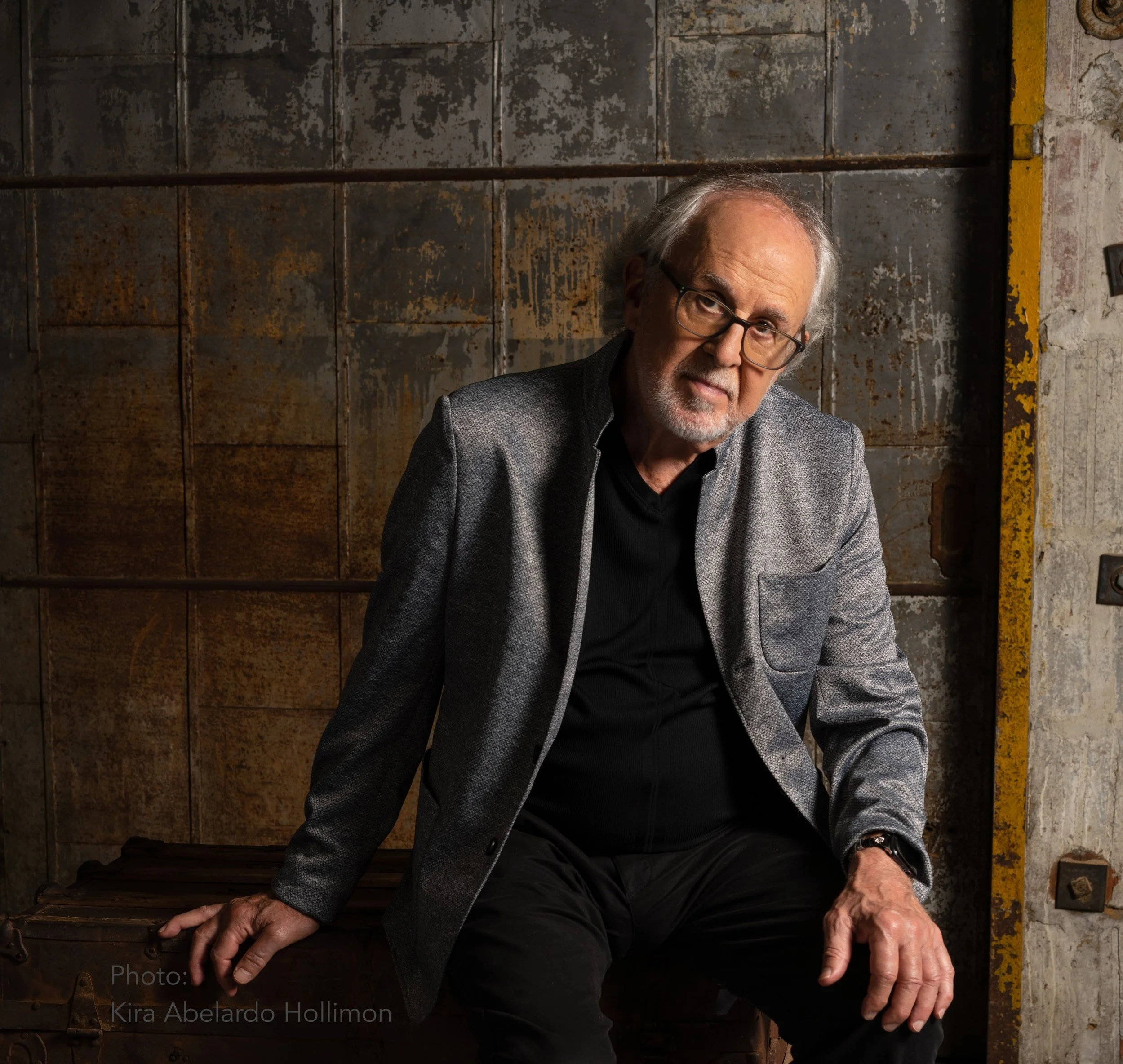
Pianist Bob James has long blended post-bop and smooth-jazz elements with unusual fluency, and on Saturday evening he delivered a rousing hour-long set. It was my second-favorite performance of the festival—a surprise because smooth jazz has never been my preference. James won me over through the elegance of his phrasing, especially on Roberta Flack’s classic “Feel Like Makin’ Love.” He was in top form, but Ukrainian saxophonist Andrey Chumut often became the center of attention, moving from a sweet tone on his original “Moving Forward” to a more commanding attack on James’s “The Music of Freedom.” By the middle of the set, he had the capacity audience in his hands.


African Rhythms Alumni Quintet: Celebrating the Centennial of Dr. Randy Weston
(Carhartt Amphitheater Stage)

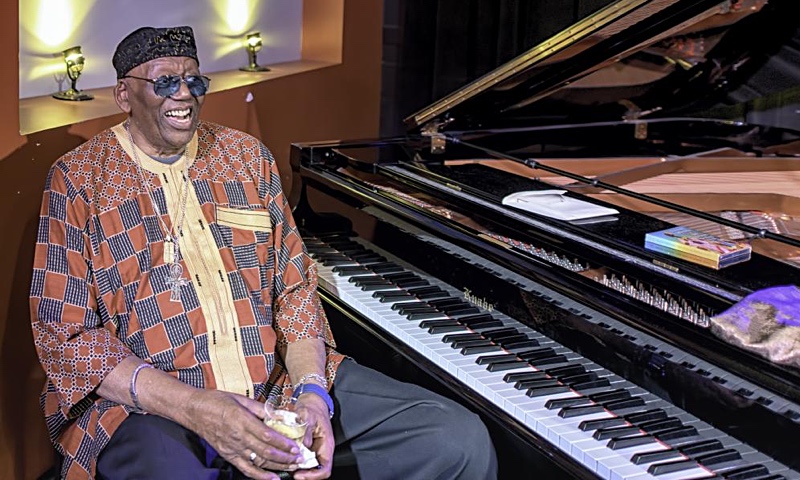
Jazz pianist Randy Weston would have turned 100 this year, and several former bandmates—including alto saxophonist TK Blue, pianist Sharp Radway, percussionist Chief Baba Neil Clark, trombonist Ku-umba Frank Lacy, and bassist Alex Blake—honored him with the festival’s most thoughtfully conceived tribute. The quintet opened with Weston’s classic “Hi-Fly,” then remodeled his signature works “Anu Anu,” “The Gathering,” and “Portrait of Patsy J.” Rather than merely reproducing his arrangements, the musicians channeled his expansive rhythmic language, with longtime collaborator Blake adding especially vivid color on bass.


Artemis
(Waterfront Stage)

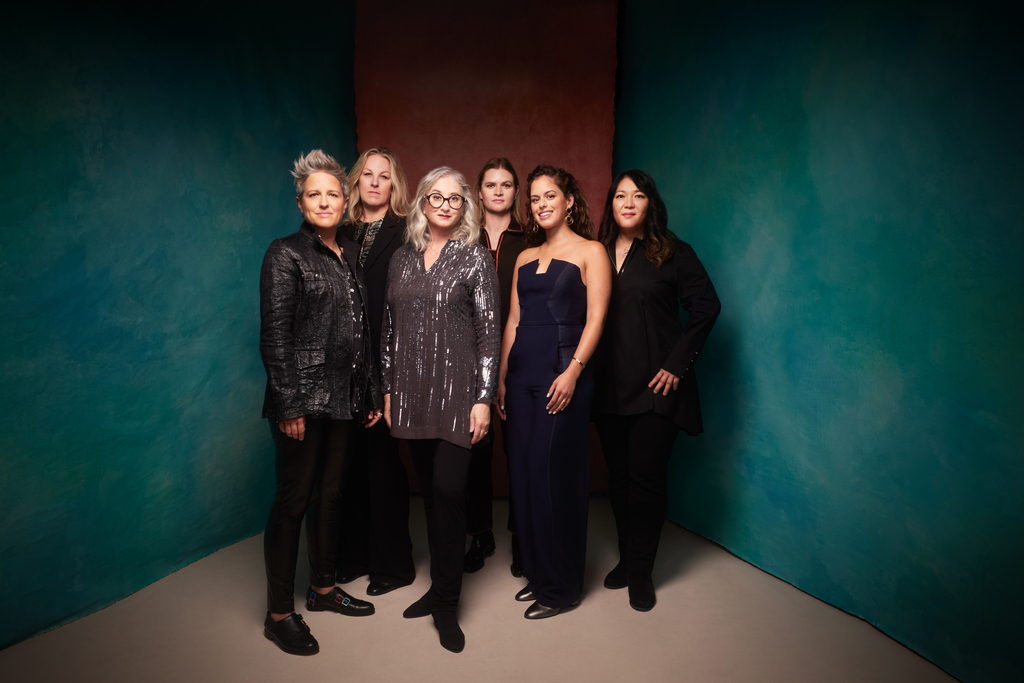
Artemis had made a persuasive case for being one of jazz’s finest ensembles. Pianist Renee Rosnes, drummer Allison Miller, bassist Noriko Ueda, trumpeter Ingrid Jensen, and saxophonist Nicole Glover offered a master class in collective virtuosity. Their set leaned heavily on standards including “What the World Needs Now is Love Sweet Love,” “Hackensack,” and “Flamenco Sketches,” but the original “Sight Unseen” revealed the group at its most distinctive. The musicians listened and responded with such precision that even familiar standards seemed fresh off the assembly line, each player in lockstep with the others without sacrificing an individual voice.


Ron Carter Foursight Quartet 
(Waterfront Stage)

Ron Carter’s set was not billed as a tribute to his former boss, trumpeter Miles Davis; however, its emphasis on Davis-associated compositions made it feel like an unofficial centennial celebration. Carter is known for threading tunes together until the compositions take on the shape of a carefully built suite, and his quartet sustained that continuity with remarkable ease. Pianist Renee Rosnes, drummer Payton Crossley, and tenor saxophonist Jimmy Greene swung with seemingly inexhaustible energy, while Carter anchored every transition with his polished tone. At 89, he remains a commanding bassist, and this was post-bop at its finest.


Cindy Blackman Santana
(Carhartt Amphitheater Stage)

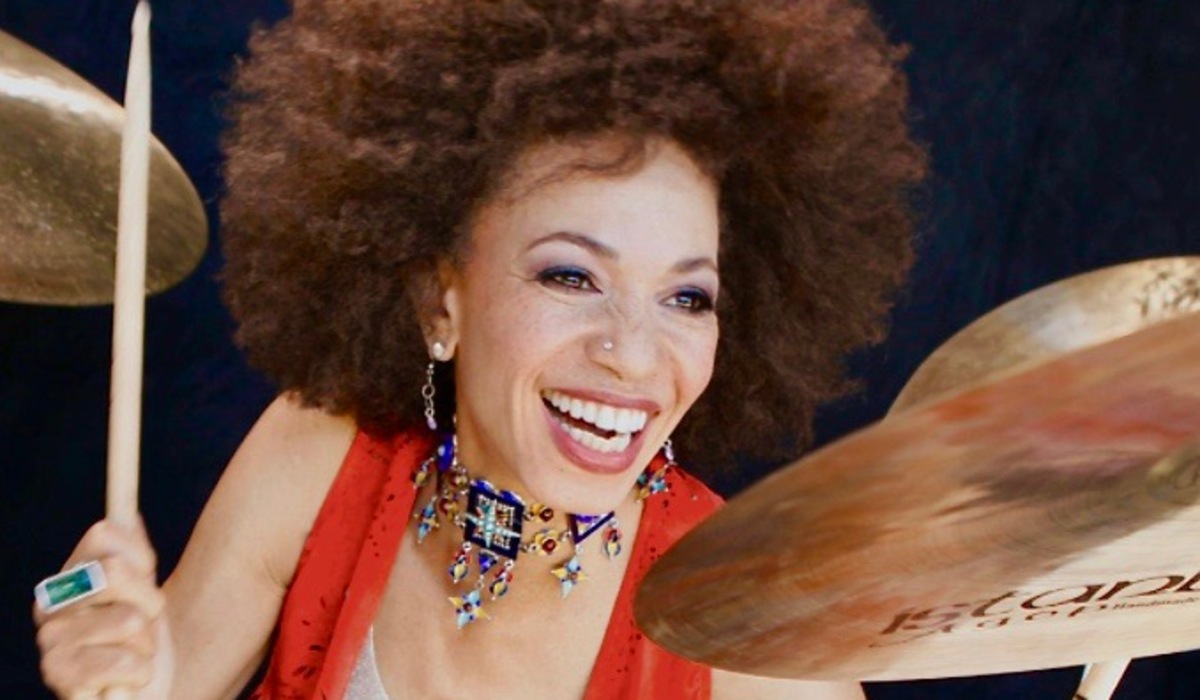
Cindy Blackman delivered the festival’s funkiest set. Few drummers I have encountered in my years as a music journalist match her combination of power and control. She sucks you in and releases you when she is damn good and ready. Her saxophonist was equally captivating. The set moved furthest toward the jazz tradition when Blackman surprised the crowd with a revamped take on Miles Davis’s “Blue in Green.”