Sunday, October 20, 2013

A LOW TURNOUT DIDN'T DETER THE MSU JAZZ ORCHESTRA FEATURING ANTONIO HART FROM SWINGING

Alto saxophonist Antonio Hart
It was a rainy Saturday afternoon, which may explain the low attendance for the Michigan State University Jazz Orchestra's concert at the St. Matthew’s & St. Joseph’s Episcopal Church in Detroit. The orchestra was directed by Detroit bassist Rodney Whitaker, who runs the MSU’s Jazz Studies department. The concert was the last stop of a four city tour sponsored by the Michigan State Federal Credit Union, which recently gave the department a million dollar grant.

The grant will be used for the department's artist-in-residence program. Whitaker said the acclaimed jazz musicians will be brought in for a week long residency that includes a tour with MSU's jazz orchestra throughout Michigan. 

First up was alto saxophonist Antonio Hart. Hart, 45, a native of Baltimore, has cut a bunch of excellent albums such as “Here I Stand” and “Its All Good”. His sound is a mix of bop, swing and the blues. There’s a spiritual quality to the way he plays a ballad. To date, some of his best blowing has been with the Dave Holland Big Band.

As the artist-in-residence, Hart taught a series of master classes and performed with the MSU Jazz Orchestra in Lansing, Byron Center, Holland, and Detroit. Trumpeter Jon Faddis and drummer Jeff Hamilton are coming in December. Next year, Whitaker is looking to bring in Christian McBride, Sean Jones, and Robert Glasper.

The diehard jazz fans that showed up despite the lousy weather were treated to an hour plus of swing from one of Michigan’s top college jazz orchestras. The first half of the concert the orchestra performed “A Night in Tunisia, “Do Nothing Till You Hear from Me,” and “Groove Merchant”. The second half Hart joined in.  

On Hart’s original “Down and Out,” he grabbed it by the shirt collar and gave it a Sam’s Club size ass kicking. The MSU Jazz Orchestra handled Hart’s music like champions. They swung below sea level and did not come up for air until Hart called the ballad “Stars Fell Over Alabama”.

There was choice soloing from alto saxophonist Jerrick Mathews, trumpeter Walter Andre’ Cano, and bassist Endea Owens. Despite the low attendance, the orchestra played their hearts out. The orchestra's mantra appears to be swing hard whether the house is empty or at capacity.

Sunday, October 13, 2013

THE 2013-2014 PARADISE VALLEY JAZZ SERIES OPENED WITH A SPELLBINDING SHOW FROM THE BRANFORD MARSALIS QUARTET

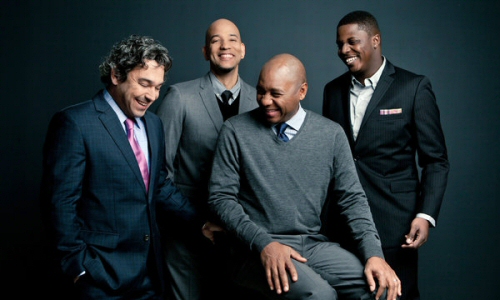
Joye Calderazzo, Eric Revis, Branford Marsalis, and Justin Faulkner
Midway through “Teo,” the third tune the Branford Marsalis Quartet played Friday evening at the Paradise Valley Jazz Series in Detroit, I was convinced the quartet was the series' best opening act in years. The quartet have been together for 15 years. That might explain why pianist Joey Calderazzo's, bassist Eric Revis', and Justin Faulkner's musical psyches are interlocked.  

The hour and 45 minute concert was the most spellbinding I have witnessed all the years I have covered the jazz series. That is worth noting because some of the series’ previous opening acts were Cassandra Wilson, Stanley Clarke, Sonny Rollins and Ramsey Lewis. Each put on memorable concerts.  

Before trumpeter Terence Blanchard introduced the quartet, he credited Detroit for having the most intelligent jazz audience he has performed for. Then he shared some memories of his lifelong friendship with Marsalis, recalling when they were kids in music camp together horsing around instead of practicing. I took that as Blanchard and Marsalis were so musically advanced as kids they did not need much practicing.

After sharing that bit of their history, Blanchard introduced the quartet. A few days ago, they had returned from a tour in Taiwan. Marsalis kidded about how it was the first time the band has seen the sunlight in days. An avid baseball fan Marsalis spoke glowingly about the Detroit Tigers and their ace Justin Verlander. That was it for the pleasantries.

Joey Calderazzo and Marsalis toyed with the melody of the first tune “Endymion” before launching a full-blown attack that lasted the entire concert. Calderazzo is a jazz pianist with a bottomless imagination. Frankly, he is also the heart of the quartet. If Marsalis wanted to take a sabbatical, Calderazzo could competently run things. In fact, at various moments of the concert, it sounded as if the quartet was his baby.  

Marsalis likes to play a lot of notes. On “The Mighty Sword,” he played every note available to a musician. He bent notes, stretched them like slingshots, picked them apart and reassemble them piece by piece. All night long, his blowing was a thing of beauty.

Save for two tunes, the quartet played extended versions of the music from their brilliant 2012 album “Four MF’s Playin’ Tunes”. That album marked the first time drummer Justin Faulkner, who took over for Jeff “Tain” Watts three years ago, recorded with the quartet. I caught Faulkner with the quartet at the 2010 Detroit Jazz Festival. Back then, he was a tad cautious but exuded promise. He has proven to be a wise hire. 

Throughout the concert, he resembled Watts when Watts was the quartet’s muscle. Faulkner was brash, animated, and too aggressive at times. On the encore, “Return of the Jitney Man,” Faulkner beat the drums like a disgruntled employee. And the audience ate it up.

A  memorable highlight was Blanchard joining the quartet to play Irvin Berlin’s “Dancing Cheek to Cheek”. In May, Blanchard put out “Magnetic” one of his finest albums.  And this month, he is on the cover of Jazz Times. 

On Berlin’s classic, Blanchard was fiery. The flames from his trumpet could have singed the eyebrows of the people seated up high in the cheap seats. By concert end, I was certain the Branford Marsalis Quartet is the tightest most engaging jazz quartet I have heard. What a fitting way to open the Paradise Jazz Series.

Sunday, October 6, 2013

NEW MUSIC: GARY SMULYAN TEAMS UP WITH A MOB BOSS; PLUS FORTHCOMING ALBUMS FROM MARC CARY, DAVE BENNETT & GRETCHEN PARLATO


don’t be that way  Dave Bennett (Mack Avenue Records)

“don’t be that way” is the impeccable and rousing debut album from jazz clarinetist Dave Bennett, coming out on Mack Avenue Records the 15th of October. Bennett, 34, is a former member of the Hot Club of Detroit. The Pontiac, MI native is a self-taught jazz musician, which is hard to believe because he plays the clarinet as if he invented the damn thing.

As far back as Bennett recalls, he looked up to the swing era clarinetist and big bandleader Benny Goodman. Bennett opens “don’t be that way” with Goodman’s “Slipped Disc,” stumping through the changes as if his feet is on fire. Understand this Bennett is in no way a Benny Goodman copycat.  On “don’t be that way,” he plays the blues, swing, and even barrelhouse Boogie-Woogie with equal proficiency.

The album is filled with jalopies such as “St. James Infirmary” and “Sing, Sing, Sing” that Bennett gives overdue oil changes. The album rocks primarily because Bennett put together a heavenly rhythm section drummer Pete Siers, bassist Paul Keller, and pianist Tad Weed. Those who follow Detroit jazz know Siers, Keller, and Weed are key figures who have blessed every album they have performed on.

Four Directions  Marc Cary Focus Trio (Motema)

This is the jazz pianist Marc Cary’s second album this year. June the 11th, Motema Records released Cary’s exceptional solo album “For The Love of Abbey,” dedicated to his mentor the late jazz vocalist Abbey Lincoln. Cary’s Focus Trio—drummer Sameer Gupta and bassist Burniss Earl Travis II and Rashaan Carter who occasionally subs for Travis II—have been together going on a decade.

Cary’s trio is heavily into experimentation as shown on their 2009 live album “Focus Trio Live”. On it, the trio played tunes that had excerpts of speeches from human right activists Malcolm X and Dr. Martin Luther King. Bank on something special when Cary’s trio puts out an album. The music on “Four Directions,” which comes out nationwide the 8th of October, is a mix of aggressive post-bop with African and Indian inspired rhythms.

Cary brought all his toys to the party. He plays an Ultra Nova Synthesizer, the Fender Rhodes and the Wurlitzer. The soul-stirring cuts are “Boom” “Indigenous,” and “Waltz Betty Waltz”. The latter is a Waltz that Cary wrote to honor one of his idols vocalist Betty Carter. “Four Directions” shows how tight-knit and imaginative Cary’s trio continues to be.

live in nyc  Gretchen Parlato (Obliq Sound)

I caught the jazz vocalist Gretchen Parlato’s show at the Paradise Jazz Series in Detroit in 2011. That jazz series attracts jazz conservatives. And Parlato’s neo-soul tinged brand of jazz did not fly. I was disappointed. I have always adored Parlato’s modern style and soothing voice. I implored my friends to get her last album “The Lost and Found”.

 Not until I played her forthcoming album for Obliq Sound “live in nyc,” did I understand Parlato is a vocalist who feeds off her audience. “live in nyc” was recorded at New York’s Rockwood Music Hall, and the audience there showed Parlato a lot of love.

“live in nyc” is a hell of a live date. Parlato sings material from her studio albums such as “All That I Can Say,” and “Holding Back the Years”. The standout on “live in nyc” is the cover of “Weak” by the 90’s R&B group SWV. On it, Parlato is so alluring and sexy a man-of-the-cloth would toss his underwear on the stage without hesitation. The album is due out the 8th of October.

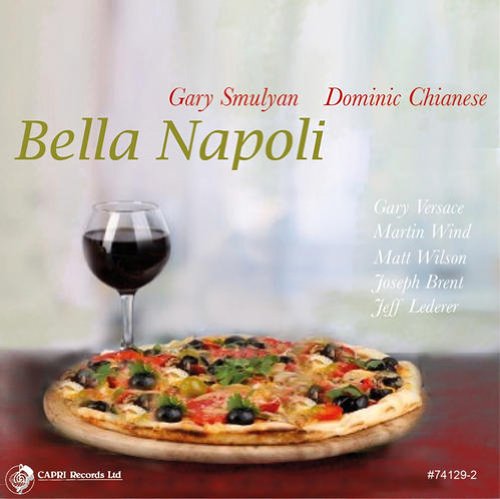
Bella Napoli  Gary Smulyan and Dominic Chianese (Capri Records)

Dominic Chianese is a damn good part-time jazz vocalist. If you don’t recognize that name, Chianese is best known as the actor who portrayed the sociopathic figurehead New Jersey mob boss, Uncle Junior, on the hit HBO series the Sopranos. Chianese loves Neapolitan classic songs. So does the jazz baritone saxophonist Gary Smulyan.

The most casual observers of jazz know about Smulyan’s billing as the top baritone sax player on earth right now. He has earned that billing brick by brick. He plays in a number of popular big bands, which explains why his tone on the baritone could fill up a gas tanker truck.

Smulyan is the closest in curb appeal to the great baritone saxophonist Pepper Adams the jazz world has set eyes on in a years. For “Bella Napoli” Smulyan and Chianese teamed up and made an album of their favorite Neapolitan songs.  

On “Bella Napoli,” out October 15th, Smulyan struck a balance. Half of the album is, Smulyan jamming with his current band Matt Wilson, Martin Wind, and Joseph Brent. The other half of the album the band accompanies Chianese. His voice is gorgeous and strong. It locks in perfectly with Smulyan’s band. The track that captures Chianses’ range is “Santa Lucia Lontana”. On paper, Smulyan teaming up with a fictional mob boss seems odd, but Smulyan pulled it off.

Sunday, September 22, 2013

IMER SANTIAGO PREMIERES 'HIDDEN JOURNEY,' HIS FIRST SHOT AS A SESSION LEADER

This is Imer Santiago’s first album as a bandleader. And he heaped a lot on his plate. The jazz trumpeter is, 37, a native of Ohio and was educated at the University of Ohio and the University of New Orleans. He built his name in Nashville where he is a key player. “Hidden Journey,” due out the 24th of September on Jazz Music City-based in Nashville-is a mix of blues, post-bop and Latin Jazz.

The album epitomizes what is happening on Nashville’s growing jazz scene. The album is loaded with guest spots from some of the city’s top jazz musicians. Trumpeter Rod McGaha and saxophonist Rahsaan Barber are probably the most well-known. Santiago did not use this first outing as a dry run. He went all out, and it paid off.

“Hidden Journey” works in part because of the excellent production work of Rahsaan Barber, the owner of Jazz Music City. Santiago and Barber co-arranged the 11 cuts on “Hidden Journey”. It appears Santiago and Barber locked themselves in a studio and vowed not to leave until they had made a flawless album. If that was their goal, they achieved it because this album is free of any imperfections.

Santiago blew the safe door open on “Girls’ Night Out,” a blues he wrote. On it, he played as if he took pointers from drummer Art Blakey’s how-to-swing-playbook. That cut is followed by two other destroyers “Fourthcoming,” and “Flat 2176”. 

After the third cut, you have to turn off the album to catch your breath. Yes, it is that highly charged. But you will not want to keep it off for long. Santiago is a gifted and a self-assured trumpeter. “Hidden Journey” is a superior jazz album you would expect from a veteran session leader not a first-timer.

Sunday, September 15, 2013

KENNY GARRETT MAKES ANOTHER TRIBUTE, PLUS NEW MUSIC FROM AHMAD JAMAL, THE JEFF HAMILTON TRIO & GREGORY PORTER

Chances are saxophonist Kenny Garrett will claim his forthcoming album “pushing the world away,” his  seventeenth overall and third for Mack Avenue Records, is not another tribute album. It sure as hell sounds like one. That is perfectly fine because Garrett makes wonderful tribute albums. “Pursuance: The Music of John Coltrane” and “Sketches of MD Live at the Iridium” are two gems in his body of work. “pushing the world away,” due out nationwide September 17th is not a nod to any particular jazz musician.

Garrett wrote songs for some of his idols such as Sonny Rollins, Chick Corea, and Chucho Valdez. On the album Garrett is the same ball-busting, swing crazed saxophonist his fan base adores. On “Brother Brown,” a nod to the album’s producer Donald Brown, one of Garrett’s longtime friends, Garrett sent his regular piano player Benito Gonzalez on a coffee and doughnut run while Garrett played piano. How is he on the instrument? It is not his natural habitat. Nonetheless he played competently. The albums prom queen is the closer “Rotation”. On it, he used two pianists Vernell Brown and Gonzalez, both gobble up the changes like freshly baked pastries.

Ahmad Jamal has made another flawless jazz album “Saturday Morning”. That is not a big surprise given the pianist has been making albums well over 50 years. Jazzbook Records let loose “Saturday Morning” the 10th of September. It has his bodacious working band the bassist Reginald Veal,  the drummer Herlin Riley and the percussionist Manolo Badrena. It’s hard to go wrong with that kind of backing. Of the 11 cuts on “Saturday Morning,” Jamal wrote seven, the others are standards. The band burned the town down on the title track “One,” which is a crowd favorite at Jamal’s live shows. This album’s odds on favorites are “I Got It Bad And That Ain’t Good” and “I’m In The Mood For Love”. There is nothing like hearing Jamal gussying up the old standards.

Wilford Brimley is a known character actor who has performed in classic films such as “Absence of Malice” and “Cocoon,” and who has been in a shitload of television commercials. He has developed an alter ego as a jazz singer with a fondness for the great American Songbook. Brimley’s first album backed by a road-tested jazz trio is “Wilford Brimley with the Jeff Hamilton Trio” is due out the 17th of September on Capri Records. It is pretty special for a vocalist pushing 80 with low mileage in jazz. How did Brimley hook up with the jazz drummer Jeff Hamilton?

They talked after a Hamilton concert in Vail, Co. Brimley sent Hamilton several recordings. After listening to his work, Hamilton began mulling over the trio collaborating with the actor. Hamilton and Brimley thumbed through the American Songbook, deciding on songs that suited Brimley’s thick, conversational voice. “Wilford Brimley with the Jeff Hamilton Trio” has 15 standards some are jumpers others are slow jams. Brimley sounds best on some of the slow jams they picked  “I’ve Grown Accustomed to Your Face,” “I Have Dream” and "This Love of Mind”. 

As for the Jeff Hamilton trio-pianist Tamir Hendleman and bassist Christopher Luty-understood Brimley has limited experience as a jazz singer. So they did not imposed unrealistic expectations on him. Neither did they go easy on him. Brimley pulled through mostly on his own merit. He is no Mel Torme or Tony Bennett but for a veteran character actor pushing 80, he sounded damn good with a big name jazz trio.

Before Blue Note Records unveils Gregory Porter’s new album “Liquid Spirit” nationwide Tuesday, the label should issue a Public Service Announcement, warning people they might get hooked on his voice immediately after listening to the album’s opener “No Love Dying”. Of course, the warning does not apply to those are already fans of his mighty baritone voice. 

Porter just has it like that. He is a freak of nature, but not an overnight sensation. He worked hard and deserves all the accolades and praise his fans and music critics have lavished on him. “Liquid Spirit” is his third album, his first debut for Blue Note. The Harlem New York based record label Motema Records put out his others “Water” and “Be Good”.

“Liquid Spirit is borderline perfect. Porter is stretched thinly performing up-tempo songs, covers and love songs. Midway through you wish he would have stuck with singing the love songs. He is at his absolute best on them. The love songs he chose for “Liquid Spirit” are not the baby-making variety but they seduce the heart. “Hey Laura” will make any woman melt and a Sumo wrestler feel all tingly inside. He gives the “Lonesome Lover” and “I Fall In Love Too Easily a thorough airbrushing. It is hard to categorize Porter because he sings many styles beautifully.

Sunday, September 8, 2013

MEMORIES OF THE 2013 DETROIT JAZZ FESTIVAL LINGER ON

Trombonist Delfeayo Marsalis

A week has passed since the 2013 Detroit Jazz Festival. I still think about the choice performances I saw plus the ones I missed. I made some hard choices. I decided, for example, to catch the McCoy Tyner with special guest Savion Glover set instead of saxophonist Charles Lloyd featuring guitarist Bill Frisell. McCoy and Glover put on the most awe-inspired set I saw all weekend. At, 74, Tyner is still a barnburner. He pushed Glover like he used to push saxophonist John Coltrane decades ago. Wonder if Glover had to buy new feet after the set because he wore his old ones out.

There were unforgettable sets by the all-star jazz band The Cookers, vocalist Gregory Porter and, trombonist Delfeayo Marsalis. The Marsalis set, of the three, is the one that stuck to my ribs the longest. Marsalis loves Duke Ellington it seems more than any other iconic big band leader and composer. Marsalis played the music of “Such Sweet Thunder,” Ellington’s and Billy Strayhorn’s shout out to Shakespeare.

Marsalis’ band shone like new hardwood floors. Drummer Winard Harper was the rhythm section's muscle, and his solos would have given a pit-bull goose bumps. I felt as if I were in a graduate seminar on Shakespeare, listening to Marsalis explain the inspiration behind each songs. On “Circle of Fourths,” Marsalis took the melody through more key and tempo changes than an erotic dancer changing costumes.

The Detroit acts were not-to-be-forgotten as well. Saxophonist James Carter blew a new hole in the Ozone during his tribute to tenor saxophonist Don Byas at the Absopure Pyramid Stage. At the J.P. Morgan Chase Main Stage, pianist Geri Allen put on a first-rate tribute to Detroit. Allen pulled the set off with drummer Karriem Riggins and bassist Robert Hurst.

Allen’s specials guests were former Detroiters trombonist George Bohanon, vocalist Sheila Jordan, and saxophonists Dave McMurray (McMurray is still a Detroiter) and JD Allen. Some of Allen’s previous Detroit oriented projects have been overcooked. But this one was cooked perfectly. The trio itself was satisfying enough.  

Trumpeter Marcus Belgrave’s "Trumpet Call" presentation was not as exciting as the "Trumpet Summit" he staged for the 2003 Detroit jazz festival where festivalgoers saw trumpeters Chris Jones, Corey Wilkes, and Sean Jones before they hit it big.  

"Trumpet Call" was worthwhile just listening to Belgrave amuse the crowd with stories about his friendships with trumpet legends Blue Mitchell, Donald Byrd and Clifford Brown. Belgrave said Brown schooled him on the fine points of improvising. The standout moment of  "Trumpet Call" was Belgrave blowing on his original “Brownie Town”.

Of the Detroit acts that I saw, drummer Karriem Riggins set was the most eye-popping. The past three festivals, Riggins has presented jazz fusion projects. They were top-heavy with Detroiters, which was not a bad thing. He has an affinity for his homies. And he includes them in his projects. This time out, he hired musicians from the East Coast and the West Coast. The music Riggins spoon fed the crowd was a mix of jazz, hip hop, and techno. It comes off effortlessly and beautifully when he mixes genres. Each year, his projects have gotten tighter.

Did this year’s Detroit Jazz Festival top the 2012, which longtime attendees believed was the best in decades?  Last year’s felt more authentic, geared more toward jazz purists. Obviously, the festival’s Artistic Director, Chris Collins, aim was to expand the festivals scope, booking nontraditional jazz acts. It worked

Monday, September 2, 2013

SO FAR, SUNDAY WAS THE BEST DAY OF THE DETROIT JAZZ FEST

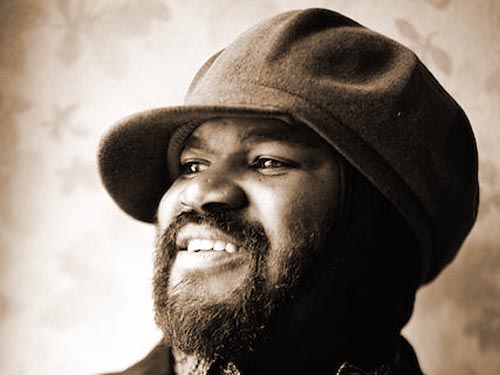
Jazz Vocalist Gregory Porter
Sunday, was the most exciting day of concerts at the Detroit Jazz Festival so far. At the J.P. Morgan Chase Main Stage, jazz vocalist Gregory Porter kicked the crowd's ass with some of the music from his 2012 album “Be Good” and his upcoming debut for Blue Note Records “Liquid Soul”. Porter is the hottest male jazz vocalist on earth right now with a mighty and a gorgeous baritone voice. On top of that, Porter has the stage presence of a hypnotist.

During his set, Porter put the men on the spot that have been in long relationships.“It times for you guys to lock it down,” Porter joked. Then he sang a version of “Good Hands” that would have melted a bear’s heart. One memorable moment was the protest song Porter belted about the Detroit riot that featured Detroit saxophonists Vincent Bowen and Kamau Kenyatta, Porter’s mentor. It was Porter’s debut at the Detroit Jazz Festival. It would be an injustice if he were not invited back.

At the Absopure Pyramid Stage, popular Detroit saxophonist James Carter paid tribute to the swing era saxophonist Don Byas. Last year, Carter purchased and reconditioned the tenor sax Don Byas played from 1950 to 1962. It was the same sax Byas used, according to Carter, to mop the floor with Coleman Hawkins and Stan Getz in a tenor sax battle in Europe.Carter is a master at pulling off tribute projects. 

His tributes to guitarist Django Reinhardt “Chasin' the Gypsy” and Billie Holidays “Gardenias for Lady Day” are two of his finest works. Carter played the Byas set with his longstanding band veteran hell-raisers pianist Gerard Gibbs, drummer Leonard King and bassist Ralphe Armstrong.

After Carter explained his fondness for Don Byas, the band jumped into two of Byas’ well-known tunes “1944 Stomp” and “Free and Easy”. Carter blew until he ran out of ideas on the latter tune. The winner of the Detroit Jazz Festival Trumpet Competition, Theo Croker was a special guest. On the standard “Star Dust,” the veterans put the zoom lens on him, and he did not choke.  

Later Sunday evening drummer Karriem Riggins, another popular Detroiter had  bodies sweaty at the Mack Avenue Waterfront Stage. The style of music Riggins is into currently is hard to classify. The past three festivals Riggins—who has worked with Mulgrew Miller, Ray Brown, Diana Krall, and who moonlights as a hip hop  DJ and producer—has presented some experimental projects.

The projects included some of Riggins' Detroit peers plus featured known hip-hop acts like Slum Village, Pete Rock and Common. This time out, Riggins’ shipped in musicians from New York, California, and Philadelphia. The music they performed was a mix of hip-hop, techno and bits and pieces of jazz. Nothing resembling the pure jazz that Riggins was raised on. But the music was danceable and sure as hell sounded good.