Sunday, September 1, 2013

MCCOY TYNER & CECILE MCLORIN SALVANT HEADLINED THE FIRST FULL DAY OF CONCERTS AT THE 2013 DETROIT JAZZ FESTIVAL

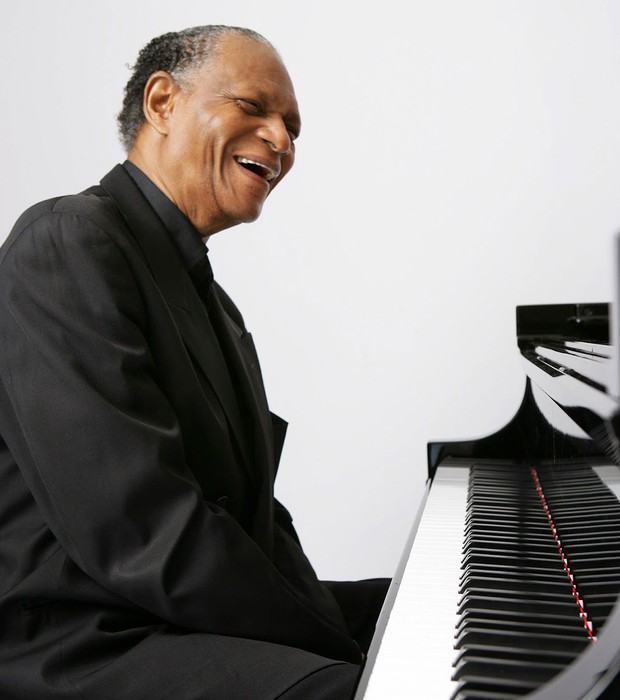
Pianist McCoy Tyner
The 74-year-old jazz pianist McCoy Tyner walked on the Carhartt Amphitheater Stage at the Detroit Jazz Fest Saturday to an ovation deserving of a jazz musician of his stature. During his hour plus set with tap dancer Savion Glover, Tyner channeled the energy he possessed decades ago backing saxophonist John Coltrane. Tyner’s aggressive style was in mint condition like on some of the classic albums he made for Impulse Records.

Tyner’s set lived up to its high billing. Before Tyner called up Glover, his trio had the crowd juiced and the stage hot as French fry grease. The trio and Glover clicked immediately. Tyner and Glover traded like tenor saxophonists in an old-school cutting contest. In all the years I have covered the Detroit Jazz Festival, I never witnessed the crowd go completely nuts midway through each number. Glover was tap dancing so fast I thought his tap-shoes were going to catch fire.

I lost count of the ovations Glover received. After the third number, the drummer, the bassist  and Glover left the stage. I figured to give his feet a must needed coffee break. Tyner played solo, settling down the crowd with a ballad played lovingly like the ballads he performed on his album “Nights of Ballads and Blues”. The performance was the most exciting performance I have experience at the Detroit Jazz Festival in years.

Vocalist Cecile McLorin Salvant set at the Amphitheater was also highly anticipated. It followed Tyner’s performance.  In 2010, Salvant won the Thelonious Monk International Vocalist Competition. Since the win, she has received a lot of good press. “Woman Child,” her debut for Mack Avenue Records is glorious. It is the best jazz album by a vocalist I have experienced so far this year. I’m a fan of Salvant. It pains me to write her performance with the David Berger Jazz Orchestra was stiff.     


Berger is a seasoned arranger. He wrote the arrangements for the performance. It was Salvant’s first shot at an international jazz festival performing with an orchestra. Frankly, she seemed as if she could not get into the arrangements. I wondered if headlining an international jazz festival this early in her career was too much of an undertaking. At age 23, she has not accumulated a  lot of frequent flier miles as a bandleader or as a headliner. And her inexperience showed.

Saturday, August 31, 2013

OPENING NIGHT OF THE 2013 DETROIT JAZZ FEST WAS A BUST

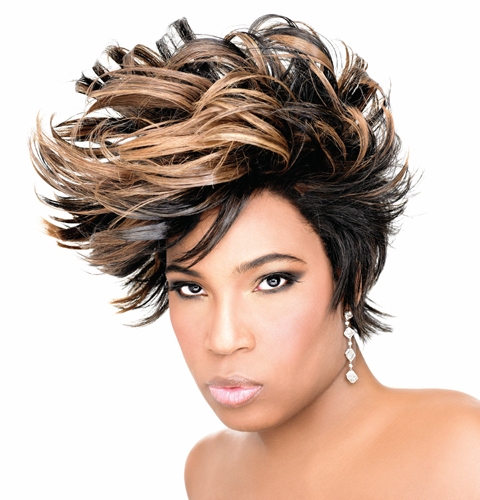
Vocalist Macy Gray
The 2013 Detroit Jazz Festival began Friday evening at the J.P. Morgan Chase Main Stage with a set by the festival’s artist-in-residence pianist Danilo Perez, and one by veteran free jazz saxophonist David Murray with pop vocalist Macy Gray. For a decade, opening night has been a high point of the four-day festival. But time around it was a disappointment.Perez performed first with his new group Panama 500.  

He premiered three songs “Rediscovery of the Pacific Ocean,” “Panama 500” and “Reflection in the South Sea”. The music did not win over the audience. The music was disjointed and way-out. The opening night crowd likes to cut loose. 

I have witnessed the crowd do so when Herbie Hancock, Christian McBride Stanley Clarke, and Tower of Power were opening night headliners. I admire Perez’s playing and his willingness to take risk. But, last night, I wondered if Perez had enough time to rehearse because the set, particularly the ending seemed spur-of- the- moment.  

Perez’s band caught fire on the last number. And the crowd came alive some. But it was too little too late. He had failed to capture them from the onset. Surprisingly, after his set, Perez received an ovation. I wondered if the crowd did so because deep down they felt bad for him, or if they were elated the performance was over. Dave Murray’s set was also disappointing.

Murray performed with his big band. It was loaded with topnotch musicians like bassist Jaribu Shahid and drummer Nasheet Waits. Murray is a jazz musician who does not have a comfort zone. He always thinks miles outside the box. His new album “Be My Monster Love” features pop singer Macy Gray. She is an oddball with a raspy cartoon-like voice. Before Gray walked on the stage in a purple silk dress, matching gloves and a bright red scarf made of feathers, Murray’s big band played a number with elements of free jazz, swing, and the blues.

Murray's set would have killed had he just played with his big band. Gray has stagecraft, and she tried her best to win over the crowd, but she failed. Most of the crowd seemed disinterested. Gray sang three songs. Then she left the stage, promising to return after the big band played a few numbers alone. Many people did not stick around. They bolted like there was a bomb threat. The past decade opening night readied festival goers for a weekend of world class jazz. This time around, opening night was a bust.

Wednesday, August 28, 2013

GARY BURTON TALKS ABOUT NEW BAND & NEW ALBUM 'GUIDED TOUR'


No matter how hard you press vibraphonist Gary Burton, he will not acknowledge “Guided Tour” is his best album in the last decade. Another thing Burton will not do is argue with the reviewers who believe the album is his most significant work. Eight of the 10 cuts on the album were composed by the members-drummer Antonio Sanchez, bassist Scott Colley, and guitarist Julian Lage. The quartet is tight as new shoes. Lage is the standout. His playing "Once Upon A Summertime" and "Monk Fish" will make your chest hairs dance. Obviously, Burton genuinely loved making the album. 

“Guided Tour” is an excellent follow up to “Common Ground,” his first album for Mack Avenue Records and which served as the official launch of his new band The New Gary Burton Quartet. The quartet is arguably his greatest band. That Burton is not reluctant to acknowledge.

Burton, 70, is one of the all-time great vibraphonists. He can make a great album in his sleep. To date, he has made 63, and he has been nominated for 15 Grammies. Last year, he won a seventh Grammy  for “Hot House,” with pianist Chick Corea. With his very first band formed in 1967, Burton was on the ground floor of the jazz rock fusion movement.

Fort 30 plus years, Burton taught at the Berklee College of Music. Pat Metheny, Kurt Rosenwinkel, and  Julian Lage are star jazz guitarists Burton gave their start. I Dig Jazz emailed Burton about “Guided Tour,” his affinity for guitarists, and how his new band compares to his previous ones.

“Guided Tour” is your second album for Mack Avenue Records. How is it different from your debut “Common Ground”?
‘Common Ground,’ our first New Gary Burton Quartet recording captured the early stages of our group, we had been playing together for all of three weeks when we recorded then. Now after two years of touring the USA, Europe and Japan, the group has continued to evolve and expand on the rapport, which has become a hallmark of this current group. ‘Guided Tour’ is an important step forward for the band.

How does the New Gary Burton Quartet compare to your past bands?
My current group is in that rare category that only comes along a few times in your career. The chemistry between the musicians is incredibly balanced and interactive. It's a situation where we all can play at our best, and the total of our playing is greater than we manage individually. I've only been part of a group with this kind of communication a few times in my career. 

You unveiled the New Gary Burton Quartet last year, how did the quartet come to be, and how long did it take the band to click?
I assembled the New Gary Burton Quartet, kind of just for fun. The plan was to just do a three week European tour, nothing more was planned. But, almost immediately, the great chemistry of the group became obvious, and by the time we finished the tour, I couldn't wait to get us into a recording studio, so the New Gary Burton Quartet was launched.

What is the key to making great albums consistently?
I think the most important factors in making a good recording are choosing a productive concept, and sticking to it. One of my techniques is to choose, say, two songs that most demonstrate the style and concept I visualize for the recording, then all the remaining songs are chosen because they are compatible with the original song choices.  My two "anchor" songs for ‘Guided Tour’ were ‘Caminos’ by drummer Antonio Sanchez, and ‘Helena’, by guitarist Julian Lage.

The New Gary Burton Quartet wouldn't be as dynamic without Julian Lage. Do you agree, and how does he compare to the other great jazz guitarists you were associated with.
I consider Julian Lage to be one of my biggest discoveries. He is so talented as both a guitarist, with an original sound and style, and as a composer. That I have known him and played with him since he was 12-year-old  gives us a special dynamic, too. 

Will you explain your affinity for jazz guitarists?
I think there are two reasons for my long-running connection with guitarists.  First, the sonic blend of vibes and guitar works extremely well.  Both instruments are mellow-sounding and when playing in unison can blend together into a single deep sound.  Or the instruments can play separately and be heard distinctly. So, it is nice for arrangements and ensemble work.  And for some reason I don't really understand, guitar players and I seem to have a mutual affinity. I keep matching up with talented players in collaborations that sometimes last for years and years.

At this stage of your career, what keeps you going? 
After nearly five decades of being an international jazz star, I feel like one of the luckiest people on the scene. Having built up a body of work and experience, my goal now is to maintain it, and keep growing; there is always something more to be done. 

 Is "Guided Tour" your favorite Gary Burton album?
After 50 years of making records, and sixty-some releases, it's hard to describe any single one as a favorite.  They're a little like your children, you love each of them for different things. But I can truthfully say that ‘Guided Tour’ is certainly one of my best, and I'm not the only one who thinks so. A number of the early reviews have described ‘Guided Tour’ in superlative terms, the most recent being the NY Times describing it as my most significant work in the last decade.  I don't disagree with that.
Tuesday, August 13, 2013

WARREN WOLF IS TOO LAID-BACK ON NEW ALBUM "WOLFGANG"

“Wolfgang” is vibraphonist Warren Wolf’s second album for Mack Avenue Records, and his fourth as a bandleader. He made two albums "Incredible Jazz Vibes" and "Black Wolf for M&I Japan years before joining Mack Avenue. 

His reputation as a top jazz vibraphonist is golden, having proven himself as a boss and as a sideman, holding down the vibes chair in the high-profile San Francisco Jazz Collective. That's a big deal.

In the past, that vibes chair was held by the vibraphonists Bobby Hutcherson and Stefon Harris. Wolf's live shows are an experience. You have to wear a hardhat and safety-goggles because his playing is so volcanic. 

His self-titled debut for Mack Avenue was excellent. But "Wolfgang" barely meets expectations. If you expect the same volcanic swing on his debut with, you are going to be a little disappointed.

 "Wolfgang," due out August 20th, is not a bad outing. There are moments Wolf swings his ass completely off on "Frankie and Johnny" and "Lake Nerraw Flow".

Wolf has a strong classical music background, and he has some harmless fun with it on the title cut, and the album's closer “Le Carnaval de Venise,” with his label-mate pianist Aaron Diehl.   

Pianist Benny Green, bassist Christian McBride and drummer Lewis Nash are members of the gang, but neither standout. All told, Wolf is too laidback on this album. 

Sunday, July 28, 2013

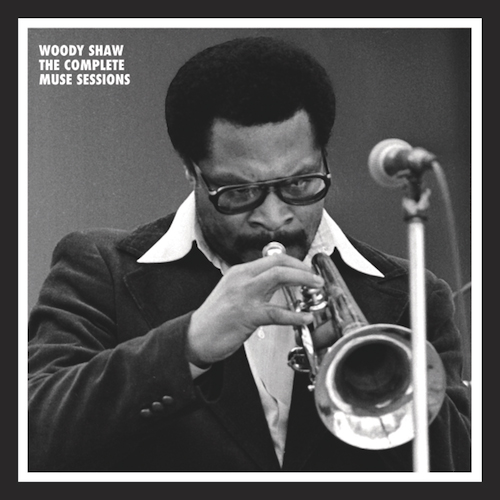
AVAILABLE NOW THE COMPLETE MUSE RECORDINGS OF WOODY SHAW

A declaration of what an impassioned jazz trumpeter Woody Shaw was is available in a limited edition seven disc set from Mosaic Records. It's titled “Woody Shaw the Complete Muse Sessions,” and the price is $119.00. The set is worth every freaking dime, and it has the recordings Shaw made for Muse Records during his 13 year run with the company 1974 to 1987. As a leader, he cut some primo post-bop music for the company.

Born on Christmas Eve 1944 in Laurinburg, North Carolina, Shaw started out playing the bugle. He turned to the trumpet as a pre-teen. His father was a gospel singer. He encouraged Shaw to become a musician. Shaw made a name working with top post-bop and free-jazz wailers such as Eric Dolphy, Pharaoh Sanders and Andrew Hill. At 44, Shaw died from kidney failure. He left a mammoth body of work. His Muse sessions were some of his best work and represents a significant chunk of his legacy. 

“Woody Shaw the Complete Muse Sessions” has a ton of music. If you plan to take it on in one sitting pack a big lunch. A companion booklet written by Shaw’s son Woody Shaw III is included. Shaw III discussed  his father’s history on top of explaining the relevance of each Muse session. 

The great thing about the sessions is you witness Shaw’s growth from a wet-behind-the-ear improviser to a post-bop maverick to an interpreter of jazz standards. Unfortunately, “Solid“ (disc six) made up of some  well-known standards from the American Songbook is disappointing. It showed Shaw’s soft side, playing some ballads, which wasn’t his strength. Also, Shaw seemed uncomfortable with the standards. 

Shaw was undeniably daring. And he staffed his bands with jazz musicians who pushed him to unimaginable improvisational heights. For example, on “Moontrane" (disc one), and “Love Dance” (disc two) trombonist Steve Turre, saxophonist Azar Lawrence were on the frontline with Shaw. The blowing was so goddamn good it could’ve made a nun swear like a construction foreman.

But “Moontrane” and “Love Dance weren't the best sessions. That honor belonged to “The Woody Shaw Concert Ensemble Live at the Berliner Jazzstage” (disc three). Shaw, trombonist Slide Hampton, and saxophonist Rene’ McLean blew fire. The people in the front row probably wore fireproof clothing for protection. 

On “The Iron Men” (disc four), Shaw was in full-blown free jazz mode, blowing due North with free-jazz deities saxophonists Arthur Blythe and Anthony Braxton, The collective improvising on "Song of Songs," one of Shaw's originals could cause multiple orgasms.

Most post-bop fans probably have the recordings in “Woody Shaw the Complete Muse Sessions”.  But for people wanting insight into Shaw's genius and legacy the box set would be a wonderful starting point. 

Sunday, July 21, 2013

NEW ALBUMS ON THE WAY FROM CHRISTIAN MCBRIDE, DAVE HOLLAND & JIMMY AMADIE

The smartest career move Christian McBride made was signing with Mack Avenue Records in 2008. The jazz bassist has made his best music there. In 2012, his big band album, “The Good Feeling” won a Grammy. Early this year, he released the second album from his outstanding quintet Inside Straight “People Music”. 

McBride designs his projects for his band-mates. McBride’s new album “Out There” is set for release nationwide August 6th. It’s a trio date with drummer Ulysses Owens Jr.—one of the finest trio jazz drummers you’ll come across who swings in High Definition--and pianist Christian Sands. On “Out There,” Sands is the predominate voice. 

For three years, he’s performed off and on with McBride. On “My Favorite Things” and “Who’s Making Love,” you get to experience how good Sands is. McBride isn’t a ball-hog, so he likes to put the spotlight on his sidemen. But on “Out There,” he steps into the spotlight more than on his other Mack Avenue albums. His solos on “East Of The Sun (And West Of The Moon)” and “Cherokee” are memorable.

At the 2012 TD Ottawa International Jazz Festival, jazz bassist Dave Holland unveiled his jazz fusion quartet pianist Craig Taborn, guitarist Kevin Eubanks, and drummer Eric Harland. Holland is associated mostly with free-jazz. He has a history in the world of jazz fusion, having played with trumpeter Miles Davis. Holland participated in Davis’ fusion gem “Bitches Brew”. On September 3rd, Darre2 Records releases Holland’s new album “Prism”, 

As far as jazz fusion albums go, “Prism” is a first-class one. Cuts like “The Watcher,” “Spiral” and the “Color of Iris” are crowd favorites. Chances are Holland will go on about “Prism” being a new sound and a new direction for his music and this band being the prefect vehicle to convey that. Yes, this is an awesome band and “Prism” is a damn sweet fusion outing.  However, it’s misleading to call what Holland does here a new direction.  Holland revisits ground he covered when he performed with Davis.

Jazz pianist Jimmy Amadie is a fighter. There isn’t a more accurate way to sum him up. Four decades ago, Amadie was a rising star and he had more work than he could handle. He played in bands led by Red Rodney, Charlie Ventura, Woody Herman and Mel Torme’. Tendinitis developed in Amadie's hands and he had to stop performing. He stayed active teaching private piano lessons and writing piano textbooks. After a series of hand surgeries, he was able to play again. 

He recorded eight albums but he didn’t perform live again until 2011 at the Philadelphia Museum of Art. August 13th, TP Recordings releases “The Jimmy Amadie Trio Live! at the Philadelphia Museum of Art”. For the date, Amadie reunited with drummer Bill Goodwin and bassist Tony Marino, veterans with sharp jazz acumen. 

They swing elegantly on jewels from the American Songbook like “There is No Greater Love,” “Softly As The Morning Sunrise,”  and “I’m Getting Sentimental Over You”. According to the liner notes, by jazz scribe Neil Tesser, Amadie hands were hurting like hell during the concert. That’s hard to believe given how his hands raced up and down the piano on “On Green Dolphin Street and “52nd Street Theme. This is a jazz trio album devoid of any imperfections.

Sunday, July 14, 2013

BOB MOVER SINGS AND BLOWS ON NEW DOUBLE-DISC RECORDING


Bob Mover
My Heart Tells Me (Motema)
The prominent saxophonist Phil Woods endorsed “My Heart Tells Me,” alto saxophonist Bob Mover's new two-disc recording. Like Woods, Mover’s blowing has a downhome bop feel.  On the first disc, Mover sings, and he blows on disc two. His singing is incomparable to his blowing. It’s still a mystery why some jazz saxophonists believe they can sing. Anyway, Mover’s blowing is strong enough to stand on its own merit.  Go straight to disc two for proof of that ability. Its Mover’s blowing that makes “My Heart Tell Me” a good recording. But had he left the singing on the editing room floor “My Heart Tell Me” would’ve been supremely good.

Peter Leitch
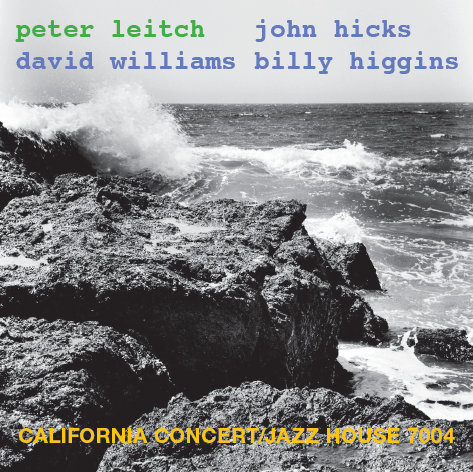
California Concert (Jazz House)
The concert took place at California State University in 1999. It was one of jazz guitarist Peter Leitch’s favorite dates as a bandleader. Leitch had pianist John Hicks, bassist David Williams, and drummer Billy Higgins in the band. Because the recording is a re-mastered bootleg, the sound quality is poor. But the playing is outstanding, especially Hicks solo on the opener “Relaxin’ at Camarillo” and the closer “A Blues For Ivan Symonds/Theme”. When Higgins died in 2001 and Hicks five years later, they left bulletproof legacies.  Arguably, one of the sweetest jazz drummers ever to grace this planet, Higgins swung above sea level throughout “My Heart Tells Me”. Leitch has a dual nature on guitar, a careful touch on slow tempo cuts. On blazing tempos, he’s a gangster.