Friday, June 17, 2011

ART PEPPER IN LONDON

In 1980, alto saxophone player Art Pepper played two nights at Ronnie Scott’s, a jazz club in London, England. That was Pepper’s first time performing in London. Mole Jazz recorded the concerts, and titled the live album “Blues for the Fisherman”. Jazz Mole only released four tracks, which stayed atop the British charts for a year.

Pepper's rhythm section included drummer Carl Burnett, bass player Tony Dumas, and piano player Milcho Leviev. Back then, Pepper was signed to Galaxy Records. And Galaxy wouldn’t allow Pepper to record as a leader for another label. So, Jazz Mole listed Leviev as the leader, which didn’t seem to bother Pepper one bit.

On June 14, Widow’s Taste Records, owned by Pepper’s wife Laurie Pepper, unveiled nationwide “Blues for a Fisherman,” in a four-disc set. In 2006, Mrs. Pepper formed the record label. Since then,  Mrs. Pepper has put out one Art Pepper album per year. 

Because “Blues for the Fisherman” was a do-it-yourself endeavor and Mrs. Pepper had a small budget, she produced a limited number of  box sets. Mrs. Pepper sent reviewers a 67-minute sampler disc. The eight songs sampler represented the best moments of the live album. 

The sampler opened screaming. Pepper played an original “Blues for Blanche”. Blanche was Pepper’s beloved cat. Pepper followed that with “Rhythm-A-Ning”. Leviev is listed as the leader. At times, his playing seemed misplaced. Leviev played a barrage of notes. On “Blues for Blanche,” he sounded like he was firing an Uzi, and  his hammering the piano keys  on the ballad "What's Now" was odd.

Pepper troubled past is known. Pepper talked candidly about his heroin addiction and stints in prison in  his  autobiography Straight Life: The Story of Art Pepper. Despite his troubles, Pepper made some acclaimed jazz albums “Straight Life,” Art Pepper Meets the Rhythm Section,”  "Intensity,” and “Art Pepper+Eleven”.  Undoubtedly, Pepper was a great alto saxophone player. “Blues for the Fisherman” ranks among Pepper’s finest recordings.

Pepper’s playing had a thick tone laced with sadness. The blues was Pepper's natural habitat. All hell broke loose on the title cut. Pepper ripped open his chest, and poured his heart all over the bandstand. Near the end of Pepper’s cadenza, he had a barroom kind of exchange with Leviev, which the audience ate up.

The production quality of “Blues for the Fisherman” was topflight. Listening to the album, you feel as if you're  inside Ronnie Scott’s, seated near the stage drinking Pepper’s music like cocktails. The audience was considerate.

On so many live jazz albums, you hear people talking while the musicians work their tails off. On “Blues for the Fisherman,” the audience was silent, but at the end of the concert, they erupted.

Monday, June 13, 2011

BE ON THE LOOKOUT

Last week, I Dig Jazz received four upcoming jazz albums "Ninety Miles," "State of Art," "Born to Be Blue," and "Monty Alexander Harlem-Kingston Express Live! at Dizzy's Club Coca-Cola, NYC. Each album is worth the sticker price and will be on the market in late Junes.


Saxophonist David Sanchez and vibraphonist Stefon Harris are survivors of the jazz youth movement of the late 90's when many jazz record labels only singed musicians under 25-year-old such as saxophonists Mark Turner, Teodross Avery, Mark Shim and a host of others. The movement was short-lived, and many of the musicians—who were pretty good—got canned when record companies closed their jazz divisions. Sanchez and Harris were the exception, and now are label-mates. For Concord Records, Sanchez, Harris and new jazz lion trumpeter Christian Scott are the co-leaders of “Ninety Miles”. I predict “Ninety Miles” will be favorite among jazz writer's. ”Ninety Miles” takes off running and never stops. Scott has experimented with different forms of music lately. I figured he'd completely forsaken his jazz upbringing. And I questioned if Scott would ever play hardcore jazz again. “Ninety Miles” is the first hardcore jazz album Scott has been an integral force on in years.

I first heard jazz bassist Ben Williams play with rising jazz vocalist Jesse Palter. And I liked Williams—a student of the accomplished jazz bassist Rodney Whitaker—right away. Since graduating from Michigan State University, and winning the 2009 Thelonious Monk International Competition for double bass, Williams has become an in demand bassist, playing with many of today's leading jazz musicians. On June 28, Concord Records offers to the public Williams' debut album “State of Art”. The album is a cogent example of the fusion course some new jazz lions are traveling these days. Williams was influenced by jazz, hip-hop, R& B and classical music. Williams successfully blends those forms, which is a lot of calories to consume on a debut album. 

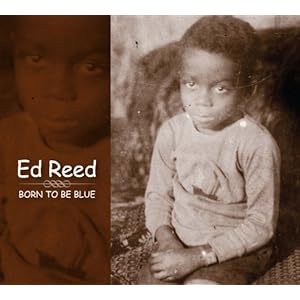
Jazz singer Ed Reed was a self-destructive junky most of his adult life. And Reed was in and out of jail also for various drug related offenses. Reed never gave up on himself, and the one thing he loved more than anything, singing. Reed is 82-year-old now. The hard knocks phase of his life is behind Reed. He's buried  that monkey on his back two decades ago. When Reed is not recording and performing around the Bay Area , he helps other addicts change their lives. Reed has put out two acclaimed albums “Ed Reed Sings Love Stories and “The Song Is You” since getting his act together. On June 21, Blue Shorts Records debuts his third album “Born to Be Blue,” which finds Reed wailing on some blues tunes. Reed has a slow conversational manner comparable to the great Andy Bey’s style but not has lucid. Anyway, Reed can sing his ass off and he seems at home with the blues tunes he picked for “Born to Be Blue”.

Jamaican born jazz pianist Monty Alexander has been in the jazz business for 50 years. Alexander started celebrating that milestone in March when Retrieval Records released the wonderful trio album “Uplift” (one of I Dig Jazz's all time favorite Alexander trio albums). Alexander has more than enough seniority to call it quits . But instead of kicking back, propping his feet on his laurels—or at least slowing down some—on June 14, Motema Records will make available for purchase Alexander's second album this year “Monty Alexander Harlem-Kingston Express Live! at Dizzy’s Club Coca-Cola, NYC”. The album is a Reggae jazz album that only Alexander could pull off. The albums has Bob Marley covers as well as familiar jazz staples "Freddie Freeloader" and a Reggae tinged version of "Sweet Georgia Brown".

Saturday, June 11, 2011

'ROUND MIDNIGHT RELIVED

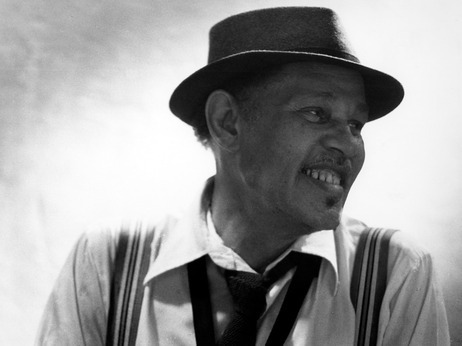
Saxophonist Dexter Gordon
Dexter, Thursday the Detroit Jazz Festival held a screening of the film “’Round Midnight” at the Michigan Theatre in Ann Arbor. After the screening, your wife, Maxine, discussed the making of ‘Round Midnight’. Maxine also, revealed that you alway talked about moonlighting as a famous actor. Twice you had a small role on the series “Crime Story”.

Maxine told the audience you're convinced the Academy of Motion Pictures would nominate you for a best actor. Maxine was surprised it happened. Maxine said you wrote an acceptance speech. I wonder if Maxine kept it. Dexter I have “’Round Midnight” on DVD. I’ve watched the film countless times. Wednesday evening “’Round Midnight” was part of a jazz movie marathon on the cable network TCM (Turner Classic Movies).

The jazz marathon began with “’Round Midnight,” followed by “Thelonious Monk Straight,” “Eastwood After Hours,” “Bird,” and “Young Man with a Horn”. I watched each. “’Round Midnight” and “Young Man with a Horn” were my favorites. There’s a Detroit alto saxophonist, Larry Smith, who resembles, Dale Turner, the troubled jazz musician you portrayed in “’Round Midnight”. Are you familiar with Larry? Larry is a terrific alto player in the same league as Charlie Parker and Sonny Stitt. Dexter if you email me your address in heaven, I’ll send you a copy of Larry’s albums “Estate’,” and “Larry Smith& Company Live at the Slovak Philharmonic”.

Dexter did you ever see “Young Man with a Horn”? Kirk Douglas played a trouble jazz trumpeter. Director Michael Curtiz based the film on trumpeter Bix Biederbecke's life story. I won’t give details. I don’t want to spoil it for you in case you plan to see “Young Man with a Horn”.

Anyway, Maxine talked about the making of “’Round Midnight”. Making the film was stressful for director and co-author Bertrand Tavernier. Bertrand developed a stomach ulcer. Bertrand believed making a film with jazz musicians would be easy. 

Maxine said you declined after reading the first draft of the script. Bertrand depiction of jazz musicians was inaccurate. But you’d reconsider participating if Bertrand reworked the script. You explained if you’d played Dale Turner as written the NAACP would’ve revoked your lifetime membership. The jazz musicians you knew had their demons, but they were smart and hardworking. You wanted them depicted as such. Begrudgingly, Bertrand made changes, and “’Round Midnight” was successful.

Warner Bros. considered killing “’Round Midnight”. Your inexperience concerned Warner Bros. Actor and director Clint Eastwood—a diehard jazz fan—supported you, offering to finance the film. You proved Warner Bros wrong.“’Round Midnight” received Oscar nominations, including best actor in a leading role.  Paul Newman won for The Color of Money". 

Dexter, during the Q&A segment, I planned to ask Maxine three personal questions about you. But I didn’t get the chance. First, when did you and Maxine first meet, and how long were you all married? Secondly, how was it being married to one of the greatest jazz saxophonist of any era? Lastly, did you have annoying habits such as leaving the toothpaste uncapped? 

Maxine shared a story about your relationship with the great tenor saxophone man Ben Webster. You and Ben toured. “Body and Soul” was on the set list. Ben liked to play "body and Soul" straight. Once you  deviated from the song's structure, playing the bridge like John Coltrane used to. At the bridge of “Body and Soul,” you played some of the changes to Coltrane’s “Giant Steps”.

Ben was irate and accused you of destroying the song. Ben stopped speaking to you for months. Dexter, the audience at the Michigan Theatre laughed when Maxine said Ben apologize, and gave you a gold Cartier cigarette lighter. Dexter, Maxine is doing a swell job carrying on your legacy. Maxine is scheduled to give a lecture during the Detroit Jazz Festival. Maybe then, I’ll get the chance to ask those silly personal questions only Maxine can answer.

Wednesday, June 8, 2011

GERALD WILSON’S WORLD

Big band leader Gerald Wilson made three albums dedicated to his favorite cities. In 2003, Mack Avenue signed Wilson.  He was already a Hall of Fame worthy bandleader, and he had enough seniority in the industry to retire, but he did nothing of the kind. Mack Avenue released Wilson’s “New York New Sound”. Back then, Mack Avenue was small, vying for respectability. Landing Wilson was a big score that paid off. 

“New York New Sound” received a Grammy nod, and Wilson became Mack Avenue’s best selling artist at the tender age of 84. In 2009, Wilson made “Detroit,” a homage to the Motor City, and Wilson’s best album for Mack Avenue.

By 2009, Mack Avenue was a household name with top jazz musicians on the roster such as Sean Jones, Kenny Garrett, Ron Blake and Christian McBride. Wilson remained the company’s ambassador, making a string of hit albums. At 92-year-old, Wilson still has the imagination and verve of a man half his age. You find that statement unbelievable? Then check out Wilson's new album “Legacy,” a nod to Chicago. "Legacy" will be available nationwide on June 21st.

With “Legacy,” Wilson shares some of the spotlight with his son Anthony Wilson and grandson Eric Otis. Wilson’s son wrote “Virgo,” and Otis wrote “September Sky”. Seems as if the elder Wilson is preparing his kin to run the big band  if he retires.

“Legacy” has two drastically different moods. First, the top half of “Legacy” has a jazz meets classical feel. Wilson’s big band performs “Theme by Igor Stravinsky,” and “Variation on a Theme by Giacomo Puccini”. Obvious nods to Wilson’s classical heroes.

“Variation,” is intricate. Wilson mix blues and classical. Plus, Wilson send the composition through two  tempo changes. Blues coexisting with classical is a novel concept. The mixture works because piano player Renee Rosnes is proficient in blues and classical music. 

Secondly, the other half of “Legacy” is a suite titled “Yes Chicago Is… (suite)". It starts with the glum movement “Jazz Mecca”. The suite ends similarly with “A Great Place to Be”. Those movements are the suites’ weak links.

But, the other movements are upbeat. Wilson put his faith in key soloists—Terrell Stafford, Ron Blake, and Gary Smulyan—to convey musically and succinctly the influence Chicago had on Wilson. They didn't let Wilson down. The soloists are accomplished jazz musicians with egos, of course, but in Wilson’s big band they mesh swimmingly.

Stafford, Blake, and Smulyan give the suite a richness that would be missing had either musician not participated. So how does “Legacy” compare to Wilson’s “New York New Sound” and “Detroit”? “Legacy” deserves a high mark, but Wilson's nod to New York and to Detroit are better.

Tuesday, June 7, 2011

OLD SCHOOL FLAIR

Sachal Vasandani has many things working in his favor. Vasandani is handsome, dapper, and classy. And Vasandani is signed to a record company that respects jazz musicians. Above all, Vasandani is a wonderful singer. His vocal style is a mix of Frank Sinatra and of Mel Torme'. Vasandani definitely embodies their lounge singer swagger. 

On June 21, Mack Avenue Records releases nationally Vasandani’s third album "Hi-Fly". It’s Vasandani best so far. On his previous albums—particularly “Eyes Wide Open”—Vasandani sang some songs that didn't fit his voice. That’s not the case on “Hi-Fly”. Every song fits perfectly.

There’re oldies galore on “Hi-Fly,” and Vasandani only sings three of his own songs, which is unfortunate for us because his songwriting is powerful like his singing. (On his next album, he should include more originals.) Of course, singing oldies isn’t a bad thing. Many jazz singers do so marvelously, and Vasandani is no exception.

Vasandani obvious flair is singing love songs. Keep tissue handy while listening to Vasandani sing, “Love Is a Losing Game,” “That’s All I Want From You,” and “Flood”. Vasandani is careful with each song like pushing them up a street in a baby stroller. 

Vasandani can also sing the blues and scat convincingly, which he has a ball doing with his idol Jon Hendricks on “Mint Julep” and the title song. “Hi-Fly” is Vasandani's best albums so far, but not his magnum opus. That’s coming in the near future. Bank on that. “Hi-Fly” proves Vasandani is among today’s top male jazz singers.

Friday, June 3, 2011

GOOD VIBRATION

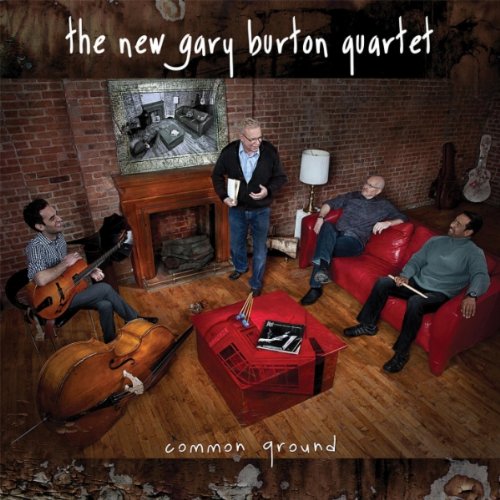
Vibraphonist Gary Burton has a fresh start. Mack Avenue Records signed Burton back in February, which was a major score for the company. Burton has a new band. And Burton has a new album, Common Ground, due out Tuesday. Common Ground is Burton’s first album in 5 years, and Mack Avenue's best album so far this year.

During Burton’s 5 year break, Burton kept his chops up. Burton still has a keen eye for gifted jazz guitarists.  In the past, Burton worked with Pat Metheny, John Scofield and Kurt Rosenwinkel, three of jazz’s more creative minds. Burton help shape their reputations.

On Common Ground, Burton works with drummer Antonio Sanchez, bassist Scott Colley and Guitarist Julian Lage. Sanchez and Colley efficiently handle all the manual labor.

On “Never the Same Way, Colley spreads notes around like fertilizer. Sanchez swings toe-to-toe with Burton on the title cut. Lage is the dominate voice throughout Common Ground. It seems Burton designed Common Ground as a platform for Lage.  

Lage is a maverick with good gut instincts. In April, Lage put out a concept album Galdewell. The album shows his knack for writing intriguing compositions.

On Late Night,  Lage uses those instincts to navigate the changes. Burton and Lage have a sentimental father and son moment on My Funny Valentine.  Burton has new musical soul mate in Lage. .

Wednesday, June 1, 2011

OLD FASHION BOP

Andy, I finally listened to Frank Rosolino Quartet Featuring Sonny Clark Complete Recordings you gave me in April. I would’ve listened to the album sooner. But I was swamped with new albums. This years, new albums have been rolling in faster than I can review them. Over the weekend, the mail carrier dropped off a stack of albums from High Note Records that'll take me a good two weeks to listen to. 

Anyway, the Frank Rosolino Quartet Featuring Sonny Clark Complete Recordings was everything you promised, clean old fashion be bop. A long time has passed since I’ve heard a pure be bop album. I guess I’ve been longing for one. Rosolino quartet with the great be bop piano player Sonny Clark—in my book the greatest ever, that’s not a slap in the face to Monk and Bud—was a good be bop band.

Andy, you have great taste in jazz, and a nose for tracking down obscure jazz musicians who never received—for whatever reasons—the praise they deserved. To your credit, Andy, you’re a hardcore jazz man. And, of course, the brains behind the Detroit Groove Society, the excellent home concert series. Also, thanks for emailing me jazz critic Gene Lee’s article about Rosolino’s suicide. I was upset after reading Rosolino killed his son then himself.

Lee nailed Rosolino personality. If playing jazz trombone hadn’t panned out, Rosolino could’ve made a living as a comic. Andy, if you listen closely you’d hear humor is his playing. Right now, I’m listening  The Complete Recordings. He just wrapped up My Delux. Now he's playing the head of the slow jam Flamingo. He could cook and tell stories on his trombone. I have to pause for a moment. Sonny Clark is taking a solo. Clark’s playing is crisp as a laundered dress shirt.

On It Had to be You, alto sax man Charles Mariano sounds as if he invested time studying Charlie Parker’s licks. Parker’s influence is evident. I appreciate how Rosolino took his sweet time on some up tempo tunes. Rosolino could race, too. On Sweet Georgia Brown Rosolino, Mariano and Clark chew up the changes like chicken wings.

Andy, what I appreciate most about having a hardcore jazz man as a friend is you’re always turning me on to hip jazz musicians and jazz albums.