Monday, May 23, 2011

HARD BOP COMFORT ZONE

Sean Jones’s followers pretty much know what to expect from a Sean Jones album, a straight-up swing affair mixed with some warm and fuzzy ballads. Jones has become an established force and the top jazz trumpeter of his generation. That’s huge, considering Jones’s peers are trumpeters Marcus Printup, Jeremy Pelt, Terrell Stafford, Dwight Adams, Russell Gunn and Nicholas Payton.

When Mack Avenue Records opened in 2004,  Jones was one of the company's first employees. Jones made a string of solid albums, and later on earned the coveted first chair in the Jazz at Lincoln Center Orchestra. (Jones recently quit to focus on other musical interests.)

I heard Jones for the first time at the 2004 Detroit International Jazz Festival. Jones was a member of Marcus Belgrave’s Trumpet Summit. Belgrave assembled jazz trumpeters from across the country, and Jones outplayed them all.

Like his hero trumpeter Clifford Brown, Jones likes to dwell in the upper register of the horn. And Jones blows forcefully enough to topple a garbage truck. My only pet peeve with Jones is some of his albums sound the same. So far, Jones’s third album, Roots showed his complete game. Jones is an if-it-ain’t-broke-don’t-fix-it bandleader, so he uses the same rhythm section from some of his previous albums.

Tomorrow, Mack Avenue Records offers to the public Jones’s new album No Need for Words. Jones is faithful to his hard swinging formula with some ballads strategically placed, giving the listeners a breather from the high premium swing that is No Need for Words main thrust. The Ballads Momma, Touch and Go and Forgiveness (Release)—are Jones’s most endearing yet.

Forgiveness (Release) comes across as if Jones has finally reconciled some deep seated issues that have bothered him for sometime. When Jones hits high notes, it sounds as if he’s screaming “hallelujah.

Love’s Fury is the stand out, and is Jones’s stab at free jazz. His band goes at it like wild animals on the attack. Love Fury is the farthest Jones has moved outside his hard-bop comfort zone. Love’s Fury foreshadows a new direction Jones is test-driving.

Saturday, May 21, 2011

DULL DUET

Renee Rosnes and Bill Charlap
At Detroit's Orchestra Hall Friday evening, husband and wife duo Bill Charlap and Renee Rosnes closed the 2010-2011 Paradise Jazz Series in lackluster fashion. At 8:00am on the button, the piano players walked on the stage hand in hand sporting pallbearer black suits. They bowed to the audience. Then Charlap and Rosnes started the concert with Never Will I Marry  followed by Antonio Carlos Jobim's Double Rainbow and Joe Henderson's Inner Urge, songs from Charlap and Rosnes' 2010 album Double Portrait..

The entire evening, Charlap and Rosnes sounded like one piano player instead of two with different styles. The duo piano thing is tough to pull off. Many respected jazz piano players have tried. Eric Reed played with Cyrus Chestnut. Mulgrew Miller played with Kenny Barron. And Hank Jones played with Oliver Jones. Those duets were uninteresting.

Charlap and Rosnes are excellent jazz piano players. No jazz fan or jazz writer worth his or her salt would disagree. Charlap is reserved, but he can swing if a situation demand him to. Rosnes is a natural swinger at heart. Rosnes can swing faster and harder than any of her peers. But together Charlap and Rosnes are shockingly dull.

In 2007, Charlap and Rosnes wed at Dizzy’s Club Coca Cola, forming a top-flight jazz duo. Charlap and Rosnes brought stellar credentials to their marriage. Charlap has two praiseworthy jazz trio dates to brag about S. Wonderful and The Bill Charlap Trio Live at the Village Vanguard. 

Rosnes played with the late saxophone player Joe Henderson. Rosnes also played with the San Francisco Jazz Collective.Three years after Charlap and Rosnes wed, Blue Note Records put out the couple’s first duo piano date Double Portrait. Jazz album reviewers spoke highly of it.

The set Friday wasn’t completely dull. Charlap and Rosnes gave the audience a jolt on Charlie Parker’s Confirmation. And the blues number Charlap and Rosnes played near the end of the set was pleasing. Charlap wow the audience, playing the number with one hand. On the whole, the hour-long set was lackluster. Charlap and Rosnes failed to do what both are capable of, swinging. But was swinging  their intent?

Thursday, May 19, 2011

MIDDLE AGE BLUES

Like his peers Tim Warfield, Joshua Redmond, Craig Handy, and James Carter, Eric Alexander is a middle age saxophonist now. Being that hasn’t changed Alexander’s playing one bit. Alexander remains an eager improviser, which Alexander proved on a string of fantastic jazz albums Prime Time, The Battle and Revival of the Fittest.

Revival of the Fittest was Alexander’s last album and was a fan favorite, leaving. fans wondering what Alexander had planned for a follow up. Last month, High Note Records ended the suspense making public Alexander’s new album Don’t Follow the Crowd, covers of some noted pop songs and songs written for films.

Pianist Harold Mabern had a big influence on Don't Follow the Crowd. Mabern convinced Alexander to record Cavatina from the Deer Hunter, Charade and Shaft’s Big Score!. Then Mabern supported Alexander throughout the album like a fitness trainer. Alexander's other staff members bassist Nat Reeves, and drummer Joe Farnsworth were helpful as well, giving Cavatina from the Deer Hunter, Charade, and Shaft's Big Score!—songs written for film—more curb appeal.

In his career, Mabern has backed some influential jazz saxophonists such as Frank Strozier and George Coleman, Alexander’s role model. Mabern never crossed or upstaged Alexander. On Nomor Senterbress and Footsteps, Mabern surveyed the land before Alexander took off on an improvisational expedition.

Remix Blues and She’s Out of My Life stood out the most on Don’t Follow the Crowd. Pop icon Michael Jackson made famous She’s Out of My Life. Alexander kept the song’s gloomy disposition. Farnsworth and Reeves were most aggressive on Don’t Misunderstand, and  Remix Blues.

With Don’t Follow the Crowd, Alexander proves—not that he had to prove anything—middle age hasn’t diminished his skills one bit.

Tuesday, May 17, 2011

MASTERPIECE

At this stage of his career, James Carter can put out any kind of album he wants to. At one of Carter’s concerts, I overheard someone saying, “James could blow into a garden hose and that would sound good”. I don’t doubt that. Carter is undoubtedly one of the principal jazz saxophonists of his generation—on second thought of any generation. Carter has recorded some remarkable concept albums “Jurassic Classics,” “Conversin’ with the Elders,” “Chasin’ the Gypsy” and “Gardenia for Lady Day” are some examples. But none more remarkable as his new album “Caribbean Rhapsody: Concerto for Saxophones.

Today, Emacry Records offers to the public “Caribbean Rhapsody: Concerto for Saxophones and Orchestra”. Roberto Sierra, who has worked with Carter off and on for nearly a decade, composed the music. Sierra cut open Carter’s style, like a coroner a corpse for an autopsy. Sierra dissected every part of Carter’s style. Sierra's crafted compositions befitting Carter's many hallmarks.

One of Carter's hallmarks is coming up with imaginative cadenzas. Sierra kept the back door of some of his compositions wide open for Carter to play cadenzas. 

“Caribbean Rhapsody" is not Carter’s first stab at classical music. In 2002, Carter performed with the Detroit Symphony Orchestra under the direction of Neeme Jarvi. Sierra composed the music. The concert was successful. The following year Carter played with the DSO again. Classical music doesn’t allow any room for improvising. Sierra knows Carter playing relies heavily on improvisation. 

And asking Carter to play music without improvising would be like asking a slugger to hit a home run without a bat. Sierra composed music for “Caribbean Rhapsody,” that doesn’t restrict Carter’s inner swinger. Sierra’s compositions challenge Carter to dig deeper into his bag of improvisational tricks, and Carter exceeds the challenge.

“Caribbean Rhapsody” opens with “Ritmico”. Carter does the bolero with his tenor. On “Tender,” Carter plays the tenor and soprano tenderly like a mother tending to a scrape on a child’s knee. “Playful” meanders along until Carter kicks the tempo in the ass. Then Carter and the Sinfonia Varsovia Orchestra swing home the rest of the way.

“Caribbean Rhapsody” has many unforgettable moments. Two moments are Carter soloing on “Tenor Interlude” and Soprano Interlude” Carter weeds through the changes like a landscaper. (Someday Carter will replace saxophonist Sonny Rollins as the reigning king of improvisation.) Another unforgettable moment is Carter’s exchange with The Alkun Dixon String Quintet on the concerto “Caribbean Rhapsody,” In the second, movement Carter and guest soloist violinist Regina Carter swing high like trapeze artists.

Carter has 14 albums under his belt now. “Caribbean Rhapsody” is Carter’s first masterpiece. “Caribbean Rhapsody is the second album legendary jazz record producer Michael Cuscuna has produced for Carter. At 42, every aspect of Carter’s playing has matured, and Cuscuna is the right partner for Carter at this stage of his career.

Monday, May 16, 2011

SNEAK PEEK

Over the weekend, I Dig Jazz received a stack of upcoming jazz releases. Some were worthwhile, and other were not. As a courtesy to I Dig Jazz reader's here is a sneak peek at three jazz albums from that stack you should purchase when they are released to the public. 

Jazz singer Sachal Vasandani has the goods. Vasandani is handsome, cool, dapper. And Vasandani is also one of the best male jazz singers around. How good is Vasandani? As good of a singer you could produce by mixing Frank Sinatra’s DNA with Mel Torme’s. On June 21, Mack Avenue Records release, Vasandani’s third album HI-Fly. HI-Fly will catapults Vasandani into the international spotlight. Vasandani also gives listeners a sampling of his songwriting skills. Of the 12 songs on HI-Fly, Vasandani only wrote three, but  they are the most memorable on the album. Vasandani hired his idol, jazz vocalese great John Hendricks, to play a few tracks.


At 92, big band leader, Gerald Wilson is still composing sweet big band music. Wilson is one of Mack Avenue Record’s best selling artist, and Wilson’s debut for MAR, New York New Sound, was nominated for a Grammy in 2003. On June 21, Wilson’s fourth date for MAR, Legacy, will be available. Legacy is a ballad heavy album with a lovely suite Wilson composed as a salute to Chicago, one of Wilson’s favorite cities. Wilson’s orchestra is star-studded. Pianist Rene’ Rosnes, bassist Peter Washington and drummer Lewis Nash make big contributions. Wilson's orchestra would be incomplete without his Mack Avenue brothers saxophonist Ron Blake and trumpeter Sean Jones.


Off the top of your head name some legendary Detroit jazz piano players. I will wager a month’s salary that piano player Sir Roland Hanna's name did not come up, which is a damn shame. Hanna was one of the jazz world’s unsung greats and a consummate craftsman.  For a while, Hanna worked in the Thad Jones-Mel Lewis Orchestra, and Hanna gigged frequently with tenor saxophonist Coleman Hawkins. For those who enjoyed Hanna playing, but may have forgotten about him, IPO Recordings, Inc. makes available, August 1st, an excellent album of Hanna playing solo piano amply title Colors from a Giant’s Kit. Hanna serves up ballads, ragtime, and blues with amazing aplomb. Many solo piano albums sound like practice sessions, but not Hanna's album. Hanna sounds as if he's playing for an appreciative audience.Colors from a Giant’s Kit will put Hanna back on your jazz radar..

PERFECT COMBINATION

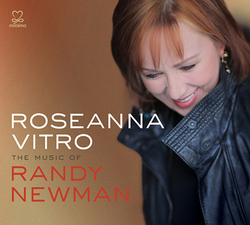
Roseanna Vitro debut album for Motema Records is a befitting homage to songwriter Randy Newman. Vitro calls the album The Music of Randy Newman. Vitro has a storyteller's style of singing. Many of Newman’s songs have a literary quality, especially the 10 that Vitro sings. Newman is a celebrated songwriter.

Newman is an Oscar and a Grammy winner, and he’s composed music for Hollywood blockbusters such as “Meet the Parents” and the three “Toy Story” movies.

Vitro strolls hand in hand with Newman’s popular love jams Sail Away, Everytime It Rains, Feels Like Home, and Losing You. Some jazz singers of Vitro’s elk screw up their albums by using an orchestra. An orchestra can overpower a singer, but Vitro avoids being overpowered by only adding to her rhythm section violinist Sara Caswell.

Caswell—on loan from Grammy winner Esperanza Spaulding’s band—impacts each song she plays on the Music of Randy Newman. Caswell plays celestially as if angels are dancing inside her violin. Caswell goes with Vitro’s voice like a silk pocket square with a pricy suit jacket.

Caswell also had the same impact on Spalding's album Chamber Music Society. Caswell is partly responsible for the allure of The Music of Randy Newman Songbook. Had Vitro decided against using Caswell this album would be less alluring.

Friday, May 13, 2011

INTERPRETING MONK

"I don’t know that Monk would appreciate my offerings of his tunes, but I seriously doubt that Monk would want me to care,” stated piano player Eric Reed in the liner notes for “Dancing Monk,” his latest album for Savant. I will go out on a limb here. if Thelonious Monk were alive, Monk would appreciate Reed's interpretation of his music on Dancing Monk".

“Dancing Monk” isn't a tribute album. Chances are it will be mistaken as such, and will compared to other Monk devotees who tackled Monk's music. "Dancing Monk" is Reeds interpretation of 10 of Monk's timeless oldies. Are there other jazz musicians out there who took more risks with Monk’s songs than Reed did? 

Sure, there are some. The late soprano saxophonist Steve Lacy was a Monk devotee. My favorite is “Steve Lacy Plays Thelonious Monk Reflections”. Lacy made it in 1958 for New Jazz Records. Not long ago, guitar player Bobby Broom made “Bobby Broom Plays for Monk”. 

 With “Dancing Monk,” Reed didn’t set out to compete. Nor did Reed try to ape Monk's style, or overhaul MonK's music. Reed is smart enough to know perfection cannot be improved on. “Ask Me Now,” “Reflection,” “Ugly Beauty” and “Ruby, My Dear.” are some of Monk's songs Reed plays,

Reed is most comfortable with Monk’s slow jams. On “Rudy, My Dear,” Reed, drummer Ben Wolfe, and bass player McClenty Hunter plays with the attention and care of a mother bathing a toddler. When Monk composed the up-tempo songs such as “Eronel” and “Blue Monk”, he left the door wide open for endless improvising, Which Reed exploits. Yet Reed never goes overboard.

Reed is a no frills kind of jazz piano player. Which doesn't suggest Reed is boring. Reed grew up playing piano in his dad’s storefront church in Philadelphia. Which explains Reed’s hallelujah swing approach on Monk's up-tempo songs. On paper, Reed is the right piano player to interpret Monk’s music.