Monday, September 22, 2008

WORSHIPPING THE PHAROAH

For years, Kenny, I’ve maintained that in order to appreciate what an exceptional musician you are, you have to be experienced live. To me, your albums have always been hit or miss. You’ve never put out a memorable album (That’s just my opinion. I’ve sure your fans will think I’m mean and nuts for saying that). On the other hand, your live performances that I’ve attended have been unforgettable.

So, Kenny I was excited when Mack Avenue Records sent me an advanced copy of your album Sketches of MD Live at the Iridium featuring Pharoah Sanders. The first time I listened to it a liked the album immediately.

On the opener The Ring, which ran over 14 minutes, you and Sanders tossed the notes and chords back and forth like a dad playing catch with his son. Sanders blew with the strength of a power-lifter, and pianist Benito Gonzalez did everything humanly possible to the piano save for disassembling it, and resembling it string by string. Kenny, you’ve always had an affinity for demonstrative piano players.

On the next number Intro to Africa, Sanders and Gonzalez were still fired up. On Sketches of MD, Sanders had the guys playing at his level.

Kenny, I know I said I dug the album right away, but after listening to it some more over the weekend I realized I rushed to judgment. After The Ring and Intro to Africa, the album veered off course, and never founded its way back home.

The futuristic Wayne’s Thang which I’m assuming to you wrote for saxophonist Wayne Shorter, is too eerie and weird for my taste. I’m not sure what you wanted to convey. And that gizmo you attached to your horn annoyed me.

The closer, Happy People, is a tune you normally end your shows with. On this release, it’s out of place. Frankly, you should’ve left Happy People off the album. It came across as if you begging to audience participate when they just wanted to leave. I give Sketches of MD thumbs down.

Monday, September 15, 2008

EAR CANDY

Ear Food. What a catchy title, Roy. If I have my facts right, pianist Cedar Walton wrote a tune titled Ear Food. I’ll double check that, and get back to you. I’m certain your spin on Ear Food will make the cut on many jazz critics and journalist's best jazz albums of 2008 list. It will definitely be on my list.

I purchased Ear Food right after I heard you perform recently at the 29th Detroit International Jazz Festival. I listened to Strasbourg/St. Denis over and over. For weeks now, the melody pops up in my hears unannounced, and I'll start humming the tune. I’m serious about that, Roy. I’m totally addicted. By the way, where did you find Clayton? He’s a sensitive player and accompanist.

On Mr. Clean and Bring it On Home to Me, Clayton reminded me of pianist Joe Sample during his heyday with the Jazz Crusaders. (If Clayton reads this blog I hope he takes the comparison I made as a compliment).

Ear Food wasn’t the kind of album stuck in one gear. You mixed things up. You played an up tempo tunes. Next you, segued into ballads, giving listeners a chance to catch their breath. Brown and Joy Is Sorrow Unmasked were as a warm blanket.

Eight years ago, I attended your gig at the Serengeti Ballroom on Woodward Ave, in Detroit, Mi. The place was packed. You gave the people more than their money's worth. The same is true with Ear Food. Oh, by the way, I just remembered why I showed up late. I was at the Mack Avenue Records Pyramid Stage listening to drummer Gerald Cleaver’s quintet.

Sunday, September 14, 2008

WELCOME BACK

At Bert’s Marketplace, a jazz club in Detroit's Eastern Market district, Saturday night alto saxophonist Larry Smith was visibly shaken by the odd behavior of his longtime running buddy bassist Rodney Hicks. Saturday was Smith's second gig in five years. In 2003, a mild stroke sidelined him. His fans wondered if he’d recover. Smith did, and last weekend Smith returned to active duty.

The alto saxophonist was missed dearly. Fortunately, Smith left us with two fine albums Larry Smith & Company Live at the Slovak Philharmonic, and Estate'. I played those albums whenever I need an extra strength dose of Smith's alto medicine. I'm sure those albums kept me as well as other Larry Smith loyalists company until he got healthy. Five years is a long time to be away, but Saturday Smith sounded as if he spent that time practicing instead of rehabbing.

Known to his peers as be bop icon Charlie Parker’s heir apparent Smith's horn swore, cried, and swung. Smith climbed up and down the chord changes to the classics such as Seven Steps to Heaven, and he whisked through Estate’, a tone that's been a part of Smith's repertoire for decades. Sadly, Hicks messed up big time, which upset Smith.
For years, Hicks has been Smith’s bassist of choice. Hicks can walk the bass for miles. I watched the guy handle the huge instrument like it was a feather. But last night he could barely function. Last night it was unseasonably humid. When Hick showed up for work dressed in a black leather suit, a black turtleneck sweater, and his unkempt dreadlocks stuffed under a baseball cap made from African Kente cloth, Smith should’ve known mentally Hicks wasn’t right. Detroit is filled to capacity with great bass players. Hicks always stood out. It hurt to watch Hick embarrass himself.

Planted on a chair the entire first set, Hicks nodded off like a junkie. In fact, I wondered if Hicks had a rough day, and should’ve called in sick. After the first set, I asked drummer George Davidson, who was also mad at Hicks, if the bassist was took so medicine that made him woozy. Davidson flat out said Hicks was stoned. I never seen a Detroit jazz musician so stoned he couldn’t function.

I felt bad for Smith. After he closed the set, he unhooked his sax from its neck strap, lit a cigarette, and downed a Heineken. Davidson went outside to calm down. Hicks stayed on the bandstand. He wrestled with his instrument. When he finally managed to pack it, he told Smith goodbye. Then Hicks nearly toppled on the bandstand. Smith never chastised Hicks, but it’ll probably be the last time they perform together.

Monday, September 8, 2008

THREE OF A KIND

In early 2000, the organ trio organissimo became part of a mini-renaissance of bands that emerged on the Detroit, Mi jazz scene with catchy names such as Bop Cultural, and Urban Transport. The bands wrote and performed mostly original compositions, and were democratic as well. Each member had equal status. The bands developed a loyal following, but save for organissimo the other band were constantly changed personnel, and eventually split up, but organissimo thrived. They seemed to possess a special formula the other bands lacked.

I heard organissimo two years ago at the famous Baker’s Keyboard Lounge. The trio cast a spell on me I’ve been unable to break. For those who’ve never experienced the trio, here’ how you can tell when they’re about to cook like a family barbecue: Guitarist Joe Gloss shuts his eyes. Drummer Randy Marsh turns his cap backward, and Alfredson slips of his shoes.

Months after that gig at Baker’s, I interviewed Alfredson for an article the Metrotimes--a weekly newspaper in Detroit I’ve written for eleven years--published. I talked with Alfredson at his home in Lansing, Mi. The organist is soft spoken, and has the demeanor of an academic. If you encountered he say in a shopping mall you’d never surmise he’s one of the most soulful organ players working on this planet.

Alfredson and his wife gutted the kitchen, and was remolding it .The organist and I talked at his dinning room table. While I questioned him, his daughter, nicknamed Sweetie Pie, set in his lap, and when she became restless, she crawled under the table and tugged on her dad’s pant leg. Alfredson talked about his influences, (bands such as Weather Report and Genesis) why he dropped out of Michigan State University to play music full-time, and how he met Marsh and Gloss.

After the interview, Alfredson showed me his home recording studio in the basement. CD's lined the wall. He played several tracks from the Root Doctor’s album, a Rhythm and Blues band Alfredson plays in. He gave Gloss and Marsh’s telephone numbers, and days later I interviewed them.

I recently exchanged emails with Alfredson. He explained the concept of the trio’s new album, Groovadelphia, and he spent me an advanced cop. Like the organissimo previous offerings This is the Place and Waiting for the Boogaloo Sister, I like Groovadelphia immediately, and set up an email interview with. Alfredson. He discussed why trio stayed together, and why Groovadelphia is his favorite organissimo album.


organissimo have been together for eight years, and you guys sound more polished than ever. What is the secret to the trio's success?

We work hard. And we have a genuine love of playing music with each other. We have our spats now and again, but at the end of the day we really enjoy playing together and writing together. I also believe that we are just different enough from each other, as far as our tastes, that we compliment each other musically very well.
How is Groovadelphia different than organissimo's pervious recordings?
It is the first album with just the trio and no special guests. It was also recorded in a very "old school" way, with everyone playing in the same room together. We couldn't go back and fix mistakes, we just had to play and if we messed up, we'd start again. It is also very collaborative. Almost all the tunes are written by the three of us together.

What does Groovadelphia mean, and who came up with the title?

Groovadelphia is a tribute to Philadelphia, the jazz organ capitol of the world. We consider Philly our home away from home on the East Coast and we love the city, the people, and playing there. I think Randy came up with the name. We originally were thinking of doing a "suite", but it hasn't materialized yet. We might extend the idea over several records, kind of like the "Clap Yo Hands", "Stomp Yo Feets" motif across the first two albums.
What are some of the obstacles you guys encountered making Groovadelphia?

My schedule with Root Doctor has been extremely busy and our biggest obstacle was simply finding time to play and write. We also knew that we couldn't afford to spend as much money making this record as we did the first two, so we decided early on to let me try and track it myself. I have been interested in recording for as long as I've been playing music and really the two have always gone hand in hand for me but it was an enormous technical obstacle for me to track the entire record myself.
How did the trio overcome the obstacles?
We made good use of our downtime. We tried to have at least two rehearsals per month even if we had no gigs on the horizon. That way we'd stay tight and also have time to write together. And I had a lot of help on the technical side of things from my friend and Root Doctor band mate Greg Nagy and also from Glenn Brown, who engineered our first two CDs. And my wife is also extremely understanding! I had to kick her and my daughter out of the house while we tracked or else their footsteps would be heard from the 100 year old creaky floors above. My wife was even 9 months pregnant at the time! So she deserves a lot of accolades.

Six of the nine selections on Groovadelphia you co-wrote with Marsh and Gloss .Will you explain how you guys collaborate, and how important it is that each member shares the workload?

The writing process on my end usually begins with coming up with a fragment or sometimes an entire chord sequence and melody and then getting together with Joe and either fleshing out a melody if one doesn't exist or refining what's already there. Joe usually takes the ideas home and refines them and brings them back to me and we further refine them together. We then present the tunes at a rehearsal and Randy suggests rhythmic and arrangement ideas. Has there ever been a period when you guys contemplated splitting up?
No. We're having too much fun! What keeps organissimo focused and motivated?
We like writing music together, we like playing together, and we all have lofty goals for the group. We're confident that we have the right stuff to be on the world stage. We just need the right people to agree.

Were you guys able to spend more time polishing Groovadelphia because it was recorded in your home studio?

Yes and it was a real treat. We were able to take each song and really break it down to the essence of the tune and build it back up. We could record it, take it home for a day or two and listen, and then gain perspective on how to make it better. That's just not possible in a professional studio unless you have a lot of money.We also don't really have any egos and we share ideas between each other very openly. If a part isn't working, we'll say so and no offense is taken. We try to do everything in service of the music.
How do you rate yourself among other noted jazz organists?

That's a loaded question! I break jazz organists (and musicians in general) into two distinct camps: There are the stylists and there are the speakers. The stylists are those people that can play just like the past masters, but don't really have a personal voice. The speakers are those people that you know the instant you hear them because their sound on the instrument is unique to them. I hope that I am the latter.If I could compare myself to anyone, I hope it would be someone like Dr. Lonnie Smith. He isn't technically flashy, but he grooves incessantly and he tells a story with his music.
Is Groovadelphia your favorite organissimo album?

Yes, it is. I feel like I improve as a musician every day and I am not only proud of how I played on that record, but also the production and recording aspect of it. I am also proud of my band mates because I think they really stepped up and overcame the technical and personal challenges to make this record. Joe sounds better than ever on Groovadelphia and Randy is constantly listening and reacting. It's very special and rare to find musicians like Joe and Randy to play with and I think we all recognize that. That's probably the biggest reason why we're still together. Why mess with a good thing?It's also my favorite because I think it makes a strong statement as a whole. So many jazz records are just a collection of tunes where they state the head and then you get solo after solo after solo, they restate the head, and off to the next tune. There's no flow between the songs. My inspiration for this record was my love of bands like Weather Report and early Genesis and artists like Peter Gabriel, where you listen to their records and each song flows into the next and the record is a self-contained thing that beckons to be listened to from beginning to end.

How long did it take to make this album?

Pre-production took over a year. I literally recorded every rehearsal I could and experimented with mic placements, different mics, different mic preamps, acoustic treatments, drum heads, Leslies, etc for over a year. When it came time to actually track the record, it took about 6 days, two of which were rehearsal days.

Was there any drama among the trio while recording Groovadelphia?
Not really. We had some discussions on certain parts, but nothing out of the ordinary. No flared tempers or name-calling or anything newsworthy. We get along really well.

Sunday, August 24, 2008

PLAYING THE RACE CARD

David, I want to chat with you about your new blues album Here & Gone, but first I need to vent. It upsets me when armchair jazz experts accuse you of ripping off alto saxophonist Hank Crawford. Its obvious Crawford influenced you. You always acknowledged that. Years ago, for instance, when Crawford appeared on your weekly television show Night Music you said the alto saxophonist helped shape the way you play, and you’re forever indebted to him.

David, I hate to play the race card. I wondered if those armchair experts singled you out because you’re Caucasian. Have you ever felt that way? I suspect you hate that like you loath being labeled a smooth jazz musician. I wonder if those armchair pundits are familiar with your background. Also if the people quick to criticize you know how many African-American musicians you helped get national exposure via your weekly television program Night Music. They probably wouldn’t be so judgmental if they knew how much time you dedicated to helping other musician.

As a lad, you had Polio. To speed up your recovery, your doctor suggested you learn the saxophone. Doing so would help the muscles damaged by the disease redevelop. You followed the doctor’s recommendation, and you got hooked. At 14, you worked with blues legends Albert King and Little Milton. That impressed me. I doubt King and Milton would’ve hired you if they weren’t confident you had talent.

I've heard African-American accuse Caucasian musicians of stealing their style. That’s bull. You guys, I believe, appreciate the music created by African-American, and have helped keep it alive. I wonder if African-American saxophonists who sound like Charlie Parker are subjected to the same scrutiny. They get thanked for carrying on Parker’s legacy while you guys get branded rip off artists.

David, now that I’ve vented, I want to talk about your new album Here & Gone. It’s a grand gesture of appreciation to every blues musicians who influenced you such as former employers Albert King and Little Minton. Both men would dig this album, and Hank Crawford would too.

David the collaborations on this session worked. Sometimes albums filled with collaborations are overwrought. The stars you selected, however, are versatile, and they complement you. On I’m Going to Move to the Outskirts of Town, Eric Clapton wailed and begged better than a seasoned panhandler.

Pop siren Joss Stone, On I Believe to My Soul voice aches with cries out like her sorority sister shipped town with her fiancĂ©e. You support and comfort her. David, you’re not a rip off artist. You’re a serious musician, and you keep making wonderful music.

Monday, August 18, 2008

DETROIT LOVE


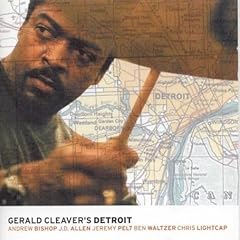
I just finished listening to your sophomore album Gerald Cleaver’s Detroit for the tenth time. I love the band’s work ethic and your leadership style. I especially like saxophonists Andrew Bishop and J.D. Allen. Bishop has been your running buddy for years, but where have you been hiding this Allen fellow. Man, he almost stole the show. He could’ve been easily mistaken as the session’s leader. I bet that would’ve upset you one bit. You never made a fuss about sharing the spotlight. Gerald I suspect you learned that from your dad John Cleaver. He's a no frills elegant drummer.

You’re not a showoff either. On the many albums you’ve graced, you seemed to have understood implicitly one of the drummer responsibilities is to do the band's dirty work. You’ve never through temper tantrums because you weren’t getting enough attention.

Backing vocalist Rene’ Marie and saxophonist Lotte Anker you were a gentleman. You never over powered them. You remind me of one of Blue Note Record’s great session drummer Joe Chambers. Gerald Cleaver’s Detroit is a love letter addressed to Detroit, your hometown. The guys you assembled share your blue collar work ethic. You gave each a chance to shine.

Trumpeter Jeremy Pelt and saxophonist J. D. Allen spoke their peace on Pilgrim’s Progress. Pianist Ben Waltzer and Andrew Bishop played tug-of-war on Grateful. And throughout bassist Chris Lightcap worked harder than a sharecropper. On Detroit (Keep It in Mind) the band engaged in a listenable collective improvisation. You all weren’t just in the studio making a lot of noise

Gerald I have to be straight with you, I liked this album more than your first, Adjust. I didn’t get what you tried to convey. It was too far out for my taste, but Gerald Cleaver’s Detroit I immediately fell head over heels for.

Friday, August 8, 2008

JUST PLAY

Trumpeter Rayse Biggs Bassist Ralph Armstrong tried damn hard to get the audience to buy into his comic shtick Thursday evening at the Music on the Plaza, a weekly concert series held on St. Clair Street in downtown Grosse Pointe, MI. As a sideman, Armstrong has worked with a bunch of prominent musicians such as saxophonist Eddie Harris, vocalist Aretha Franklin, soul crooner Curtis Mayfield, and pianist Herbie Hancock, just to list a few. For a number of years, Armstrong has been the workhorse in saxophonist James Carter’s quintet responsible for the bulk of the manual labor.

Thursday was the first time I experienced Armstrong as a bandleader. Watching him clown was tough because I genuinely admire him. He's a standout in a city top heavy with bass players. It's not uncommon, however, for a musician of Armstrong's caliber to have a bad night. Armstrong and his band faced a crowd that unfamiliar with his track record and who were obviously disinterested in his jokes. Most of the audience probably didn't have anything better to do, and felt it was too nice of a summer evening to waste at home watching sitcom reruns. Armstrong tried to perk up the crowd with some jokes when he should've just played.

Armstrong felt it necessary to prefaced each selection his quartet played with a corny joke. The jokes weren't remotely relevant to the compositions the band performed. For example, before they played Just Friends, the first song on their set list, Armstrong encouraged the crowd to continue to support the arts. Then he shamelessly quipped that if not for the arts instead of entertaining them he would probably be mugging them. The audience became so quite you could literally hear a cricket pissing on a piece of cotton.

He poke fun at the mayor of Detroit who the police arrested hours before Armstrong took the stage. I had an urge to heckled the bassist, but when the audience did not respond to his jokes, Armstrong and pianist Henry Gibson played a duet on Dear Old Stockholm. When they played the last note, I wanted to rush the stage and yell:"Yeah, Ralph that's what we came to hear!" Unfortunately, I never got the chance because the bassist told another lame joke about wanting to help the mayor pay his legal tab.

The bassist's jokes received a few chuckles. Overall, his shtick bombed. I mean really bombed. Most of the jokes were inappropriate. I wanted Armstrong to just play, but he stuck to his game plan.

Trumpeter Rayse Biggs clowned, too. On the Divorce Blues, Biggs played the trumpet and the flugelhorn simultaneously. The crowd went nuts. Then, for no apparent reason, the trumpeter literally started speaking in tongue. After biggs finished mumbling, I surveyed the audience for the their reactions. They looked outright confused.

I’ve experienced Armstrong at the top of his game on many occasions, and I think he’s a good reputable musician, but I can’t figure out why he behaved so foolishly.