Sunday, March 23, 2008

A MONKIN' GOOD TIME


Of the five albums in your Gerry Mulligan Meets… series, "Mulligan Meets Monk" is the one I can’t stop listening to. The others you cut with alto saxophonists Paul Desmond and Johnny Hodges; and tenor saxophonists Stan Getz, and Ben Webster are good, but you and Monk play like soul-mates.

I read biographer Jerome Klinkowitz’s take on “Mulligan Meets Monks” in his judgmental book about your career “Listen: Gerry Mulligan An Aural Narrative In Jazz”. Klinkowitz made it seem as if you were intimidated by Monk. I think he got it wrong. To me, you were Monk’s equal.

“Mulligan Meets Monk” could’ve easily been into Monks baby. The pianist was domineering-although I loved every Monk album I’ve listened to-I always felt Monk was self-indulgent. Save for the two albums on Riverside "Thelonious Monk Plays Duke Ellington" and "Unique Thelonious Monk," the pianist only covered his own compositions.

You had to be at your best to record with the pianist. In 1957, when you pitched this idea to Keepnews Monk was the rave. You demanded five of the six selections on the album be Monk’s classics. I admire the way you handled Monk’s creations. On his ballad “Sweet and Lovely” I thought at any moment the baritone would float out your hand. You played that softly. It didn’t even sound like you were playing such a huge horn. On “Straight No Chaser” and “I Mean You,” you swung your as off, proving you’re in Monk’s league.

After listening to you get down with Monk, I wanted to know more about your relationship with the pianist. I read you first jammed with Monk in 1954 after one of his gigs in Paris.
The chemistry you had with him shocked you. You could’ve jammed all night, but after hours listening to you and Monk riffin', blowin', and just puting your instruments through hell your wife intervened, telling you it was time to wrap it up.

Two years, later you’d launched the Mulligan Meets series with Desmond. But the recording with Monk was the one that got folks to take notice. That’s Klinkowitz version. I can’t speak for your fans but. Mulligan Meets Monk got me interested in the series.

Sunday, March 16, 2008

ON THE SET


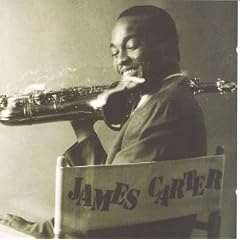
Fifteen years ago, I purchased your debut album JC On The Set at Car City Records. For the life of me, I can’t recall if I bought it new or used. After listening to you solo on Baby Girls Blues, Worried And Blue, and Blues For A Nomadic Princess, the best selections on the album, you became my favorite saxophonist.

The way you raced through the changes, and the nifty tricks you did on the tenor sax was unlike anything I had ever heard. The camaraderie you had with pianist Craig Taborn also grabbed me.

Taborn could perform the same tricks on piano you did on tenor and baritone. For example, on “Blues For A Nomadic Princess” you began softly. Then took your tenor on a wild ride, blewing like a madman. I thought your horn would explode. By the conclusion you had mellowed.

Then Taborn took over, touching the keys softly like a snow flake melting on cotton. Mid-way through his solo he became angry, pounding and hammering away like he was working out his aggression on the piano. I was so impress I wanted to sign up for piano lessons.

You’ve released 11 solid albums since your debut. I have every one of them. I’ve watched you mature. When you released JC On The Set you were a whippersnapper with an ocean of talent. You never wasted it. You became a world class bandleader, and a musical ambassador of Detroit. When you hit the big time you did not shunned Detroit. I admire your for that.

On your albums there are Detroit jazz musicians. Did you make a promise when you hit it big you would help your friends? Was it a promise your mentor saxophonist Donald Washington asked you to make when you were his most promising protégé in that boot camp called Bird/Trane/Sco/Now?

At some point, you should be commended for your commitment. Too many Detroit jazz musicians who made it thumbed their noses to Detroit. That’s shameful. Your parents deserve most of the credit for raising you to be upstanding.

Anyway, James your music has meant the world to me. I used to listen to your albums daily. No kidding. I wore out four copies of JC on the Set. Last week I listened to the album for the first time in a year. You and Taborn solo’s still excite me.


Sunday, March 2, 2008

HERBIE HANCOCK ON MY MIND


Herbie, I’m not writing this blog to apologize for the mean things I wrote about your performance at the 2007 Detroit International Jazz Festival. I meant every word. You have been on my mind lately. A few Saturdays ago, I got into a discussion with the founder of the Detroit Groove Society Andrew Rothman about your album “River the Joni Letters”.

Andrew is a real jazz aficionado. He host jazz concerts in the living-room of his Bloomfield Hills, MI home. You should look him up the next time you’re in Detroit. He’s a nice guy and he will talk your ears off about anything concerning jazz.

Andrew and I were standing in line at Baker’s Keyboard Lounge waiting to hear this new local jazz band called Sean Dobbins and the Modern Jazz Messengers. While we waited, Andrew asked what I thought about your album “River the Joni Letters” winning the coveted album of the year at the Grammys.

I told Andrew I hadn’t heard your album, and added I no longer thought of you as a jazz musician. I viewed you as a contemporary pop instrumentalist. I loved your work for Blue Note Records especially “Takin’ Off,” “My Point Of View,” and "Inventions and Dimensions". But I hated your Verve recordings “New Standards” and “1+1,” and your set at last year's Detroit jazz fest made my skin crawl.

But talking to Andrew made me want to buy "River". This afternoon I purchased it, and Herbie, an hour ago, I finished listening to it. I can’t say “River the Joni Letters” deserved the album of the year because I haven’t heard the other albums that were nominated. But, Man I really love this album.

Normally, I listen to an album over and over before I make any comments. “River” caught my senses right away. There isn’t a flaw on it. The best tracks are Court and Spark featuring Norah Jones, Edith and the Kingpin featuring Tina Turner, and The Jungle Line featuring Leonard Cohen. Herbie, your soloing on the four instrumental selections are exquisite. Herbie, Andrew also wondered if you winning would be good for jazz. I said absolutely not. Winning was an individual achievement only. Your market value would increase, but the industry wouldn’t rush to promote jazz, and major record companies such as Atlantic and Warner Brothers wouldn’t be anxious to resign the jazz musicians they downsized several years ago.

As I stated initially, I’m not apologizing for the mean things I've written about you. I just feel compelled to congratulate you on making a flawless album.

Friday, February 29, 2008

YOUNG AT HEART

Mr. Moody-Sorry to hear the folks at the Detroit Music Hall for the Performing Arts cancelled your gig celebrating the 50th anniversary of the prestigious Monterey Jazz Festival. Man, I was looking forward to meeting you. I guess it wasn’t meant to be. I hope you will visit Detroit before you retire. I enjoyed interviewing you last month. I know it was only a 20 minute chat via cell-phone. For what it’s worth, it was one of my favorites. The article I wrote was slated to run in the Metrotimes, a weekly newspaper in Detroit, a few days before your scheduled gig, but when my editor got wind the gig was cancelled, he had no other recourse but to kill the article. Needless to say, I was thoroughly disappointed because it’s easy to brag to my friend that I actually interviewed a jazz icon when I have printed evidence. Mr. Moody, getting my hopes up about an article I wrote being published and for whatever reasons it getting cancelled is the part of being a freelancer that I hate. Anyway, I didn’t want the article to go to waste, so I decided to post it on my blog page with this hip photo a found of you on the web. I hope to meet you in the near future.
--Charles L. Latimer


“This experience playing the Monterey jazz fest is better than when I played in it with Dizzy Gillespie in 1960 because I’m learning so much from these young guys I’m playing with. I tell Benny Green and Terrence Blanchard that every night,” says saxophonist James Moody, 82, when asked how leading a super band for the Monterey Jazz Festival 50th Anniversary tour compares to the first time he played the festival 48 years ago.

It’s a Saturday afternoon, Moody is sitting in a crowded tour bus in the parking-lot of a Cracker Barrel Restaurant in Alabama talking to me via cell-phone about bits and pieces of his career, life lessons he learned from his mom, and the splendid time he’s having touring.

Moody’s wife Linda and his band-mates are eating lunch, but Moody remains on the bus. He jokingly says he refuses to eat in any restaurant with cracker in the title.

The sax man -- who’s released such classics as Moody Mood for Love, “ James Moody and His Bop Men,” “Wail, Moody, Wail,” “Return from Overbrook,” Moody’s Mood for Blues,” and “Young at Heart”-- is touring with trumpeter Terrence Blanchard, pianist Benny Green, vocalist Nnenna Freelon, bass Derrick Hodge and drummer Kendrick Scott, celebrating the 50th anniversary of the prestigious Monterey Jazz Festival.

Moody is jovial and has a hunger to learn, emphasizing he’s always striving to improve. The saxophonist was born in Savannah, Georgia, but grew up in New Jersey.

“My mother always wanted to learn, learn, and I never went to school for music. I try to learn as much as I can because when you stop learning you are through, you know what I mean.”

Moody’s mom, Ruby, also introduced him to jazz. She favored music the big band music of Jimmie Lunceford and Count Basie. And she was an amateur pianist.
“Because of her my ears were educated, and I’m so thankful for that because if my mother was someone who liked Doo Wop, I would be singing that because you are what you listen to.”

Moody taught himself to play on a used tenor sax his uncle gave him. He played three years in the Air Force band. Then he joined trumpeter Dizzy Gillespie’s big band.

At the time, Gillespie’s band was loaded with would-be icons such as pianist Thelonious Monk, but Moody never felt intimidated or out of place. He stayed one year. In 1949, he recorded James Moody and His Bop Men, his first album.

Then he moved to Europe. There he recorded his first big hit “Moody Mood for Love”. Moody says the song is still popular.

“I still love doing it. I’m not doing it on the Monterey tour, but I do it with my quintet. When I do it now, I do a little rap thing at the end,” Moody says.

In 1963, Moody reunited with Dizzy Gillespie. He played off and on with the trumpeter for a decade before moving to Las Vegas. For seven year, Moody performed with the Hilton Orchestra backing Elvis Presley, Liberace, and Glen Campbell.

“I was playing my horn, but I wasn’t playing necessarily the music I wanted to play. But I was still learning, you know. It was a good lesson because I had to make a living, and I made a living for seven years doing that,” Moody says.

He returned to New York in 1981, picking up where he left off. He's been working exclusively as a jazz musician since. Moody made a slew of first rate jazz albums. In 1985 and 1990, he received Grammy nobs.
Moody’s last release was "Homage" four years ago. These days he tour eight months per year. Moody credits his longevity in the music biz to hanging with the younger players such as Blanchard and Green.

“That’s it man, if you hang around old people they be talking about this hurts and that hurts. I’m feeling okay. These younger musicians got the new stuff. So I’m trying to get some of that, man.”

Sunday, February 17, 2008

NEW MESSENGERS


Saturday night at Baker’s Keyboard Lounge drummer Sean Dobbins celebrated the release of “Blue Horizons,” his quintet’s debut album. For a year, Dobbins has led a tight knit band called Sean Dobbins and The Modern Jazz Messengers that features vibist Robert Pipho, pianist Steve Richko, bassist Marion Hayden, and saxophonist Dean Moore.

Dobbins never attempts to outright emulate the original Jazz Messengers, although his group play compositions that were part of the Messengers repertoire. Dobbins named his band after the Messengers to pay homage to the late drummer Art Blakey, Dobbin's chief musical influence.

If Blakey were alive, and had attended The Modern Jazz Messengers’ performance Saturday night, he would’ve enjoyed every moment especially, how Pipho and Richko worked “Sky Dive,” “Bolivia,” and “Lester Left Town”. Pipho and Richko had the crowd transfixed. Pipho played notes faster than cars rolling off an assemble line. Richko woke up the blues monster in his piano on an impromptu belly rubbing blue number the group performed.

Dobbins joined the fray on Charlie Parker's "Donna Lee". Dobbins put his drum kit through a Taebo style workout, and the capacity crowd when nuts. At times, Dobbins can be a show-boater, but as a band leader the guy is charismatic and self-less. Saturday night, he had the crowd wrapped around his drumsticks, and instead of giving in to his proclivity to hog the spotlight Dobbins share it with his band-mates.

Sunday, February 10, 2008

SOUL BLOWIN'

Last week, Lockjaw, I listened exclusively to The Eddie “Lockjaw” Davis Cookbook Volumes 1 and 2, and Smokin’, three classic albums you cut back to back in 1958 with organist Shirley Scott. You had a voluptuous tone. The notes you played seemed to come from the basement of your soul. I'll label what you did on those classics "soul-blowing". Is that an appropriate characterization? If asked to take the blindfold test jazz historian Leonard Feather started in Down Beat magazine, I could identify your sound from a crowd of tenor saxophonists. Your voice was that distinct.

That voluptuous tone and Scott’s gracefulness made for the prefect union. On the blues ballad “In The Kitchen,” I felt like I was peeping through the keyhole of your souls. You guys were musical soul-mates, indeed.

Is it true you fell for Scott’s immediately after hearing her perform at a little dive in Philly her hometown ? She impressed you with the support she gave her band-mates. When they stumbled, Scott guided them back on course.

Growing up in big bands led by such greats as Count Basie and Andy Kirk, you valued that kind of self-less attitude. That night you asked Scott to join your band. Did she accept right away? Did you have to get permission from her folks?

I bet a lot of jazz fans were upset when you guys split. Why did you and Scott quit making music together? Had the relationship run its course? Did Scott want to be a leader? When you decided to quit playing and became a booking agent, did Scott want you to reconsider? I understand for whatever reasons relationships change and people want to pursue other dreams. You and Scott moved on.

You made classics tenor sax battle albums with Johnny Griffin such as The Tenor Scene, Pisces, and Live at Minton’s. Those battles were brutal. How were you guys able to stay friends after blowing each other to bits on the bandstand?

Scott started her solo career in 1958, and made 42 albums including Queen of the Organ and Blue Seven. I hope before you split with Scott you told her what she meant to your band, and that she made those Prestige albums, especially Eddie “Lockjaw” Davis Cookbook Volume 1 gems.

Sunday, February 3, 2008

VAL MADE ME BELIEVE


I’m asked often, Ms. Wilmer, to name the jazz journalist who influenced me. I always answer Valerie Wilmer. I read your book Jazz People religiously. Your sentences were music, and it revealed you cultivated a she’s-one-of-the-fellows trust with the musicians you interviewed.

As an admirer of you work, I’m ashamed to admit I’m not familiar with every inch of your life as I should be. I do know, however, you’re from England, you interviewed your first jazz musician, Herbie Lovelle, at 18, you’re an accomplished jazz photographer, and you also wrote As Serious As your Life, and Mama Said There’d Be Days Like This.

Last Thursday, I took the first step toward learning more about what made you tick as a jazz journalist. I ordered a copy of Mama Said There’d Be Days Like This. The book should arrive by the end of the month. I hope there’s a chapter or two about how you got the musicians to talk candidly.

Reading Jazz People--particularly the chapters on alto saxophonist Jackie McLean, drummer Billy Higgins, tenor saxophonist Eddie “Lockjaw” Davis, and vocalist Babs Gonzales—I felt as if they were sitting across from me at a neighborhood bar discussing their lives. Ms. Wilmer, you never came across as a critic or judgmental. You let the musicians explain themselves.

Billy Higgins described his style of playing as making love to the drums instead of attacking them. Ms. Wilmer you explored other angles, too. For example, you chartered Eddie “Lockjaw” Davis',” tenure as a booking agent. I bet most of his fans didn’t know he quit blowing to work as a booking agent.

You set the record straight in the chapter about alto saxophonist Jackie McLean's relationship with Charlie Parker. I got the impression McLean was never really aware he was copying Bird.

Ms. Wilmer, it saddens me you're not as popular among jazz enthusiasts as your peers Martin Williams, Amiri Baraka, Francis Davis, Nate Hentoff, AB Spellman, Gary Giddins, and Whitney Balliett. You were just as knowledgeable. I read there books and articles. Save for Balliett, they seem to only have a peripheral connection to the musicians they wrote about. The musicians you befriended valued you like a brother cherishes and respected his sister. For what it’s worth, you’re the one jazz writer who made me believe being a jazz journalist is a worthwhile occupation.