Friday, January 28, 2011

PASSING THE HAT


This is your sixth album. That’s a big deal given you’re still a teenager. I wonder if that’s a world record. I’ll have to investigate that. “Man with the Hat” is a solid addition to your growing discography , and I was taken by the album after the first listen. I’ve played it many times since. It says volumes about your talent that legendary saxophonist Phil Woods decided to co-lead this project, and the great pianist Monty Alexander participated as well.

Grace, you are a superb alto saxophonist and singer. You’re going to be a great jazz musician someday after you’ve had more life experiences. Right now, you have all the technical know how, but you’re still some years away from telling stories on your instrument. That will come with age and life experience. Some people familiar with your work have labeled you a musical prodigy. That’s false.

Such a label implies playing comes easily. Apparently, you've invested a lot of time listening to great alto saxophonists. Listening to “Man with the Hat”, I could tell you spent time honing and polishing your chops. I doubt if alto saxophonists Lee Konitz, who appeared on your fourth recording "Gracefullee" and Woods would’ve bothered with you if they didn’t believe you’re a dedicated musician.

Honestly, Grace, I’ve never been a big fan of Woods, especially after I read when Charlie Parker died Woods assumed his life. Woods inherited Parker's wife, his horn, and his sound. Chan Parker, who was married to Parker and Woods, wrote about it in her autobiography “My Life in E Flat”. That was a long time ago, and undoubtedly Woods has distinguished himself, and on this recording his chops are still in mint condition.

It was the grown folk’s material on “Man with the Hat” that held my attention “People Time”, “Ballad for Very Tired and Very Sad Lotus-Eater” and “Gone”. You delivered those songs with feeling, and you could’ve been easily mistaken for someone years older. You have a delicate singing voice.

On the up-tempo numbers, I had a hard time distinguishing between you and Woods. I mean that as a compliment. The standouts on “Man with the Hat” are “Gone” and your duet with bassist Evan Gregor on “Every Time We Say Goodbye” That was a nice moment, and it demonstrated the depth of your technical know how.

Tuesday, January 25, 2011

BLOWING SESSION


"Where’ve you been, man”?” I asked my friend Cory the barber. In the background, I heard saxophonist Cliff Jordan’s album “Cliff Craft” playing. This was the first time I talked to Cory since Christmas. I called to find out if he was okay.
“I’ve been dealing with some stuff. Be bop’s mother got a new job in Atlanta, which starts next month, and she planning to uproot my daughter.
“Atlanta is not a bad place to start over, and I hear they have a pretty good public school system.”
“Be bop, is all that I got in the world, man. I’m not going to allow her mom to take her away. I fought too hard to get partial custody“.
“I remember what you went through. I know you don’t want to relive that.”
“I’ll fight to keep my daughter here,” Cory said.
“You have to think about what’s best for her”.
“That’s easy for you to say. You don’t have kids”.
“That’s true but…”
“Look man, you didn’t call to hear me bitching and moaning about my personal problems”.
“You can’t keep that kind of stuff all bottled up inside you, man. It will drive you nuts”.
“I hear you. Change the subject. What have you been listening to”?
“All kinds of good stuff. Some of James Carter’s earlier recordings, the new album by the Yellow Jackets, and a date co-led by Phil Woods and Grace Kelly, a young alto saxophonist. She’s pretty good to only be 18-year-old”.
“Didn’t she make her first album when she was 12-year-old”?
“I believe so, but don’t quote me on it”. Her playing is still remedial. She’s a really good singer. She worth following. By the time, she hits her thirties, she’s going to be a household name. Is that Cliff Jordan you’re playing”?
“Yeah. I’ve been listening to it for a few days”.
“I’ve also been listening to Johnny Griffin’s album ‘A Blowing Session’ that I picked up at Borders.
“I have that album. The sidemen are Art Blakey, Wynton Kelly, Lee Morgan, John Coltrane and Hank Mobley.”
“That right”.
“But I thought given the talent pool on the album would’ve been more powerful like a cutting contest”.
“Now that I think about it the album wasn’t really a powerhouse”.
“Maybe because all the guys save for Art Blakey were still wet behind the ears at the time. They were outstanding players, but neither had really cemented their reputations. Coltrane was on the cusp, and Morgan was still sort of honing his sound”
“The album was still worthwhile. I think although it was pretty straight forward”.
“The albums Griffin made with Eddie “Lockjaw” Davis was better”.
“Those two cats were blowing their butts off, man.”
“That’s the kind of energy missing from ‘A Blowing Session’. Hold on for a second I have another call coming through.
The cell phones went dead. A few minutes later Cory came back online.
“It’s my daughter on the other line. I have to call you back later. I really need to talk to her. It was good talking to you. I was in the dumps, but I feel much better now”.

Wednesday, December 29, 2010

TOP 10


I Dig Jazz top ten jazz albums of 2010.

1.) Geri Allen, Geri Allen and Time Line Live (Motema)
Throwing a tap dancer into the rhythm sections, Allen proves she's not afraid to take big risk. Allen did not mind that the tap dance stole the show.

2.) Tia Fuller, Decisive Steps, (Mack Avenue Records)
Fuller’s break out album that announced to the jazz world that Fuller is a clever and formidable saxophonist.

3.) The Clayton Brothers, The Same Old Song and Dance (Artist Share)
The Clayton's are the first family of jazz. I'd take them over the Marsalis clan any day. This album is a straight up swing fest from start to finish.

4.) Azar Lawrence, Mystic Journey (Furthermore Records)
Often, compared to the great John Coltrane. This spiritually driven jazz album shows Lawrence is his own man.

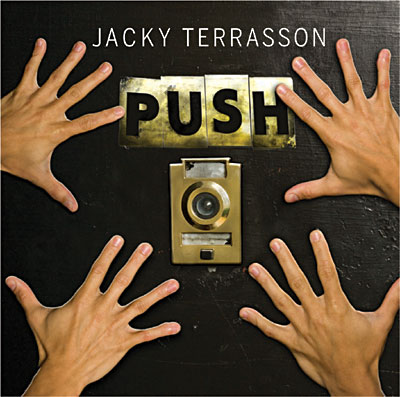
5.) Jacky Terrasson, Push (Concord Jazz)
The best rendition of Thelonius Monk's Ruby My Dear and 'Round Midnight I've ever heard. Terrason has been unsung for too long.

6.) Marc Cary, Focus Trio Live 2009 (Motema)
I can't say for sure civil rights advocates Martin Luther King Jr. and Malcolm X were jazz fans, but I bet they would've loved how Cary improvised around excerpts of their speeches. Cary is the most creative jazz pianist to every sit at a piano.

7.) The Asian American Orchestra, India & Africa: A Tribute to John Coltrane Live @ Yoshi (Water Baby Records)
This is best Coltrane tribute album since saxophonist Archie Shepps Four Trane. The AAO put their twist on some latter day Coltrane classics.

8.) Milton Suggs, Things to Come (Skiptone Music)
Suggs is the kind of jazz vocalist you would get if you mixed Johnny Hartman's and Kevin Mahogany's DNA. Suggs version of We Shall Overcome and Lift Every Voice and Sing made my pitbull cry.

9.) James Moody, Moody 4B (IPO Recordings, Inc.)
My sentimental favorite. The recently departed saxophonist was a blue-collar jazz musician who knew how to make good down home swing.

10.) Benito Gonzalez, Circles (Furthermore Records)
A percussive pianist in the tradition of McCoy Tyner. This is album is a bombshell. Then again, it’s impossible to blew it with a supporting cast of Ron Blake, Myron Walden, Azar Lawrence, Christian McBride, and Jeff -“Tain” Watts.

Saturday, December 11, 2010

SKILLED TRADESMAN AT HEART

Tenor saxophonist James Moody (1925-2010)
"James Moody is dead,” my friend Cory the barber announced. Then he paused. In the background, I heard James Moody’s last album Moody 4B playing. The tenor saxophonist wailed away on Billy Stayhorn’s Take the A Train. The great pianist Kenny Barron hounded Moody like an ornery supervisor. The news Moody died from pancreatic cancer upset Cory. He considered Moody a fine jazz musicians who never surrendered to any jazz fads. Moody deserved the accolades he received four Grammy nominations, Medal of Honor for Music, and countless other recognitions. The horn-smith always made superb jazz music. He played meaty and meaningful solos. He never resorted to purposeless flights of improvisation. The guy was too darn classy for that. Such behavior was for rank and file amateurs starved for attention. Moody was a skilled tradesman at heart. He developed his chops in the Dizzy Gillespie big band along side future stars Thelonious Monk, Kenny Clark, and Milt Jackson. 
“My editor informed me yesterday,” I said,
“I hate I missed his set at the Dirty Dog last year.
“I interviewed him a week before. At, 85, he still toured over 200 days a year,” I said.
“The man loved his job.”
“You got that right”.
“The music he made will live forever.”
“That's for sure.”
“How many times did you interview him”?
” Twice”.
“I heard he was funny.”
“The first time I interviewed him he was touring with pianist Benny Green, and vocalist Nneena Freelon. I forgot who the other band members were. Anyway, when I talked to Moody they were on a tour bus. They stopped at Cracker Barrel restaurant to eat. Moody stayed on the bus. He refused to patronize a restaurant with the word cracker in the name, he said. I laughed, but the man was dead serious. It dawned on me Moody came of age when bigotry and racism was overt. The second time I interviewed him we talked about his music, his bout with alcoholism, and his opus Moody’s Mood for Love. When the song exploded, Moody lived in Europe. Jazz vocalist Babs Gonzales begged Moody to come home to take advantage of the song’s success. I played At the Jazz Workshop, an album he made in 1959, while I interviewed him. Moody asked who was playing the flute. He was surprised when I said It was him.
“You couldn’t expect him to remember every solo,” Cory said. He yelled to his daughter, Be bop, to get her things ready. Her mom was coming to pick her up.
“How's Be bop dealing with his death”?
“She’s been playing his albums Wail Moody Wail, Moody’s Mood for Blues, and Homage for the past two days,” Cory said.
“I was sad at first. Then I realized Moody had a great life. He spent decades traveling the world playing music he loved. Eighty-five years, is a long life. I can only hope I live that long,” I said.

Saturday, December 4, 2010

BRUTE'S GENTLE SIDE

Tenor saxophonist Ben Webster
Today, Mr. Webster, I found a copy of Jazz Masters of the 30’s by jazz trumpeter Rex Stewart. I purchased the book a few years ago at Street Corner Music, and I just got around to reading it this afternoon. The book is different from other books about noted jazz musicians written by jazz critics, historians, and journalists. However, Jazz Masters of the 30's was Stewart's personal account of his relationship with many jazz greats such as Coleman Hawkins, Fletcher Henderson, Duke Ellington and Sidney Catlett. Stewart revealed things about them only an astute insider would know. Many of the articles in “Jazz Masters of the 30’s” Down Beat magazine published. A fine jazz journalist Stewart proved to be.

As I write this, Mr. Webster, I am listening to an album you made with Coleman Hawkins for Verve Records in 1957 Coleman Hawkins Encounters Ben Webster. Do you remember that recording? The great Norman Granz produced the album, and he hired an all star rhythm section Oscar Peterson, Ray Brown, Herb Ellis and Alvin Stolier. You all kicked off the recording with Blues for Yolande and followed up with the ballad It Never Entered My Mind. You and Hawkins took turns seducing the melody. Do any of those details jog your memory? You made a ton of fine albums, so it would be foolish of me to believe you would remember all of them.

Anyway, Stewart also wrote a piece about Hawkins, which I disliked. Stewart implied the saxophonist was aloof and pompous. Stewart recounted this scene where Lester Young and Billie Holiday played a set at a dive in Harlem. Hawkins showed up and cut in. After the set ended, the crowd cheered, and Lady Day told them it was her pleasure to play with the greatest tenor saxophonist of all times Lester Young. The club was so quiet you could hear a fruit fly belch, after Lady Day made that statement.

Mr. Webster, Jazz Masters of the 30’s was a little gossipy. Stewart shared his colleague’s idiosyncrasies. In The Days with Duke, an essay about Duke Ellington. Stewart said Ellington was a clothes horse, and superstitious. If a button was loose on his coat or his blazer, Ellington would immediately discard it. Some members of the orchestra took advantage of Ellington’s superstition. For instance, if Ellington wore a coat they liked, after he took it off, they would deliberately loosen a button, knowing Ellington would give it away. Stewart did not say which members tricked Ellington.

I particularly, enjoyed the account of his relationship with you. In the articled Frog and Me, Stewart exposed your soft side. According to jazz lore, you had a quick temper. I heard you threw a woman out a window. I cannot remember where I read or heard that, but I figured it was a lie. Stewart acknowledged you were temperamental at times. However, you were equally generous, too.

Stewart revealed things about you I bet most people are unaware of. Mr. Webster, did you really save fellow tenor saxophonist Lester Young from drowning? Stewart explained Young was swimming in a river his hamstring cramped. You rescued him. Stewart also detailed how you stopped a woman from committing suicide. Friends down on their luck could rely on you. Stewart wrote you were a pool shark as well, and you avoided cutting contests. You believed they were frivolous. Showing up a rival seemed beneath you.

You were sort of a novelist on the tenor saxophone. I loved the ballads you immortalized Where Are You, When I Fall in Love, In the Wee Small Hours of the Morning and You’re Getting to Be a Habit with Me. You played each ballad at what Wynton Marsalis dubbed grown folk’s tempo. I enjoyed Frog and Me the most because Stewart exposed your gentle side.

Tuesday, November 30, 2010

TALKING MILES

Miles Davis
"I’ve been in a Miles Davis frame of mind lately,” my friend Cory said passing me a cold Heineken. He picked up the slim infrared remote control for his Bose Wave Music System to adjust the volume. Then he flopped down on his chocolate leather Troy sofa from Crate and Barrel. Cory played Davis’ jazz fusion opus Or the Corner. I stopped by his place. I wanted him to check out the new jazz albums Moonlight by saxophonist Steve Cole and Opus One by saxophonist Shauli Einav. Cole is a smooth jazz bigwig, and Einav is an Israeli saxophonist. I liked both projects.
“I’ve been listening to some of the albums Miles recorded for Prestige,” I said taking a swig of the beer. I placed the bottle on a coaster on Cory’s glass coffee table.
“Did you see the Stanley Crouch and Mtume debate”?
“I saw it on YouTube last week. It was a good discussion.
“It’s been years since I listened to On the Corner,” Cory said.
“Mtume made some valid points. But I have to side with Stanley.”
“You believe Miles was a sellout”?
“He was all about staying current.”
“What’s wrong with that,” Cory asked.
“Rock-n-roll was popular back then, and Miles found away to capitalize on it.” I took another swig. Cory cellular phone vibrated on the coffee table. He picked it up, looked at the LD screen and put the phone down.
“I’m on Mtume side. Miles pushed musical boundaries, and the jazz fusion thing was innovative.”
“I agree with Stanley. Jazz fusion was a fad. None of those bands are around,” I said.
“Even if those bands were still around and selling records, Stanley would still knock the music. Honestly, I can’t stand that guy. He always plays the devil’s advocate. Miles was all about change.”
“Miles was about following trends. When the hip-hop thing started to gain momentum Miles jumped on that bandwagon. He made a hip-hop album. It was really ridiculous. I forgot the name of it.”
“doo-bop".
“That’s it?
“What’s wrong with him mixing things up”?
“A 60-year-old jazz icon playing hip hop, in my book, was ridiculous,” I said finishing the beer. Cory offered another. I declined.
“Mile had the right to play whatever music he wanted,” Cory said.
“Stanley pointed out that Clive Davis told Miles he needed to up his game because his records were doing poorly. That’s when Miles traded in his Brooks Brothers clothing and started wearing those outlandish rock-n-roll outfits. Miles changed because his record company pressured him to.”
“Mtume said he had many private discussions with Miles about jazz fusion. Miles simply wanted to come up with something new.”
Cory’ cell-phone vibrated again. This time he answered it. It was his daughter, Be bop. Cory grabbed my empty beer bottle, and walked into the kitchen. I heard him tell Be bop I was visiting. Then he asked when she needed to pick her up from Oakland Mall. Several minutes later, Cory asked if I wanted to ride with him. We could finish our discussion, and listen to Cole and Einav me album in the car.

Thursday, November 25, 2010

SOFT JAZZ

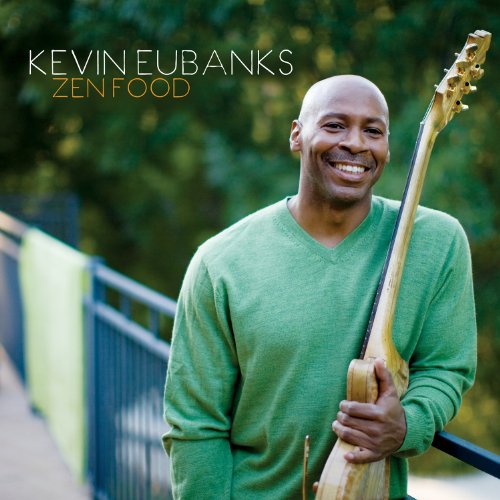
For a Wednesday afternoon, 100% Barbershop was unusually crowded. Three customers waited on Cory the barber. Dana worked on his tenth head. Kenneth, the new staff barber, swept up hair around his barber’s chair into a black dustpan. Two customers played dominoes waiting for Wes. He'd gone to lunch minutes before they arrived. Be bop, Cory’s 12-year-old daughter set in KB’s, the shop owner, workstation reading the liner notes to guitarist Kevin Eubanks new album Zen Food. KB watched NBA highlights on Sport Center on the flat screen television mounted to the wall by the shoes shine booth. I spoke to Be bop. Then I removed my black leather bomber jacket. I stuffed my wool pageboy cap into the right jacket pocket, and I hung it on the coat rack. After KB and I shook hands, I flopped down in the barber chair. He wrapped a black cape that had a pair of gold scissors embroidered on it around my neck, and pumped up the chair with his left foot. I instructed him to trim down my hair. Then I asked Be bop if she liked Eubanks’ new album.
“He’s cute,” Be bop said.
“You bought the album because he’s cute”?
“Dad gave it to me.”
“Does he like the album”?
“Dad said the music sounds like the soundtrack for a cartoon series,” Be Bop said.
“He can be hard on musicians he dislike,” I said. I heard KB turn on his clippers.
“Dad likes Mr. Eubanks other albums. Dad just hates this one. I told dad he should give it another chance because there’re some really good songs s on the album like The Dirty Monk Café, Adoration and G.G,” Be bop said. She passed me the cd case.
“It’s a good album.”
“Dad said all those years Mr. Eubanks spent playing on the Tonight Show made him soft”.
“I disagree with that.”
“I do, too.”
“The kind of soft jazz he plays is pretty good.”
“That’s a good name for it, soft jazz”.
“What do you like about Zen Food”?
“Besides Mr. Eubanks being really cute, each song made me feel different. On the last track Das It, Mr. Eubanks sounded like he was playing with four hands instead of two, and the way he horsed around with drummer Marvin “Smitty” Smith like kids after school was cool. The other thing is Mr. Eubanks on fast tempo songs plays a lot of notes like a rock guitar player. That was cool, too. He’s not a slave to conventional jazz licks. He can excite you and make you sad in the same breath. Naming the album Zen Food, I thought it was going to be really weird and deep like the kind of avant-garde junk my dad has been listening to lately where the musicians almost sound like they don’t know how to play their instruments. But Mr. Eubanks’ album is really understandable and really fun to listen too,” Inez said.
KB said Be bop was destine to be a music critic one of these days. I countered that she was already a music critic. Cory the barber walked into KB’s workstation.
“Bop, are these unsophisticated old farts bothering you,” Cory asked his daughter after he shook my hand.
“Bop can handle herself. She’s back here schooling us about music,” KB said.
Cory told Be bop he had one more customer. Then he’d take her to get something to eat if she was hungry. Bop said she’d wait because she was having fun schooling us.