Sunday, January 20, 2008

PEPPER GOT IT IN HIS SOUL

Is it a coincidence, Mr. Adams, all last week I listened to Pepper Adams Plays Charlie Mingus, Lee Morgan’s The Cooker, read a chapter in Al Young’s memoirs Body and Soul about hearing you at the World Stage in Detroit in 1955, and now I’m having a conversation with you at my favorite neighborhood record store Car City Records on Sunday? I discovered years ago, Sunday is the best day to shop here. It’s not crowded. Mr. Adams, I don’t make it a habit of approaching folks in public places, but it’s rare I encounter a hometown music legend.

I'm surprised you’re not combining through the jazz bins. I would’ve never thought you like R&B music, particularly John Legend. Are you thinking about buying Kenny “Baby face” Edmond’s greatest hits album, too? You should cop it. Edmond is an amazing songwriter.

I know you don’t have a lot of time to chat with me. I have to tell you how “Pepper Adams Plays Charlie Mingus” really captured how multi-faceted the bassist was. The Detroiters Hank and Thad Jones, Charles McPherson, and Paul Chambers helped you show Mingus was a swinger, a blues shouter, and a political activist in his own right.

Mingus helped you select the compositions for the date. Is that true? I heard the bassist was a stickler, and quick to chastise. What kind of relationship did you have with him? Did he ever single you out? Nicknamed “ the knife,” and being a Detroiter probably made Mingus think twice about bullying you. I heard the bassist had a love hate relationship with Detroit cats. A jazz friend told me Mingus said Detroiters were too heavily into bebop.

On I0 to 4 at the Five Spot, The Pepper Adams Quintet, and Encounter should prove you couldn’t be typecast as a Detroit bebopper. On Lee Morgan album The Cooker you stole the show. Allegedly you cut Coltrane to pieces on Dakar, an album released by Prestige Record considered a classic blowing session. You had something extra special. With that piercing, deep tone on the baritone sax, you cut everybody who challenged you. I bet that’s why bandleaders such as Mel Lewis, Benny Goodman, and Lee Morgan wanted you by their sides.

Mr. Adams, I respect your loyalty to other Detroit jazz musicians. On most of your albums you hired Detroiters. Some were your running buddies from the World Stage and the Bluebird Inn. You could have employed musicians from other cities, but you reached back. Detroit jazz musicians have an unbreakable fraternal loyalty.

Listening to “Pepper Adams Plays Mingus,” I imagined Mingus was sitting in the studio with his hand on his belly, his eyes closed, soaking up the music. You were cooking because throughout the session Mingus was patting his feet. Mingus got the holy spirit when you soloed on “Better Get It In Your Soul”. Okay, so it really didn’t happen that way. Remember, Mr. Adams, I’m just fantasizing.

I bet Mingus was happy with the outcome. I know I’ve talked you ear off. You probably want to get home and listening to that John Legend and Babyface album.

Sunday, January 6, 2008

THE GIGS

Drummer Thadduex Dixon

Last week, I posted my five favorite jazz albums (which included new releases and re-issues) I purchased in 2007. I wanted to list 50, but my dear buddy William, a certified jazz guru, encouraged me to reduce the list. Shaving it down to five, he said, required careful consideration. I chose the five albums I played over and over. Surprisingly, William did not criticize my list. Days after he read it, he asked me for the five best jazz gigs I attended last year. Choosing five albums was tough because I bought a bunch of wonderful albums. I decided to simplify the process this time. I chose the gigs that I still think about.

1.) George Davidson Drum Summit
(Bert’s Marketplace)

This was the last jazz concert I attended in 2007. Master drummer George Davidson-who I first heard in 1997 playing with the late pianist Teddy Harris at the Wednesday night jam session at Baker’s Keyboard Lounge-assembled four of the finest Detroit based drummers, Bert Myrick, Sean Dobbins, Bill Higgins, and Spider Webb( that’s not a pseudonym) and let them slug it out. When the smoke settled the drummers were slumped over their drum kits, and the capacity crowd was hurry for more blood.

2.) The Second Annual Festival of Jazz and Improvised Music??
(The Bohemian National Home)

Hey Joel, I have to be honest with you. I didn’t think it was musically possible to put together a music fest and there not be one bad performance. You made it work, man.

3.) The James Carter Quintet
(The Detroit Institute of the Arts)

On this night saxophonist James Carter horns were full of special effects. There’s never an uninteresting moment at Carter’s live performances. The saxophonist shows a lot of love to Detroit jazz musicians, too. He likes working with his hometown colleagues. At the DIA gig, Carter was flanked by two of Detroit's finest bassist Ralph Armstrong and trumpeter Dwight Adams.

4.) The Thaddeus Dixon Quartet
(Baker’s Keyboard Lounge)

The 23-year-old drummer was bassist Rodney Whitaker’s protege’. Rodney, you did a great job raising this kid. As a bandleader, Dixon is not a ball-hog. He proved it by sharing the spotlight with his band-mates pianist Mike Jellick, bassist Ben Williams, and saxophonist Diego Rivera. These young musicians are Detroit’ next generation of swingers.

5.) Yusef Lateef
(Ford Detroit International Jazz Festival)

At 82, Lateef showed no visible indications his chops have rusted. When he played the blues my ears were glued to his horn from start to finish.

Tuesday, January 1, 2008

HARMOLODICALLY YOURS,


Mr. Coleman, did you like The Outsider, the article music journalist Scott Spencer wrote about your life in the December issue of Rolling Stone magazine? Spencer explained how you kept blowing despite the ugly things critics, club owners, and some of your peers said about your music. The article made me reminisce about who introduced me to your music. In 2004, I asked my buddy William, a red blooded jazz aficionado, questions about free-jazz. William suggested I check you out. Then he gave me a copy of Four Lives in the Be Bop Business by jazz historian A.B. Spellman. I learned a lot about you reading that book.

You grew up in Forth Worth, Texas. Rosa Coleman, your mom, encouraged you to play music. Flutist Prince Lasha and drummer Charlie Moffett were your childhood running buddies. Your high school music teacher booted you out the school’s band. He caught you teaching your band-mates jazz licks. I bet the music teacher never thought you would make over 50 albums, win a Pulitzer Prize, and receive the prestigious "genius grant" from the MacArthur Foundation.

Mr. Coleman, you never lost faith. I admire that. You had plenty of reasons to quit. I heard about the incident in Baton Rough, Louisiana when you worked in Clarence Samuel's rhythm and blues band. Angry patrons mangled your horn, and pummeled you because they hated your playing. After that incident, I would have changed careers. You kept blowing. Level with me, did you ever contemplate quitting?

“The Outsider” inspired me to re-listened to Something Else!!!, Tomorrow Is the Question, The Ornette Coleman Trio at the Golden Circle Stockholm Volume One, Change of the Century, New York Is Now, and Free Jazz a Collection of Improvisation. I had an issue with the latter. The playing was jumbled. Were you certain people would understand it? I asked my buddy, William, the same question, and he explained how you guys were feeding off each other.
Something Else!!! your first album for Contemporary Records is the album I listened to over and over when I finished Spencer's article. Mr. Coleman, Something Else!!! sparked a heated exchange between William and me. I told William Contemporary should have marketed it as a Be bop album. On the tunes Chippie and Invisible, for example, you played as if Charlie Parker was at the session coaching you, and throughout the recording Don Cherry sounded like Dizzy Gillespie. William disagreed.

“To you Something Else!!! sounds like Be bop because you're experiencing it 50 years after Coleman made it,” William said.

“I don’t follow you.”

“If you were listening to it, for example, in ‘58 when Coleman made the album you would hear it differently, and appreciate what he was doing. He took what was essentially Be bop and reshaped it by doing something different with a song’s harmony and melody.” He called it harmoldic. Coleman didn’t want to be a slave to the conventional way chords were played. That’s how he approached things.

“Be bop is Be bop no matter what you call it or how you approach it, right?”

“No, because it sounds that way to you don’t mean that’s what he was playing. Coleman had essentially figured out a new way to improvise…”

“…That’s clear as day on Change of the Century and Tomorrow Is the Question. But Something Else is a Be Bop album. I'll go to my grave believing that."
"Chances are you'll be the only stiff there who believes Coleman was playing Be Bop. Your mind is made up. I don’t see the point in continuing this conversation.”

Mr. Coleman am I absolutely nuts for believing Something Else!!! wasn't a free-jazz album? I trust my ears.
I started by asking if you liked Scott Spencer’s article. But I ended up questioning you about a recording you made nearly 50 years ago. I hope I haven't offended you. Mr. Coleman “The Outsider” was a thoroughly written article that captured what you had to endure to become a music icon, and it got me excited about your music again.

Monday, December 24, 2007

TAKE FIVE


Recently, my friend William, who gets really excited when music magazines publish their best-of-the-year-album-lists, asked me for my five favorite jazz albums I purchased in 2007. William said to include new releases as well as re-issues. His request was unusual because most music rags normally list at least 50 to 100 albums they deemed their best.

Why five I asked? Listing 50 to 100 would be too easy. Narrowing down the many jazz finds I purchased required thorough consideration, William said. Fair enough. I enjoyed the challenge although I wondered if William would think I'm nuts because Booker Ervin's "Exultation," Frank Strozier's "Cool, Calm, and Collected," and Steve Lacy's "The Straight Horn of Steve Lacy," re-issues I scored this year, didn't make the cut. I expect William to contact me soon. Finally, after thorough consideration, I selected the five jazz albums I listened to over an over.

1. David Murray
Scared Ground-Justin Time

Wow! This is the saxophonist 220th album. That has to be a world record. "Scared Ground" is a lean album. Murray and pianist Lafayette Gilchrist soloing on “Family Reunion” is still dancing in my ears. And vocalist Cassandra Wilson was the prefect fit for those eerie songs written by poet Ishmael Reed.

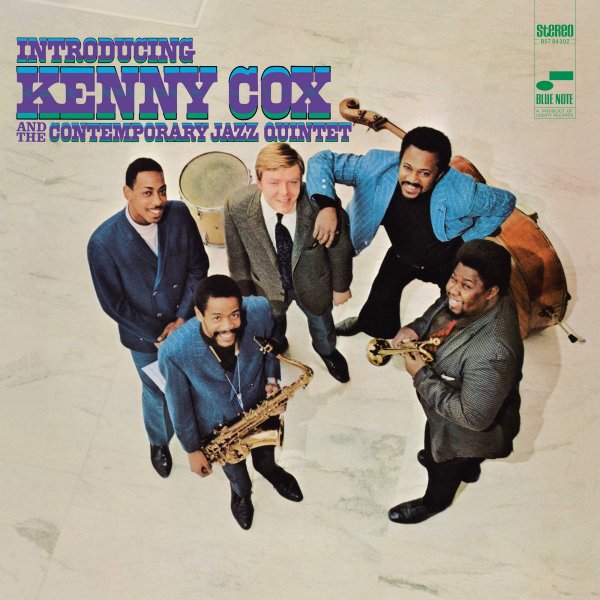
2. Kenny Cox
Introducing Kenny Cox and the Contemporary Jazz Quintet-Blue Note

Two classic Detroit jazz albums (Kenny Cox and the Contemporary Jazz Quintet and Multidirection) recorded in 1968 and 1969 re-issued on one disc. Pianist Kenny Cox, bassist Ron Brooks, saxophonist Leon Henderson, drummer Danny Spencer, and trumpeter Charles Moore did what’s expected from Detroit jazz pros. They sung from start to finish.

3. Red Garland
Red Alone-Prestige/Moodville

Recorded in the spring of 1960, Garland was in his element on this solo album, playing mostly standard love songs. This album feels like a love letter.

4. Ron Carter
Dear Miles-Blue Note

Bassist Ron Carter, pianist Stephen Scott, drummer Payton Crossley, and percussionist Roger Squitero reworked “My Funny Valentine,” “Seven Steps to Heaven,” “Someday My Prince Will Come” and “Bye Bye Blackbird,” songs Davis turned into classics. The quartet made the standards sound brand new.

5. Lafayette Gilchrist
Lafayette Gilchrist3-Hyena

The Baltimore native fingers speed across the piano keys a la the late jazz pianist Don Pullen. Gilchrist is not your run-of-the-mill jazz pianist. The pianist brings his musical influences to the table. On this trio album, Gilchrist serves up a hearty portion of jazz mixed with Go Go and Hip Hop.

Sunday, December 16, 2007

THE COOLEST

Have a seat Frank. Welcome to my blog. I’ve wanted to chat with you every since I listened to “Cool, Calm and Collected, the album you recorded in Chicago 47 years ago. Before I question you about the music on that recording, let me take your coat. Make yourself comfortable. Let me get those Sonny Criss albums out of the way. I was listening to them last night. You guys sound so much alike. We can rap about that later.

In July, a dear friend introduced me to your music. We were browsing through the jazz bins at Street Corner Records on 13 Mile and Southfield Road. I found an album you made with MJT+3. The band looked prim and dignified in those black business suits. I asked my friend about the MJT+3 because the cover photo reminded me of the dapper Modern Jazz Quartet.
“Have you every heard this group?”

“Yeah, they were a solid band. They made a handful of recording, but they only stayed together for a year, from 1959-1960.”

“They look like the MJQ.”

“The members are from Memphis”

“Is the album blues based?”

“No. But Frank Strozier, the alto player, plays the ballads and the blues so well he could make a motivational speaker sad.”

“Which one is Strozier?”

“He’s the white guy to the right of pianist Harold Mabern.”

“Strozier looks like a hair stylist. Is this album worth having?

“Yes. And you should get Strozier’s Cool, Calm and Collected. The ballads and blues on that date will blow you away.”

Frank, I want to ask you about those ballad and blues. Where did you learn to play with such raw emotion? You have a lot of soul, man. Before I listened to the album, I googled you. After reading several articles about you, I had more of an understanding of why you had so much soul.
You grew up in Memphis. You hung around musicians such as pianists Phineas Newborn Jr. trumpeter Booker Little, and saxophonist George Coleman. Charlie Parker and Lee Konitz influenced you. Frank, honestly, I think your style and tone is more akin to alto saxophonist Sonny Criss, another jazz musician from Memphis.

Like Criss your forte’ is playing ballads. Am I the first person to compare you to Criss? Criss made love to the ballads he played on albums such as “Saturday Morning” and “Out of Nowhere”. Frank, you treat ballads with the same tenderness and attention to detail. You and Criss should have made a record together.
I also like your versatility. Your work as a sideman is equally impressive. On drummer Roy Haynes’ album for Prestige Records “Cymbalism” your flute playing was smooth.
You had an endless supply of tricks up your sleeve on Booker Ervin’s album “Exultation”. You kept pace with the tenor saxophonist as he sped through the chord changes on “Mooche Mooche”.

Frank, before you leave will you listen to “Cloudy and Cool,” the first selection on “Cool, Calm, and Collected,” with me? That song gives my heart goose bumps. I love the way you dimmed the light on the tempo and cuddled the melody.

“Cool, Calm, and Collected summarizes perfectly your style.

Frank, you’re probably tired of me gushing about how great your playing is. I invited you to my blog because I wanted to pick you brain, and tell you I think you’re the coolest alto sax player I’ve ever listened to.

Thursday, November 29, 2007

UNSUNG


Ken, yesterday I listened to “Stone Blues,” your first album for Prestige Records recorded at Rudy Van Gelder's place in Englewood Cliffs, NJ the last day in May 1960. The blues you played got inside me right away. I felt like I was eavesdropping on a personal conversation the way your horn was talking. You should be a household name like Eric Dolphy and Ornette Coleman because you had a unique way of blowing. You could make your alto laugh and cry in the same breathe, and the blues you served on "Stone Blues" were upbeat not the woeful variety.

In fact, I like "Stone Blues" more than “Looking Ahead,” your sophomore album that featured Eric Dolphy. The album felt like his date. Did Prestige want it that way? Back then, you were a newcomer. I read you didn't know Prestige had hired, bassist Sam Jones, pianist Walter Bishop Jr. and drummer Arthur Taylor for the date until you arrived at Van Gelder's place. I bet you were nervous surrounded by those greats.

Anyway, I listened to your blues tune “Cornballs,” the first track on “Stone Blues,” repeatedly. It’s an upbeat blues not one of those life-is-so-damn-rough blues. I liked the softness of your flute on the ballad “Blanche”. And how pianist Dizzy Sal--one of your running buddies from the Boston jazz scene--tiptoed down the piano keys. Ken, on this album you had the alto and flute singing.

It bothers me you weren’t more celebrated--more of a jazz icon.

I wonder if jazz critics and jazz historians considered you just another face in the crowd. That’s a question only they can answer. Or, was your timing bad? When you got to New York Eric Dolphy, Cecil Taylor and Ornette Coleman were popular. Making a name for yourself must have been difficult given the speed those guys were playing at.

To paraphrase jazz historian Joe Goldberg (he wrote the liner notes for Stone Blues) you had high expectations. You believed you could get steady work because you were a skilled musician with two degrees in music from the Boston Conservatory. To work regularly, you discovered, required a lot of hobnobbing.

Hobnobbing wasn’t your thing. It consumed too much time, and you had mouths to feed. To provide for your wife, Charlotte, and your sons, you worked at a Post Office and taught in the public schools. Forgive me, Ken, for bringing up those lean times. People need to know your sucess wasn't handed to you. You praticed, practiced until you developed a sound, an identity. The Ken McIntyre Sound. That what I call it.

There were good times, too. I bet you reminisced a lot about the first time you played with Dolphy. In 1959, you showed up at Minton Playhouse to hear Dolphy. Trumpeter Freddie Hubbard asked if you brought your horn. It was in your car. Locked in the trunk. Hubbard made you fetch it because he wanted you to sit in. You wowed Dolphy, and he agreed to appear on “Looking Ahead”. What did Dolphy say to you after the gig, and how did you ask him to record with you?

I imagined it took place as the crowd was leaving Minton's. Hubbard and the other band memebers were packing up. Dolphy told you how good you were as he unhooked his alto from his neckstrap. Your horn was cooling off atop the house pinao.

"Man you played your ass off," Dolphy said.

"Thanks. I just came here to listen. I didn't know you wanted me to sit in. Charolette won't believe it.

"Is she your old lady,"

"Yeah."

"You pushed us to another level," Dolphy said

"I was real nervous. But after the second number it felt really natural like I've been playing with you for ever."

I damaged my horn trying to keep up with you, man," Dolphy said joking.

"I just got a recording contract with Prestige Records."

"I heard about that."

"Would you be interested in recording a few tunes with me?"

"Lets do it. Name the time, the place, the tunes, and I'll be there."

Dolphy praising and agreeing to record with you must have boosted your confidence. Let me stop talking about that night. It was a long 48 years ago. There're many highlights in the great career you had.

You made some wonderful music. Twelve albums, and it would take days to list all the great musicians who performed with you. The workshops you put on through The Contemporary African-American Music Organization (CAAMO), a music and performing arts educational organization, you started in 1983, help a lot of people. You were an accomplished, Ken. You should be a household name.

Sunday, November 25, 2007

HEIR APPARENT

Mr. Pullen, are you familiar with Lafayette Gilchrist, a jazz musician from Baltimore who started playing piano at 18, who was influenced by Funk and Hip Hop music, and who mixes those genres with jazz. My mentor says Gilchrist sounds like you did on those Blue Note albums you made with saxophonist George Adams, which is a helluva compliment.

By the way, my mentor's name is William. Two months ago, we listened to saxophonist David Murray album “Sacred Ground”. After Gilchrist soloed on “Family Reunion,” William asked me: “Who is that piano player? He sounds a lot like Don Pullen.”

“He’s from Baltimore.

“Do you have any of his albums?”

“Just one, but I heard him in 2005 at the Harlequin Café. He did a solo performance. He played some originals and a medley of Duke Ellington compositions. The performance was okay.”

Honestly, Mr. Pullen, I did not hear the similarities right away. But I trust William’s ears implicitly because he's a true jazz aficionado. I re-listened to Gilchrist’s album “Towards the Shining Path,” and I purchased “Lafayette Gilchrist 3”.

Gilchrist style is akin to yours, particularly on “Visitors, and “Spheres of Existence” two tunes on the pianist latest album “Lafayette Gilchrist 3”. He plays every square inch of the piano. It appears Gilchrist has four sets of hands zipping up and down the keys. On the ballad “The Last Train,” he plays pretty like the tips of his fingers are flowers.

Gilchrist performs best, like you did, with a trio. I’m not knocking the work you did with saxophonist George Adams, drummer Dannie Richmond and bassist Cameron Brown. “Breakthrough” and “Song Everlasting” are outstanding albums.

You brought everything to the table on“Random Thoughts,” the album you recorded on Blue Note in 1990. Your trio made the album fun, passionate, danceable, and even a little melancholic.

I'm not sure if you disliked jazz pianists who emulate you. Be assured, however, Gilchrist is no copycat. He's your heir apparent, Mr. Pullen. If you want proof listen to "Lafayette Gilchrist3".