Wednesday, April 16, 2025

JAZZ PIANIST JASON MORAN PERFORMS A SPELLBINDING SOLO CONCERT AT THE GRETCHEN C. VALADE JAZZ CENTER


Pianist Jason Moran

If you attended the Detroit Jazz Festival press conference on Tuesday evening at the Gretchen C. Valade Jazz Center, stayed for Jason Moran's short concert, and two hours later left still doubting he is the most exciting jazz pianist of his generation, which includes Benny Green, Cyrus Chestnut, and Charles Craig, I would have to respectfully question your taste and sanity. Moran was there as the DJF’s 2025 Artist-in-Residence. Before Chris Collins, the festival’s president, announced the performers, Moran shared his thoughts on Detroit's rich music history, his love for the festival, and his mixed feelings of honor and fear about being the Artist-in-Residence. He then gave a spellbinding solo concert. I have been attending this jazz festival’s annual press conference for twenty years. Usually, the Artist-in-Residence plays three songs. He played six solo songs, starting with a medley of Duke Ellington tunes, followed by “Melancholia,” Geri Allen’s “Feed the Fire,” mixed with Moran’s “Retrograde.” His original “Barbershop” earned the first of three ovations. He played brilliantly, fiddling with the piano strings with one hand while the other raced across the keys like a child running after an ice cream truck. He made the piano echo the sounds of a bustling Manhattan street. This short concert was just a taste of what he will bring to the festival, starting with a must-see duet with techno music founder Jeff Mills and Detroit’s Poet Laureate Jessica Care Moore, a tribute to Duke Ellington, and a set with his long-time group Bandwagon featuring Meshell Ndegecello. The press conference was a showcase of his vast skills. Every Moran live concert or recording presents music that captivates, whether he is blending jazz with hip-hop, playing behind the backdrop of two women in a casual conversation, or someone scribbling on a notepad. His gift is convincing you that every sound can be music, setting him apart from other pianists. What is truly special about the jazz festival’s Artist-in-Residence position is the outreach programs at high schools and colleges. These programs allow music students to gain experience from a worldly musician like Moran.

Monday, April 14, 2025

SAXOPHONIST KENNY GARRETT'S MUSIC GETS A STAR TREATMENT AT THE DETROIT JAZZ PRESERVATION CONCERT SERIES


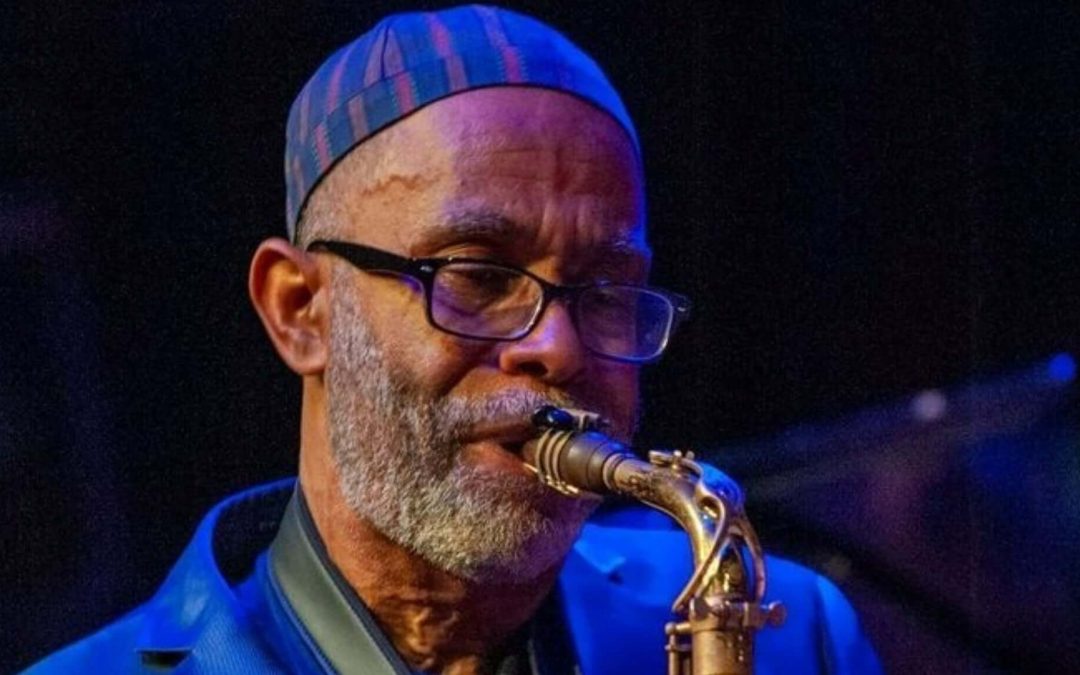
Saxophonist Kenny Garrett

Sunday afternoon, when trombonist Vincent Chandler, the founder of the Detroit Jazz Preservation Concert Series, told the crowd at Schaver Music Recital Hall that the concert celebrating saxophonist Kenny Garrett’s music was the second-to-last in the series this season, there was a collective sigh. Their disappointment showed how important the jazz series had become in just two short years. I bet most who showed up wished Chandler could find money to keep the series going year-round. No one knows if he will, but I pray that he does. Sunday’s nod to Garrett was another well-plotted set with a strong lineup of saxophonists Rafael Leafar and De’Sean Jones, drummer Sean Dobbins, bassist Josef Deas, and pianist Roger Jones II. I never knew Garrett was such an outstanding composer. Chandler was smart in choosing to steer the frontline with Leafar and Jones. During the early stage of Leafar’s career, he sounded like Garrett and even swayed back and forth during solos. Listening to Leafar blow up and down Sunday afternoon, I felt he had finally come into his own. Leafar and Jones had their horns honking, screaming, and squealing with such raw force that Chandler should have warned the crowd before the set started to protect their ears. Mine were burning midway through the set. Chandler enjoys scat singing when the spirit hits him. I am not a fan of scatting. However, he always manages to sound damn good. He started “Happy People,” which Garrett usually ends his concerts with, by scatting and drawing the crowd in, but was overshadowed when Jones and Leafar began trading measures. Garrett is all fire, and Jones and Leafar captured that side of his blowing well. Dobbins was the motor pushing the saxophonists to great improvisational depths. At the end of the set, Dobbins probably had to soak his drumsticks in Epson salt to reduce the swelling, given the workout he put them through. I wondered though why Chandler did not choose a heavy-handed piano player, as Garrett likes that type. Jones II is a sharp pianist with chops suited for a trio but never matched the bombs the saxophonists dropped. The sighs heard at the start of the set were replaced with applause as the band moved through Garrett’s “Wayne’s Thang,” “Wooden Steps,” and “Sing a Song of Song.” Give Chandler a pat on the back for giving Jones and Leafar the room to stick and jab. Of the concerts put on so far, this one should have been recorded for future nationwide release.

Saturday, April 5, 2025

DID THE RON CARTER FOURSIGHT QUARTET PUT ON THE BEST CONCERT IN THE HISTORY OF THE PARADISE JAZZ SERIES?

I wonder if anyone at jazz bassist Ron
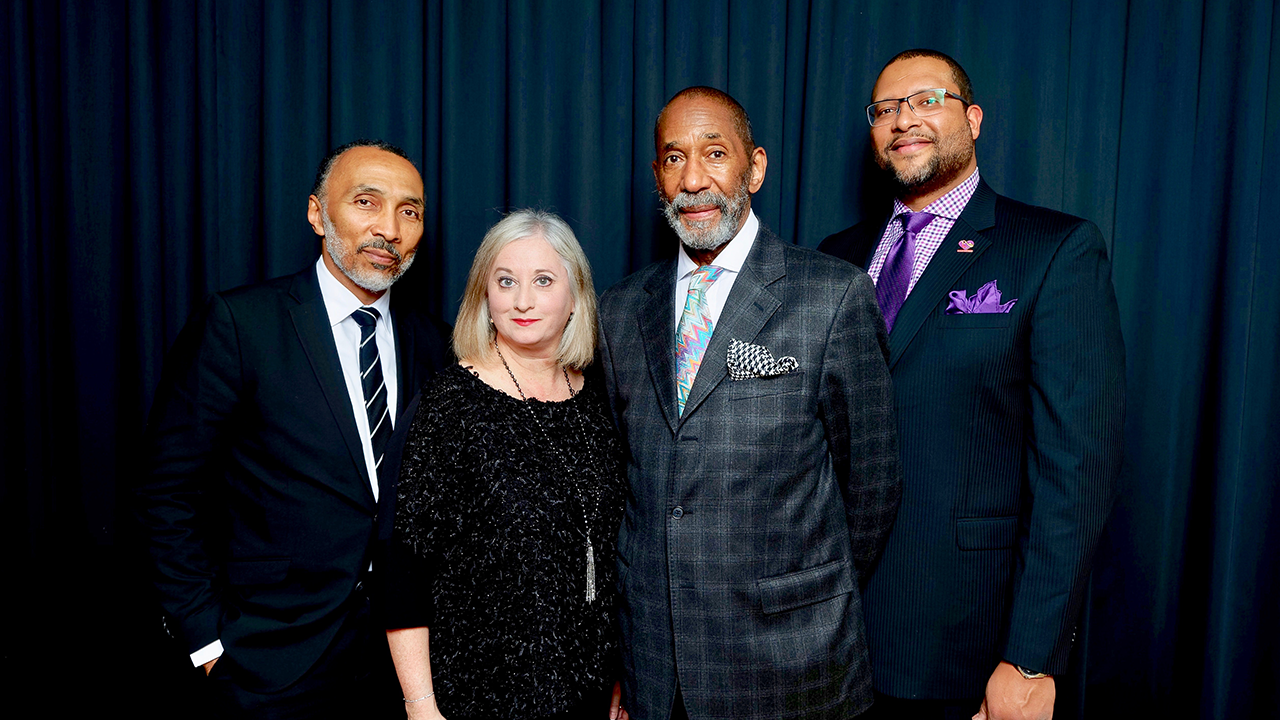
Payton Crossley, Renee Rosnes, Ron Carter & Jimmy Greene
Carter's Foursight Quartet concert on Friday evening at the Paradise Jazz Series believes it was the best concert in the series history. The quartet, pianist Renee Rosnes, saxophonist Jimmy Greene, and drummer Payton Crossley put on a concert for the ages. They are the smoothest outfit I've seen. Their way of swinging is different. It has a certain dignity you do not get from other jazz bands. Before they started swinging, they walked out dressed in black tuxedos, locked arms and bowed. Carter sat on a stool next to the piano. The quartet played for an hour without coming up for air. Carter didn't call the first four songs. I had to go to his Facebook page for the setlist. They opened with "Bohemia After Dark" and slid into "Nefertiti" and "One Finger Snap." After they ended "Little Waltz," they finally came up for air, and Carter addressed the house. It was a joyful homecoming for Carter, and he was happy to play for a packed house at Orchestra Hall, his first time hitting there as a band leader. The quartet didn't pause between songs like they were performing a suite. The wondrous thing about this concert was that each moment could rank as the concert's high point, with Rosnes and Carter trading and Greene blowing brilliantly. Greene is a sax player with a lean, pleasing, everyday tone, like the late Harold Land. With so many highlights, my favorite was Crossley's solo, where he only hit the cymbals, which was like watching a hotshot artist painting on stage. Rosnes' playing stood out the most. She's an elegant piano player who plays like her fingers are made of diamonds. Carter shook up the house with a well-crafted bass solo. As a bass player, he waltzes with the bass instead of walking with it. His playing draws you in after playing notes. So, it's worth asking if the Foursight's set was the best in Paradise Jazz Series' history. 
 

Monday, March 24, 2025

TRUMPETER BENNY BENACK III LAUNCHES FIRST MIDWEST JAZZ COLLECTIVE CONCERT AT THE BLUE LLAMA

Trumpeter Benny Benack III

Benny Benack III, a jazz trumpeter from Pittsburgh, reminds me of the late Chet Baker with his trumpet and singing style. I don't know if he means to copy Baker, or if he looks up to him. Benack has played with stars like Christian McBride and Emmet Cohen and released two albums. When I heard Benack sing and blow Saturday night, I could not stop thinking of Baker during his heyday. However, Benack sings better than Baker did. Benack III performed with his band, including pianist Tyler Henderson, drummer Charles Goold, and bassist Caleb Tobocman. They were there to start a new concert series by the Midwest Jazz Collective, a group of jazz clubs and promoters in the Midwest that organize tours for leading jazz musicians. Benack III had performed at Blue Llama before and even recorded a live album there last year, set for release this summer. The band played standards and originals, starting with "Kiss the Good Life Goodbye" and then "The Sound of Music."  The band sounded best on songs from Benack's albums “Third Times The Charm,” “One of a Kind,” and “A Lot of Livin’ to Do.” Benack's singing was soothing, making you wish he would never stop. His pianist, Tyler Henderson, a Juilliard graduate, played perfectly behind him, demonstrating how selfless a pianist must be when supporting a singer. During the 90-minute performance, it was surprising to see that Benack, who has such a smooth singing voice, could also play the trumpet so powerfully. He showed this, especially on the song “Catching Drift,” which was a twist on “My Favorite Things.” Here, Goold and Tobocman really carried the heavy parts. Tobocman, only twenty-two, is already making a name for himself. Throughout the set, he strolled with his bass rather than walking it. Goold's drumming was powerfully beautiful, like his peers Nasheet Waits and Brian Blade. At the end of the set, Benack III invited a singer friend to join him for a restructured take of “Willow Weep for Me,” ending the show beautifully and marking a great start for the Midwest Jazz Collective's concert series.


Wednesday, March 19, 2025

WJZZ CELEBRATES ITS 66TH BIRTHDAY AT BAKER’S KEYBOARD LOUNGE

WJZZ's Rodger Penzabene Jr.

WJZZ celebrated its 66th birthday with an exclusive party Tuesday night at Baker's Keyboard Lounge in Detroit, MI, which included a guest list of notable Detroiters like fashion laureate Chuck Bennett, renowned photographer Monica Morgan, fashionista Fast Freddy Anderson, jazz vocalists Naima Shamborguer, Sky Covington, Joan Belgrave, celebrity journalist Greg Dunmore, and some elected city officials. The drummer and Kresge Fellow Aisha Ellis and her quartet provided the music. Before the quartet launched the two-hour performance with tracks from Ellis’s new album "Luck or Favor," WJZZ's president, Rodger Penazbene Jr., thanked his sponsors and team for organizing the celebration and shared insights into the station's history and its new direction. He then handed the stage back to Ellis's group, whose performance mixed funk and smooth jazz. This style of music, although different from what I usually write about here, aligns with WJZZ's shift from traditional acoustic jazz. The quartet included keyboardist Jame Shelton, bassist William Pope II, and flutist Deblon Jackson played most songs in the same key and at a lively pace, captivating the audience and even me at times. It has been a while since I last visited Baker's. I was a regular at the late pianist Teddy Harris Jr.'s weekly jam sessions years ago. It is surprising that Baker's no longer has a piano, especially since it is known as the world's oldest jazz club—a claim disputed by some jazz historians. During the celebration, I found myself—despite my allegiance to straight-ahead acoustic jazz—lost in the music along with everyone else. Ellis is a witty and exciting drummer, reminiscent of Gaylynn McKinney in her textured rim shots and self-assurance in the pocket, shouldering the bulk of the workload. Jackson, on the flute, was exceptional, though sadly unsung despite her long history of putting out good music. I only hear her play at her annual street performances during the Detroit Jazz Festival. Her talent is remarkable, and I wonder why the festival has not booked her or she has not been featured at any of the jazz clubs in Detroit. Shelton, the keyboardist, played energetically, though his rambunctious style made his bandmates labor harder than they should have at times. Halfway through the set, Ellis was sweating like a construction worker on a hot August day. Shelton might have forgotten he was not leading the quartet. Over the years, I have come to understand that smooth jazz keyboardists are prone to grandstanding. It is an unshakable part of their nature. Overall, the 66th birthday bash was a perfect tribute to WJZZ, an important part of Detroit's cultural scene. There is good reason to cheer Rodger Penzabene Jr. for his dedication to revitalizing WJZZ.


Sunday, March 16, 2025

YOU DON’T HAVE TO EXPERIENCE AN ENTIRE WILLIAM HILL III CONCERT TO KNOW HE’S THE REAL DEAL

Pianist William Hill III

I owe the young jazz pianist William Hill III a heartfelt apology for only staying for half his trio set Friday evening at the Friday Night Live concert series at the Christ Church Cranbrook. Hill’s trio includes drummer Samuel Melkonian and bassist Langston Kitchen. Hill is a Detroit School of the Arts graduate who now studies at the Manhattan School of Music and performs regularly around New York. I left midway through the set because my partner’s seasonal allergies flared up, causing her eyes to swell. Fortunately, the four compositions I heard convinced me that after hearing him for the first time as part of the Detroit Jazz Preservation concert series, my initial impression of him as a force to be taken seriously was accurate. His trio opened Friday night with his original “Keep It Moving,” showing he’s a gifted composer, and the trio is as polished as any professional trio currently working. They followed the opener with a hip take of Thelonious Monk’s classic “’ Round Midnight.” Pianistically, he runs lines with the sophistication and aplomb of a veteran sharpshooter like Cyrus Chestnut, and Hill possesses the piss-and-vinegar swagger of the late Jaki Byard, who could touch on the history of African American music in a single solo. Hill denies that Chestnut and Byard weren’t immediate influences. He attributes that to Wynton Kelly and Oscar Peterson. After the trio’s modernized rendering of the Monk classic, Hill cast the spotlight on bassist Langston Kitchen on the goose-bump-inducing “Alone Together.” Kitchen has a mean left hook and his soloing on the tune was awe-inspired. Melkonian drumming could’ve made the devil blush. Hill didn’t announce how long his trio had been together. The trio is professional from top to bottom. I appreciated that William required his bandmates to wear suits. He understands the significance of first impressions. So many of his peers don’t care how they look on stage, but not Hill. He treated the bandstand as if it were sacred ground. I hated that I couldn’t stay for the entire concert, but what I experienced was top-notch enough to convince me the sky is the limit regarding Hill’s future.


Monday, March 10, 2025

THE DETROIT JAZZ PRESERVATION CONCERT SERIES SHOWS ANOTHER SIDE OF JAZZ BASSIST RON CARTER


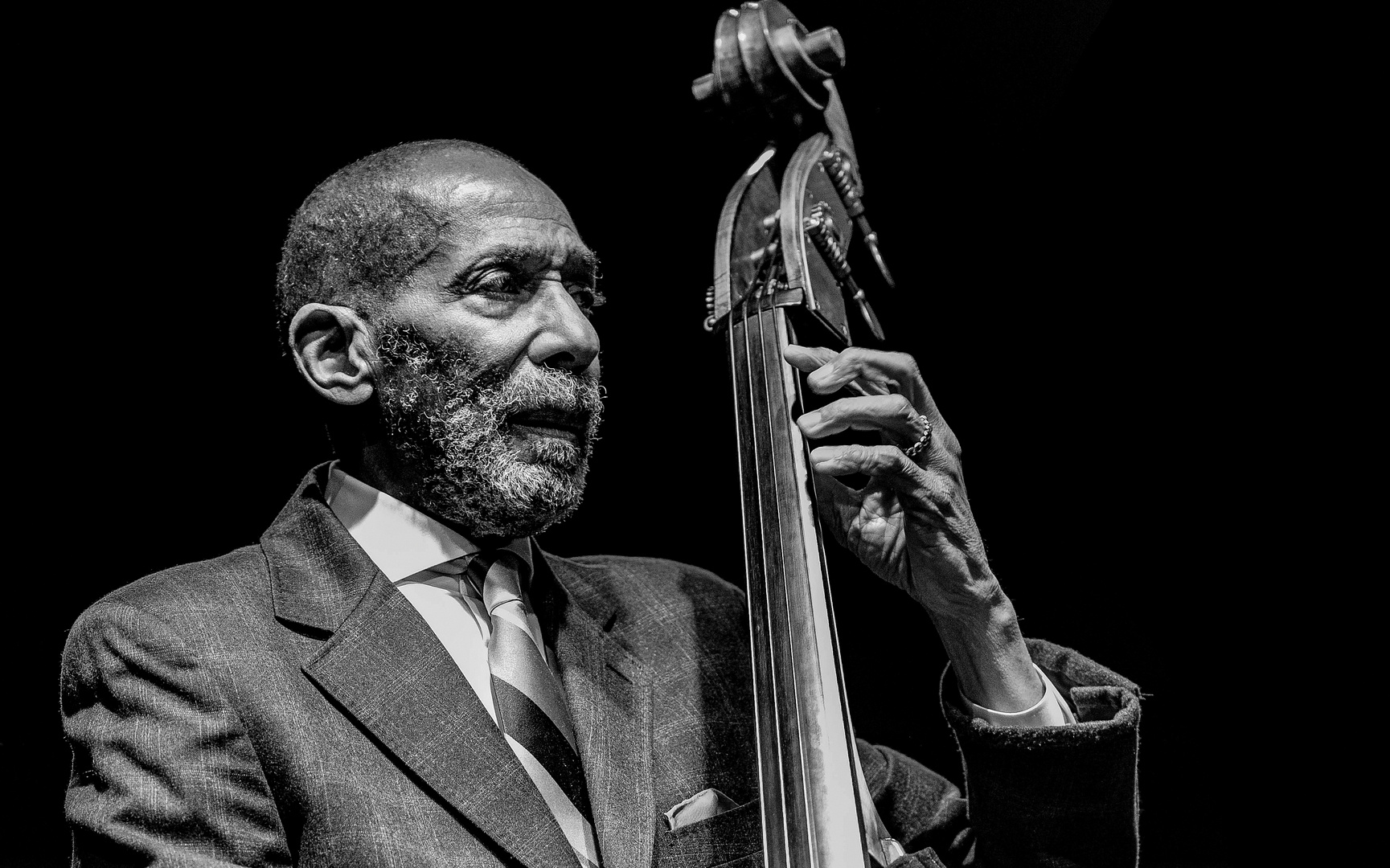
Ron Carter

Whenever jazz bassist Ron Carter comes up in conversation, it often centers on his numerous achievements, such as his contributions to over 2,000 recordings, his decades as a leading jazz educator, and his membership in Miles Davis’s second iconic quintet. However, fans and critics seldom discuss him as a composer. His compositions took center stage on Sunday evening at the Detroit Jazz Preservation Concert Series in Schaver Music Recital Hall. Trombonist Vincent Chandler, the series founder, chose nine of Carter’s compositions and assembled a cross-generational band that included pianist Gregory Burk, drummer Louis M. Jones III, bassist Michael Abbo, saxophonist Vincent Bowens, and percussionist Mahindi Masa. The evening began with Carter’s “Uptown Conversation." Although it’s an upbeat piece, the band didn’t allow its nuances to overwhelm the audience. The various bands Chandler has assembled for the DJPS seldom rehearse the music they present. That’s hard to tell and shows the elevated level of musicianship in Detroit that Chandler is helping cultivate. Next, the band performed one of Carter’s ballads, “3 More Days," with patience and warmth, and it’s doubtful that there was a dry eye in the hall when the band finished. In all the years I’ve followed Chandler, this was the first time I remember hearing him perform a ballad. It felt like a love letter to the audience. Chandler was in top form during the concert. As the leader, I’ve never seen him focus the spotlight solely on himself; he’s about laying the groundwork and encouraging his bandmates to build upon it. However, he did mention something that annoyed me while providing context about his touring stint with the Jazz at Lincoln Center Orchestra, implying he isn’t on the same level as trombonist Wycliffe Gordon, who Chandler subbed for in the JLCO. Of course, Chandler was being modest, but I know his chops and feel confident in asserting that he is in the same league as Gordon or any prominent jazz trombonist performing today. This time, his standout selection was the veteran saxophonist Vincent Bowens, who has the softest tone of any professional tenor player I’ve ever encountered. When Bowens soloed on “Aromatic” and “Fill in The Blanks,” I felt his tenor sax might float out of his hands at any moment. Bowens is neither average nor overly muscular as a saxophonist; sophistication is his trademark. The rest of the band was marvelous as well. Burk is a sophisticated pianist who follows the tradition of Kenny Barron. He doesn’t believe in taking out his aggression on the piano and has a light touch as if feathers are attached to his fingertips. Abbo was a crowd favorite, walking his bass like a prom date. When he performed on Carter’s “Little Waltz” and “117 Special,” I understood Chandler’s affinity for him. His style resembles bassist Josef Deas, who played with Chandler in the popular jazz ensemble Urban Transport. And for such a young drummer, Jones III displays a remarkable command of the kit. His solos are concise and impactful. Listening to his drumming, I wondered if his biggest inspirations were drummers Bert Merrick and Sean Dobbins. What stands out most about this incredible concert series is the respectful handling of the music presented.