Monday, October 31, 2022

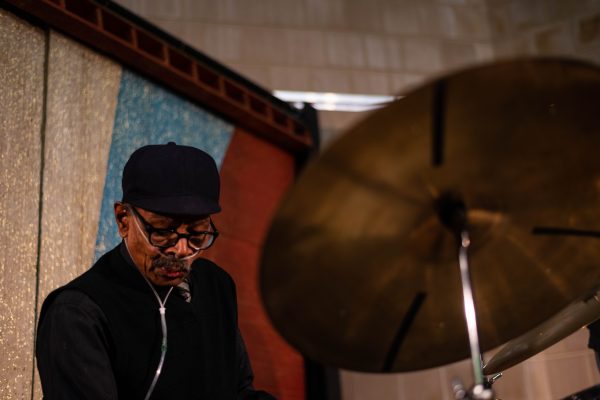
JAZZ DRUMMER GEORGE DAVIDSON ON TAP DANCING, TOURING WITH THE QUEEN OF SOUL, HANGING OUT WITH EARL" FATHA" HINES & SHOWBOATING IN FRONT OF DR. MARTIN LUTHER KING


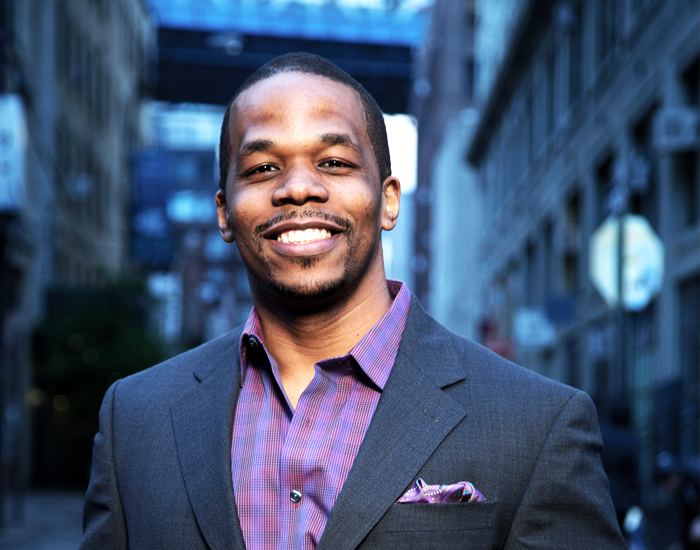
George Davidson


Is it true you started as a tap dancer?

Yeah. I was about 10. That was my first gig, dancing.

Why tap dancing?

At that time, there was a settlement house across the street from where I lived on the eastside called Sophie-Wright Settlement. One of the counselors there was a dancer. At that time, we had outlets like that. The Settlement House had cooking, music, and a lot of literary stuff you could take advantage of. So, I just happened to get into dancing and music. My teacher's name was Clara Wilson, and she was a dance teacher. 

Did you want to pursue it professionally?

Not really. The school had a little band, and I wanted to play drums. At that time, we had some youngsters who had drum equipment. And I wanted to play, but my teacher didn't put me in the line. So, when I got to middle school, I started playing drums.

What was it about the drums that you liked?

I just gravitated to the drums. That's what I wanted to do. My first drum teacher was Frank Paxton in middle school, where I got my first drum kit.

Did he also introduce you to jazz? 

Well, at first, it was concert music. That's where I started. When I got to Northeastern High school, I became interested in jazz. I had a great drum teacher. He was a sub from the Detroit Symphony Orchestra and stressed symphonic and concert music more than jazz. But I would skip class and slip down to the band room. I would be down in the jazz room with some older guys like Bennie Maupin and Bobby Rogers of The Miracles. They were all at Northeastern. We listened to Max Roach and Clifford Brown's Study in Brown album. That was the first jazz album I listened to, and after that, I was addicted.

When did you start performing professionally?

I started getting professional gigs right after I graduated from Northeastern. I would have graduated when I was sixteen. Still, because I was messing around with the band, I graduated four months after turning seventeen. Before that, I would play in talent shows. I would play with Kenn Cox. Kenn used to play trumpet back then. So, that was my first time playing jazz. But for a regular gig, I started playing gigs when I was seventeen. A few of us, like Bettye LaVette, came up together. 

At the time, we were about the same age and would be at Phelps Lounge. But before that, my first musical father was a saxophone player named Raymond Studemier. He was the first to take me on a gig. He got me a road gig in Indianapolis. I met Wes Montgomery, James Spaulding, Mel Ryan, Dave Young, and Dave Baker. Oh, boy, I could go on and on. I met Vi Redd, the alto player with the Sweethearts of Rhythm, too? There used to be a club there called the Hubbub. It was one of the leading jazz clubs in Indianapolis at the time. So, that was my first on-the-road gig. I was about eighteen then. That was when the Hubbub had jam sessions every Saturday. 

Saturday afternoon jam sessions, that's when I got to play with many guys, like Mel Ryan. Wes never played. He came home to chill out. I met his teacher, a guy named Jimmy. Wes didn't start playing until he was in his early twenties because he never did read music. 

He was the first to play with his thumb because his wife would complain if the guitar was too loud if he played with the pick. So, he started playing with his thumb. So, he's the one who initiated that style, and when they made all those arrangements out West, they would orchestrate them around him because he wasn't a reader. 

How fertile was Detroit's jazz scene back in those days?

Detroit was one of the headquarters for music. Donald Byrd was the first one to stay there. Detroit was one of the main hubs, man, for creating great musicians, and the music scene here was the best in the world. Fortunately, I had a chance to work with Donald Byrd a few times.

Did you frequent the Blue Bird Inn and get to rub shoulders with the famous jazz musicians who played there, such as Miles Davis, Elvin Jones, or Charlie Parker?

Well, you know Bird was in and out of Detroit. He played at the Blue Bird Inn. Have you been to the Blue Bird Inn?

No. But I know about its history and the famous jazz musicians who performed there.

Well, you know they're renovating that building and opening it again. There's an organization trying to do that. Are you hip to that? The Blue Bird Inn was the place to play. Miles Davis used to play there when he was living in Detroit. Bird used to be there all the time. All the great jazz musicians, Elvin Jones, Louis Hayes, Roy Brooks, and Beans Richardson, played there. Beans was the one who had the house band at the Blue Bird, and he was like the band director. All the other guys came in, but Beans was the boss.

We had great musicians from all over the country who came to Detroit and were at the Blue Bird. There were so many clubs at that time. The city was wide open, and everybody was mentally equipped for experimental music, and that's what jazz was.

What about Earl "Fatha" Hines? I heard he was a friend.

I had the opportunity to work with him. And he had a big band at the time, and I had worked the same show with him for a week during that time. So, we had a chance to sit down and talk. He told me Bird and Dizzy were in his band. So, he said, the guys in the band were coming down complaining, saying, "Earl, go back there and get on Dizzy and Bird. That's when they were into bebop. So, they started the bebop era. So, Earl "Fatha" Hines told me that the guys in his band complained about Bird and Dizzy.

Did he chastise them?

No, his mind was wide open. He was a great guy. Fortunately, I had a chance to sit and talk with him and get a lot of history. And you know, I got history from quite a few of the cats.

Is music how you always made a living?

Yes, well, music is the primary way I made my living. I had a chance to travel the world and work with Motown acts, but you know, Motown musicians were initially jazz musicians.

What's your Motown connection?

I was about 18 and worked with the Walter Hamilton Band at Phelps Lounge. We were also the rehearsal band for some of the Motown acts. Because when they rehearsed for gigs to go on the road, or new material or stuff like that, they would send them to Phelps. That was one of the places where they used to hide me in the backroom when the police came in, but that's when I started working with a lot of the Motown acts, you know, like The Temps, The Contours, Singin' Sammy Ward, Marv Johnson, David Ruffin, and Jimmy Ruffin. I knew David before he joined the Temps. 

David and I were friends, and we'd hang out, but the first gig we did with The Temps, I was with the rehearsal band, so that was before The Funk Brothers. Martha Jean "The Queen" [the famous radio personality] tacked that name on them, you know. So, after that, that was my first contact with her. That's when I went on the road with Mary Wells. I did some road gigs with her. And Singin' Sammy Ward, you've never heard of him.

Were you on any of the Motown recordings?

No, I recorded, but I did jazz recordings. Yeah. The first drummer was Benny Benjamin, and he was the one that taught me the Motown sound. He was the one that created the Motown drum sound. I started with Norman Dillard's organist, who you've never heard of, but that's who I recorded within Motown. 

We would leave the gig and go into the studio at 3 a.m. Raymond Studemier, Earl Van Dyke, who had just returned to town. You've heard of Earl Van Dyke? Earl Van Dyke was our organist. When he first came to Detroit. He started working with Raymond Studemier, and I was the drummer. And we had James Jamerson and Robert White, who were learning guitar before becoming The Funk Brothers. So, I worked with the first group before they got that title. He was with the Raymond Studemier band.

 After Walter Hamilton left, Raymond Studemier got the house band. But I got the gig again with Studemier, so we still accompanied many acts. After that, I worked with Norman Dillard, and then Spider Webb replaced me with that band.

In 1964 is when I did a gig with Aretha Franklin. I got the call at the last minute because her drummer couldn't make it. She had a gig at Hampton Institute in the D.C. area, and I remember she had a Cadillac, and my drums wouldn't fit. So, all I could get in there was my trap case in the trunk of the car, and they shipped my drums through Northwest Airlines, but they shipped my drums to Minneapolis, and the gig was in D.C. So, all I had to play with was the snare drum and cymbal.

That first gig with Aretha, we were 22 years old, was the first time I met her. That was in '64. So, in January of '66, Hindal Butts, her regular drummer, for some reason, couldn't make the gig, so I got a call three hours before the plane was supposed to leave from Ted White and Aretha; she remembered me from that first gig.

And I got the call. The plane was leaving in three hours. So, I got packed and everything, and man, I was ready. So, we flew out to L.A. That was in January of '66. Bruno Carr was the drummer that had contacted us just in case they didn't bring a drummer. But anyway, I got the gig, and Teddy Harris and I were on the gig.

So, after that, I stayed with Aretha. When she got her first million-seller, I was with her; I Never Loved a Man the way I Love You. We were at rehearsal when the songwriter Ronnie Shannon. I remember when Ronnie Shannon brought that news to her. And Ronnie Shannon came in and said, "Check this out."

 Aretha changed bands again. So, Aretha called me over to her house and asked me who I wanted to work with? I recommended Claude Black and Roderick Hicks.

So, they joined the band. So, we were at rehearsal, Claude and Rod were in the band, in the trio then, and Never Loved a Man we recorded at ten at night in New York, three-quarter time, three-four time. Jerry Wexler was one of the leading producers at Atlantic, and he took it to multiple shows, and the people would play it. So, that was Aretha's first big seller.

And that was in '67. And after that, that's when everything took off, man. We went from the station wagon to limousines and airplanes overnight, man. Just overnight, man. And after that, her career started skyrocketing. And then, we did tours with Operation Entertainment. Aretha's father was tight with Dr. Martin Luther King. 

He was one of the main guys in that organization. Like Ralph Abernathy, Andrew Young, and all those guys, Aretha's father was a part of that group with Dr. King. And we were always with Dr. King. So, I had a chance to travel from California to New York with Dr. King.

Dr. King was a great guy, man. Both he and Mrs. King. They were just great people. His voice was so magnetic, man. Whatever he'd say to you would draw you to him. When I was changing from California to New York with Jesse Jackson, Operation Breadbasket came. We were in the Astrodome in Houston. Besides sports, we were the first to play there, and Jesse Jackson mentioned that at Aretha's funeral.


Sunday, October 23, 2022

NOT SAXOPHONIST TIA FULLER'S BEST HOUR AT THE NEW STANDARDS JAZZ CRAWL

Saxophonist Tia Fuller

There were several annoyances at saxophonist Tia Fuller's concert Friday evening at the Detroit Institute for the Arts. Fuller, one of the leading saxophonists of her generation, was part of the Carr Center's New Standards Jazz Crawl showcase, featuring some of the best female jazz musicians on the planet at The Detroit Public Library, Museum of Contemporary Art Detroit, the Detroit Institute of Arts, and the Carr Center. Unfortunately, Fuller's set started a half-hour late. She apologized for the delay, confessing the band was still getting dressed and eating at 7:30 pm when the concert was scheduled to commence. There were also technical issues. The opening songs her quartet performed, you could barely hear the pianist. I'm a Tia Fuller admirer, and I've attended most of her performances in Detroit. It's painful to write that Friday evening was the first time I'd witnessed her do more talking than blowing. Her quartet—pianist Shamie Royston, bassist Mimi Jones, and drummer Kobe Royston—performed cuts from Fuller's 2019 Grammy-nominated gem Diamond Cut. Interspersed between some brilliant playing by the quartet, Fuller felt it was essential to explain the symbolic meaning of the development of diamonds, which I found difficult to comprehend. Then again, I'm a music blogger, not a gemologist. Annoyances aside, the concert offered some praiseworthy moments. On the title cut from Fuller's forthcoming album Intersections, she initiated a terrific exchange with Kobe Royston. It began with them horsing around. Fuller did some rhythmic tricks on the alto sax, and Royston countered with a deluge of rimshots. The exchange became more heated and meaningful as they exposed the marrow of the song. Kobe is still in college, but his drumming has a maturity that generally takes years for an upstart to perfect. He never showboated when the zoom lens was cast on him. Hands down, Shamie Royston, was the crowd favorite. She had the piano testifying on The Coming and Delight and the most goose-bump inducing solos. On up-tempo songs, how her hands sprinted and tumbled across the keys compares to pianists Cyrus Chestnut's and Myra Melford's style. When Fuller wasn't going on and on about the origins and intricacies of diamonds, her blowing was superb. She gobbled the chord changes to Queen Intuition like Halloween candy. Near the end of the set, Fuller surprised the audience by singing a Cole Porter song. I say surprised because I'd wager few of Fuller's Detroit fans knew she was interested in singing. Again, I'm a Tia Fuller admirer, so I loathe writing her singing was subpar, and I dislike that she's added that to her game. Some instrumentalists feel called to sing these days. Most have never taken vocal lessons. I wonder if any professional jazz vocalists find this as I do bothersome. Had Fuller adhered exclusively to the music and focused less on explaining the development of diamonds, the concert could've been one of the best the Carr Center has sponsored this year.


Wednesday, October 19, 2022

WYNTON MARSALIS'S 'ALL RISE' STIRRED SOULS AT HILL AUDITORIUM


Wynton Marsalis

For two decades, I've attended Jazz at Lincoln Center Orchestra with Wynton Marsalis University Music Society concerts. Under Marsalis's stewardship, the JALCO is the current reigning G.O.A.T. of international jazz orchestras. Bank on Marsalis to deliver monumental projects like culturally and politically relevant recordings such as "From the Plantation to the Penitentiary," "The Abyssinian Mass," remodeling the music of jazz overachievers such as Duke Ellington, Count Basie, Paul Whiteman, John Coltrane, Charles Mingus, and Thelonius Monk. I've often left JACLO concerts, wondering if Marsalis would ever run out of steam. But Saturday evening at Hill Auditorium, Marsalis pulled off another massive undertaking, "All Rise (Symphony No. 1.) For Symphony Orchestra Jazz Orchestra, and Chorus." Positively, the most ambitious work of his 22-year association with the University Musical Society. Rivaling in scope and depth, his epic 1997 Pulitzer Prize-winning oratorio "Blood on the Fields." "All Rise" Marsalis, composed in 1999, has only been performed periodically. It has 12 movements. Each movement was seasoned with the blues and executed meticulously by participants University of Michigan Symphony Orchestra, University of Michigan Choirs, UMS Choral Union, and key members of the JALCO. Over 200 collegiate and professional musicians shared the same space, treating the near-capacity audience to over two hours of musical bliss. The musical cohesion was staggering. It was Marsalis's brainchild, but the linchpin of this elaborate spread was the conductor, Kenneth Kiesler. It appeared Kiesler meant for the movements to come off as 12 mini-concerts. The movements—"Jubal Step,"" A Hundred and a Hundred, a Hundred and Twelve," Go Slow (But Don't Stop)," "Wild Strumming of Fiddle," "Save Us," "Cried. Shouted. Then Swung,"" Look Beyond," "The Halls of Erudition and Scholarship," El "Gran' Baile de la Reina," "Expressbrown Local," "Saturday Night Slow Drag," and "I Am (Don't You Run From Me)—were soul-stirring and dispelled the myths classical musicians cannot swing or play the blues. The classical musicians cut up on "Go Slow (But Don't Stop)" and "Cried. Shouted. Then Swung," proving they can swing and navigate any form of the blues with equal aplomb. Near the end of "All Rise, " I wondered how many audience members had a full-blown spiritual experience absorbing all the awe-inspired music. Given how most in the audience roared after the last movement and the standing ovation that lasted 15 minutes, the two-plus hours of musical bliss had induced that feeling in many of them.

Sunday, October 2, 2022

WARREN WOLF BRINGS GOOD VIBES TO HIS DIRTY DOG JAZZ CAFÉ RETURN

Vibraphonist Warren Wolf

Three songs into Warren Wolf's concert Saturday night at the Dirty Dog Jazz Café, the vibraphonist let the audience know it was the first time he'd performed as a band with guitarist Randy Napoleon, drummer Quincy Phillips, and bassist Noah Jackson. Indeed, those were some strong personalities Wolf had to acclimate his chops to on the fly. But, given the audience cheering after the band performed F.S.R. and the Stylistics' Betcha By Golly, Wow, he pulled it off. Wolf is one of the more complete vibraphonists of his generation, well respected for mixing classical music, jazz, and R&B in one set with equal aplomb. For this performance, he concentrated on standards and some R&B oldies. During the whole concert, Wolf played the vibraphone and piano. One choice moment was Prelude to a Kiss. His solo was as serene and warm as a grandmother's embrace. Wolf was hands down the captain, but there were times when Napoleon and Jackson assumed control of the ship. The rich texture of Napoleon's playing was evocative of how guitarists George Benson and Wes Montgomery used to chew through chord changes. Jackson is a calm and collective jazz bassist. Other noted bassists who share his music acumen and temperament like to walk the bass. Jackson dances with it like a prom date. It was Wolf's long overdue return to the Dirty Dog. With a terrific pickup band, Wolf stuck to his reputation as a bandleader with a propensity for mixing things up.


Monday, September 26, 2022

AT ARETHA'S JAZZ CAFÉ THE NEA JAZZ MASTER DRUMMER LOUIS HAYES SWUNG WITH THE VERVE OF MUSICIANS HALF HIS AGE

Louis Hayes

At Louis Hayes's concert Sunday night, I wondered if other attendees were blown away by how athletic his playing still is at 85. Hayes, the 2022 recipient of the National Endowment for the Arts Jazz Masters Fellowship—the highest honor bestowed on a jazz musician—returned to Detroit for a weekend at Aretha's Jazz Café. Off the bat, Hayes set the tone for the high-grade swing the audience would be lavished with for 90-minutes. Silver Serenade and Arab Arab were the two scorchers Hayes opened the concert with. Witnessing him burn rubber through both numbers showed his dexterity as a masterful jazz drummer hasn't withered with age. His cymbal work was crisp, and his rimshots embodied a youthful muscularity. All night long, he was equally dynamic as when he held down the drum chair in pianist Horace Silver's and alto saxophonist Julian "Cannonball" Adderly's bands many decades ago. Then, after submerging the audience with the two opening tunes, Hayes let them come up for air on Tadd Dameron's ballad If You Could See Me Now. Hayes had a well-condition band—pianist Rick Germanson, saxophonist Abraham Burton, vibist Steve Nelson, and bassist Gerald Cannon—that punched even harder in the later rounds of the set. The members were so evenly yoked that neither overshadowed the other. Germanson and Cannon were the band's linchpins, Burton blew the paint off the walls, and Nelson's solos had an athletic quality. Hayes isn't one of those old-timers who spend a chunk of a set reminiscing about the old days. But, for what it's worth, I've always enjoyed it when jazz musicians of Hayes's era include a jazz history lesson in their concerts. Anyway, he performed for 90-minutes with no commercial interruptions and with the verve and stamina of a musician half his age. 


Monday, September 5, 2022

FOUR MEMORABLE PERFORMANCES SUNDAY AT THE 2022 DETROIT JAZZ FEST

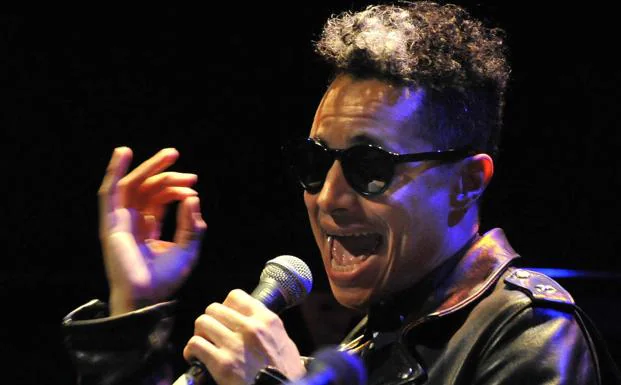
Jose James

 Jose James (JP Morgan Chase Main Stage)

The jazz vocalist Jose James released Yesterday I Had the Blues: The Music of Billie Holiday in 2015. He revisited the project at his Detroit Jazz Festival set Sunday afternoon. James is a vocalist with stagecraft and an enormous voice. Unfortunately, it was rainy and windy during his concert. However, James joked that such conditions are an opportune time to listen to Holiday's music. James added new herbs and spices to God Bless the Child, Strange Fruit, and Body and Soul. I'm not sure how many attendees who braved the rain will consider this performance a favorite. However, hearing James remake Holiday's classics was worth getting drenched.


Nubya Garcia

Nubya Garcia (Absopure Waterfront Stage)

The British tenor saxophonist's improvisational savviness has been likened to the great Sonny Rollins. Any doubt about the accuracy of their likeness was immediately dispelled during Garcia's soloing on the opening number of her set. Garcia's band—pianist Greg Spero, drummer Sam James, and bassist Lawrence Shaw—performed mostly music from Garcia's highly-touted first album, Source. The band modernized acoustic swing was refreshing to hear. Garcia was the marquee attraction, for sure. However, listening to Spero back her and solo with such raw enthusiasm, I wondered if Garcia's quartet would still swing hard if Spero was absent from the mix. His style reminded me of pianists Craig Taborn and Jacky Terrasson.


Cecile McLorin Salvant

Cecile McLorin Salvant (JP Morgan Chase Main Stage)

A litany of show tunes, gems from the American songbook, and obscure songs that are an acquired taste are expected from a Cecile McLorin Salvant performance. Honestly, I've been bored to death at some of her shows; at others, her angelic voice melted my soul. However, her Sunday night set was the best I've experienced since she became a regular headliner at the Detroit Jazz fest. I was intoxicated by every song I heard, and she's been blessed with a soulmate in pianist Sullivan Fortner.

Chucho Valdes

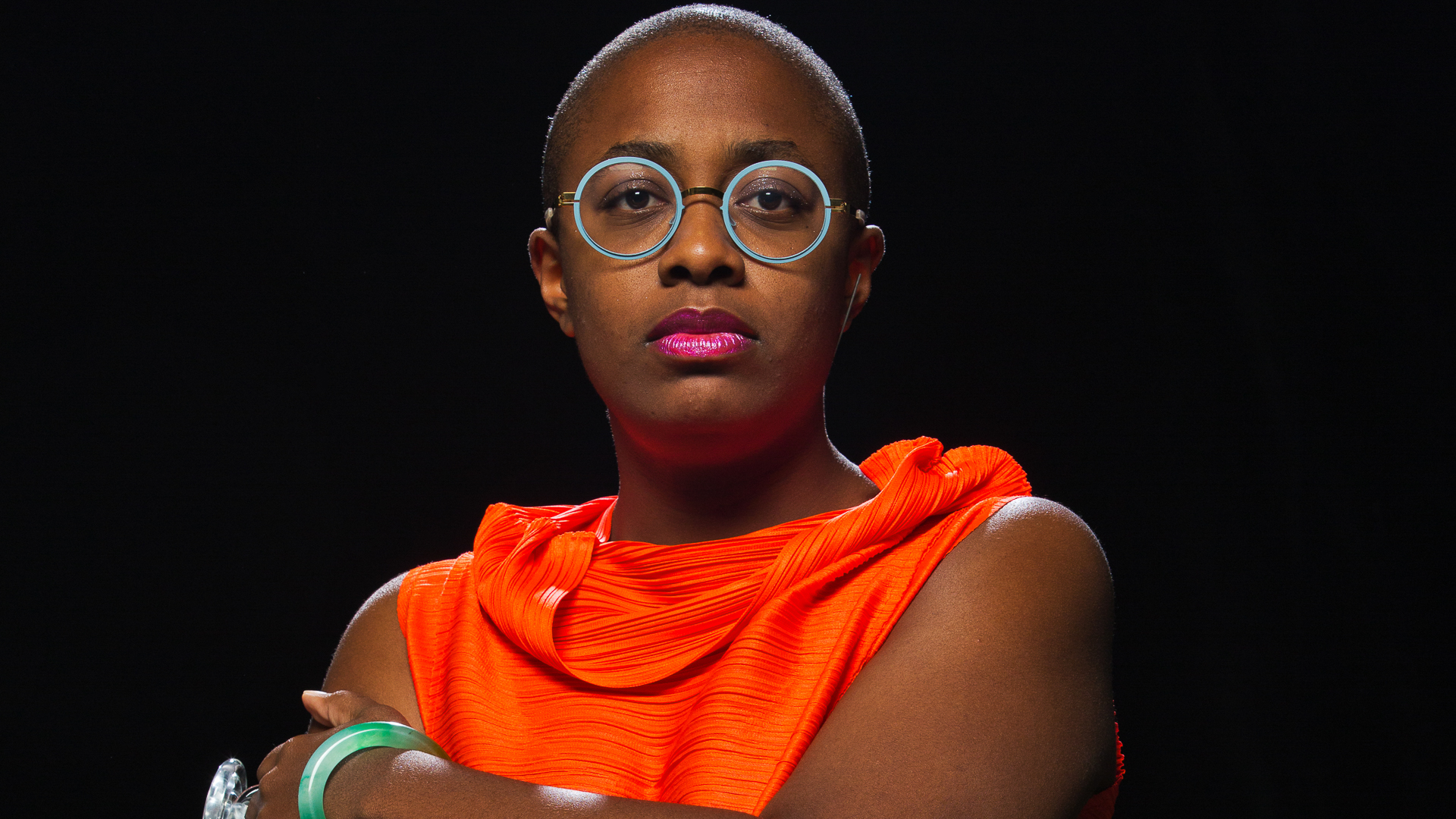
Duets: Dianne Reeves, Chucho Valdes & Joe Lovano (Carhartt Amphitheater Stage)

Given Reeves', Valdes's, and Lovano's different musical makeup, I wondered if the pairing would work. But merging their uniqueness turned out well. Valdes played solo piano to start the set and had the piano airborne. After that, saxophonist Lovano joined him for a duet. Lovano was blowing so aggressively that he nearly blew a hole in the moon. This duet replaces Archie Shepp and Horace Parlan as my all-time favorite pianist and tenor sax duet. The duet was enough to send the audience home gratified. Valdes's duet with Grammy-winning vocalist Dianne Reeves was a bonus. Reeves was at her best, scatting up a storm. When nestled into a slow-tempo song, her voice had a puppy-love innocence. This set was hands down my favorite experience Sunday.

Sunday, August 28, 2022

THE MULTI-FACETED JAZZ PIANIST MIKE MALIS PREMIERS THREE AMBITIOUS PROJECTS AT THE DIA FRIDAY CONCERT SERIES

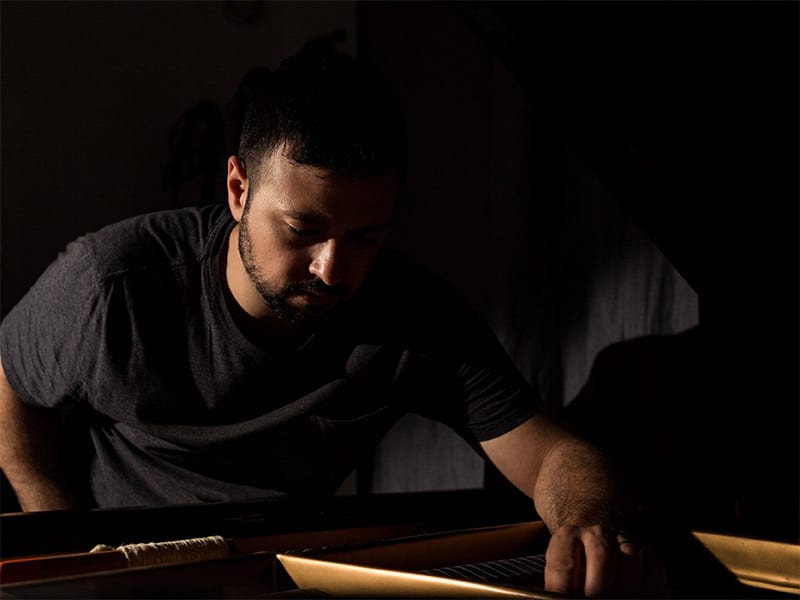
Pianist Mike Malis

The Detroit jazz community has so many uniquely gifted musicians. So, I have to think long and hard when asked who's my favorite drummer, bassist, or horn player. However, I proclaim Mike Malis, my number one pianist, without pause when asked to pick my fave pianist. Malis is an alumnus of the University of Michigan. There he studied with the late Geri Allen. After hearing him perform with the vocalist Milton Suggs many years ago, I became fond of Malis's playing. Over the years, my fondness for him has grown. I witnessed him co-lead the duo Balance with saxophonist Marcus Elliot (recently featured in Jazz Times magazine) and tackle challenging works by greats such as Andrew Hill and Ornette Coleman. At the Detroit Institute of Arts Friday evening, Malis premiered his most ambitious project yet with the chamber ensemble Virago violinist Meg Rohrer, cellist Wesley Hornpetrie, saxophonist BethAnne Kunert, and vibraphonist Sofia Carbonara. All possess fierce improvisational skills. Malis packed a lot of arresting music into the 90-minute concert, starting with four movements from his suite Imperfect Intervals. Then performing Hold Tightly Your Vision of How Things Could Be and ending with music from his new recording, From Darkness We Awaken. During this leg of the concert, the Virago members were in stride with each other like a championship relay team. Malis treated the audience to three different concerts, each equally moving. For weeks to come, I'll think about Malis giving his all on Hold Tightly Your Vision of How Things Could Be. Honestly, I've never been a friend of solo piano because it's like watching a pianist practice. However, I was taken by Malis's range, depth, and beauty. Midway through the solo, I wondered if he'd invested time dissecting late pianist Jaki Byard's gift. Like Byard, Malis can play many styles simultaneously. So much music in a single concert could've overwhelmed an audience unwinding after a taxing work week. However, Malis is a self-assured leader, and he made such an ambitious undertaking look effortless.