Tuesday, July 19, 2011

STRAIGHT-AHEAD GUY AT HEART

Bass player Noah Jackson has only been a professional jazz musician little under a year. And Jackson has already put out his first album Contemplations: A Suite, which will be tops on I Dig Jazz’s best jazz albums of 2011 list. Jackson is 22-year-old. He’s a husky fellow with gentlemanly disposition, and he uses good grammar.  


Jackson lives in New York now. He's a graduate student at the Manhattan Institute of Music. And Jackson is getting his name out there running the streets with the jazz quartet the Misfits. Before Jackson moved from Detroit to New York, he held the bass chair in the jazz ensemble Planet D Nonet. Jackson's played on the nonet's albums Ballads, Blues & Beyond, Blowin' Away the Blues, and We Travel the Spaceways.

On the bass, Jackson has an aggressive sound like jazz bass players Rodney Whitaker and the late Don Mayberry. Jackson becomes animated when he’s soloing. Beads of sweat collects on his forehead, and he rises on his tiptoes when hitting certain musical notes.

In 2010, Jackson graduated from Michigan State University. Jackson played the compositions on Contemplations at his senior recital. The recital was successful. Some friends encouraged Jackson  to record the suite. Jackson hustled up the money, and a friend, who's a recording engineer, gave Jackson a deal on the studio time needed to completed the project.

Save for Jackson work with the Planet D Nonet, he has a traditional jazz background. But, surprisingly, Contemplations has a free jazz and a contemporary jazz feel.
“ I didn't intend for the album to come across as free jazz. I think people can relate to it because it has a good rhythmic pulse,” Jackson said.
I Dig Jazz spoke with Jackson about the album’s evolution days before the official album release party at Cliff Bell’s in downtown Detroit.

You’re just getting your feet wet as a professional jazz musician. Why did you release your debut album so early in your career?

NJ: Why not? I mean there's only one way to be ready, and that is just to do it. I never felt like I had to do this album. But, things lead up to the point where I had to make it.

How did Contemplations come about?

NJ: I did the whole suite as my senior recital at Michigan State. I got an overwhelming positive response from the recital, and some people told me that I should record it.

I’m glad you listened.

NJ: I have a good friend who runs a recording studio outside of Lansing, and he made it possible for me to make the album. Contemplations started as a collection of themes and ideas that I wrote over a period of time. It wasn't written as a suite. It was five different pieces that I wrote the music so it would have this nice logical progression.

The first tune that I wrote, which is independent from the other tunes was the ballad My Reflection. I wrote that a year ago, and everything else I wrote after that. I just kind of put things together and it worked out very well.

Bassist Noah Jackson
Contemplations has a free jazz feel. That shocked me because you have a straight-ahead jazz background.

Because Michigan State is such a straight-ahead school, I didn't want to deviate from that because I'm a straight-ahead guy at heart. I wanted to do something a little bit different and unique that had a distinct sound. The album has a free jazz vibe to it. But it not free jazz.

What category of jazz does Contemplations fit?

If you have to put it in a box, I would say it's contemporary jazz. It has a contemporary sound, but it doesn't stray away from harmony and melody. I don't consider it a perfect package, but the album is something that people can listen to and enjoy and make it their own.

The band is tighter than a banjo string. How long have you performed with the musicians on the albums Anthony Stanco, Marcus Miller, Walter Harris III, Ryan Goh, and Ryan Ptasnick?

NJ: I've played with them all for many, many years. But the recital and the recording was the first time we all played together.

Where are you headed musically?

NJ: I not know. I had a lot of fun playing the music on Contemplations. But I'm still a huge disciple of swing, and that's never going to change anytime soon. I want to add to that. I really enjoy post bop hard bop and swing. That's my bread and butter.

At the end of the day, I still want to play with Sonny Rollins, Wayne Shorter. Their careers obviously went in a different direction and people still respect their art. I don't necessarily want to be in that same circle. I want to be of the mindset of constantly changing and not being pigeonholed as one type of musician.

 You’ve put a good product on the market.

NJ: I didn't what to shortchange anybody. I didn't want to take the audience for granted, and give them a product that I didn't believe in. If I believe in something, I'm going to do it right. I’m still a work in progress. The album is a stepping-stone. The album is something that I want to improve on. When I mature more as a musician, and when I stretch higher I will have this album to rely on to make the next album even better.


Friday, July 15, 2011

IMPROVED SWINGER

Mike Jellick
Piano player Mike Jellick spent the past two years in Chicago soaking up its diverse jazz scene and it did him a world of good. His playing has grown considerably. I caught Jellick’s sets Thursday night at Cliff Bell’s in downtown Detroit. Jellick played with rising jazz lion’s drummer Jesse Kramer and bass player Noah Jackson. 

Jellick has been on my radar for a while. I heard him for the first time on jazz singers Jesse Palter’s outstanding 2006 album Beginning to See the Light. Jellick was in his early 20’s then and he was promising.

A year later, I caught Jellick at Baker’s Keyboard Lounge with tenor saxophone player De’Sean Jones’ band. The concert was disappointing. Jellick got tangled up in his solos as if his imagination was ten steps ahead of his technical ability. I wrote a harsh review on the Metrotimes music blog, singling out Jellick as the band’s weak link.

I kept my eye on Jellick though. I knew he’d improve by woodshedding, and working with more advanced jazz musicians. Over time, that happened. Now Jellick’s ability and imagination are neck and neck. He's an awesome piano player and an adventurous arranger.  Jellick proved that Thursday night.

Jellick’s trio opened with Joe Henderson’s Recorda-Me. Then the trio played Song for My Father. Horace Silver would love Jellick’s modern and funky spin on his classic. Modernizing Silver’s classic wasn’t enough. 

Jellick gutted the standard Alone Together. Then he remodeled it. The trio played the standard in 7/4, and  changed tempo several times. Jellick played the electric keyboard and the acoustic piano simultaneously. And his left foot wiggled under the piano like a catfish out of water.

Normally, Jellick plays the monthly concert with Jesse Kramer. Kramer is a wonderful young drummer. He looks like Penn of Penn and Teller. Kramer has a full and a ferocious sound like Elvin Jones. Noah Jackson was Jellick special guest. 

Jackson lives in New York now. He's running the streets with some young and hungry jazz musicians. Jackson chops have blossomed the ten months he's been in New York. This week, Jackson is in Detroit to promote Contemplations: A Suite, his first album as a leader. The album release party is Saturday at Cliff Bell's.

Jellick’s arrangements allowed Jackson room to explore. Jackson took full advantage. When he soloed, Jackson sounded like a mix of Don Mayberry and Rodney Whitaker. Jellick, Kramer, and Jackson would be a successful jazz trio. Jellick should  keeping the trio together.  

Tuesday, July 12, 2011

THE RIGHT SETTING

At the height of Jimmy Amadie’s career, he has a major setback. He developed tendonitis in his hands and  for several decades he stopped playing. He loved working. He was known to work 70-hour wor weeks. 
Amadie was the go to jazz piano player for some great jazz saxophone players. Coleman Hawkins and Phil Woods had him on speed dial.

Amadie kept busy writing music and music books. It took many operations to fix his hands. He slowly rehabilitated them, gradually moved back into the public eye. He put out some good jazz albums such Let’s Groove and Savoring Every Note.

Today, Amadie new album Something Special is on sale. It’s a jazz trio album, and the right setting to hear him. Amadie is a conservative jazz piano player who never takes stupid risks. Amadie is comfortable playing any tempo. Bass player Tony Marino is a natural born jump.

Marino displays that on Get Happy, but Amadie never allows Marino to get carried away. Amadie's drummer, Bill Goodwin, has a cooling in the shade style. Goodwin never makes a fuss.

Amadie has a ball playing the timeless standards on Something Special. On My Funny Valentine and Sweet Lorraine, Amadie play warm opening passages. His fingers seem to melt all over the piano keys like butter on a stack of pancakes. Something Special is a clean cut jazz trio date you’ll never grow tired of hearing.


Monday, July 11, 2011

RED-BLOODED CROONER

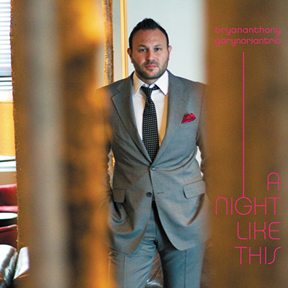
The oldies Bryan Anthony sings on A Night Like This have been done over and over by singer's way more popular. Anthony is still working on becoming a household name. Anthony grew up in Houston, Texas. In his early 20’s, Anthony toured with the Tommy Dorsey Orchestra. Not a bad start to what will be a promising music career if Anthony stays focus.

Of the many takes of How Deep is the Ocean, Stardust, I’m in the Mood for Love and April in Paris available few are good as Anthony’s take. Anthony is a red-blooded American crooner like his idols Frank Sinatra and Tony Bennett.

Anthony has Sinatra’s coolness and Bennett’s laid back style. (Many jazz singers of Anthony’s generation copy Sinatra. Seems to be a Sinatra movement going on.) Like Sinatra, Anthony fancies slim fitting suits and wears his neckties loose. A Night Like This is Anthony first album for Mercator Media, and it goes on sale Tuesday.

Anthony sings 13 songs. Ten songs are easy to identify standards. Piano player Gary Norian did the arranging. Norian know every nook and crevice of Anthony's voice. And Norian purposely keeps the arrangements  basic, and the song’s original melodies within reach. 

Anthony is not a scatter. Nor is Anthony a ham. But A Night Like This is a standard heavy jazz album that jazz singers have to get off their chests. Making an album of mostly standards seems to be an unavoidable rite-of-passage for many. And a confidence booster for others. Assuredly, as Anthony matures, he'll tackle more challenging projects. 

Anthony is a unique jazz singer. Anthony undresses and caresses songs. He does so to This is All I Ask, So in Love, and I’m Confessin’. Anthony’s ability to treat songs as if he loves them sets him apart from other jazz singers of his generation.


Tuesday, July 5, 2011

TENOR TANDEM

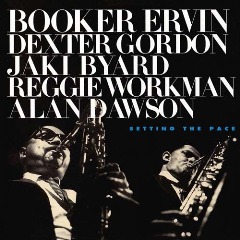
Over the holiday weekend, Booker, I listened to your albums The Freedom Book, The Song Book, and Booker & Brass.  Last night, I played Setting the Pace. That’s one of my favorite jazz albums. Do you remember making it? You made it in Munich, Germany in 1965. Dexter Gordon played on the title cut and Dexter’s Deck. Your longtime bandmate's Jaki Byard, Alan Dawson and Reggie Workman were in the rhythm section.

Do those details jog your memory? Man, you and Dexter showed out. Setting the Pace was the hottest sax tandem I’ve heard. And I've heard plenty such as the dates Gene Ammons co-led with Sonny Stitt. You and Dexter never upstaged each other. Instead, you guys took your talent and stretched it as far as it would go. Your styles are different.

Dexter had a lean tone. Dexter could jump over chord changes like a hurdler. Booker, your tone was wide like the state of Texas. You had enough horsepower to zoom through changes like a speedboat.

Booker, before the holiday, I talked with the friend, who introduced me to your recordings ten years ago. We talked about how today’s jazz musicians, especially jazz saxophone players sound the same. My friend said players from the swing, bebop, hard bop, and free jazz eras strove for uniqueness.

Charlie Parker, Art Blakey and Ornette Coleman could play a few licks and right away, listeners could identify those musicians. They had their own sound.

Today’s jazz musicians lack individuality, and it seems as if they learned from the same textbooks, my friend stressed. Booker, I disagree with my friend. 

James Carter, Christian McBride, and Cyrus Chestnut--three current and accomplished jazz lions--are unique. Yes, many jazz musicians from the bebop, hard bop, and free jazz eras were innovators.The current generation isn’t concerned with changing jazz music, which is fine. Booker what do you think? 

Not every jazz musician has to be an innovator. If they play with the same level of commitment, musicianship, and creativity, you and Dexter showed on Setting the Pace that’s good enough in my book.

Monday, July 4, 2011

IN HINDSIGHT

Saturday afternoon, I talked to writer Bill Harris about jazz bass player Marion Hayden’s 2007 album Visions. Bill has been my mentor well over 20 years. We talk weekly about a variety of topics, mainly books, writing and jazz music. Marion is popular around Michigan. And she’s a top bass player in the nation. That’s my opinion. I bet others acquainted with Marion feel the same.

Visions was Marion’s debut recording. Marion has played on many jazz albums. And she cut three albums with the female jazz band Straight Ahead Look Straight Ahead, Body & Soul, and Dance of the Forest Rain. Visions was the fourth album I reviewed for I Dig Jazz.

For the most part, I liked Visions. But I recall writing Marion’s band Steve Turre, Wendell Harrison, and Kirk Lightsey—great bandleaders—eclipsed her. I felt Marion should’ve been more aggressive. I learned a few years later, after interviewing her, aggression wasn’t her style.

Bill thinks the world of Marion. Last week, Bill caught Marion’s set at jazz guitar player A. Spencer Barefield’s home concert series. Bill bought a copy of Visions. And he raved about it, ranking Visions among the best jazz album by a Detroiter he’s ever experienced. That’s a big compliment. To Bill jazz is important as food and shelter. Bill disagreed with my review of Visions.

I listened to Visions again a year or so after interviewing Marion for a Metrotimes article. My editor, W. Kim Heron headlined it ‘Mother of the band’. I asked Marion about her low-key style.

Part of a jazz bass player’s job, Marion explained, is keeping the band in check. Consumed with the basic duties of a jazz bass player, Marion rarely has the opportunity to play long solos or showboat.

In June, Marion performed with saxophone player Salim Washington at the Detroit Institute of Arts. That was the first time I’ve seen Marion solo on nearly every song. Washington gave Marion the floor. And she kicked butt.

Looking back, I wished I’d interviewed Marion before I reviewed Visions. Now I understand her, and what the duties of a jazz bass player are.

Friday, July 1, 2011

WATCH OUT FOR...

I Dig Jazz recommends three new jazz albums, Kaiso, 33, and Something Special set for release soon.

Caribbean bop
Trumpeter Etienne Charles was born in the Caribbean. Charles’ third album Kaiso , which is set for release by Culture Shock Music July 12, is a bop album with a calypso feel, especially on songs such as Ten to one is murder, congo bara, and Kitch’s bebop of calypso. Charles is a lyrical trumpeter like Johnny Cole. Charles can speed up the pace when necessary. Charles hired a talented rhythm section. Ben Williams keeps time throughout Kaiso accurately like a grandfather clock. (Williams' first album as a leader State of Art hit record stores last month.) And there's plenty highlight worthy solos from piano player Sullivan Fortner Jr. 

Comeback
A few years ago, Canadian jazz singer Alex Pangman had a double lung transplant that could’ve ended her career, which was on an upswing. But she’s tougher than rubber, and she kicked the odds that were stacked against her in the ass. On July 12, her comeback album 33 goes on sale. 33 is her first recording for Justin Times Records. She didn’t play it safe. 33 is a period piece jazz album. Pangman sings songs--I Found a New Baby, Ain’t Cha Glad, and A Hundred Years from Today--that were big in 1933. She blew the dust off those relics and modernized them.

The bionic man
Piano player Jimmy Amadie stopped playing for 30 years because he developed a terrible case of tendonitis in his hands. Amadie was a workaholic and a favorite of many top tier jazz saxophone players Coleman Hawkins, Benny Golson, Lew Tabackin, Phil Woods, and Lee Konitz. When Amadie was out of the public eye, he kept busy composing and writing instructional music books. He had surgery on his hands. Over time, he painstaking rebuilt his chops. Then he returned to active duty, releasing some solid albums Always with Me and Philadelphia Story are two of his best dates. August 16, TRRecordings is scheduled to unveil Something Special, a cover album of some well-known standards such as All the Things You Are, Sweet Lorraine and Fly Me To The Moon. Those and seven other classics are reinterpreted brilliantly by Amadie and his mate’s bass player Tony Marino, drummer Bill Goodwin.