Saturday, June 14, 2008

NOT IN CARTERIAN FASHION

I have to be honest with you, James. I really dislike your new album for Emarcy Present Tense. This is a tough blog for me to write because just several months back, I wrote a blog expressing how much your music has impacted me over the years, and how you’re responsible for some of my most cherished musical experiences. The one I think about often is the night you recorded live at Baker Keyboard Lounge.

You had saxophonists David Murray, Johnny Griffin, and Detroiters such as the late drummer Pistol Allen and alto saxophonist Larry Smith. I was sitting across from Kid Rock and his lady Pamela Anderson. I would have never figured them to be fans of your, but they were transfixed like the others in the audience. At least monthly, I think about that night.

That was along time ago, James. For what it’s worth, I always left your concerts confident you could do no wrong. Before I get into my take on your new offering I should tell you about a promise I made when I decided to start this blog page. I promised myself I would be forthright in my assessment of the albums, concerts, and people I blogged about. That meant at times I would have to write some unfavorable reviews about musicians I genuinely admire.

That said, James, for people to understand what a magnificent musician you are they have to hear you live. I would encourage them to purchase your albums Live at Baker Keyboard Lounge and Out of Nowhere, live recordings where you were uninhibited. I cant’ recall how many people I recommended those albums to. I loved those albums because they were straight up blowing sessions.

This new album Present Tense sounds like you started out on a journey with no particular destination in mind. And throughout it sounds as though someone forced you to modify yourself. Gone were those fancy catchy nuances you'd add at the very end of certain tunes. That was a recognizable trademark that distinguished you from other saxophonists.

Also, missing from Present Tense are those glorious ballads where it appeared you're engaged in an intimate dialog with your horn. There’s nothing particularly interesting about Tenderly and Song of Pour Que Ma Vie Demeure, ballads you performed on Present Tense. Even your homage to Eric Dolphy was flat. This entire album come across like outtakes from your previous offerings. Of the albums in your discography, this is the most disappointing.

You staffed your previous albums with mostly Detroiters. When you played with those guys there’s chemistry. That’s the sort of connection that’s missing with the sidemen on Present Tense guitarist Rodney Jones, bassist James Genus, drummer Victor Lewis, and pianist DD Jackson. The lack of chemistry is so noticeable it sounds like you guys were confined to separate rooms while recording this album. That might explain the cut and spliced together feel Present Tense has.

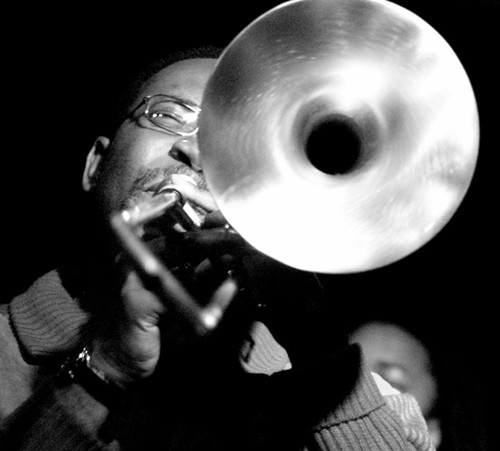
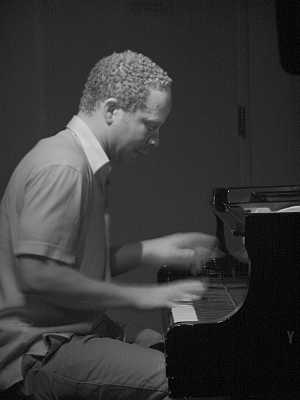
The only Detroiter on the album is trumpeter Dwight Adams. Surprisingly, Adams is not at the top of his game. It appeared as if he tried to forge a bond with these musicians who he’s obviously not comfortable playing with. The biggest eyesore is pianist DD Jackson. On Rapid Shave, he bangs and hammers the piano like he’s mad at it, or like he’s unleashing some pinned up aggression.

As I mentioned earlier, this is a difficult blog for me to write. I have to admit James, that I feel like a fair-weather friend, but this is the first time you put out a product that doesn’t measure up to you considerable talent.

Tuesday, May 6, 2008

Dream Chasers

trombonist Vincent Chandler Recently, a friend asked me who were my favorite jazz musicians I’ve interviewed over the years. Without giving the question much consideration, I blurted out Sonny Rollins and Wayne Shorter, but I couldn’t tell my friend why. It was a basic question that caught me off guard, and I gave a knee jerk answer.

I reread some of the articles I wrote over the span of my career as jazz journalist. I thought about my friend’s question again, and now I have a more thought out answer. My favorites were Detroiters organist Gerard Gibbs, vocalist Penny Wells, and trombonist Vincent Chandler. I admired their determination. They controlled their careers. It would’ve been more practical if they got good jobs instead of chasing their dream, but they understood the obstacles they faced.

Gerard Gibbs, for example, worked as an architect, and he earned good money. Yet he felt empty. He felt fulfilled making music. He quit his job to play full-time. He immediately landed steady work at popular jazz clubs such as Floods and Baker’s Keyboard Lounge. He produced two well received albums To Be or Not to B-3 and Livin’ & Learnin’, and he toured with saxophonist James Carter’s organ trio.

Vincent Chandler could have made a name for himself, playing standard compositions exclusively, but the trombonist started Urban Transport, a jazz quintet which dared to be unique by performing only original material. Chandler challenged his band-mates. Under his leadership, Urban Transport flourished. I heard the quintet on numerous occasions at Baker’s, and twice at Detroit International Jazz Festival. They never disappointed.

Of the three Detroiters, vocalist Penny Wells was the most tenacious. Wells proved her worth. When she was a teen, Wells’ music teacher tried to discourage her. The teacher said Wells couldn’t sing, and suggested Wells learn to play the violin.

Wells was infuriated, but she continued on. In 2004, she released an unforgettable debut album titled Shine. The vocalist showed such versatility the album could’ve been classified as a jazz, R&B, and Neo-Soul albums. Plus, she wrote and co-produced the songs. Wells and I became friends. She kept me updated on her career. I never told her I played Shine more than any other album I own.

Gibbs, Chandler, and Wells created opportunities. They were memorable interviews. I’m fortunate because I witnessed them realize their dream.

Friday, April 25, 2008

MY FANTASY GIG

Last week, I had every intention of writing a blog about your live album “The Gene Harris Trio Plus One” you cut at the Blue Note in 1985, which featured tenor saxophonist Stanley Turrentine, and was your debut offering for Concord Records. But I used the space I planned for you to eulogize saxophonist Donald Walden, who passed around the same time I rediscovered your album. Did you know Donald? If not maybe you'll cross paths with him up there someday.

I wanted to chat with you about this live date. During your career, you put out a substantial body of work, so I wonder if you remember this particular offering. Maybe describing the cover art will jog your memory. It's a facial shot of you with a cheeky smile, and it has the innocence of a high school yearbook photograph. You sported a goatee, and a short Afro. Staring at photo reminds me of all the fun your group seemed to have that evening, and the great time I experienced listening to it.

If you're curious, I rediscovered it a few weeks ago while alphabetizing my jazz CD collection, which currently occupies every inch of the four CD towers my wife purchased at Wal-Marts. I haven’t completed the task yet. Organizing CD’s is time consuming. I've contemplated hiring someone to finish the job because, honestly Gene, I don’t think I ever will.

The Gene Harris Trio Plus One transported me back to the exact moment in 2000 when I purchased and listened to the album for a solid month. I'm not kidding you. Every time I played the album it felt as if I was sitting in front of the bandstand. Listening to the album, I actually fantasized I replaced you. I can't recall every detail of the fantasy, for example, if you summoned me from the audience, or I if I simply imagined that I was you.

Anyway, I do recall fantasizing about sitting at the piano flanked by bassist Ray Brown, and drummer Mikey Roker playing the Battleship Hymn of the Republic and Brown’s Gene’s Lament. My ten fingers zipped across the piano keys. After those tunes I whispered to Turrentine's: “Lets play a ballad. Ray’s tune took a lot out of the crowd”.

I called Erroll Garner’s Misty. The ballad seemed to give the crowd time to catch their breath. But Turrentine and I didn’t allow them to become too relaxed. We hit them with Uptown Sop. The crowd cheered while Turrentine and I horsed around with the chord changes. Often when I listen to a remarkable recording I wish I was a musician instead of a writer. Maybe I will realize that in my next life.

I heard you liked your gigs to be loose, and you never prepared a set list. You want the music to be open. That’s what I loved about The Gene Harris Trio Plus One, the openness, the spontaneity, and how you made the crowd feel like they were at a neighborhood block party.

Thursday, April 10, 2008

DONALD'S MELODY LINGERS ON

photo by Clarence Johnson Donald, early this morning I founded out you passed away on Sunday after a lengthy battle with an ugly illness. Most of today, I reminisced about the first time I heard you play at the International Institute in 1995. You performed the music of pianist Thelonious Monk. I wasn’t a published jazz journalist yet. I was still feeling my way around the music.

You were the first jazz musicians I ever interviewed? Do you remember that interview? It was in 1996 a few months after Arts Midwest named you Jazz Master. You and Marsha had just moved into an apartment at 1300 Lafayette. The apartment had a great view overlooking downtown Detroit. A piano was in the living room. You set on a black leather sectional, wearing a white silk shirt and black slacks, holding a silver flute. A glass of red wine was on the coffee table.
I asked you how it felt receiving the Jazz Master award. You said humbly there were other jazz musicians more deserving. Then you talked on an on about your mentor pianist Barry Harris. Harris taught you and other fledging Detroit boppers who came of age during the 50’s everything he knew about Be Bop.

You said Harris was a task master, and there were times when his criticism was so brutal you left his Westside Detroit home damn near in tears. But you stuck it out. And you became an accomplished musician, a tenured professor, a bandleader, and a business man. You only made three albums as a leader, "A Portrait of You", "A Monk and a Mingus Among Us," and "Focus: The Music of Tadd Dameron". Three albums isn’t a lot, but they were gems nevertheless. You always struck me as an artist who was more concerned with quality than quantity.

I heard stories you took your students through the same rigorous boot camp. That intense training worked. Bassist Rodney Whitaker is a star. Pianist Geri Allen is a star. Bassist Marion Hayden is a star. They were your students.

Mid-way through our interview, I asked if you ever, like saxophonist Eddie “Lockjaw” Davis, quit playing to pursue a different occupation. You told me a funny story about pawning your tenor, and getting a gig delivering milk. For the life of me, I couldn’t imagine a guy as dapper as you delivering dairy.

You also told me about some lean times you had when you lived in New York. You said things got so tough once you had to run an extension cord from your apartment to an adjoining building where a friend lived to keep your electricity working.

You probably don’t remember that interview. It was a long time ago. Now you are in that exclusive section of heaven God reserved for Detroit jazz musicians jamming with your running buddies Teddy Harris, Roy Brooks and Harold McKinney. I bet the jam session they organized to welcome you home was fantastic.

After our first interview, we became friends. I could always count on you for a good quote such as the one you gave me when I was working on an article about your close friend bar owner Bert Dearing Jr. You said: “Bert is like a Jew business man who loves jazz music and who knows how to make a buck.”

You never got upset when I’d call you on a Sunday morning out of the blue to chit-chat. There was one incident when you got upset with me.

It was three years ago when I quoted you in an article I had written about Roy Brooks. I won’t give any detail because I’m sure you forgot about it, but I have never really forgiven myself. Our friendship, however, changed.

Donald that incident was one of those moments I regret. I had plenty of chances to apology, but I didn’t. I hoped in some way you forgave me. For what it’s worth, my feelings for you never changed, not one bit. You were the jazz musicians that give me a start.

Monday, April 7, 2008

REPLAY


Last month, Craig, I wrote a blog about the influence James Carter's first album “JC on the Set” had on me, and how much I believed you and the saxophonist were compatible, noting there was a stretch where I listened to the album damn near every day for a solid year.

To this day, when I replay it I can’t just listen to it once then walk away. I have to replay it over and over. You are partially responsible for that.

Writing about the album, I didn’t convey you’re also responsible for some of my most cherished listening experiences.

The first experience that springs forth is your solo on “The Intimacy of My Woman’s Beautiful Eyes,” the third track on Carter’s third album “The Real Quietstorm”. Craig you had the piano serenading.

On your solo you express those feelings and emotions men harbor, but have a difficult time, for whatever reasons, conveying. Your fingers were like ten poets strolling along the piano keys. I would point to that moment if asked to name my favorite instrumental solo of all times.

The chemistry you and Carter delayed on his classic albums “Jurassic Classics,” “The Real Quietstorm,” and “Conversin’ with the Elders,” should be bottled and given to any budding musicians curious about how band members should inspire and complement each other.

I was upset when you and Carter slit. I wondered, particularly when I was reminiscing about the saxophonist’s music, how to musicians with so much in common decide it times separate. Did you guys just get sick of each other?

I kept abreast of James’ musical evolution, but at times I lost track of your career. I heard you moved to Brooklyn, New York, and signed with Thirsty Ear. You fatten your resume’ gigging with drummer Susie Ibarra, saxophonists Roscoe Mitchell, Chris Potter, and Lotte Anker.

I purchased a copy of your debut release for Thirsty EarLight Made Lighter". I wasn’t taken by it like I was with your first album as a leader titled “The Craig Taborn Trio,” which you made with members of Carter’s quartet drummer Tani Tabbal and bassist Jaribu Shahid.

In 2003, a few years, before the Harlequin CafĂ©, in Indian Village, closed down, I got a chance to hear you with guitarist A. Spencer Barefield’s group. None of the cats could match your creativity, but you shone nonetheless.

Seeing you at the Harlequin didn’t compare one bit to the first time I heard you live in 1997 with Carter in Ann Arbor, MI at Hill Auditorium. Carter’s quartet headlined the Blues, Roots, Honks, and Moans concert. That evening you had such a big sound I though you were playing two pianos simultaneously.

Last year, at the Festival of Jazz and Improvised Music, you performed with saxophonist Lotte Anker and drummer Gerald Cleaver. It was the last night of the two day fest, and the trio closed it out with a bang. I was there from sun up to sun down both days. I recall you guys getting the only standing ovation.

You did everything to the piano but crawl inside it. The image of you finger whirling on the keys like propellers stuck inside my head for months.

Although I don’t get a chance to hear you as often as I would like, I have those moments, images, and solos frozen in time inside of my memory.

Sunday, March 30, 2008

BUDDIES


Gerry, for weeks I’ve been obsessed with your Gerry Mulligan Meets…series. I wrote about your collaboration with Thelonious Monk and Ben Webster. Now I’m listening to what I believe is the best of the lot Gerry Mulligan Meets Johnny Hodges. I felt as if I attended the recording session. I know that sounds silly. I wasn’t even born when you and Hodges produced this masterpiece. Actually, the albums feels like you made it in you house, and Hodges dropped by unannounced. When two great jazz musicians meet some magnificent music is bond to ensue.

You jokingly told Hodges you would only let him inside if he had his alto. Before leaving his house, Hodge grabbed his alto first, then his wallet and his car keys. You guys drank, and gossiped. Then you scooped up your baritone. You wanted Hodges is critique a new tune you had written titled “Bunny." You wrote the composition in his honor, but you didn't tell him that beforehand. You wanted to gauge his reaction first-if he cringed after hearing the melody. Or if he grabbed his horn to join in.

Hodges liked "Bunny" right away. You were only two choruses into “Bunny” and miles away from the bridge before Hodge joined you, offering counter-melodies like he had co-written the tune. Hodge was the competitive sort. You understood the altoist had to be tough grewing up in Ellington's family.

So, after you guys finishing "Bunny," Hodge didn't allow your horns to cool down. Hodges called the ballad “What’s The Rush”. Ballads were his hallmark. He played them with such dignity and warmth.

You didn't challenge him. When it was your turn to solo, it sounded as if you just shut your eyes and did the best you could. Gerry, I must say it was smitten by how you caressed every note. I bet you even made Hodge blush, and maybe a little envious.

You were more assertive on “Back Beat" and “Shady Side,” refusing to be outdone by Hodges in your dwellings. On “Shady Side,” you took the melody by the hand, and strolled through the changes.

Gerry Mulligan Meets Johnny Hodges wasn’t conceived as I described. Journalist Nate Hentoff, who wrote the liner notes, didn’t say how this album was conceived. To me, the album felt like all you wanted to do was blow with a close buddy.

Monday, March 24, 2008

BEN & GERRY


Hey, William do you remember the telephone conversation we had a few Thursdays ago about the Gerry Mulligan Meets ..., a series of collaborations the baritone saxophonist cut for Verve and Riverside? The series featured such stalwart swingers as Johnny Hodges and Ben Webster.

Hours before I called you, I’d listened to Mulligan Meets Monk. Before I could give you my take on it, you encouraged me to listen to Gerry Mulligan Meets Ben Webster. You said the album was perhaps Mulligan’s finest collaboration.

This weekend, I spent some quality time with the album. The saxophonists did some wonderful individual blowing, especially on "Go Home" and "For Bessie". But the album wasn’t Mulligan’s finest collaboration by a long shot. Mulligan didn’t have the same affinity he had with Thelonious Monk and Johnny Hodges. Mulligan was more in sync with them as if he could read their thoughts. That kindred connection was missing from Mulligan’s meeting with Webster.

In the past, you've accused me of rushing to judgment. Occasionally, I’ve been guilty of that. But, I listened to this album more than the others. I even wondered why I wasn’t immediately taken by Mulligan and Webster. I have it figured out.

They seemed reluctant to challenge each other. Had they, this date would've been an all blowing session. Sadly, I wanted to shelve this album after listening to their uninspired rendition of Chelsea Bridge and Sunday. But, I stuck it out hoping they would loosen up.

On "Go Home" and "For Bessie," they jelled, but sadly they didn't sustain it. William, listening to Gerry Mulligan Meets Ben Webster did not excite me as much as it did you.