 |
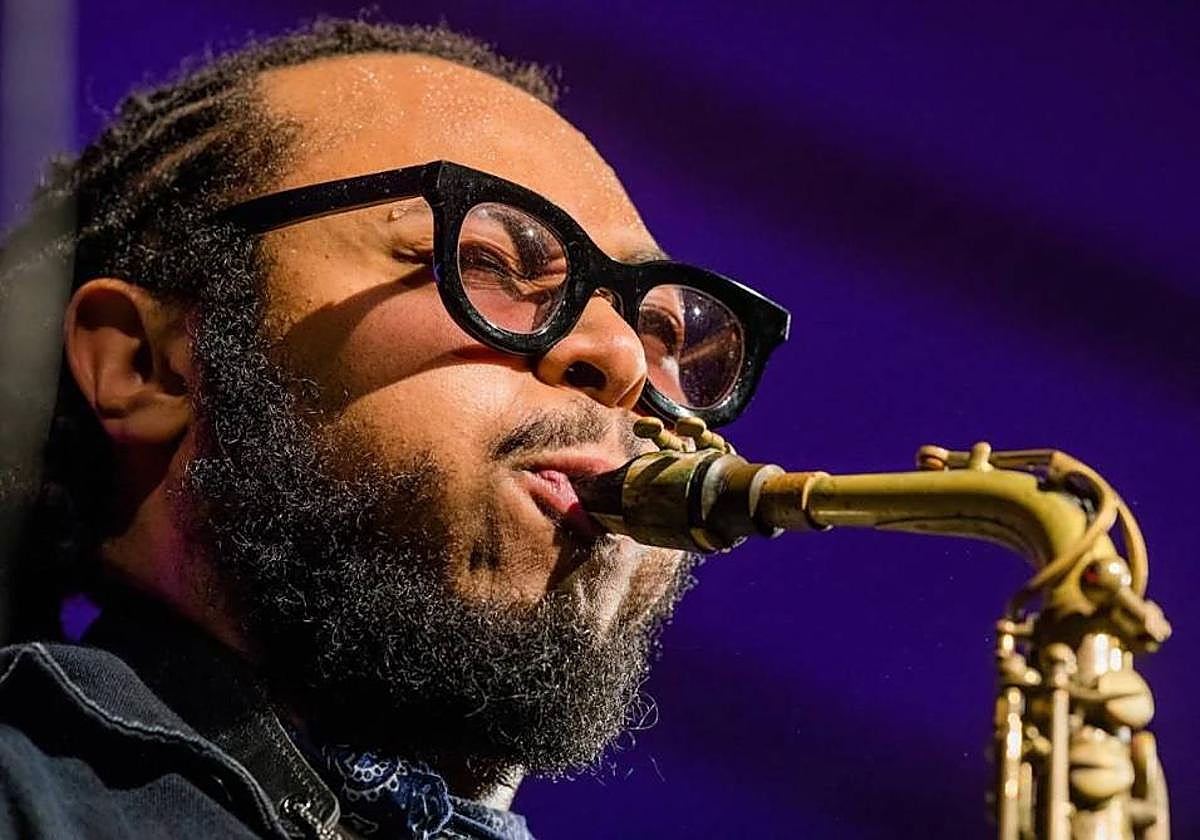
| Saxophonist Immanuel Wilkins |
It’s
such a pleasure to hear a young jazz musician whose influences are instantly recognizable
after he or she plays a note or two. That’s how I felt Saturday evening
listening to the alto saxophonist Immanuel Wilkins perform with his quartet at
the Blue Llama jazz club in downtown Ann Arbor, Michigan. A Juilliard graduate,
a Grammy-nominee, and a Blue Note artist, Wilkins performed at the Blue Llama
for the first time, and it didn’t take long for his quartet to win over the packed
club. The quartet is unflashy and woven tightly, featuring bassist Ryoma
Takkenaga, drummer Kweku Sumbry, and pianist Micah Thomas. From the opening number,
it was apparent that Wilkins had spent considerable man-hours dissecting the
licks and mechanics of saxophonists James Spaulding and James Carter. Wilkins embodies
Spaulding’s completeness and vast tone and Carter’s fearlessness and command of
every inch of the saxophone. Throughout the 90-minute set, the quartet
performed original compositions—though Wilkins never announced any title, which
was disappointing. But it was an easy flaw to forgive, given how inviting the
music presented was. He showcased his range with brisk, fast-tempo numbers,
slow grooves, and even an avant-garde-leaning number. The standout for me was a
ballad, which he approached with such warmth and tenderness that his saxophone
seemed to melt in his hand. What I admire most about his quartet is their sure-footedness.
They get to the point without taking any shortcuts. Wilkins is a fantastic
saxophonist who truly deserves all the press he’s received since hitting the
jazz scene. Yet, if there’s one noticeable weakness in his game, it’s his lack
of stagecraft—an area in need of immediate attention. Engaging the audience between
numbers and explaining the genesis of his compositions would be an excellent starting
point.


