Monday, February 16, 2026

TERENCE BLANCHARD AND RAVI COLTRANE CELEBRATE MILE DAVIS AND JOHN COLTRANE’S CENTENNIAL AT THE UNIVERSITY MUSICAL SOCIETY CONCERT SERIES


Terence Blanchard and Ravi Coltrane
On Sunday afternoon at Hill Auditorium on the University of Michigan campus, a terrific concert commemorated the 100th birthday of jazz legends Miles Davis and John Coltrane. The event featured trumpeter Terence Blanchard, his band the E-Collective, and special guest Ravi Coltrane. Before the performance began, Blanchard addressed the near-capacity audience, explaining that the music he selected for the band to perform would not mirror the original arrangements. Instead, he intended to honor Davis and Coltrane’s legacy by performing new arrangements and staying true to his and Ravi’s artistic voice — a principle Davis had implored Blanchard to follow decades earlier. Blanchard’s words set the tone for the concert, preparing the audience for interpretations that resuscitated the originals. The concert opened with an extended, reimagined version of “Flamenco Sketches,” followed by an electronically tinged take on “Green Dolphin Street.” The band’s innovative take on the opening selections made it clear that modernizing the arrangements was the right choice. Both Blanchard and Coltrane delivered breathtaking solos, moving through the changes like snowplows. Blanchard and Coltrane got top billing, but the scene stealer was the E-Collective’s pianist, who raced up and down the piano like a madman with a style and enthusiasm like pianist Joey Caldarazzo. Despite the musical excellence, it was disappointing that Blanchard never discussed the musical relationship between Davis and Coltrane, or how their collaboration helped shape jazz. Equally disappointing was that Coltrane did not share personal reflections about his father. Coltrane did not speak at all during the concert. The performance continued with a funk-inspired reinterpretation of “All of You.” The concert’s highlight came when Blanchard paired “All Blues” with “Teo.” To close the evening, Blanchard completely renovated “Two Bass Hit,” noting that it was the band’s first time performing this arrangement. Sunday’s concert was a big hit, keeping the audience engaged from start to finish through modernized arrangements. Blanchard and Coltrane honored the spirit of these jazz icons without attempting to emulate their style. Although the absence of spoken tributes left some questions unanswered, the music itself served as a heartfelt celebration.

Sunday, February 8, 2026

THE JAZZ AT LINCOLN CENTER WITH WYNTON MARSALIS PERFORMS ‘DUKE IN AFRICA’ AT THE UNIVERSITY MUSICAL SOCIETY CONCERT SERIES


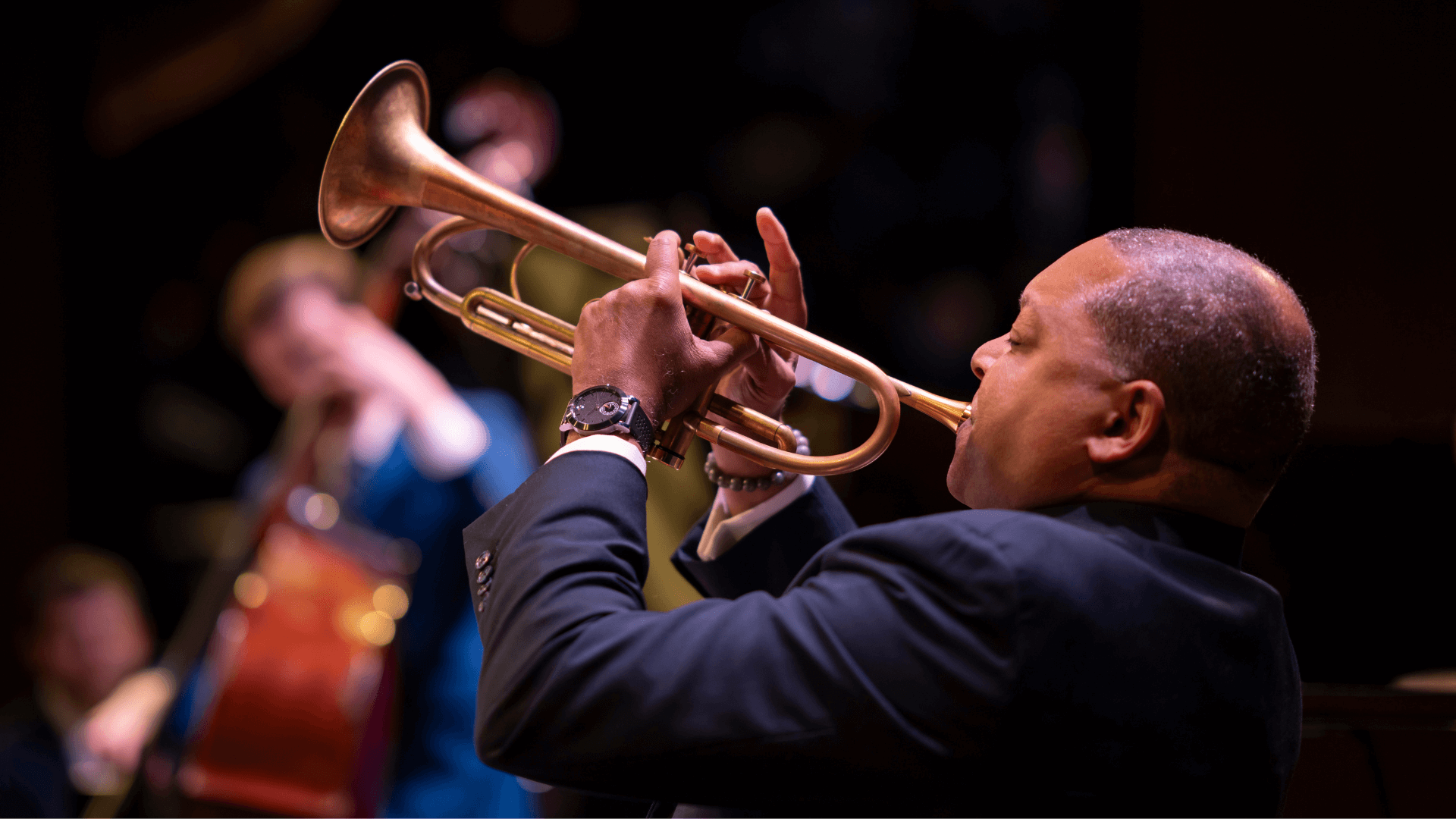
Trumpeter Wynton Marsalis
What makes the annual Jazz at Lincoln Center concert with Wynton Marsalis, presented by the University Music Society, worth attending each season is that each performance is unique. That has been my experience over the two decades I've reviewed the shows. On Saturday, the orchestra returned with a program titled "Duke in Africa," once again demonstrating its mastery of Ellington’s canon. For 90 minutes, the JLCO highlighted its collective virtuosity, dedicating the first half to Ellington's “Togo Brava Suite” and the second half to his “Liberian Suite.” What stood out most in each interpretation of Ellington’s music was the soloing. Before the music started, Marsalis passed the reins to the co-music directors' saxophonists, Alexa Tarantino and Chris Lewis. Tarantino, one of the youngest musicians in the orchestra, spoke about the orchestra’s tour of Africa, its collaborations with noted African jazz musicians, and how this presentation of “Duke in Africa” would be mixed with music from those collaborations. Those compositions warmed the audience, but it was Ellington’s music that stirred their souls. Tarantino and baritone saxophonist Paul Nedzela delivered the first memorable solos on “Soul Flute,” followed by Dan Nimmer, who made his piano float on “Conscious.” But the solo that almost caused a riot inside Hill Auditorium was Lewis on “Naturally.” Trombonist Chris Crenshaw and trumpeter Marcus Printup dazzled when the zoom lens was focused on them. The crowd ate up the changes the musicians played like a hardy holiday brunch. Surprisingly, Marsalis didn’t make too much noise. He appeared content, minding his business in the trumpet section. Recently, Marsalis announced that he was stepping down as the artistic director of Jazz at Lincoln Center. So, I wondered if he also plans to leave the trumpet section. Anyway, the orchestra was in strong form, managing Ellington’s music with the reverence his legacy deserves. 

Monday, February 2, 2026

SAXOPHONIST MARCUS ELLIOT KILLS AT THE DETROIT JAZZ PRESERVATION CONCERT SERIES

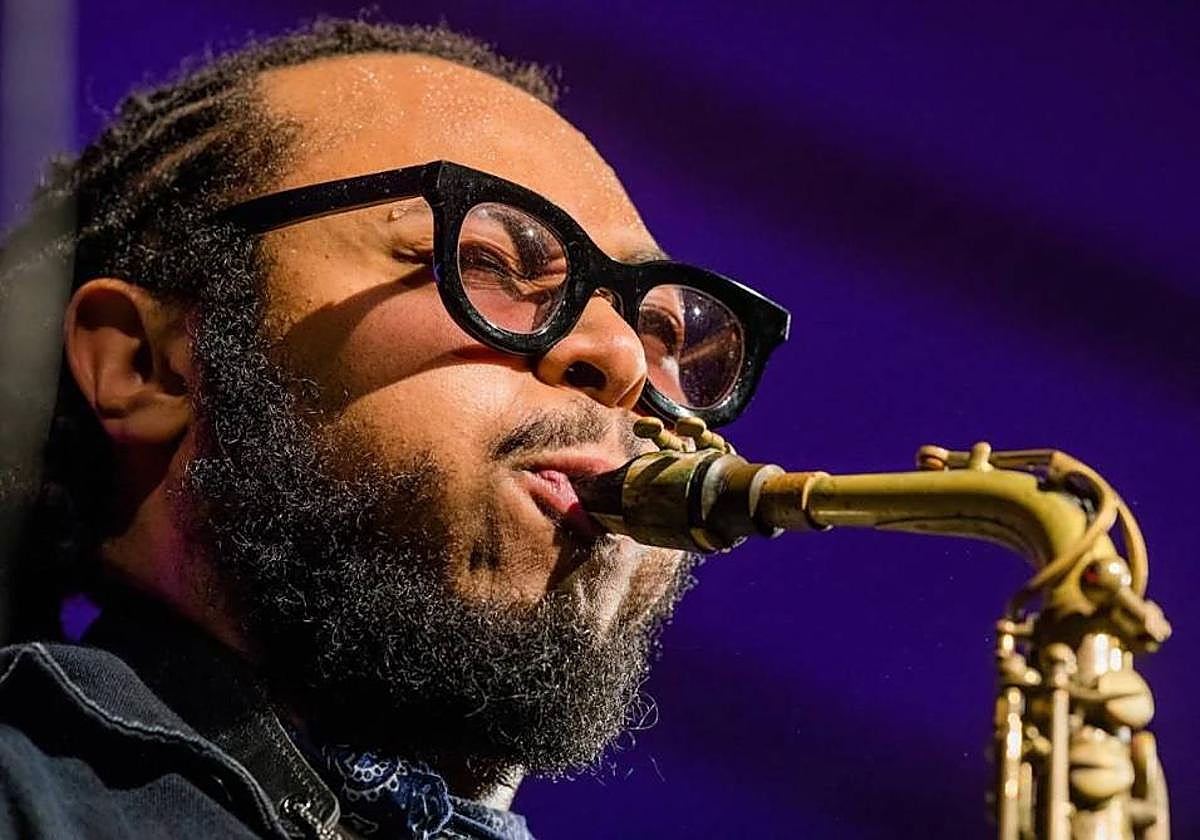
Saxophonist Marcus Elliot

I was surprised when trombonist Vincent Chandler, founder of the Detroit Jazz Preservation Concert Series, announced last month, following the tribute to the late pianist Harold McKinney, that saxophonists Kasan Belgrave and Marcus Elliot would be featured next. This decision was surprising, not because of any absence of genuine talent, but because neither artist has yet developed an extensive body of work as previous honorees in the series have. Chandler explained that Detroit's young jazz musicians are producing great music and deserve recognition. On Sunday evening, Elliot delivered one of DJPCS's best concerts, proving that Chandler's move to spotlight younger composers was wise. Belgrave and Elliot have graduated with high honors from the young lion stage of their development. They are respected and popular members of Detroit’s jazz community. Their respective performances have been DJPCS’s largest turnouts. Elliot’s quintet featured trumpeter Dwight Adams, pianist Cormac Avila, bassist Noah Jackson, and drummer Caleb Robinson. They opened with Elliot’s hot. “Hills of Pinar del Rio,” with Adams and Elliot setting the tone for the elevated level of swing maintained all evening. Adams swung with the top down throughout the concert, a perfect complement to Elliot’s luminous blowing. In terms of swing, the quintet was evenly matched, but Elliot was the centerpiece. I met him years ago during his tenure at the jazz club Cliff Bell’s. I was drawn to his blowing because he’d clearly modeled his tenor sax approach on greats like Joe Henderson and Jimmy Forrest. Over the years, every time I attended one of Elliot’s sets, I was amazed at how his sound continued to mature. At Sunday’s show, his compositional skills were the focal point. His compositions show depth, allowing space for unbridled improvising, a defining aspect of his performance. On his original like “Words for the People,” “Learning to Remember,” and “On a Good Day,” he consistently showed his improvisational marksmanship. During certain solos, his blowing was akin to a youthful Yusef Lateef, and at other moments, Elliot stirred the spirit of Rahsaan Roland Kirk. Big contributions were also made by Avila, a recent Michigan State University graduate, and Robinson, the quintet’s secret weapon. Chandler’s decision to celebrate Belgrave and Elliot proved to be a smart addition to an already world-class concert series.