Saturday, December 22, 2012

A NOTE TO TCHAIKOVSKY REGARDING MIKE JELLICK’S INTERPERTATION OF THE 'NUTCRACKER SUITE'

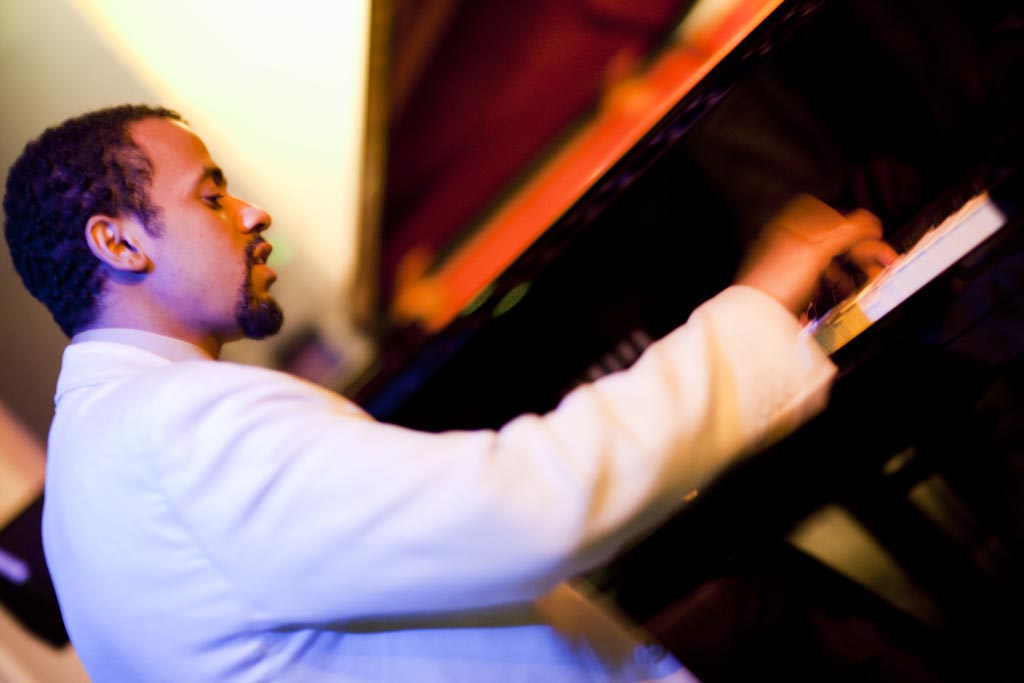
Pianist Mike Jellick

Dear Mr. Tchaikovsky,
I am Charles L. Latimer. I'm a jazz reporter and jazz blogger. I want to take a minute of your time to tell you about an outstanding show I caught Friday night at the Detroit Institute of the Arts. The jazz piano player and arranger Mike Jellick put on the show. Jellick is, 32, and in the past two years has become the top jazz piano player in the state of Michigan.

Funny thing, Mr. Tchaikovsky, is five years ago Jellick couldn’t play worth a damn. He had a hard time making a living. Eventually, Jellick became frustrated because he couldn’t get steady work. So he moved to Chicago. Jellick always showed promise. Plus, he had a colorful and a fertile  imagination. But he lacked the chops to pull off all the slick musical ideas swimming in his head. Being in Chicago did him a world of good.

In Chicago, Jellick practiced for two years. He soaked up Chicago’s jazz scene. Then he returned to Detroit anew. It didn’t take long for him to become a first-call commodity. Friday night, Jellick and his quintet—drummer Jesse Kramer, bass player Miles Brown, saxophone player Marcus Elliot, and singer Kira Frabotta and special guest trumpeter Chris Johnson--presented an ambitious work that took Jellick two years to perfect.

Jellick reworked your yuletide masterpiece “The Nutcracker Suite”. Not that it needed reworking. Jellick wanted to put his spin on it, and boy did he ever. Given the positive response from the standing-room-only crowd Jellick’s reworking of the suite was a hit. What did Jellick do to your work you wonder.

Jellick took “The Nutcracker Suite” apart note by note, applied a few new coats of paint on some notes, and added a number of tempo and mood changes. He retooled the suite like an auto mechanic retools an engine of a priceless car. Jellick didn’t borrow from any of the other arrangers who rearranged “The Nutcracker Suite,” including the great Duke Ellington.

Borrowing from others wouldn’t have been a challenge for Jellick. Jellick’s take was solely the product of his imagination. Of course, the show wouldn’t have been a hit without the participation of Jellick’s world-class band.

Miles Brown was sweet. He walked the bass all night long like one of Santa’s reindeers. Kira Frabotta turned her voice into an instrument. Marcus Elliot proved he’s one of the leading tenor players of his generation. He’s a youngster who’s invested plenty man-hours studying the greats of the tenor sax. 

Jesse Kramer was a textbook example of how tasteful a drummer should be. He knows the chief task of a jazz drummer is powering a band, and Chris Johnson fit like candles on a kid’s birthday cake.

Jellick was the consummate leader. Mr. Tchaikovsky, I bet a month’s pay you would’ve loved his playing. And you might’ve been a tad jealous. Damn, I wish I had played the section of the suite that way you might’ve said to yourself.

The best part of the show was Jellick’s solo version of “A Christmas Song,” which received the first of three ovations. Mr. Tchaikovsky, I don’t have enough fingers and toes to count the number of people I overheard say Jellick’s show was the best they attended this year. Jellick is performing the suite again tonight at Cliff Bell's in downtown Detroit. If you aren't doing anything you should check it out.

Best always,
Charles 


Tuesday, December 18, 2012

TOP 10 JAZZ ALBUMS OF 2012


1.)         Don Byron “Love, Peace, And Soul (Savoy Jazz)
Don Byron always thinks outside the box. On this album, Byron performed some deep research into the work of gospel legend Thomas A. Dorsey. Once Byron selected the cuts for this album he picked vocalist DK Dyson to pour her gorgeous voice over each cut. The result is the greatest gospel jazz album in recent memory.

2.)         Ravi Coltrane “Spirit Fiction” (Blue Note Records)
Coltrane’s dad saxophone God John Coltrane would be proud of Ravi’s latest album. Ravi has an impressive discography to date, but this album, his first for Blue Note, is Ravi’s opus. Every component works from hiring Joe Lovano to produce it to having pianist Geri Allen to bless it. Ravi is not a natural swinger. His hallmark is story telling.

3.)         Branford Marsalis “Four MF’s Playin Tunes (Marsalis Music)
If nothing else, Marsalis can come up with a catchy title for an album. In the past, there’s been titles such as “Crazy People Music” and “I Heard You Twice the First Time”. Marsalis is by all accounts the leading saxophonist of today, and since opening Marsalis Music, he’s put out one outstanding album after the next. “Four Motherfuckers Playing Tunes” is Marsalis’ finest album for the label thus far. Plus, the album is the proper outlet to showcase the newest member of Marsalis’ band drummer Justin Faulkner—who took Jeff “Tain” Watts’ spot. Faulkner proves to be a suitable replacement, and it’s fun listening to the other longstanding band-mates break in the youngster.

4.)         Eric Alexander & Vincent Herring “Friendly Fire” (High Note) This album recorded live and Smoke is the second blowing session for two of jazz’s upper tier saxophonists, and the high level of swing is on par with the classic blowing sessions Eddie “lockjaw” Davis and Johnny Griffin made. Be careful with this album. It will burn up your ear drums.

5.)         Cyrus Chestnut “The Cyrus Chestnut Quartet” (WJ3) Chestnut is the kind of pianist who can let his inner swinger go at will. That’s particularly true when he’s leading his trio. When playing with his quartet, Cyrus likes to give his sidemen the lion share of the spotlight. On this album, Chestnut’s best in years, he ask saxophonist Stacy Dillard to shoulder most of the workload, and Dillard does so magnificently.

       6.) The Cookers “Believe” (Motema)
         Billy Harper, Eddie Henderson, David Weiss, Craig Handy, George Cables, Cecil McBee, and Billy Hart. It's not difficult at all to make a smoking hot jazz album when those all-star jazz musicians are in the same band. Of course, this project could’ve turned into an ego fest. There’s some strong personalities in the band, but each swinger understood this all-star project wasn’t about individuality. The project worked on paper and it worked in reality.

7.)         JD Allen “The Matador and The Bull (Savant) Saxophonist JD Allen is a thinking man’s saxophonist as evident on all 12 cuts on his latest album. Like Branford Marsalis, there’s substance behind every note that Allen plays. He never swings for the sake of swinging.

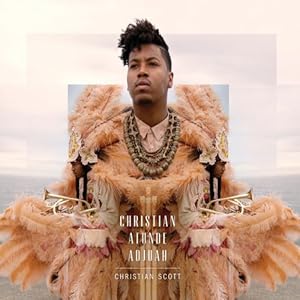
8.)         Christian Scott “Christian Atunde Adjuah” (Concord Records) Early in his career it was obvious Christian Scott wasn’t going to be happy as a run-of-the-mill jazz trumpeter. So Scott—who recently changed his name to Atunde Adjuah—has been experimenting since day one, and finally all his hard work has come to fruition with this remarkable double album, a bulletproof representation that Scott has come up with a winning formula.

9.)         Orrin Evans “Flip the Script (Posi-tone) For years now, pianist Orrin Evans has been quietly making wonderful trio jazz albums, but Evans for whatever reason hasn’t garnered the press or praise given his peers. However, Evans carries on unfazed. Here Evan plays blues, pop, and a lot of bop beautifully.
        
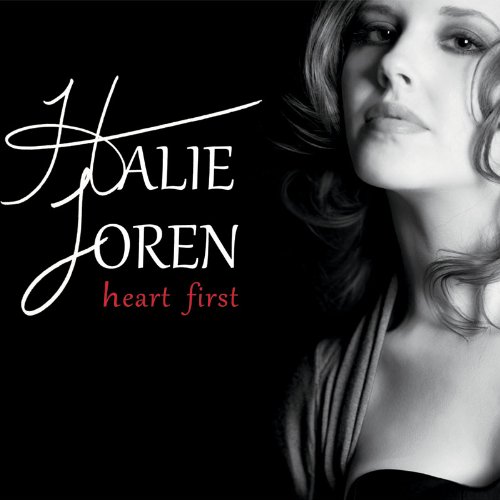
        10.) Halie Loren “heart first” (Justin Time) She is not a household name yet, but who cares this woman can sing. The cut “Waiting in Vain” will make an attack dog cry. Loren loaded up this album with  14 songs, which is a good thing because the time you spend with her delicious voice never feels rushed.

Monday, December 10, 2012

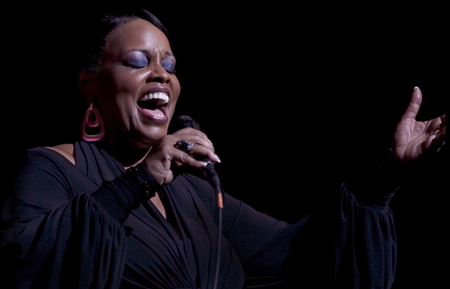
DIANNE REEVES CLOSED 2012 TOUR IN HOMETOWN

Dianne Reeves
Guitarist/songwriter Raul Midon was billed as a special guest at the second concert of the University Music Society’s Jazz Series Saturday evening at Hill Auditorium in Ann Arbor, MI. Midon was hired to heat up the stage for jazz singer Dianne Reeves. But Midon pimped the stage as if it was his bitch, and the audience ate it up. Midon, a native of New Mexico who’s been blind since birth has five albums on the market, and he’s been touring with Reeves.

 Midon was escorted on stage and put in front of a mic where he shocked the audience for twenty plus minutes, working out on cuts from his 2010 album “Synthesis”. Midon told the packed auditorium after the opening number there wasn’t any technology on the stage just human technology. Then Midon played the guitar and bongos at the same time, and made his voice sound like a  trumpet. Midon has a good voice, and he can switch from falsetto to baritone. 

I gathered it was the first time most of the audience had experienced Midon. He set the bar high for Reeves. Reeves, one of the top jazz singers around, is having a hall of fame career. But, her live shows are hit or miss. Reeves like to end her tours in her hometown. I’ve caught three, and sometimes she seemed bushed. She’s never really gone for broke. 

Saturday, Reeves’ gorgeous voice was in top condition, but her set didn't have any memorable highlights. Reeves played it safe singing mostly well-known songs such as “Stormy Weather,” and “Misty”. And there was a lot of scatting which Reeves is a pro at. In fact, no Dianne Reeves show would be complete without her scatting up a storm. 

Reeves has one of the toughest bands on earth piano player Peter Martin, guitarist Romero Lubambo, bass player Reginald Veal, and drummer Terreon Gully. And she got good use from them. When Martin and Reeves did a duet on “Misty,” I was reminded of the truism that a jazz singer is only as good as her piano player. 

Martin is a complete package, and I wondered if Reeves could get along without him. Reeves set wasn’t packed with highlights, and obviously she didn’t put a lot of thought into the set list. Honestly, people attend her shows to hear one of the top jazz voices around not to see a spectacle.

Friday, December 7, 2012

PRESERVATION HALL JAZZ BAND GAVE AUDIENCE A THOROUGH WORKOUT

The Preservation Hall Jazz Band

At 8:00am sharp, the seven members of the Preservation Hall Jazz Band walked onto the stage at Orchestra Hall in mid-town Detroit wearing pallbearer black suits. The band was founded in New Orleans in 1961 and has since become a landmark. The last five plus years the PHJB has experienced a second wind, and the band has been busy touring the world. 

Thursday evening the PHJB stopped in Detroit to play the second concert of the Paradise Jazz Series. The band gave the near capacity house a hearty dish of swing New Orleans style. The members were trumpeter Mark Braud, clarinetist Charlie Gabriel, trombonist Freddie Lonzo, pianist Rickie Monie, saxophonist Clint Maedgen, drummer Joseph Lastie Jr., and tuba and bassist Ben Jaffe.

The PHJB played two sets full of brace-yourself-moments. The first set was full of well-known blues classic such as “St. Louis Blues,” and “Basin Street Blues”. Trombonist Freddie “the Voice” Lonzo stacked up the most unforgettable moments. Lonzo is a character and a monstrous trombonist, and he was comical at times. He’s lauded as the last of what's known as “tailgate trombonists”.

As expected clarinet Charlie Gabriel, the elder of the band at, 80, was the crowd favorite. Gabriel was born in New Orleans, but he spent the majority of his professional life in Detroit. Gabriel had a ball on stage ribbing his band-mates and singing and dancing.

Gabriel isn’t the greatest singer in the world, nor is the other members of the PHJB, who sang during the concert, but Gabriel is one of the finest clarinetists around. No circus tricks. He shoots straight from the hip with the accuracy of a sharpshooter.

Gabriel first played Orchestra Hall back in 1948 when it was the Paradise Theater. Four songs into the set the band had the audience’s full participation. New Orleans musicians are masterful at working a crowd. The second set was better than the first. 


This go around, the band had a chance to show their virtuosity, each hogging the spotlight for a moment. It was cheesy, but the audience ate it up. It seemed as if the band downed some swing juice concoction during the intermission. 

The band returned charged. The set began with a delicious solo from trumpeter Mark Braud, firing away like an avid big game hunter. Braud’s playing was a reminder that New Orleans has blessed the music world with some of the best trumpeters. 

For the third number everybody cleared the stage but pianist Rickie Monie. The concert was billed as a Christmas special; during the opening set the band only performed one Christmas number. Monie played a medley of Christmas songs. Gabriel and Ben Jaffe followed with a clarinet and a tuba duet. Then the other members rejoined the party. 

If nothing else, New Orleans’ jazz bands and musicians know how to put on a party. They had the audience worked up and sweaty.  By the end of the concert there wasn’t a dry armpit in the building. You would’ve thought, given the audience's condition, they had completed a 10k run.

Monday, November 26, 2012

WALTER WHITE'S BIG BAND WON OVER AUDIENCE AT ALBUM RELEASE PARTY

Walter White
The jazz trumpeter Walter White held the official album release show for “Breaking Good,” his big band’s new album, at the downtown Detroit jazz club Cliff Bell’s Sunday night. The album has been available for several months now, but that didn’t stop people from coming out to hear the most flammable jazz big band in Detroit. White built a name for himself outside of Detroit, his hometown, playing with the Dave Holland Big Band, the Mingus Dynasty, and the Maynard Ferguson Big Band. Last year, White returned to Detroit, and he has been about the business of winning over Detroit jazz fans.

Cliff Bell’s was packed. Surprisingly, the audience was attentive as the band played cuts from “Breaking Good” and a few new charts featured on White’s next album. Winning over Cliff Bell’s audience was a testament to what a downright killer big band White has. The club has been a serious hub for jazz, particularly for up-and-coming jazz musicians. Many of the club's patrons come to socialize. They talk during the set, and that's upsetting for the patrons who come for the music. The band had everybody’s attention on all the tunes the band played.

The band played  some vamps before tenor saxophonist Bobby Streng introduced White. White walked on stage with his trumpet and flugelhorn tucked under his arm. White is a big guy, and he was dressed like the fictional mob bass Tony Soprano in a made to measure sport jacket and a patterned sport shirt open at the collar. The first number White called “There Will Never Be Another You”. 

The band took off like the favored horse in the Kentucky Derby. In most big bands the emphasis is usually on the soloists. Clearly, White is the focal point of his big band, which is alright because he’s an enthusiastic trumpeter a la Lee Morgan, Dizzy Gillespie, and Freddie Hubbard. Plus, White is comfortable playing in the upper register of the trumpet. That’s where he pretty much stayed the entire set. 

In a local club, it’s rare for a local or a national act to get an ovation after the first set. That’s what White’s band got when the set ended. The audience roared like Miguel Cabrera and Prince Fielder of the Detroit Tigers hit back to back homers. The band's sound is high horse-powered swing. White's arrangement of  "Stella By Starlight" and "Nica's Dream" sounded as if he injected them with steroids. 

Obviously, White’s chops are perfectly suited for a big band environment. And his big band, which White named Small, Medium, @Large, reflecting how the band has grown since its started. The band is powered by some local sluggers, pianist Gary Schunk, who logged the most mileage Sunday night. White featured Schunk on every tune, and he played beautifully. White demanded a lot from drummer Jeff Trudell, too. 

Trudell was situated behind the brass section. So you couldn’t see him. But you could see sparks flying from his drum kit during his soloing. There’re some excellent solos from alto saxophonist Mark Kieme and tenor player Bobby Streng although you had to strain to hear them because their microphones weren’t as loud as White’s and Trudell’s microphones were.

Three tunes into the set, I wondered if, Paul, the owner of Cliff Bell’s had the Detroit Fire Department on standby. At any moment, it seemed the band was going to burn the club to the ground. The band was that flammable. It’s good to know there's a big band in town that's on par with the Dave Holland big band, and the Jazz at Lincoln Center Orchestra. The challenge for White now is to find a club his band can work at regularly. Of course, given how explosive his big band is, the club has to be structurally sound.

Tuesday, November 20, 2012

BUY NEW ALBUMS BY PHAREZ WHITTED, RANDY NAPOLEON, RJ SPANGLER AND CAROLINE DAVIS


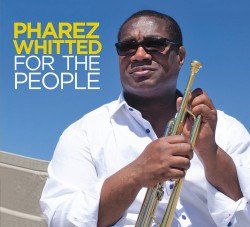
The jazz trumpeter Pharez Whitted took 14 years off from recording as a leader. Whitted used those years wisely, keeping his talent from molding working with greats such as Slide Hampton, Ari Brown, Von Freeman, and the Chicago Jazz Ensemble. In 2010, Whitted returned to the studio and recorded the excellent comeback album “Transient Journey”. Last month, Whitted released the jewel “For The People” on Origin Records. The album could easily be mistaken for one of trumpeter Freddie Hubbard’s classic for Blue Note Records “For The People” isn't loaded with special guests. Whitted wrote all the tunes, and hired guitarist Bobby Broom—who dropped a wonderful album this year “Upper Westside Story”—to loan his genius to the album. There’re sappy ballads on the album such as “Sad Eye” and “Unbroken Promise”. The cuts likely to be fan favorites are “Watusi Boogaloo,” and  “Another Kinda of Blue”. Be warned, those cuts could burn a hole in your eardrums.

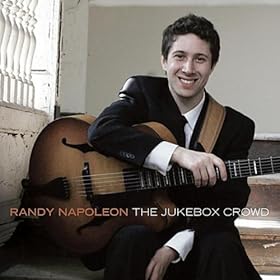
The ink wasn't even dry on jazz guitarist Randy Napoleon's diploma from the University of Michigan before his career took off. Shortly, after Napoleon graduated, drummer Jeff Hamilton, co-captain of the Clayton- Hamilton Orchestra, tracked Napoleon down to offer him a chair in the orchestra. When the run with that orchestra ended, pianist Benny Green snatched up Napoleon. Then Napoleon hooked up with jazz vocalist Freddie Cole. For the past five years, he’s recorded and toured with Cole. Somehow given Napoleon’s full schedule he found time to assemble a band—trumpeter Justin Walter, saxophonist Ben Jansson, trombonist Josh Brown, organist Duncan McMillan, and drummer Quincy Davis—to record his second album “The Jukebox Crowd”. Napoleon is a humble guitarist like Bobby Broom and Jim Hall. Improvisation isn’t necessarily the focal point of what Napoleon does. “The Jukebox Crowd” is a soft-bop (a close cousin of smooth jazz), and Napoleon put 14 cuts on listener’s plates, all of which are satisfying. Obviously, Napoleon wanted listeners to leave “The Jukebox Crowd” with a full belly.

There's not enough fingers and toes on a human body to count the number of bands and projects that jazz drummer RJ Spangler is involved with. The Planet D Nonet and the RJ Spangler Trio are two that gets a lot of press. The trio is comprised of guitarist Ralph Tope and organist Duncan McMillan. The trio is the shit around Detroit. Wednesday’s the trio can be experienced live at the jazz club Cliff Bells. The trio’s latest offering is “This Is What We Do”. What the trio has done since Spangler formed it is make smooth organ jazz music. That sounds contradictory when you think of organ jazz down-home hell-raising comes to mind. Spangler's trio is capable of hell-raising. If that claim needs to be backed up, check out the albums closer “Funky Mama”. On that cut, it appears McMillan is playing two Hammond B3 organs simultaneously. Every worthwhile organ jazz trio has a linchpin. In Spangler’s trio, it’s McMillan who has the most horsepower. “This Is What We Do” is an album you can wear every day. 

I wonder if there’s an official count of how many female jazz alto saxophonists are out there. I can come up with Tia Fuller, Anat Cohen, Lotte Anker, and Hailey Niswanger, alto saxophonist  making some good jazz music. A week ago, I came across a splendid new album by alto saxophonist titled “Live Work & Play” by Caroline Davis. There are traces of Charlie Parker and Ornette Coleman in Davis' bloodstream. That’s clear on the cuts “Dionysus,” and “Cheryl”. Davis is a brain, too. She has a Ph.D. in Music Cognition from Northwestern University. On Chicago’s jazz scene, she’s been a mainstay, and she perfected her sound at saxophonist Von Freeman’s weekly gathering at the New Apartment Lounge. “Live Work & Play” is the kind of post-bop that straddles the lines of free-jazz..   

Monday, November 19, 2012

DAVE HOLLAND'S BIG BAND OPENED UNIVERSITY MUSIC SOCIETY'S JAZZ SERIES

Jazz bassist Dave Holland

The Dave Holland Big Band launched the 2012-2013 University Music Society’s jazz series Saturday night at the Michigan Theater in Ann Arbor. The Big Band has some sluggers—Steve Nelson, Antonio Hart, Mark Strickland, and Robin Eubank’s—walked on the stage anxious to swing, and that’s what they did from the first number Holland called to the encore the audience demanded after a lengthy ovation. 

Before the big band opened up a Costco size can of whoop-ass, Holland told the audience he’d give the names of each member at the end of the tune they’re featured on. Then Holland touched on how he enjoys playing in Ann Arbor, and that he has some fond memories of  the city, but he didn’t go into any details. The night wasn’t about a trip down memory lane. It was about a big band swinging  and Holland’s two time Grammy winning big band is expert at that. Holland's band played seven tunes, six from the band's 2002 album “What’s Goes Around”.

Holland opened with “Upswing”. The title says it all. Baritone saxophonist Jason Marshall was the first to solo, and he burned to the changes of “Upswing” like a warehouse fire. Vibraphonist Steve Nelson—one of the original members of the big band and Holland’s most trusted staffer—followed. Nelson was animated working out on the vibes like a mad scientist. Throughout the performance it appeared Nelson was in his own world.

Next Holland called “A Rio” followed by the showstopper “Triple Dance”. Alto saxophonist Antonio Hart was remarkable, which wasn’t surprising. Throughout his career Hart has been a ruthless improviser. All night, Hart behaved like the captain of a sports team, encouraging his band-mates, reacting enthusiastically as they soloed and swung through the set list. When trombonist Robin Eubanks soloed, for example, on “Triple Dance,” Hart was so hyped it appeared at any moment he’d spring from his chair and do the Dougie dance.

“Triple Dance” was the funkiest and the most urban tune Holland called. On most of the tunes the soloist soloed twice. Holland has achieved the oneness or the united sound good big bands strive for. For Holland that had to be challenging. Each member of his band has distinct character traits. The members are supportive of each other nevertheless, but some inner-band competition exists, especially between Hart and Gross. 

Gross has an old-school bebop tone. His alto has a sweet tooth and Gross ate the changes to “A Rio” like penny candy. Gross soloing seemed to embolden Hart. Their blowing could’ve been taken as competition or two journeymen horn-smith drawing the best from each other.

For the fifth tune, Holland called “First Snow,” a ballad. By then, the audience needed a breather. The band had them so worked up smoke billowed from their ears. Besides, slowing things down gave the musician’s horns a chance to cool off. After the ballad ended, the band returned to swinging.

Tenor saxophonist Mark Strickland got a late start. Once he got going on the cooker “Free For All” you couldn’t shut Strickland up. Drummer Donald Edwards didn’t get much love. He soloed on “Free For All”. His job was to motor the band and tend to the dirty work, which he did magnificently.

The audience roared for about five minutes when “Free For All” ended. That nearly made Holland tearful, knowing his band was appreciated for putting in a good night’s work. Holland placed his hand over his heart and he thanked the audience for sharing in the music.

For the encore, which the audience begged for like an overweight kid a second helping of dessert, Holland called “Blues for C.M.,” an ode to his hero jazz bassist Charles Mingus. Holland is thoughtful. He kept the audience hyped for 80 straight minutes of dervish swinging. Then he put a blues on them like a winter coat and sent them home.