Thursday, April 14, 2011

DON MAYBERRY WAS THE GREATEST

The late jazz bassist Don Mayberry
Jazz guitarist A. Spencer Barefield emailed me the bad news yesterday. Your wife found you in the basement of your Farmington Hills home dead. You had a massive heart attack. Don, I planned to hang out at a house concert yesterday evening. I was too upset to go. I sat numb for a long time. I reminisced about how I loved watching you walk the bass.

I used to catch you Wednesdays at Baker’s Keyboard Lounge. Drummer George Davidson and the late pianist Teddy Harris, Jr. were your band-mates. When you soloed, notes dripped off your bass like beads of sweat. And you always had this orgasmic facial expression like the music massaged your soul. In 2004, I scored a telephone interview with you. I told my friend jazz historian Jim Gallert. He warned me you that it would be tough getting you to open up about your accomplishments.

I was working on a story about Baker’s 70th anniversary. You had a history with the jazz club. You used to hang out there with your dad. You’re 14-year-old and hooked on the upright bass. Your dad knew most of Baker’s staff. When famous jazz bassists such as Ron Carter, Charles Mingus and Sam Jones performed there, your dad pulled some strings to get you in. You hung out with the bassists in the dressing room. They gave you pointers. 

That was as much of your life story you'd divulge. You cut the interview short. I tried to slip in questions unrelated to you affiliation with Baker’s. I didn’t get a chance to ask which bassists influenced you most. Anyway, what you divulged I used in the story. Don, you’re in the same league with Carter, Mingus, and Jones. I bet many of your fans would agree. Detroit produced many jazz bassists. I can brag I interviewed the greatest.

FAMILY GUY

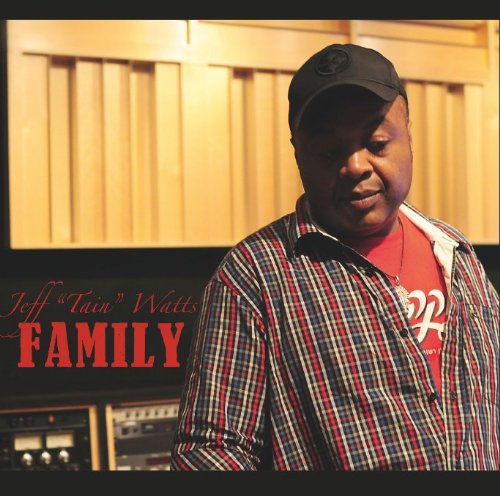
As a sideman, Jeff “Tain” Watts left his footprints on many outstanding jazz albums, particularly those he played on as a member of the Branford Marsalis quartet such as “Contemporary Jazz” and “Braggtown”. Watts has put out some excellent albums as well. His last, “Watts,” was my top jazz album of 2009. Tuesday, Dark Key Music drops “Family” Watts' new offering “Family”.

On “Family”, Watts plays with pianist David Kikoski, bassist James Genus and saxophonist Steve Wilson. Watts also wrote a batch of new songs. “Of August Moon,” “Jonesin’ (for Elvin),” and “Torch E-Ternal” are the songs that shows Watts’ band-mates have team spirit. They are flexible and aggressive. Wilson is Watts’ go-to-guy. Wilson is a tasteful sax player. He never grandstands. I became a fan after hearing him perform at the Detroit International Jazz Festival last year. I still breakout in a cold sweat thinking about his soloing.

On Watt’s last album, he decided not to use a pianist. This time around, Watts calls on Kikoski, and he shows he’s grateful by playing like a man happy to have a steady job in a depressed economy. Watts wrote terrific songs and his guys have a grand time playing them. Watts has a few choice moments. The one that standout the most is his prelude on a “A Wreath for John T. Smith”. He sounds as if he's playing two sets of drums as the same time.

Wednesday, April 13, 2011

GLOBAL FREINDLY

Bassist Dave Holland
Yesterday, Terri Pontremoli, the Detroit jazz festival's Artistic Director, made public the lineup for the 2011 Detroit Jazz Festival. “We Bring You the World” is this year's theme. Pontremoli, booked jazz acts from Africa, Japan and Brazil, making the four-day event global friendly. Composer and bandleader Jeff “Tain” Watts is the festival’s Artist-in-Residence. The drummer will perform in a number configurations. Some of the internationally acclaimed acts on the bill are Jason Moran, Vijay Iyer, Joe Lovano Us Five, Steve Wilson & Wilsonian’s Grain, Dave Holland Octet and the Anat Cohen Quartet. The DJF was recently haled as one of the top five jazz festivals in the world. The jazz festival runs September 2nd through 5th. For the complete lineup visit  www.detroitjazzfest.com.

Tuesday, April 12, 2011

CRUZ CONTROL

Drummer Adam Cruz has proven his worth as a sideman. Cruz worked for trumpeter Tom Harrell, saxophonists Pharaoh Sanders and Paquito D'Rivera. For 10 years, Cruz punched the clock in the Danilo Perez trio. Cruz has enough work experience under his belt now to be an effective session leader. Perez  had  a big influence on Cruz style of composing. Like Perez, Cruz writes abstract compositions. “Milestone”is Cruz's debut as the boss. He wrote eight originals for the album. 

“Milestone” opens with a long composition “Secret Life”. Cruz hand stitched the composition to suit  saxophonist Chris Potter. Potter is a blunt improviser, and he never backs down from challenging material. Cruz hired other like minded saxophonists the 2008 Guggenhiem and MacArthur fellow Miguel Zenon, and Steve Wilson, a featured soloist in the Maria Schneider Orchestra. The saxophonists generate excitement and are comfortable under Cruz’s supervision. 

On “Resonance,” Zenon dispenses notes like a coin machine. Wilson plays jump rope with the chord changes on "Magic Ladder". Cruz is a self-less boss. His drumming style is laid-back like the great Blue Note session drummer Joe Chambers. Cruz only took a few quick solos on “Milestone”. After years of being a grunt, Cruz has deservingly moved to the next level.

Monday, April 11, 2011

BACK TOGETHER

The original member's of the jazz ensemble Tribe
Saxophonist Wendell Harrison and trombonist Phil Ranelin formed Tribe in 1971. The jazz band performed Sundays at Alvin’s, a neighborhood hang out on Palmer St. frequented by artists, musicians and writers. Some of Detroit’s top jazz musicians were members of Tribe trumpeter Marcus Belgrave, bassist Doug Hammond and pianist Harold McKinney. The group played  a mix of jazz, funk, and Afro-Cuban music.

Harrison and Ranelin also published Tribe and ran a Tribe Records. The magazine had a political and social  bent consistent with the time, and the record label the put out a string of albums by individual members. “An Evening with the Devil (Harris),” “Voices and Rhythms of the Creative Profile,(McKinney)” “Gemini II,”(Belgrave) and “Vibe from the Tribe (Ranelin)”. In 1975, Tribe disbanded. The members move and had successful careers.

Sunday, at the Charles E. Wright Museum, in Detroit’s cultural center, three of Tribe’s original members Harrison, Belgrave and Ranelin reunited. With a banner rhythm section, they performed nearly two-hours. The museum was packed, showing Tribe still has a  following.

Harrison, Belgrave and Ranelin are old enough to collect social security, but musically they still have staying power. Besides, they are still remarkable improvisers. On their solos, they dug deep. Tribe performed mostly music Harrison and Ranelin wrote during Tribe’s heyday such as “The Ride,” “Vibe from the Tribe” and “Livin’ in a New Day”.

Tribe’s rhythm section pianist Geri Allen, bassist Robert Hurst, drummer Karriem Riggins and percussionist Okyerema Asante were outstanding. Asante is from Ghana. In the past, he’s performed with trumpeter Hugh Masekela’s, Fleetwood Mac, and the Jazz Crusaders. Asante amused the crowd playing a assortment of gadgets.

On “Vibe from the Tribe,” Allen and Riggins got into a lively exchange, which the crowd enjoyed. Both were wild.  Allen thrashed and banged the piano keys with her hands and elbows. She seemed determined to upstage Riggins. Allen was busy all evening. She bounced from the Fender Rhodes to the piano.

The guest spot by vocalist Joan Belgrave, bassist Ralphe Armstrong, guitarist John Arnold, and the Lisa McCall dancers was overall. Back in the day, Tribe always put on an exciting show. The reunion concert lived up to that reputation.


Saturday, April 9, 2011

SENTIMENTAL MOOD


The late pianist Kenn Cox
 I found a letter you wrote to me in 2004. Kenn, I forgot I kept the letter. I stuffed it inside my copy of Time magazine with Thelonious Monk on the cover. I wrote in a Metrotimes article trumpeter Marcus Belgrave mentored James Carter. The factoid was wrong, and it upset you. You expressed your outrage. You ended the letter demanding I apologize to Detroit’s jazz community. I made a careless mistake. Your response was over the top. The editor published the letter and a correction.

That was the only time I upset a jazz musician of your standing. We never met face to face. In 2006, we finally met. I interviewed you for a Metrotimes story. You were the smartest jazz musician I ever met.

Lately, Kenn, I’ve been thinking about Detroit jazz musicians who died not long ago. I can’t explain why. I recently dreamt about saxophonist Donald Walden. Last week, something triggered a memory about pianist Harold McKinney. I used to hang out at his weekly jazz workshop at the former SereNgeti Ballroom on Woodward Ave, and I thought about the first time I talked to him. Today, you’re on my mind. Physically, you all have moved on, but you all spirit and music is alive.

Rereading your letter made me look back on the first time we met. We drank Budweiser beer in your den, and you talked about studying under Alice Coltrane, and working with jazz singer Etta Jones. You said the downside to working a long time with singers is your chops get weak. You had to woodshed after you left Jones’ band. You could hardly swing like you used to.In December, I interviewed pianist Johnny O’Neal. He believes backing a singer is a good way for a jazz piano player to stay sharp.

Months before we met, Blue Note records reissued “Introducing Kenny Cox and the Contemporary Jazz Quintet” and “Multidirection” on a single disc. They are my favorite Blue Note recordings. The quintet was tough with you and drummer Danny Spencer holding down the rhythm section, and trumpeter Charles Moore and saxophonist Leon Henderson on the front line. I’m playing the album right now. Moore is soloing on Henderson’s original “Diahnn”.

During the interview, you said he was a better saxophonist than his big brother Joe. I found that hard to believe. Joe Henderson was one of Blue Note’s top artist. He made some terrific albums for the label “Inner Urge,” “Page One,” and Our Thing”.Joe was well known. I wonder if jazz fans outside Detroit are hip to Leon, and if other Detroit jazz musicians felt he was better. I asked several of them. They agreed Leon was stronger.
But neither knew what happened to Leon. I discovered he played with trumpeter Ed Nuccilli’s orchestra after the Contemporary Jazz Quintet split. Nuccilli fired him. The orchestra had a dress code. Leon refused to follow it. Surprisingly, no one seemed to care if Leon was dead or alive.

Kenn, the article I wrote about you “Reintroducing Kenn Cox" turned out better than I hoped. The Association of Alternative Newspaper’s wire service circulated the article. I began listening to your music in earnest. My editor W. Kim Heron loaned me some live recordings of your Gorilla Jam Band, and Kenn Cox and Drum band. I wanted to keep those recordings, but Kim wouldn’t let me. You made some wonderful music,

Kenn, James Carter is my favorite jazz musician. I listen to Carter’s music all the time, particularly “Live at Baker’s Keyboard Lounge”. I was at Baker’s when Atlantic recorded that album. I listened to your solo on Leonard Feather’s ballad “Low Flame” a million times. I always get emotional. My admiration for you grew every time I heard you perform. I was bummed out for a long time after you died.

I missed your funeral. I cannot recall why. Kenn, I will never know why my incorrectly crediting Marcus Belgrave as one of James Carter’s mentors upset you so much, but I’m sorry it did.
Thursday, April 7, 2011

SALUTING YOUNG & BLAKEY

Drummer Ralph Peterson has something in common with his idol Art Blakey. Their bands were schools, and they groomed their pupils to be jazz stars. Many accomplished players served under Blakey. Peterson groomed his fair share of current stars. Trumpeter Sean Jones, saxophonist Tia Fuller, and pianist Orrin Evans did their apprenticeship in Peterson's band. Each musician grew into top-notch bandleaders, and they have excellent discographies to prove it.

On Peterson's new album “Outer Reaches,” the drummer salutes the late jazz organist Larry Young’s 1965 Blue Note album “Unity”. Before Young hooked up with Blue Note, he made several soul-jazz albums for Prestige Records. A jazz critic once dubbed Young the John Coltrane of the organ. The organist was a deep thinker and an intense improviser. "Unity" was one of Peterson's all-time favorite jazz albums. Peterson plays four tunes from “Unity” “The Moontrane,” “Monk’s Dream,” “Beyond the Limits,” and “Zoltan”.

"Outer Reaches" is also a nob to the influence Blakey had on Peterson. He bonded with Blakey while a member of Blakey's two drum big band. Peterson's band has the same intensity and team spirits as Blakey’s various groups had. On “Outer Reaches,” Peterson lays in the cut, and rations out the spotlight to trumpeter Josh Evans, saxophonist Jovan Alexandre and organist Pat Bianchi.

Of the bunch, Bianchi has the strongest presence. He runs through “Inside Job” as if his feet are on fire. Evans and Alexandre are greedy improvisers. They gobble the notes on “Wee Three Kings,” and “Monk’s Dream” like appetizers. “Spectrum,” is the album's only eyesore. The tune is too way out, and it should've failed inspection. Other than that, "Outer Reaches" is a primo tribute album, and a platform for his current band of star pupils Evans, Alexandre, and Bianchi.