Sunday, August 24, 2008

PLAYING THE RACE CARD

David, I want to chat with you about your new blues album Here & Gone, but first I need to vent. It upsets me when armchair jazz experts accuse you of ripping off alto saxophonist Hank Crawford. Its obvious Crawford influenced you. You always acknowledged that. Years ago, for instance, when Crawford appeared on your weekly television show Night Music you said the alto saxophonist helped shape the way you play, and you’re forever indebted to him.

David, I hate to play the race card. I wondered if those armchair experts singled you out because you’re Caucasian. Have you ever felt that way? I suspect you hate that like you loath being labeled a smooth jazz musician. I wonder if those armchair pundits are familiar with your background. Also if the people quick to criticize you know how many African-American musicians you helped get national exposure via your weekly television program Night Music. They probably wouldn’t be so judgmental if they knew how much time you dedicated to helping other musician.

As a lad, you had Polio. To speed up your recovery, your doctor suggested you learn the saxophone. Doing so would help the muscles damaged by the disease redevelop. You followed the doctor’s recommendation, and you got hooked. At 14, you worked with blues legends Albert King and Little Milton. That impressed me. I doubt King and Milton would’ve hired you if they weren’t confident you had talent.

I've heard African-American accuse Caucasian musicians of stealing their style. That’s bull. You guys, I believe, appreciate the music created by African-American, and have helped keep it alive. I wonder if African-American saxophonists who sound like Charlie Parker are subjected to the same scrutiny. They get thanked for carrying on Parker’s legacy while you guys get branded rip off artists.

David, now that I’ve vented, I want to talk about your new album Here & Gone. It’s a grand gesture of appreciation to every blues musicians who influenced you such as former employers Albert King and Little Minton. Both men would dig this album, and Hank Crawford would too.

David the collaborations on this session worked. Sometimes albums filled with collaborations are overwrought. The stars you selected, however, are versatile, and they complement you. On I’m Going to Move to the Outskirts of Town, Eric Clapton wailed and begged better than a seasoned panhandler.

Pop siren Joss Stone, On I Believe to My Soul voice aches with cries out like her sorority sister shipped town with her fiancĂ©e. You support and comfort her. David, you’re not a rip off artist. You’re a serious musician, and you keep making wonderful music.

Monday, August 18, 2008

DETROIT LOVE


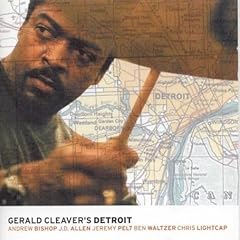
I just finished listening to your sophomore album Gerald Cleaver’s Detroit for the tenth time. I love the band’s work ethic and your leadership style. I especially like saxophonists Andrew Bishop and J.D. Allen. Bishop has been your running buddy for years, but where have you been hiding this Allen fellow. Man, he almost stole the show. He could’ve been easily mistaken as the session’s leader. I bet that would’ve upset you one bit. You never made a fuss about sharing the spotlight. Gerald I suspect you learned that from your dad John Cleaver. He's a no frills elegant drummer.

You’re not a showoff either. On the many albums you’ve graced, you seemed to have understood implicitly one of the drummer responsibilities is to do the band's dirty work. You’ve never through temper tantrums because you weren’t getting enough attention.

Backing vocalist Rene’ Marie and saxophonist Lotte Anker you were a gentleman. You never over powered them. You remind me of one of Blue Note Record’s great session drummer Joe Chambers. Gerald Cleaver’s Detroit is a love letter addressed to Detroit, your hometown. The guys you assembled share your blue collar work ethic. You gave each a chance to shine.

Trumpeter Jeremy Pelt and saxophonist J. D. Allen spoke their peace on Pilgrim’s Progress. Pianist Ben Waltzer and Andrew Bishop played tug-of-war on Grateful. And throughout bassist Chris Lightcap worked harder than a sharecropper. On Detroit (Keep It in Mind) the band engaged in a listenable collective improvisation. You all weren’t just in the studio making a lot of noise

Gerald I have to be straight with you, I liked this album more than your first, Adjust. I didn’t get what you tried to convey. It was too far out for my taste, but Gerald Cleaver’s Detroit I immediately fell head over heels for.

Friday, August 8, 2008

JUST PLAY

Trumpeter Rayse Biggs Bassist Ralph Armstrong tried damn hard to get the audience to buy into his comic shtick Thursday evening at the Music on the Plaza, a weekly concert series held on St. Clair Street in downtown Grosse Pointe, MI. As a sideman, Armstrong has worked with a bunch of prominent musicians such as saxophonist Eddie Harris, vocalist Aretha Franklin, soul crooner Curtis Mayfield, and pianist Herbie Hancock, just to list a few. For a number of years, Armstrong has been the workhorse in saxophonist James Carter’s quintet responsible for the bulk of the manual labor.

Thursday was the first time I experienced Armstrong as a bandleader. Watching him clown was tough because I genuinely admire him. He's a standout in a city top heavy with bass players. It's not uncommon, however, for a musician of Armstrong's caliber to have a bad night. Armstrong and his band faced a crowd that unfamiliar with his track record and who were obviously disinterested in his jokes. Most of the audience probably didn't have anything better to do, and felt it was too nice of a summer evening to waste at home watching sitcom reruns. Armstrong tried to perk up the crowd with some jokes when he should've just played.

Armstrong felt it necessary to prefaced each selection his quartet played with a corny joke. The jokes weren't remotely relevant to the compositions the band performed. For example, before they played Just Friends, the first song on their set list, Armstrong encouraged the crowd to continue to support the arts. Then he shamelessly quipped that if not for the arts instead of entertaining them he would probably be mugging them. The audience became so quite you could literally hear a cricket pissing on a piece of cotton.

He poke fun at the mayor of Detroit who the police arrested hours before Armstrong took the stage. I had an urge to heckled the bassist, but when the audience did not respond to his jokes, Armstrong and pianist Henry Gibson played a duet on Dear Old Stockholm. When they played the last note, I wanted to rush the stage and yell:"Yeah, Ralph that's what we came to hear!" Unfortunately, I never got the chance because the bassist told another lame joke about wanting to help the mayor pay his legal tab.

The bassist's jokes received a few chuckles. Overall, his shtick bombed. I mean really bombed. Most of the jokes were inappropriate. I wanted Armstrong to just play, but he stuck to his game plan.

Trumpeter Rayse Biggs clowned, too. On the Divorce Blues, Biggs played the trumpet and the flugelhorn simultaneously. The crowd went nuts. Then, for no apparent reason, the trumpeter literally started speaking in tongue. After biggs finished mumbling, I surveyed the audience for the their reactions. They looked outright confused.

I’ve experienced Armstrong at the top of his game on many occasions, and I think he’s a good reputable musician, but I can’t figure out why he behaved so foolishly.

Sunday, August 3, 2008

HOT DAMN!

Dear Evan Perri,

A few weeks back, the folks at Mack Avenue Records sent me an advance copy of the Hot Club of Detroit new album Night Town, the follow up to the quintet’s 2006 highly touted self-titled debut. Evan, before I explain why I love this release so, I have a confession. Before Night Town hit record stores the editor of the Metrotimes, W. Kim Heron, asked me if I’d be interested in profiling your band. I turned the assignment down because I wasn’t familiar enough with the quintet’s material.

Evan, after listening to Night Town, I regretted not accepting the assignment because I’ve been unable to tear my ears always from the album. I wondered how the Hot Club of Detroit formed. I did some digging.

I read you became a devotee of Gypsy Swing and Django Reinhardt after hearing the guitarist play Honeysuckle Rose on one of the Hot Club de France’s recordings. That was your introduction to Gypsy Swing, a form of jazz Reinhardt pioneered as the co-leader of the Hot Club de France.

You master Reinhardt’s style. Then in 2003 you recruited saxophonist Carl Cafagna, accordionist Julien Labro, bassist Shannon Wade and guitarist Paul Brady, your classmates at Wayne State University. You taught them how to play Gypsy Swing. In 2006, the Hot Club of Detroit signed with Mack Ave Records. Since then, you guys have won a slew of awards.

Studying Reinhart’s music, you learned a drummer-less and a piano-less rhythm section could still swing hard. You wanted the Hot Club of Detroit to be unconventional not merely a carbon copy of Reinhart’s band.

Of the 15 selections on Night Town, four were Reinhardt’s. Evan, on this sophomore outing, the Hot Club of Detroit sung hard. Saxophonist Carl Cafagna and accordionist Julien had a grand time riffing and horsing around on the Blues Up and Down. Cafagna knows how to get to the point. And Julien Labro nickname ought to be the Bud Powell of the accordionist, the way he zipped up and down the chord changes.

Evan did you feel Reinhardt’s spirit was present during the making of Night Town? You strummed the guitar as if Reinhardt’s spirit was in your fingers on Django’s Monkey and Speevy. Night Town is a solid follow up album. The quintet has perfected its niche.

Evan is it too premature to inquire about The Hot Club of Detroit’s next project. If welcome suggestions, I have one I think would excite Reinhardt if he was still alive. The quintet could tackle some Motown classic, and you could even tentatively title the project Gypsy Swingin’ in the Streets.

Sincerely yours,
Charles L. Latimer

Sunday, July 27, 2008

THE ODD COUPLE

I’m glad you decided to stick around. It’s passed 2:00am. My blog is usually closed for the night, but it’s not often I get the opportunity to chat face to face with a living icon. Mr. Nelson the next round is on the house. By the way, who convinced you to collaboration with trumpeter Wynton Marsalis? Kudos to the individual or committee who felt this collaboration would fly.

You have to admit, it was a risky venture. You and Wynton are from different corners of the music world. You’re a Country and Western legend, and Wynton is a polished jazz traditionalist.

I was hesitant about purchasing Two Men with the Blues. I’m familiar with Wynton track record, but I’m unfamiliar with yours. That’s wasn’t the reason I was reluctant. I didn’t think you guys would click. I was wrong.

Yesterday, I gave Two Men with the Blues my undivided attention. This album could be classified as a Blues oriented jam session led by two uninhibited pros. It was recorded live at the Lincoln Center, but it could’ve taken place in an after hours dive. You showed up with your acoustic guitar in tow, and Wynton with his trumpet. Before you guys began the session, Wynton removed his suit jacket and loosened his necktie. You hung up your cowboy hat, and slipped off your boots.

Wynton kicked things off, doodling with the melody to Bright Lights Big City, altering some chords here and there. You chimed right in. Barefooted you sort of strolled through Stardust and Ain’t Nobody’s Business. On Night Life and Georgia on My Mind you spilled your guts.

Throughout this album you guys reminisced. Mr. Nelson Isn’t the Blues about unburdening yourself? Two Men with the Blues wasn’t just a bunch of bellyaching. Overall, the album worked. You look as if you’re really to leave. Before you split, have another round on the house.

Wednesday, July 23, 2008

'HEY, MOM LOOK AT ME!'

Keyboardist Gerard Gibbs It was supposed to be Christian McBride’s official introduction to Detroit’s jazz community, a two set performance held at the legendary jazz club Baker’s Keyboard Lounge, but the bassist was upstage by keyboardist Gerard Gibbs. Gibbs' trio accompanied McBride. Someone should've had a pep talk with Gibbs for the gig began, informing the keyboardist that McBride was the star. And it would be appreciated if he refrained from his customary antics.

The keyboardist, a notorious show-boater, spent the greater part of the first set acting a fool and man-handling his instrument. On the opening selection, Gibbs went straight into his usual hey-mom-look-at-me act. This was pretty much his attitude during the first set.

McBride, a seasoned bandleader, couldn’t humble Gibbs. McBride spent most of the set trying to reel Gibbs back on track. McBride couldn’t contain the annoying ball-hog. McBride gave up and went with the flow.

When McBride found the space, he solos were short and sweet. At one point, the band cleared the stage so McBride could play alone. The ballad he played was so heartfelt it could’ve made the devil cry. The capacity crowd finally got the chance for a brief moment to experience the wonderful bassist uninterrupted. As the guys returned to the stage, Gibbs yelled to the audience: “Aw that was pretty”. Again he averted the attention to himself.

Gibbs is so selfish he didn’t allow the bassist to enjoy the spotlight. Gibbs returned to whipping the piano as if he was mad at it. Even his drummer, Jabari, (he doesn’t use his surname) wearing a suede cowboy hat and matching cowboy boots on one of the humid nights of the year, ventured into show-boat mode, banging away like he was auditioning for a heavy metal band.

The only member of Gibbs’ trio who bonded with McBride was guitarist Perry Hughes. With his black cap turned backward, Hughes set on a stool and cruised through the set. For some reason, he didn’t a take solo.

Thanks to Gibbs antics the audience didn’t get a chance to experience all McBride has to offer, and to give him the welcome he so deserves.

Sunday, July 20, 2008

BREAKING THE BAND

Trombonist Vincent Chandler Dear Vincent,

I’m writing this blog to express the hurt I felt when I heard Urban Transport broke up. I know it’s been nearly one year now, and that’s a long time to keep my feelings about the band’s separation bottled up, but I could never find the right combination of words to express my hurt. I wondered why you, alto saxophonist Dean Moore, drummer Sean Dobbins, and bassist Yusef Deas decided to stop performing together. You guys were so compatible.

Urban Transport was my favorite Detroit based jazz band. I thought the group would stay together forever. You guys put in a lot of man hours perfecting the quintet’s sound. I can’t think of one jazz band from Detroit that only performed original music.

You always wanted Urban Transport to be taken seriously. I still think about the reception the quintet got at the 2005 Detroit International Jazz Festival. Of the performances at that fest, Urban Transport received one of the few standing ovation. You blushed when the audience stood up and begged for an encore.

Backstage a fellow from out of town told me he never imagined an ensemble of twenty-something musicians could be so poised and play so soulfully. Man that was a memorable afternoon.But you weren’t satisfied. You wanted the band to be a featured act on the main stage. In an interview for a story I wrote about Urban Transport published in the Metrotimes you told me the group rehearsed religiously because you didn’t want the group to be perceived as a jam session band.

Vincent, I never told you I’ve been a big fan since you were one of the late tenor saxophonist Donald Walden’s pupils. I watched you grow into to an exception trombonist and bandleader.

As the leader of Urban Transport, you treated Moore, Dobbins and Deas like equal partners. You encouraged them to write, and you never hogged the spotlight. I respect you for that.

I found out about the break up last year. I noticed Urban Transport wasn’t on the lineup for the 2007 Detroit International Jazz Festival. I talked to Bill Higgins, the drummer for Bop Culture, at the fest. I asked him why you guys weren’t performing. He said you moved to New York to be with your wife. Initially, I thought the group had irreconcilable issues.

A few months ago I went to Bert’s Marketplace to hear Moore’s new band, the Dean Moore Quartet. Moore and I chatted after the first set. He said the split was consensual. The guys knew you wanted to be in New York with your wife. And you encouraged them to pursue other endeavors. Moore said you’re doing great in New York.

Your ex-band mates are succeeding. Several months ago Dobbins released his first album as the leader of Sean Dobbins and the New Jazz Messengers. Moore is composing for his band the Dean Moore Quartet, and Deas is gigging steadily. Vincent, I really miss Urban Transport. I hope you guys reunite soon.