The joke about drummer and bandleader Sean Dobbins around Detroit’s jazz scene is he’s held down more jobs than a Jamaican. Dobbins has a strong work ethic. At one point, for example, he taught at Wayne State University, the University of Michigan, Oakland University, and was the Artistic Director of Jazz Ensembles for the Detroit Symphony Orchestra while performing regionally with the Dobbins Krahnke Weed Trio, and fronting the Sean Dobbins and the Modern Jazz Messengers group. Outside of music, he’s a husband and has three children. With being a musician, an educator, and a family man on his plate, you wonder where in the hell Dobbins found the time, energy, and creativity to make the kick-ass jazz album “The Journey” just released on Detroit Music Factory. The album is Dobbins’s sophomore testament for the label. The first was the slamming “Blue Horizons”. This time out, Dobbins took his organ quartet – saxophonist Marcus Elliot, guitarist Ralph Tope, and organist Chris Codish – into the studio. The quartet has a less explosive temperament than Dobbins's other group Sean Dobbins and the Modern Jazz Messengers. For "The Journey" Dobbins picked ten recognizable compositions such as “Willow Weep for Me,” “Jingles,” “Remember,” and “Here To Life” and allowed the quartet to pour their chops over the compositions. Each member has a sterling moment on the album. Elliot on “Fancy Free,” and Codish on “Ooh Child”. By far, Tope is the primary muscle on the album. His strumming was sinfully good throughout, and Tope has a gift for pulling pure excellence from his bandmates. Dobbins’s is the brain behind the quartet, but he didn’t step into the spotlight much. The solos that he took were precise. The more commanding solo was at the tail end of “Here’s To Life”. Those familiar with Dobbins career knows early on he was prone to grandstanding. Sometimes, the most rambunctious and animated cat on the bandstand. However, that hey-mom-check-me-out mentality is in the past. As “The Journey” shows, Dobbins is now a great jazz drummer and a giving bandleader.
Monday, October 19, 2015
Tuesday, October 13, 2015
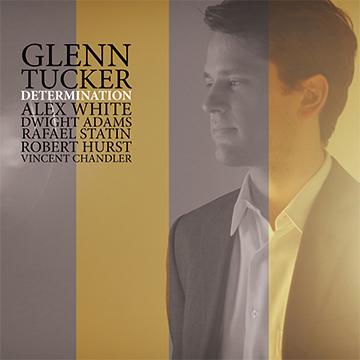
PIANIST GLENN TUCKER GIVES THE LOWDOWN ON FLAWLESS DEBUT 'DETERMINATION'
In a short time, the jazz pianist/organist Glenn Tucker has transcended the rising star status on Detroit’s jazz scene and has developed into a bonafide jazz sensation. At 26, three full years removed from music school at the University of Michigan, the native of Ann Arbor, MI, has made a name for himself as a sideman, composer, and bandleader. Last month, the Detroit Music Factory released “Determination,” Tucker’s flawless debut.
The album has nine originals, and Tucker's band has three elite Detroit jazz musicians bassist Robert Hurst, trumpeter Dwight Adams, and trombonist Vincent Chandler. Rising Detroit talent drummer Alex White and saxophonist Rafael Statin round out the band.
After experiencing a couple of selections on "Determination," you'll understand Tucker is an old soul, deep into the lineage of Detroit jazz pianist. As a pianist, Tucker has the late jazz pianist Claude Black’s spirit dancing in his right hand, and Kenn Cox’s spirit blessing his left hand.
As a composer, Tucker’s original compositions are akin to some of the intelligent and exciting compositions alto saxophonist Cassius Richmond wrote back in the day. I Dig Jazz, hit Tucker with questions about "Determination, recruiting elite Detroit jazz musicians for his debut, and being mentored by the great pianist Claud Black.
When did you begin plotting “Determination”?
The album has nine originals, and Tucker's band has three elite Detroit jazz musicians bassist Robert Hurst, trumpeter Dwight Adams, and trombonist Vincent Chandler. Rising Detroit talent drummer Alex White and saxophonist Rafael Statin round out the band.
After experiencing a couple of selections on "Determination," you'll understand Tucker is an old soul, deep into the lineage of Detroit jazz pianist. As a pianist, Tucker has the late jazz pianist Claude Black’s spirit dancing in his right hand, and Kenn Cox’s spirit blessing his left hand.
As a composer, Tucker’s original compositions are akin to some of the intelligent and exciting compositions alto saxophonist Cassius Richmond wrote back in the day. I Dig Jazz, hit Tucker with questions about "Determination, recruiting elite Detroit jazz musicians for his debut, and being mentored by the great pianist Claud Black.
When did you begin plotting “Determination”?
Some of the music was written as early as 2009, but I started plotting the album in early 2013, finally settling on the title and playlist in late 2013. In a sense, it is a compilation of music I’d already written that fit the theme, and music that I wrote after I had the concept in mind.
Why did you go with all originals instead of standards?
I play a lot of standards live, but the industry is so oversaturated with them. I try to stick to my music when I record, to feature myself as a composer and performer. It takes a lot to record a standard in a way that stands up next to the classics. At one point, I considered including one standard and one cover, but I thought this album was a stronger statement with only my music.
The title cut, “Keep on Turnin’,” “Takin’ It Back,” and “Walk Like Warriors” are exceptional. What inspired the compositions?
“Determination” was inspired by the Blue Note recordings of Kenn Cox and the Contemporary Jazz Quintet. When I wrote it, the title was abstract, but over time, it has come to resonate with my personal journey and also to act as a frame for the body of music on the record. There is also a resonance with the Detroit bebop legacy and themes of determination throughout Detroit’s history.
The groove of “Keep On Turnin’” was inspired by Stevie Wonder’s “Higher Ground,” so I titled it with a quotation from that song’s lyrics. This is the most uplifting side of the "Determination" theme.
I wrote “Takin’ It Back” for a gig I did with drummer Jesse Kramer’s group more or less as an exercise to get myself more comfortable playing in 11/8 and long 7/4 meters. The verse-chorus format is loosely inspired by Gamble & Huff’s “Don’t Leave Me This Way”. The title refers not only to the throwback funkiness of the tune but also the courage needed to claim and reclaim positive elements of life, which fits the theme of the album.
“Walk Like Warriors” also draws its title from a lyric, in this case from Common’s "Be". I wrote this tune to balance out the title cut since I wanted to begin and end the album with the sextet. This piece was largely inspired by the personalities in the group, custom-built for the recording session. I wrote the melody with Vincent in mind and each of the grooves with Alex and Bob in mind and gave each guy room to shine as a soloist and group players. Some of my favorite playing on the record is listening to how Bob interprets each of the grooves.
Robert Hurst, Vincent Chandler, and Dwight Adams are apostles of Detroit jazz. Did you have to sell your soul to get them in the studio?
It took me a minute to save up what I thought these musicians were worth, but each of them put in extra effort learning the music. They have all been very encouraging of me from a young age, so they were excited to help.
Talk about your affinity for playing with rising stars saxophonist Rafael Statin and drummer Alex White, and how different this album would be without them.
At the time this was recorded, Rafael, Alex and I were a working band. Initially, Rafael and Alex hired me to be in their organ trio before I knew what I was doing on organ, and totally kicked my butt in the process. One thing I loved about that trio is that we never talked about the music before or after, we just played. Always challenging, always fun, always grooving, what more could you ask for?
This album would be very different without them because we learned all of this music over time. This allowed me to record some of my harder tunes because we had the trio foundation to support the other musicians, who learned the music specifically for the recording sessions. Although Dwight did come in on a trio gig and sight-read a few of these tunes at a depressingly high level.
Were there any challenges mixing the two generations of jazz musicians together?
No challenges. Vincent had already been using Rafael in his septet, and Bob has used Rafael in his group for a long time. Dwight had come to sit in with us for years. I was able to reconnect Vincent and Alex, who knew each other but hadn’t worked together until I put them both on an organ trio date of mine. All of us came up through the same mentoring system, and Bob has recorded with a number of us younger players since he’s been back in Michigan. So, it was natural and fun.
As a young jazz pianist, what are some of the challenges you have faced making a name for yourself?
I have faced a lot of the challenges that my mentors and their mentors have faced, many of them being market forces. It can be easier to make a living as a sideman, or playing standards, or playing in a historic style; it can be easier to make a living outside of jazz too. It can be easier to get booked in venues as an out-of-town name than as a so-called local name. Daniel Aldridge calls us "residential musicians," which removes the ‘local-musician’ stigma. Clubs haven’t adjusted for inflation in decades, although people seem to differ on how many decades.
Most of my heroes aren’t household names, as they ought to be; most of them are musician’s musicians. There’s also the challenge of reconciling the wisdom of the elders with the realities of today. I’ve always tended on the side of being known by musicians, sometimes at the cost of not being better known by the public or having the name recognition or even having gigs as a leader.
I happen to like learning different styles and working as a sideman, but it’s ultimately a balancing act, finding the balance where you are the most productive and happy. There’s also the balancing act of working on your music versus working on other people’s music. Ultimately, it’s all music, and everything feeds into everything else, but it doesn’t always feel that way.
Pianist Claude Black was one of your mentors. How did you meet him, and what impact did his genius have on you as a pianist and as a composer?
Paul Keller recommended me for a gig with Clifford Murphy when I was 15, and Clifford’s partner Joan Russell somehow picked my name out of the list he sent. So, I did a private gig with Clifford when Claude was out of town. A few weeks later, my mom and I went to Murphy’s Place on a night Claude was playing. After that, we started making almost weekly pilgrimages to hear him, and he would always have me up to play, which was a great reality check to hear myself on the same piano with the same rhythm section. And I was playing saxophone too in those years, so I think I might be one of the few pianists to have been accompanied by their mentor as such.
The timing was such that Claude was at a very generous, reflective stage of life, and I was a total sponge trying to learn the music. There are pianists in Toledo who probably spent more time around Claude but sound less like him just because they were already mature players when they heard him. I got to hear Claude dozens and dozens of times, on good nights, on off nights; with great singers, with amateur singers; with a responsive crowd, to an empty house at 1:00 am; with his full physical capabilities, struggling with low energy or arthritis; I heard it all. I can still remember specific solos he took, although I won’t go into detail.
Above all, I learned musicianship from Claude. What it means to know a tune. What it means to accompany attentively. What every note you play means. What it means to overcome your frustrations and make music. What it means to work a crowd by the sheer power and truth of your playing. What it means to have personality. What it means to leave everything on the bandstand. Musicianship.
In terms of musical specifics, I am still studying Claude’s harmonic concept, since there is way too much there for me to understand even as an adult, much less as a teenager. A lot of what I learned initially was textbook Detroit piano straight from Barry Harris and Tommy Flanagan through Claude. For me, he was also a link to all of the people he’d accompanied: Billie Holiday, Dakota Staton, Johnny Hartman, Eddie Jefferson, Yusef Lateef, Sonny Stitt, Dexter Gordon, Eddie Harris, a totally ridiculous pedigree. But his playing reflected all of that experience. That in turn affected me deeply and gave me tremendous inspiration to this day. The fact that I am one degree away from all of those legends having heard the same pianist they heard on their gigs.
If Claude were alive and got his hands on “Determination,” would he be proud of it?
I would certainly hope so. Quite a few Toledoans tell me that they hear him throughout all of my playings and not just when I am playing something, I directly learned from him. Historically speaking he was almost a swing-to-bop pianist despite his age; he drew a lot from people like Erroll Garner and Hank Jones, who were a little older than the beboppers. I say this because he was pretty hard to pin down on more modern music. Some things he liked, others he kept his mouth shut when the topic came up. But he was always happy to see people in his circle doing well.
"Determination" CD Release Party on 10/30/2015 at the Carr Center 311 Grand River Ave. Detroit, MI. 48226 (313-965-8430) Robert Hurst on bass and Alex White on drums. 7:30, $10 suggested donation
Sunday, October 4, 2015
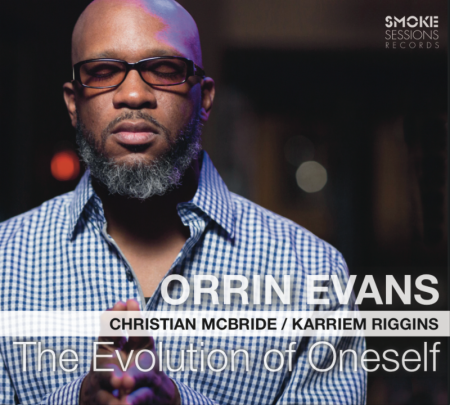
'THE EVOLUTION OF ONESELF,' ORRIN EVANS'S NEW ALBUM, IS A CROWNING ACHIEVEMENT
Orrin Evans is 21 albums deep into his career. The Philadelphian is the youngest of a generation of great pianists such as Marc Cary, Jason Moran, Anthony Wonsey, Jacky Terrasson, and Cyrus Chestnut. They started recording as leaders in the 90’s. Evans, 39, has a stellar body of work that dates back to that era. He recorded some gems for Criss Cross Records such as “Captain Black,” “Justin Time,” "Listen To The Album," and “Grown Folks Bizness”. Of late, Evans’s work has remained consistantly stellar. “Flip Script” out in 2012 rocked his fans, and his debut for Smoke Session Records “Liberation Blues” was one of the sweetest albums the popular jazz label put out last year. “The Evolution of Oneself” is Evans’s second album for the label, and is a crowning achievement. The album was an ambitious undertaking. A perfect primer for folks new to Evans’s work. For his established fan base, it reaffirmed what a wonderfully diverse musical imagination he possesses. He included, on the album, blues, R&B, neo-soul, spoken word, and even a way out free-jazz cut. On top of that, Evans has two franchise players in drummer Karriem Riggins and bassist Christian McBride. Evans’s association with Riggins dates back to their arrival in New York in the early 90’s. They were roommates. McBride is also a Philadelphian known to have blessed with his genius every band he’s worked in. McBride and Evans have played together before, but Evans longed to team with the Grammy-winner for a substantive project. “Evolution of Oneself” proved to be the right endeavor. McBride’s soloing on “Sweet Sid” will boost your metabolism. The trio has a groove driven kind of swing, evident on Evans’s originals like “Spot It You Got It,” “Tsagil’s Lean,” and “Professor Farworthy”. “Wildwood Flower,” which features guitarist Marvin Swell is the only cut that’ll have listeners wondering what was going through Evans’s head when he made it. “Wildwood Flower” is a folk song, but Evans turned it into a free jazz country-and-western number .
Monday, September 28, 2015
JOHN WOJCIECHOWSKI'S 'FOCUS' IS A FRIGGING GOOD POST-BOP JAZZ ALBUM
The jazz saxophonist John Wojciechowski is a native of Mount Clemens, MI, and a graduate of Western Michigan University. His dad was a sheet metal worker who moonlighted as a jazz organist, and who made sure music was a big part of his son’s existence. After college Wojciechowski played briefly in New York, returned to Michigan, and when the worked there slowed to a crawl around 2002, he moved to Chicago and became a valuable player and jazz educator there. Lexicon was his debut as a leader, showing Wojciechowski had a blue-collar swing ethic. Focus is his second album released September 18th on Origin Records. The ten cut album is a frigging good post-bop jazz album with much attitude, and exquisite playing by Wojciechowski's rhythm section pianist Ryan Cohan, bassist Dennis Carroll and drummer Dana Hall. Ternary, Twirl, and particularly the quartet’s working of Thelonious Monk’s classic Evidence will leave listener’s mouths hanging wide open. Wojciechowski has run the streets with Cohan, Carroll, and Hall since setting up shop in Chicago. As Focus shows, the musicians are in lockstep with each other’s musical psyches. As for Wojciechowski, stylistically, it sounds as if saxophonists Sonny Rollins's and Joe Henderson's blood flow through Wojciechowski’s saxophones. By trade, he’s a post-bop craftsman check out In Your Own Sweet Way. He also possesses a gentle streak, On cuts such as Divided Man and The Listener, he redefines what’s regarded as smooth jazz
Sunday, September 20, 2015
MACK AVENUE RECORDS RELEASED NEW MUSIC FROM CHRISTIAN MCBRIDE TRIO & PEREZ PATITUCCI BLADE
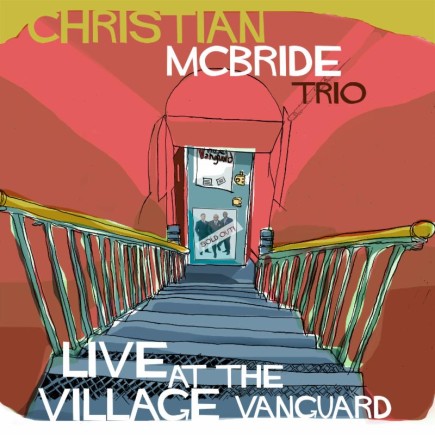
Christian McBride Trio Live At The Village Vanguard is the jazz bassist’s second trio album. The album was recorded last year and released nationwide recently. For eight years running, McBride has had an annual weeklong engagement at the famed jazz club. He’s rocked the Vanguard with his quintet Inside Straight, and his Grammy-winning-big band. This time out, McBride performed with his trio drummer Ulysses Owens, and pianist Christian Sands. For Live at the Village Vanguard, McBride went with standards and some well-known R& B oldies that have simple melodies. McBride pushed his guys to pour their imaginations over the standards and oldies. There’s nothing earthmoving here, but you’ll have a ball listening to the trio play Fried Pies, Cherokee, Down By The Riverside, Car Wash, and The Lady In My Life, a hit by Michael Jackson. Midway through the album you’ll concede, McBride built this trio around Sands’ chops. Stylistically, Sands has Hank Jones's spirit dwelling in his left hand, and Vijay Iyer influence crashing his right hand. The cut likely to get the most watercooler talk is The Lady In My Life. Sands’ solo would have the king of pop moonwalking in heaven. Sands has the biggest presence on the album, but Owens has some choice moments, showing his ass on Fried Pies and the closer Car Wash.
When the newly formed jazz trio Perez Patitucci Blade completed their new album, Children Of The Light,, the trio presented the album to saxophonist Wayne Shorter as a gesture of gratitude for being their musical father figure for nearly two decades. Perez, Patitucci, and Blade have made some unforgettable albums with Shorter, Without A Net being the most recent. Children Of The Light is the first time pianist Danilo Perez, bassist John Patitucci, and drummer Brian Blade have recorded as a trio. Children Of The Light is a marvelous album of eleven originals. Each member contributed compositions, and the album comes off as a love letter to Shorter. Fortunately, the trio didn’t pay homage to Shorter by playing his music. They dove head first into the deep end of their imaginations and returned to the surface with opulent originals such as Looking For Light, Milky Way, and African Wave. Although each member shares equal billing, Perez is the star. His playing throughout was profound and wonderfully abstract. The music on Children Of The Light won’t have you strutting-what-your-mama-gave-you, but you’ll have a swell time hearing Perez, Patitucci and Blade ply their musical genius, which Shorter played a significant role in cultivating.
Sunday, September 13, 2015
IN + OUT RECORDS RELEASED NEW MUSIC BY RON CARTER & SUN RA ARKESTRA
My Personal Songbook is jazz bassist Ron Carter’s new album just out on In + Out Records. On the album, Carter teamed with the WDR Big Band, which is based in Cologne Germany, and the winner of seven Grammy awards. Carter and WDR play ten compositions he wrote years ago. The bassist association with the WDR goes back to 2013 when they toured cities in Germany and Switzerland. The tour was successful, and soon after Carter and WDR made My Personal Songbook, a nearly flawless big band album that puts the zoom lens on what a terrific composer Carter is. His reputation as an iconic jazz bassist is well-known. He’s played on 2,000 plus albums, steered Miles Davis’s second great jazz quintet, and made jazz classics such as Where, Yellow and Green, and Piccolo. WDR was the right fit for Carter’s music, adding to it their special seasoning, particularly on standouts Ah, Rio, Blues for D.P., and Wait For The Beep. My Personal Songbook comes with a companion DVD, so you get to see how this project evolved.
May 22th 2014 was Sun Ra’s 100th birthday. To celebrate it, the current makeup of the Sun Ra Arkestra flew to Istanbul and made this live album Live in Babylon, which came out nationwide September 4th. Sun Ra, a way-out showman, formed the Arkestra in 1953, and the free-jazz ensemble made in the neighborhood of 100 albums. After Sun Ra passed in 1993, saxophonist John Gilmore ran things. Two years later, the Arkestra’s current leader alto saxophonist Marshall Allen became the leader. At 91, Allen is still kicking much ass. Live in Babylon is an awesome tribute to Sun Ra, who for his otherworldly strangeness made some excellent free-jazz music. The Arkestra’s open a Costco size jar of whoop-ass on selections like Saturn, Carefree #2, and Satellites Are Spinning. Baritone saxophonist Danny Ray goes balls deep on the album's best track Discipline 27B, which also have crazy sweet solos by trumpeter Cecil Brooks and tenor saxophonist James Stuart. There’s extraordinary singing by Tara Middleton on the Arkestra’s reworking of the standard Stardust. The album’s linchpin, however, is Allen. To this very day, his playing is still inspired and youthful
Monday, September 7, 2015
TERRIFIC DETROIT JAZZ FEST SETS FROM CHARLIE HADEN LIBERATION MUSIC ORCHESTRA & OLIVER LAKE ORGAN QUARTET
![]() |
| Oliver Lake |
The late jazz bassist Charlie Haden formed the Charlie Haden Liberation Music Orchestra in 1969 and outfitted it with some of the leading free-jazz lions of that era trumpeter Don Cherry, saxophonist Gato Barbieri, and pianist Carla Bley. The orchestra’s self-titled debut album was suffused with aggressive protest music. Haden’s mission statement for the orchestra was, “This music is dedicated to those who will dream of a society with compassion deep creative intelligence, and respect for the preciousness of life for our children, and for our future”.
At the JP Morgan Chase Main Stage Sunday evening Haden’s wife, Ruth, reiterated Haden’s vision for the orchestra before she introduced CHLMO’s members and ran down the set-list. Presently the CHLMO has many great musicians such as bassist Steve Swallow, drummer Matt Wilson, and trombonist Curtis Fowlkes. Pianist Carla Bley runs the orchestra.
Sunday evening performance was my first time experiencing the orchestra live. The performance wasn’t what I’d expected. I wasn’t in any way disappointed. I loved the music, and Tenor saxophonist Malaby and guitarist Steve Cardenas can count me as a new fan of theirs. I expected a set of aggressive protest music.
“This Is No America,” “America the Beautiful,” and “Amazing Grace” were some of the songs presented. On every selection, the members played from the deepest regions of their hearts. I was damn near in tears listening to “Amazing Grace,” which had some mood changes, and “Lift Every Voice and Sing”. The moment that stuck to my ribs occurred when the horn section parted, and the spotlight hit Matt Wilson as he put his drum kit through a cardio-like workout.
***
The Oliver Lake Organ Quartet has one foot planted in the avant-garde jazz, and the other foot rooted in straight-ahead jazz. The quartet played both styles. A blind person could see Lake designed this organ quartet, which almost blew up the Wayne State University Pyramid Stage Sunday night, around organist Jared Gold’s chops. Gold is the quartet’s life force and deserves major props because he pushed the quartet to the brink. Trumpeter Freddie Hendrix deserves much love also
Hendricks hands down was the crowd favorite. He hung out in the upper register of the trumpet on most of the tunes. During several solos, he nearly blew the moon out the sky. Lake has been a star avant-garde alto saxophonist for decades. He proved solo after solo, Sunday night that his chops are still mint after all these years on the frontline, and his improvisation has a youthful exuberance. One of the highpoints of the quartet’s terrific show happened mid-way through a song. Lake surprised the audience by reading a poem he wrote titled “You Look Marvelous” dedicated to the late poet Amiri Baraka.
Subscribe to:
Posts (Atom)