Saturday, December 31, 2011

WALLACE RONEY'S BAND KICKED OFF TEMPLAR JAZZ SERIES

Wallace Roney
Trumpeter Wallace Roney’s band opened the Templar Jazz Series at the Masonic Temple in Midtown Detroit Friday night with two hot sets of jazz music best described as hard bop on steroids. Roney came to town with a band of young players who looked like teens—with the exception of Roney’s brother sax player Antoine Roney—but they showed they have big league skills. 

 How good were they? If Roney had come down with a bad cold that prevented him from performing, his band bass player Rashaan Carter, drummer Kush Abadey, alto sax player Arnold Lee and the piano player whose name I did not catch could have carried the concert. No one would have demanded their money back.  

The band was hyped up both sets, partly because of the loud and aggressive drumming of Kush Abadey. I could not tell if his microphone was set higher than the others, or if he just liked playing loudly, which is common among too many young jazz drummers out to prove themselves. He has nothing to prove. For goodness sake he is touring with Roney. That speaks volumes. 

 Anyway, when a jazz band has a pushy and a loud drummer, he makes his band mates work harder than normally required. Abadey pushiness was the only glaring eyesore. Otherwise the band was tight, particularly Antoine Roney. 

Clearly, Roney has spent time pouring over John Coltrane’s early albums as a leader and his worked while on Miles Davis’s payroll. I wonder if Roney hired his brother because he plays like Trane. 

 Anyway, on sax Roney has a tone so big and wide it could fill up a fat man’s boxer shorts. Roney’s soloing was one of the highpoints of both sets. As for his big brother Wallace, he finally after years of copying his hero Miles Davis, sounds like his own man. 

 My pal Luis, a red-blooded American jazz fan, disagreed with me. Roney is known as a great jazz trumpet  player and a Miles Davis copycat. After the concert, Luis said Roney’s sounded like Miles did on “In a Silent Way” and on “Water Babies”. 

To me, Roney’s onstage behavior favors Miles’s. Last night, Roney never acknowledged the audience. Nor did he give the title of the tunes his band played. 

Those were forgivable sins given how good his band played. Both sets were a big step toward establishing the Templar Jazz Series as worthwhile program in a city with a jazz series on damn near every corner.

Sunday, December 25, 2011

TOP TEN JAZZ CONCERTS OF 2011


Omar Sosa
1.) Omar Sosa (Jazz Cafe)

2.) The Stanley Clark Band (Orchestra Hall)

3.) Ahmad Jamal (Hill Auditorium)

4.) Jeff “Tain” Watts (Charles A. Wright Museum of African-American History)

5.) Bob Hurst (Virgil Carr Center)

6.) Steve Nelson and Mulgrew Miller (Virgil Carr Center)

7.) Karriem Riggins wsg Common (Detroit Jazz Festival)

8.) The Gerald Clayton Trio (Detroit Groove Society)

9.) Bunky Green, Rudresh Mahanthappa, and Vijay Iyer (The Power Center)


10.) Kate Patterson (The Grosse Pointe Unitarian Church)

Thursday, December 15, 2011

DRUM ROLL PLEASE...TOP TEN JAZZ ALBUMS OF 2011

James Carter Caribbean Rhapsody (Emarcy)
This is Carter’s first masterpiece in what’s shaping up to be a hall of fame jazz career.

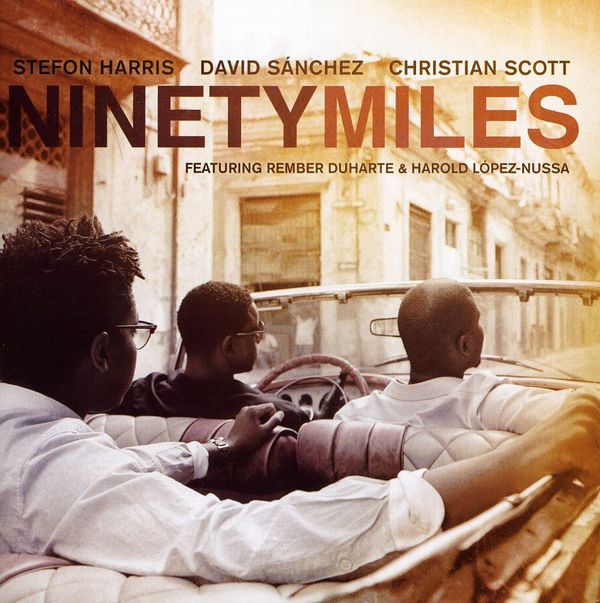
Christian Scott, David Sanchez, Stefon Harris Ninety Miles (Concord)
For serious acoustic jazz lover this date is the equivalent of comfort food.

The James Carter Trio At the Crossroad (Emarcy)
What a grand way to celebrate the trio’s tenth anniversary with a blues and gospel tinged outing.

Christian McBride Conversations with Christian (Mack Avenue)
The greatest jazz bassist of his generation having some one on one time with many of his favorite musicians.

Michel Camilo Mano Mano (Emarcy)
The jazz pianist served up the tastiest version of Lee Morgan classic “Sidewinder” I’ve never consumed.

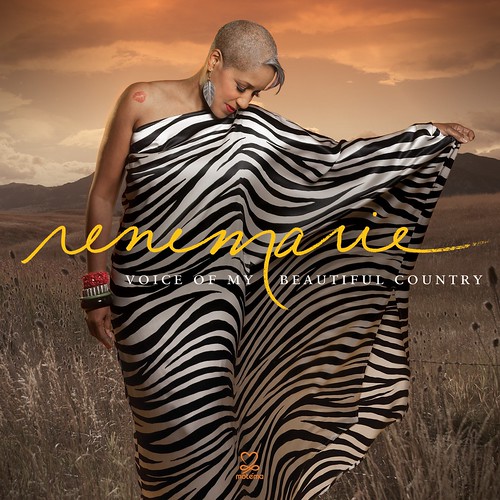
Rene Marie Voice of My Beautiful Country (Motema)
Marie gave me my first ear-gasm listening to this offering.

Rahasaan Barber Everyday Magic (Jazz Music City)
This glorious album is proof Tennessee is still making top choice jazz saxophone players a la Sonny Criss, Hank Crawford, and Frank Strozier.

Rez Abbasi Invocation (Enja)
A killer jazz album from a not so well-known jazz guitar player with Vijay Iyer and Rudresh Mahanthappa riding shotgun.

Robert Hurst Unrehurst Volume 2(Bebob Records)
Could serve a template for future generations of how a trio jazz date should sound.

Noah Jackson Contemplations: A Suite (Self-release)
Jackson’s senior recital project when he was a student at the Michigan State University, and it has the polish and seriousness of a major label release.

Saturday, December 10, 2011

VIBING WITH STEVE NELSON

Steve Nelson
Steve, I just want to drop you a note to thank you and Mulgrew Miller for putting on two wonderful sets Friday evening at the Virgil H. Carr Cultural & Arts Center in Detroit. Man, it was cold as all get out last night, but inside the center it felt like summer.

Jazz concert promoter Bill Foster put together the all-star band. Bass player Bob Hurst and drummer Karriem Riggins rounded out the band. You and Miller should keep this band together. It seemed as though you guys have worked together for a long time.

I dug how you started the concert with two well-known songs played at quick tempos “Up Jumped Spring” and “It Could Happen to You”. Then giving the audience a breather with Monk’s “’Round Midnight” before playing “If I Were a Bell” at the fastest tempo I have ever heard it performed. Your buddy Miller was great. You were right pointing out Miller is a living master on the piano. No one in their right mind would refute that.

Bob Hurst is a genius on the upright bass. Wherever you took the music Hurst was right there. And I knew it would only be a matter of time before you let Karriem Riggins loose. You know as well as I do you cannot contain Riggins for long.

He exploded on “You and the Night and the Music” like a kid shaking a bottle of soda then removing the cap. For me that solo was the highlight of the concert. Steve, the band cooked all night long. You could tell that because Rebbecca Hope danced both sets.

Hope was the tall white lady wearing the printed green dress who yelled out as if she was having an orgasm when the band closed the concert with “Bags Groove”. Hope is a big time supporter of the music. All the local jazz musicians know and respect her. She goes to all the jazz concert big or small.

Steve, I know that you Miller, Hurst, and Riggins are busy, but sometime soon, you all should think about touring nationally and cutting an album.

Friday, December 2, 2011

GRAMMY NODS

Ron Carter
I Dig Jazz would like to take a minute to tip its hat to the jazz musicians and bands who’re recently nominated for a Grammy. This year was an excellent year for jazz music. Many of the albums selected were talked about on this blog, and I Dig Jazz agrees wholeheartedly with the nominations. Here’s a sample of the jazz musicians nominated.

Gerald Clayton Bond: The Paris Sessions (Best Jazz Instrumental Album)

Joe Lovano Us Five (Best Jazz Instrumental Album)

Sonny Rollins Roadshow Vol.2 (Best Jazz Instrumental Albums)

Christian McBride The Good Feeling (Best Jazz Large Ensemble Album)

Ron Carter You Are My Sunshine (Best Improved Jazz Solo)

Fred Hersch Work (Best  Improved Jazz Solo)

Gerald Wilson Legacy   (Best Jazz Large Ensemble Album)

Karren Allison 'Round Midnight (Best Jazz Vocal Album)

Kurt Elling The Gate (Best Jazz Vocal Album)

Thursday, November 24, 2011

JAMES CARTER AT THE CROSSROADS

James Carter
Detroit jazz saxophone player James Carter is having a really good year. In May Decca Records released Carter’s much anticipated first classical album Caribbean Rhapsody Concerto for Saxophone and Orchestra, which critics have called a masterwork. With the recent release of At the Crossroads, Carter’s organ trio celebrated its tenth anniversary. Recently, I Dig Jazz talked to Carter about the two new albums and the trio’s milestone and a few other jazz related topics.

Your organ trio is coming up on its 10th anniversary. What’s the key to keeping a band together that long?

It goes back to my musical father, Donald Washington. He always said longevity is the key, and, of course, that plays well with singular longevity and collective longevity. The longer a group stays together the more it becomes of one mind as the relationship and musicianship progresses. Case and point, look at the classic Coltrane quartet albums Night at the Village Vanguard and One Down One Up. Those recording are great as the result of the band playing together for a while as opposed to doing the recording with pickup bands. Those recordings weren’t some all-star hookup.

Jazz record companies nowadays are big on all-star projects it seems.

I fought tooth and nail with Atlantic Records back in day when they were trying to hook me up with New York-bred individuals. They’d say, “Why don't we try something different?” If I wanted a Detroit drummer, they’d say he played too much hi-hat. You want that on the record?' I’d say, “Yeah!” That's something that can be worked out when the album is mixed. As far as letting them dial in some musician that I wasn’t in tune with, wasn’t going to happen. Especially when this is a document I have to live with for the rest of my life.

Why are you so loyal to Detroit cats?

I think it's because I feel musically and socially connected to them. That definitely makes for a better and more cohesive project. As fate would have it, after the formation with my first group with Tani [Tabbal}, Jaribu [Shahid] and Craig [Taborn] ran its course, that’s when Leonard King and Gerard Gibbs came on board.

Gerard Gibbs is outstanding on At the Crossroads. All the slick tricks you can do on the horns Gerard can do on the organ.

Gerard has grown a heck of a lot. When you look at Live at Baker’ Keyboard Lounge’ recorded in 1996 up until now that's a heck of a lot of growth. And that's definitely come from us growing on stage, and also growing as men. I think he told me a long time ago that music and life don’t separate. With this group, it's not only about us on stage; we check on each other; we check on our families, see if there's anything we can do.

You guys are brothers.

Yeah, and it manifests itself in the music. I can definitely and truly say that.

Does the current generation of Detroit jazz musicians have the same type of no-nonsense mentoring from older cats that your generation had?

Mentoring and the outlets have definitely disappeared. It's funny you mention that, I'm back here in Detroit working on my mom's place. I just put in a new furnace and an alarm system. I was rummaging and going through things. 

 I came across old newspaper clippings from back in the day. I kept quite a few of them like, there was a one from the Michigan Chronicle that I had. Teddy Harris' band was down at Bomac’s, Larry Smith and Ray McKinney were playing at other clubs, this was all within a week. Teddy's band was also playing at Dummy George's. We could either play with the group if you knew them, or you were a part of that group. Like all that has mad changed within the past 10 years or so.

You are known as a killer improviser, and you have done some amazing shit on the saxophones. You are also a damn fine composer. Why don't you write more?

I actually compose whenever the muse hits or if I’m commissioned. Like if I have an album coming up and we need six banging songs on it or whatever. I mean, the closest I've done something on that end was on ‘Present Tense’. Whenever the vibe hits, and you know, I do have some stuff I’m sitting on that I need to develop more.

You have a knack for putting a spin on obscure jazz tunes. Your take on Julius Hemphill’s tune “The Hard Blues” is a prime example. When you put together an album like At the Crossroads what do you look for?

Well, with At the Crossroads, I think this is the first time that you'll actually see it being billed as a group as opposed to James Carter. We all picked our tunes and OK'd them. On my other albums, I came and said these are the tunes, this is how we're going to do them. We all picked stuff out on this one, it was more of a team involvement. We all brought individual things to the table.

Has the jazz world changed much over the years?

It's definitely changed, as far as the packaging goes, being online and actually using online as one of the main routes to get jazz music out. I think it's a good thing, but at the same time, you miss the connection with the people doing the in-store appearances. Now you have to do live blogs. I guess exposure is exposure either way it goes. If you got people that are able to just tune in the comforts of their home and have music streamed live it’s kind of similar to staying at home with Netflix, or making it a Blockbuster night or whatever. So why go to the concert? So, that's the downside.

Is there an upside?

The upside is, as a musician you're potentially getting a lot more people. Hopefully that will act as a catalyst to get them to the real thing and want to see musicians in real time. So many people I think are just disconnected. Here's the irony, that they are connected you know with cyberspace and all that stuff. It's still real-time music, it's real-time art, it's art of the moment; It's one thing to see it online, but it's another to be in a club. 

Could you imagine getting someone saying, “Yeah I heard the Trane at the Vanguard live stream” and get that same effect out of hearing Trane live. My mom talked about the first time she saw Billy Eckstine live at the Paradise Theater in Detroit and how his sound hit her body. You can’t get the same effect listening to an artist streamed live.

The latest thing is how jam sessions are basically replacing group stints at jazz club. If a group was playing and somebody sat in that's just an extra bonus. Like if I happened to be in town I’m going to sit in. Maybe the best case scenario is you'll get somebody like a house band that plays their own set, they'll take a break, then they'll come back and their next two sets they'll open it up for folks to come up and play.

And that's good as far as what the promoters and club owners do, because they're get off cheaper by paying them a certain amount. Their patrons get to hear a whole lot of cats playing. The bad part about that is, the house band or the band that should've been playing their own repertoire, they don't get a chance to grow or play that repertoire. Sometimes the core members of that group wind up going to the bar while somebody else sits in. So there's no growth, and that's becoming the standard at most venues nowadays.

On Caribbean Rhapsody, why did you make the album with the Warsaw Symphony Orchestra instead of the Detroit Symphony Orchestra?

There were some logistic problems. I think when it came time to do it, it was the Warsaw Symphony that stepped up to the plate. We were kind of up in the air because I hadn't heard really much of the Warsaw Symphony.

Of the two new albums which is your favorite?

They're both different children and I've always said that about the albums. I've also said it about horns. They're different people and they do certain things for you. The concerto continues to grow for me, there's been mad growth on that piece since you've seen it at the world premiere with the Detroit Symphony Orchestra.

One of things I love about Caribbean Rhapsody is Roberto Sierra compositions leave plenty of space for you to improvise and play your trademark cadenzas.

I remember showing the compositions to three different saxophone professors and they said, “Who’s going to be able to play all this?” Yeah, the piece has grown big time, and Roberto has put so much harmonic and melodic information in there that I can keep feeding off of for years.

Michael Cuscuna has produced Caribbean Rhapsody and At the Crossroads. How is it working with a living legend?

Well, with him, he's part of one of the soundtracks of our lives. The stuff he used to do for Blue Note, and Mosaic. Inside the studio, he opens up more possibilities.

What some of your future aspirations?

I have aspirations to keeping myself open to all possibilities.

Wednesday, November 16, 2011

ONE ON ONE WITH CHRISTIAN McBRIDE

"Conversations with Christian” is the second album the jazz bass player has put out this year. The first was “The Good Feeling”, McBride’s first shot at a big band album, which focused on his star-packed band, and his arranging skills. The second album is way different.

McBride is in a one on one setting with musicians he think the world of. “Conversation with Christian” is the offspring of McBride’s satellite radio show of the same title. McBride interviewed  bigwig  musicians such as Sting, Dee Dee Bridgewater, George Duke and Dr. Billy Taylor.

This album is better than “The Good Feeling”. On that date,” McBride was happy putting the spotlight on his band members. Listeners got the chance to see McBride as an arranger. Not that McBride needed to prove himself.

No other jazz bass player on the planet understands his role more than McBride does. McBride is special and he’s been blessed with alien chops. That’s what listeners of “Conversations with Christian” get to hear firsthand.

The album displays McBride skills more than any of his other albums. My favorite track “On Conversations with Christian” is McBride’s session with Dee Dee Bridgewater. They have a lustful kind of magic. McBride and Bridgewater should consider making an album.

The only track on “Conversation with Christian” that comes up short is McBride session with trumpet player Roy Hargrove. They grew up in the same generation, and have endured the test of time, so you’d think chemistry would be a given. But the session is flat and a pimple on an otherwise smooth album.

In the one on one sessions McBride is relaxed and is having a swell time with his peers, letting the music happen naturally. There’s a lot of ad-libbing, but even that comes off as choreographed instead of hatched on the spot.