 |
| Trumpeter Trunino Lowe |
Friday, May 31, 2019
RISING JAZZ STAR TRUNINO LOWE'S QUARTET PLAYS STANDARDS & ORIGINALS AT CLIFF BELL'S


Sunday, May 19, 2019
JASON MARSALIS RETURNS TO THE DIRTY DOG JAZZ CAFE WITH NEW QUARTET, BGQ EXPLORATION
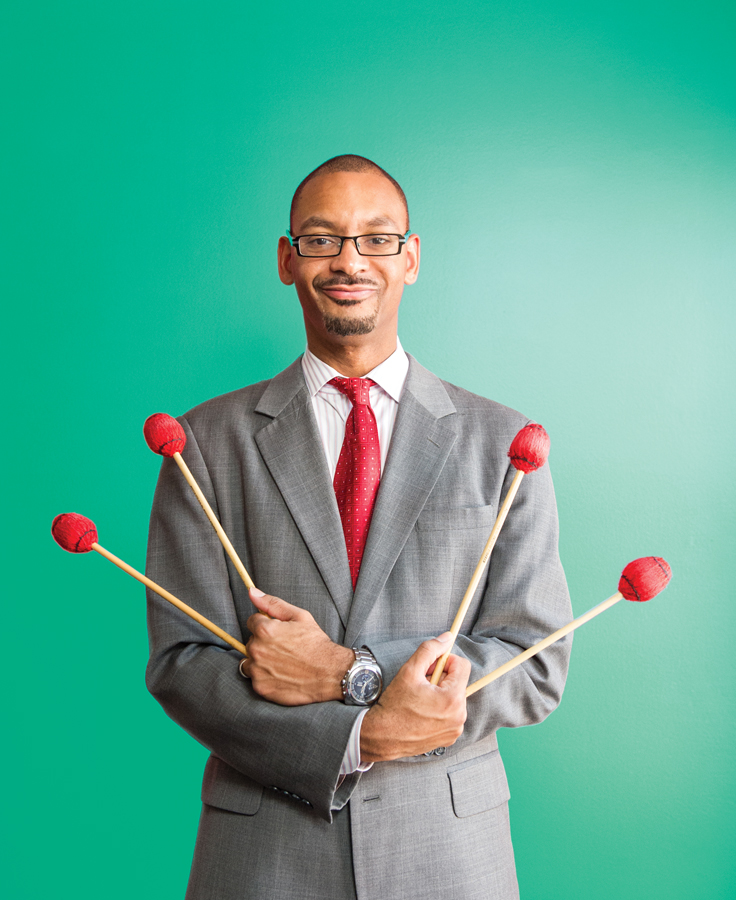 |
| Jason Marsalis |
The jazz vibist and drummer Jason
Marsalis has a new touring band called the BGQ Exploration, supposedly a
modernized version of Benny Goodman’s 1930 quartet with Gene Krupa, Teddy
Wilson, and Lionel Hampton. Friday and Saturday evening Marsalis’ test drove the
quartet at Detroit’s Dirty Dog Jazz Cafe not necessarily playing Goodman’s
original music but instead tunes his quartet performed regularly. The other
music Marsalis featured was from Herbie Nichols, Duke Ellington, Herlin
Riley, and several of Marsalis’s original tunes. He's foremost a jazz
drummer, a damn good one. He’s also a fantastic vibe player, and during a few
of his solos Saturday evening his mallet work reminded me of Detroiter Milt
Jackson. For what it’s worth the BGQ Exploration is a competent quartet its members being drummer Gerald Watkins, clarinetist Joe Goldberg, and pianist
Kris Tokarski, but the group hasn’t completely gelled yet. Of the concerts I
have caught at the Dirty Dog, Marsalis’s was, it pains me to say, the most
forgettable. There’s nothing wrong with presenting a set of standards, but what
is the point of stripping them down to the would surface than reapplying the
same old color. That’s what Marsalis is guilty of doing with such oldies as “I Got
Rhythm,” “It Don’t Mean a Thing if it ain’t Got That Swing,” and “I’m Confessing.”
Saturday evening was the first time at the Dirty Dog I saw a good percentage of
the audience disinterested in the music before them. They weren’t talking endlessly
while the quartet worked, but they were nonresponsive after most of the soloing.
The concert wasn’t a total bust. There were moments where the BGQ displayed spunk
like on “Harlem Shuffle, and “So Rare,” but those moments were few and far
between. It was the kind of uninspired concert you’d likely forget about driving
home from it, and wouldn’t take to Facebook to boast about. Midway through the
set, I felt I made a mistake skipping the final jazz concert of the Carr Center’s
season to catch Marsalis’s new band.
Sunday, May 12, 2019
TRUMPETER NICHOLAS PAYTON'S FIRST APPEARANCE AT THE BLUE LLAMA JAZZ CLUB WAS DISAPPOINTING
 |
| Nicholas Payton |
Of the great jazz trumpeters from New
Orleans, Nicholas Payton is my favorite. For years, the eight terrific albums
he made on Verve Records were constants on my playlist. I’ve watched Payton
change over the years. Years ago, he eschewed the word jazz and resented anyone who called him a jazz musician. He rebranded jazz Black American Music
(BAM), and he started making more fusion-derived recordings such as “Sonic
Trance,” “Numbers,” and his most recent date “Afro-Cuban Mixtape.” Gone,
unfortunately, was the Nicholas Payton of old who made gems such as “Payton’s
Place,” “Nick @Night,” and “Dear Louis.” Over the weekend, Payton’s trio --
bassist Robert Hurst and drummer Marcus Gilmore -- made its first appearance at the Blue Llama, a new jazz club in Ann Arbor Michigan. The club opened last
month to glowing reviews. It’s an
excellent place for live jazz. Friday evening the capacity crowd experienced
Payton as a pianist and a vocalist. He played music from his current catalogue,
including three movements from a newly composed suite. I enjoyed some of the concert
but was disappointed overall. He spent most of it moving from the Fender
Rhodes to the piano, and he closed the concert singing. It pains me to say he’s
neither a good pianist nor singer. It appeared he’d just learned to play the
piano and he was anxious to play it for whomever willing to listen. I was shocked he
spent so much time not doing what he was put on earth for. That's playing the
shit out the trumpet. When he did play it, his blowing was majestic. He’s still
a brilliant trumpeter, and he could’ve blown the paint off the ceiling if he
wanted to. Honestly, I didn’t know what to expect when I decided to attend the
concert. I prayed he’d channel his former self and play a few cuts from his
Verve recordings. That never happened. Save for some goosebumps-inducing solos
from Hurst and Gilmore the concert was a letdown.
Monday, May 6, 2019
THREE JAZZ BASSISTS PAY TRIBUTE TO DETROIT LEGENDS PAUL CHAMBERS, RON CARTER & JAMES JAMERSON AT THE CARR CENTER
 |
| Paul Chambers |
This concert celebrating the legendary
Detroit bassists Paul Chambers, Ron Carter, and James Jamerson was the
brainchild of the jazz drummer Terri Lynne Carrington, co-artistic director of
the Carr Center. The two-hour concert was the last of the CC’s jazz season that
will be held at the Detroit School for the Performing Arts. What a marvelous way
to wrap up a terrific jazz concert season. To pay homage to the legendary musicians,
Carrington assembled three of jazz’s most accomplished jazz bassists Detroiters
Ralphe Armstrong and Robert Hurst, and John Patitucci. For added measures, the
rhythm section was Carrington, pianist Ian Finkelstein, and guitarist Mark
Whitfield, and the special guests were vocalists, Niki Harris, and Treaty
Womack. The concert opened with Carrington calling the bassists to the stage
one at a time to perform specific tunes composed by or linked to the musicians
being honored. What made this concert feel authentic was each bassist shared
recollections of their encounters and associations with the honorees. Hurst and
Armstrong talked about studying and stealing musical techniques from Ron Carter,
and Patitucci talked about having his mind blown during the formative stage of his career by James Jamerson. Armstrong had more colorful stories, and he
offered throughout the concert some comic relief. Aside from the musicians'
recollections, the music for lack of a more colorful expression was smoking.
The showstoppers happened when Armstrong, Hurst, and Patitucci were on stage
together, and when Armstrong mimicked Jamerson’s style of playing. Other
memorable moments occurred the second half of the show, which Carrington seemed
to have designed for Jamerson. Vocalists Niki Harris and Treaty Womack joined the fun singing
Motown classics Jamerson helped to immortalize. The concert was the sort of authentic
tribute to three Detroit greats that attendees will be thinking about for years
to come. And the kind of outside the box programming Carrington has blessed the
Carr Center with since signing on as co-artistic director.
THE SPRING QUARTET PUT ON THE BEST CONCERT OF 2018-2019 PARADISE CONCERT SERIES
 |
| Spring Quartet |
It’s the latest jazz all-star group,
and it’s called the Spring Quartet. Pianist Leonardo Genovese, bassist
Esperanza Spalding, saxophonist Joe Lovano, and drummer Jack DeJohnette are the
members. Friday night, at Detroit’s Orchestra Hall the quartet put on the best
concert so far of the 2018-2019 Paradise Jazz Series. What was immediately
delightful was the quartet only performed original tunes. There’re too many
highpoints during the two-hour concert to list. The concert was broken into two
sets. The first set, the emphasis was on Genovese the lesser known of the members
but who shouldered the bulk of the workload both sets, and the multi-Grammy
winner Esperanza Spalding. Genovese is an energetic pianist with traces of
Ahmad Jamal’s and Cecil Taylor’s musical DNA running through his bloodstream. On
the numbers which he was featured “Herbie Hands Cocked,” “Spring Day,” and “Ethiopian Blues,” Genovese
had a Simon Says command of the piano. Wonder if this group would be worth checking
out if he wasn’t a member. On a different note, this concert was the first time
I witnessed Spalding play like a pure jazz bassist. In fairness to her, the
other times I caught her she was the leader, performing her original tunes.
Spalding crushed all my earlier reservations about her being a bonafide jazz
musician. She is the real deal, and it was a delight listening to her craft one
delicious solo after the next. The quartet was balanced. The first set served
as a warmup for the second where the quartet stretched out on several of DeJohnette’s
tunes such as “Ahmad the Terrible,” and “One for Eric.” Genovese and Spalding
were the standouts the first set and Lovano was consistently brilliant the
entire night. DeJohnette, however, was the most breathtaking soloist when the
zoom lens was cast on him. As far back
as memory serves, DeJohnette has been an exhilarating and tasteful drummer,
perhaps the most tasteful in jazz. Every lick and rim shot during the concert
was spot on and meaningful. The capacity audience was so lit they gave a
well-deserved lengthy ovation after the concert, demanding an encore, giving
the impression had the quartet refused the audience would’ve burned Orchestra
Hall down. That’s the impact the quartet had.
Monday, April 15, 2019
THE MONTEREY JAZZ FESTIVAL BAND FEATURING CECILE MCLORIN SALVANT ENDS TOUR AT THE MICHIGAN THEATER
 |
| Vocalist Cecile McLorin Salvant |
Many jazz singers have complete command
of the bandstand. Watching greats such as Dee Dee Bridgewater, Carmen Lundy,
and Rene Marie work the stage, and an audience is like watching a Broadway
production. Then you have jazz singers such as Liz Wright and Gretchen Parlato who
stand before the microphone and sing their butts off and that’s it. If it
weren’t for their seductive and alluring voices, they would bore you senseless,
but at their performances, you are enthralled from start to completion by every
lyric they sing. The multi-Grammy winner Cecile McLorin Salvant fits in the
latter category. Unlike Bridgewater, Lundy, and Marie, Salvant doesn’t possess
much flash or sass, but the stagecraft she lacks she makes up with the purest
voice in jazz. Salvant played the Michigan Theater Sunday afternoon in Ann
Arbor, Michigan as part of the Monterey Jazz Festival’s all-star touring band,
backed by four top jazz musicians on the scene pianist Christian Sands, the
band’s musical director, trumpeter Bria Skonberg, saxophonist Melissa Aldana,
bassist Yasushi Nakamura, and drummer Jamison Ross. The two-hour concert
started with Salvant refashioning Betty Carter’s “I Can’t Help It,” getting the
near-capacity crowd ready for an afternoon of a hodgepodge of music. After singing
two songs, Salvant set in the audience and watched her
band-mates stretch out on some standards and some originals. Each member shared
equal time in the spotlight. Aldana, a rising talent on the saxophone, showed
her virtuosity on her original “Castle,” and Ross, the singing drummer a la the
late Grady Tate, gave the audience a taste of his vocal gift, belting “A Sack
Full of Dreams.” Sands delivered the singular mic dropping moment, taking the
piano through a cross-fitness workout on a classical piece. I interviewed Sands
two days before the concert, and he said he initially planned for a career as a
classical pianist, but an instructor pushed him into jazz because Sands had a bad
habit of improvising while playing classical pieces, which is a felony in classical music circles. This iteration of the Monterey Jazz Festival touring band is the
youngest in recent memory and includes more accomplished women musicians than
in past tours. Overall, however, the
concert lacked cohesion, and it was clear the band hasn’t been touring together
long. Salvant said the band toured for a month, which isn't sufficient time for musicians with such distinct chops to gel as a unit. The set list was all
over the place with music by Donny Hathaway, Betty Carter, and standards and originals sprinkled here and there. The saving grace, however, was watching Salvant do
her thing.
Saturday, March 30, 2019
PROMISING JAZZ VOCALIST EMMA LEE ABOUKASM TOASTS SARAH VAUGHAN AT THE WILLIS SHOW BAR
 |
| Emma Lee Aboukasm |
Emma Lee Aboukasm is a promising and daring
jazz vocalist making a name for herself on Detroit’s jazz scene at the tender
age of twenty-three, performing regularly at some
of the top jazz venues. Four years back, she was a finalist in the Sarah Vaughan
International Vocal Jazz Competition. A year before that she won Detroit's Youth Vocal Jazz Competition. Her debut recording “Rise to It” was a mission
statement from a gifted artist. Recently, she received a
Detroit Music Award nomination. Wednesday night at Willis Show
Bar, in Mid-Town Detroit, she paid tribute to vocalist Sarah Vaughn, singing some standards
Vaughn immortalized such as “Moonlight in Vermont,” “Tenderly,” and “It Might as
Well Be Spring.” An ambitious undertaking given Aboukasm is still in the developmental stage of her career. She has an angelic and intoxicating voice, a veteran level stage
presence, and she's comfortable singing standards.
However, her concert felt more like a toast than a tribute. She didn’t talk
about Vaughan’s accomplishments or if Vaughan was a key influence on her. During a tribute it's perfectly okay to give the audience a history lesson, and even say why the tribute is necessary. Attendees
unfamiliar with Vaughan’s legacy left the first set not having learned anything about it. Another issue was Aboukasm scatting
during every song. She’s not bad at it. But there was no need for her to do so much of it because she sings so angelically. She’s still in the formative leg of her career, and self-editing
is something she’ll learn and appreciate in due time. A terrific rhythm section backed her pianist Jordan Anderson, bassist Aiden Cafferty, and drummer David Ward. She believes in sharing the spotlight, so she gave each member ample space to flex. A tribute to a legend such as Sarah Vaughan is an endeavor jazz vocalists such as
Sheila Landis, Ursula Walker, and Joan Belgrave, who’ve been in the game for
decades, would undertake. Aboukasm, however, deserves applauds for daring to tackle some of
the music Vaughan put her stamp on.
Subscribe to:
Posts (Atom)