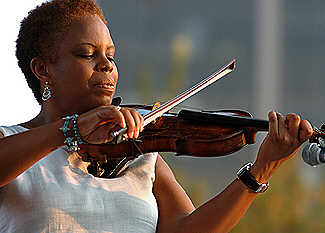
Sunday, December 20, 2015

10 OUTSTANDING JAZZ ALBUMS OF 2015

Jose James
Yesterday I Had The Blues The Music of Billie Holiday (Blue Note Records)
Billie Holiday would have turned 100 April 17th. In celebration of her centennial tributes concerts were thrown around the country, and some tribute albums were released. The one that I couldn’t stop playing was “Yesterday I Had The Blues” by vocalist Jose James, whose voice one day will be a national treasure. James performed such Holiday favorites as “Good Morning Hard Ache,” “Fine and Mellow,” and “God Bless The Child” so convincingly dare I speculate Holiday’s spirit was in the studio during the making of the album holding James’s hand on every song.

Perez, Patitucci, Blade
Children of The Light (Mack Avenue Records)
For almost two decades, pianist Danilo Perez, bassist John Patitucci, and drummer Brian Blade have backed the great saxophonist Wayne Shorter. The relationship has spawned four breathtaking albums, and this band is seen universally as one of the tightest breathing. “Children Of The Light” is the first time Perez, Patitucci, and Blade have recorded as a trio. The album of nine originals and one Shorter composition is largely a gesture of appreciation to Shorter for all he’s meant to his guys musically. The playing on this album is top notch, but that isn’t surprising. One can only picture the big smile Shorter must’ve had on his face after listening to “Children of The Light.”
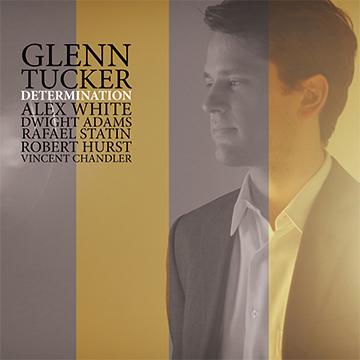
Glenn Tucker
Determination (Detroit Music Factory)
I was smitten by pianist Glenn Tucker’s playing after experiencing the first two tracks on this debut. Tucker is among a contingent of millennial jazz musicians making their presence respected on Detroit’s jazz scene. Tucker pulled off this debut in part by hiring several of Detroit’s elite swingers and some of Detroit’s rising stars. Tucker wrote all the music on “Determination”. The compositions he performed solo caused the most OMG reactions.
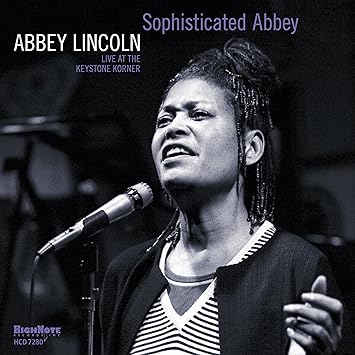
Abbey Lincoln
Sophisticated Abbey Live at The Keystone Corner (High Note Records)
This live date Abbey Lincoln made back in 1980. Lincoln was of excellent voice. She was backed by her longstanding rhythm sections James Leary, Doug Sides and Phil Wright. Lincoln had a rare gift the ability to seduce the hell out of a song. For “Sophisticated Abbey,” she applied that gift on some of her originals such as “Painted Lady,” and “People In Me”. The material I dreamt about after listening to the album was the medleys she sang that included “Sophisticated Ladies,” “The Nearest of You,” and “For All We Know”.

Heads of State
Search for Peace (Smoke Sessions Records)
Gary Bartz, Larry Willis, Buster Williams, and Al Foster are the members of the newly formed all-star jazz band known as the Heads of State. “Search For Peace” is the band’s mission statement.  What this album offers to the world is some familiar compositions performed by four of the greatest minds in jazz. “Search For Peace” is the kind of album you can listen to daily for the next decade and never grow tired of.

Rudresh Mahanthappa
Bird Calls (Act Music)
This album is alto saxophonist Rudresh Mahanthappa’s open love letter to bebop icon Charlie Parker. “Bird Calls” isn’t a garden variety tribute album. Mahanthappa elected not to perform Parker’s greatest hits. Instead, Mahanthappa borrowed elements of Parker’s compositions say the melody from “Donna Lee” and the progressions from “Relaxin’ At The Camarillo” and incorporated those elements into his new original compositions. Then Mahanthappa gave his band Adam O’Farrill, Matt Mitchell, Francois Moutin, and Rudy Royston the leeway to stretch out on each composition.

Terell Stafford
BrotherLee Love Celebration Lee Morgan (Capri Records Ltd.)
“Hocus Pocus,” “Mr. Kenyatta,” “Candy,” “Petty Larceny,” and “Speedball” are five of trumpeter Lee Morgan’s hits that trumpeter Terell Stafford stripped down to their wood surface and applied new coatings of paint. Stafford a card carrying Lee Morgan disciple pulled off a flawless tribute album, and his blowing is so inspired I wondered if Morgan’s spirit blessed Stafford’s trumpeter minutes before he recorded “BrotherLee Love.”
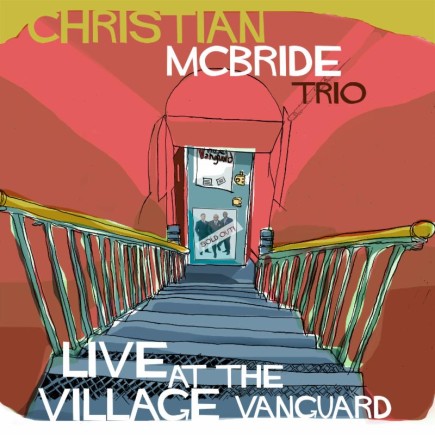
Christian McBride Trio
Christian McBride Trio Live at the Village Vanguard (Mack Avenue Records)
Jazz bassist Christian McBride had a simple formula for this Grammy-nominated album select nine compositions with simple melodies and allowed pianist Christian Sands and drummer Ulysses Owens to pour their chops over the compositions. As a bandleader, McBride has his hands in a lot of pots. He runs his Grammy-winning big band and the ensemble Inside Straight, and he made albums with each group for Mack Avenue. This trio outing, however, is his best work to date for the company. Listening to this album, I couldn’t help wondering if McBride designed the trio around Christian Sands’ chops.  Sands swings 24/7 and listening to him go-for-broke solo on “The Lady In My Life” gave my soul goosebumps.

Jacky Terrasson
Take This (Impulse!)
Ultra-conservative jazz devotees might want to put pianist Jacky Terrasson before a firing squad because of how he reworked Bud Powell’s gem “Un Poco Loco,” and Paul Desmond’s timeless hit “Take Five”. Conversely, those jazz lovers who approached the music with an open mind and who want an inspired listening experience will praise Terrasson from being a habitual risk-taker. Terrasson does some of everything on “Take This” such as singing, beatboxing, and playing the shit out the piano.


Vincent Herring
Night and Day (Smoke Sessions Records)

Alto saxophonist Vincent Herring is no stranger to red-blooded American blowing sessions. The past decade Herring has been in some memorable ones with his running buddy tenor saxophonist Eric Alexander. “Night and Day” qualify as a blowing sessions, but this time, around Herring is on the frontline with Jeremy Pelt, a trumpeter dropped from the heavens into the jazz world and has been a blessing to every band he’s played in. Pelt didn’t perform on every cut on “Night and Day”, but when Herring needed Pelt’s services he blew his ass off. Check out “The Adventures of Hyun Joo Lee” and “Smoking Paul’s Stash”.

Monday, December 14, 2015

A BEFITTING TRIBUTE TO JAZZ PIANIST & CULTURAL WARRIOR KENN COX


Kenn Cox
Inside the Knight Suite at the Carr Center Sunday evening, a long overdue tribute to the late jazz pianist Kenn Cox was held. Over four decades Cox, who died in 2008 of lung cancer, was respected around the universe as a top tier jazz pianist, composer, educator, deep thinker, and entrepreneur. Cox’s  musical accomplishments are too vast to list in a blog post. Around Detroit, he led some heavy jazz bands such as the Contemporary Jazz Quintet, the Guerilla Jam Band, and Kenn Cox and Drum.

The 90-minute tribute concert was well organized and hosted by one of Cox's protégés bassist Rodney Whitaker. Whitaker and Cox's relationship date back to the early 80’s, and during the first set, Whitaker prefaced each composition the ensemble performed with stories about his relationship with Cox.

For the first set Whitaker’s ensemble saxophonists Diego Rivera and Vincent Bowen, drummer Sean Dobbins, pianist Corey Kendrick and vocalist Rockelle Fortin performed compositions that were fixtures in Cox’s repertoire such as “Alone Together,” “You Go To My Head,” “Lamar” and “Cherokee”.  The first set was a hip dress rehearsal of sorts for the second, which featured Cox’s originals. Before the set began, Whitaker conducted a Q&A with Cox wife, Barbara.

She talked some about their marriage, revealing Cox was drawn to her early on because she was into Sun Ra, Thelonious Monk, and Archie Shepp. She also talked about the times they took one night trips to Chicago to hear Miles Davis and Jackie McLean. The Q& A closed with her reading excerpts from Cox’s journal. Then Whitaker's ensemble nearly burned up the bandstand with Cox’s original “Mandela’s Muse,” followed by “Cultural Warrior,”  “Love Dance,” "Buhanina,”  and “Beyond A Dream.”.  

Trumpeter Rayse Biggs and vocalist Shahida Nurullah were special guests. If Cox were in attendance, chances are he would’ve favorite how wonderfully Nurullah sang “Love Dance” and how angelically Rockelle Fortin sang “You Go To My Head”. 

There were many OMG moments during both sets. The tribute was befitting a jazz musician of Cox’s influence and genius. Honestly, it’s impossible to single out a standout solo or showstopper because each musician – including the four students from the Michigan State University Jazz Orchestra – showed up with their A-plus game.

Monday, December 7, 2015

MSU JAZZ ORCHESTRA WITH SPECIAL GUEST JIMMY COBB BOWLED OVER AUDIENCE AT THE CARR CENTER

Drummer Jimmy Cobb
Minutes before the Michigan State University Jazz Orchestra played the first piece of their Sunday evening concert at the Carr Center in downtown Detroit, the Director of Jazz Studies at the University, bassist Rodney Whitaker, told the audience to fasten their seatbelts. 

Two choruses into the opener “Things to Come,” it was apparent why Whitaker wanted the audience to hold on. The MSU Jazz Orchestra, nicknamed the Be-bop Spartans, took the audience on a two-hour joyride through the backstreets of some well-known jazz classics. Guaranteed no soul left the Carr Center unconvinced the Be-bop Spartans are an elite collegiate jazz orchestra.

The Be-bop Spartans put everything on the line for each song they performed. Three songs into the set the orchestra was playing with such force and self-assurance, I thought they were competing for the Big Ten championship. The orchestra was under a lot of pressure given their special guest was the legendary jazz drummer Jimmy Cobb whose career in music spans five decades.

Cobb’s work history includes tenures with Miles Davis, Ron Carter, Dizzy Gillespie, and Sarah Vaughan. At 86, Cobb is still putting out outstanding jazz records. Last year, Smoke Sessions Records released one of Cobb’s finest recordings “The Original Mob”.  The Be-bop Spartans had performed four songs before Cobb joined them. The first showstopper was the orchestra’s interpretation of Frank Foster’s “Blues Backstage”.

The orchestra had the bandstand sufficiently heated by the time Cobb joined in to play “Two Bass Hit,” “Straight No Chaser,” and “Giant Steps”. Cobb soloed beautifully on each number, showing that at his advanced age, he hasn’t lost one ounce of the piss-and-vinegar he possessed as a key figure on landmark jazz albums such as “Kind of Blue” and “Giant Steps”.

Cobb was why most of the audience attended the concert. But, I daresay the Spartans stole the show. Everybody was banking on Cobb tearing-the-roof-off-the sucker. What was shocking was how the Be-bop Spartans flourished in the midst of such genius and greatness. Over the years, this reviewer has heard many of Whitaker’s recruiting classes. This class, however, is his most exciting and gifted.  

Monday, November 23, 2015

THE JD ALLEN TRIO ARGUABLY PUT ON THE BEST CONCERT OF DETROIT GROOVES SOCIETY'S HISTORY

JD Allen
A group of regulars at the Detroit Groove Society house concert series was asked how the JD Allen Trio concert Sunday afternoon stacked up to other big-name performers who have played the series. The consensus was Allen’s show was among the top if not the best in the DGS's eleven-year history. Billy Hart, George Cables, Geri Allen, and Danilo Perez are other marquee stars who have graced the series. 

One DSG regular was so taken by the Allen trio’s depth and energy, he likened the show to one of John Coltrane’s live sets. Another regular posted on facebook after the concert he felt he was levitating listening to Allen blow.

The trio played on songs from Allen's albums “Shine!,” “The Matador and the Bull,” "Grace," and “Victory!”. The second set was heavy with material from his current recording “Graffiti”. 

Allen’s trio, bassist Gregg August, and drummer Jonathan Barber, who subbed for Allen’s regular drummer Rudy Royston, plunged into the music and resurfaced for the intermission. The trio opened with an extended version of Allen’s “Sun House,” an uncharacteristic move given Allen likes to get in and out of compositions quickly.

Allen blew so mightily on "Son House" this reviewer was concerned Andy Rothman, the Detroit Groove Society’s founder and whose home the series is held, would have to hire Hanson’s to replace all the windows in the house. Allen is a dynamo on tenor who seems to have a direct line to the spirits of John Coltrane and Joe Henderson.

Allen cooled down the house with the ballad “If You Could See Me Now,” rendered so thoughtfully it could’ve made the meanest fuck weep. After buttering up the audience with the ballad, the trio moved into a litany of short compositions that clocked in around four minutes each. Every song the trio presented both sets were bonafide showstoppers.

Johnathan Barber’s drumming made the concert extra special. His busy style of drumming is akin to Elvin Jones and Ralph Peterson. Barber was the crowd favorite, and he went hard on every number as if hellbent on staying in the trio permanently.

Saturday, November 21, 2015

REGINA CARTER & KENNY BARRON SHOWED DEPTHS OF THEIR VIRTUOSITY DURING PARADISE JAZZ SERIES CONCERT

Regina Carter and Kenny Barron
Duo concerts are a staple of the Paradise Jazz Series. Over the years, there have been some doozies by the likes of John and Gerald Clayton, Bill Charlap and Rene Rosnes, and Dave Holland and Kenny Barron. Friday evening at Orchestra Hall in Detroit violinist Regina Carter and pianist Kenny Barron put on the best  duo performance in recent memory. 

For two hours, Carter and Barron played the repertoire from their album “Freefall” released on Verve Records in 2001. As the story goes, collaborating was Barron’s idea. In the early 90’s he pitched the project to Carter. She believed Barron was pulling her leg,  

At the time, Carter was in the throes of building her solo career. She only had a self-titled album on the market. Barron, on the other hand, was a well-known jazz pianist with a legend’s resume, having had stints with Dizzy Gillespie, Roy Haynes, and Yusef Lateef. And Barron led the immensely popular group SphereCarter ended up playing in two of Barron’s bands before they in 2001 made “Freefall,” which was a hit and received a Grammy nomination, 

Friday night was the first time in years Carter and Barron revisited music from “Freefall”. Witnessing them perform flawlessly for two hours made it hard to believe they only team up occasionally. On each song, their musical psyches were in sync, and for two hours the audience experienced a guided tour of the depths of Carter's and Barron's virtuosity. 

It's worth noting that Barron has the ten most elegant fingers in jazz. His elegance was in full bloom soloing on his original compositions "A Flower” and “What If”. Barron is also a masterful accompanist. The entire concert he made sure Carter was the focal point. 

Carter's soloing on “Soft as in a Morning Sunrise,” and “Misterioso” is why a segment of the near capacity audience probably had to soak their sore hands in Epson salt at home because of incessant clapping. Every improvisational trick Carter pulled from her sleeve drove the audience nuts. Carter broke the bank soloing on “Hush Now Don’t Explain,” playing it so beautifully and tenderly it appeared her violin was crying.

Sunday, November 15, 2015

REGINA CARTER ON HER REVERENCE FOR KENNY BARRON & THE MENTORING IN DETROIT THAT PREPARED HER FOR THE MUSIC BIZ

Regina Carter
When jazz pianist Kenny Barron first approached violinist Regina Carter back in the late 90’s about hooking up for a collaboration, Carter didn’t take him seriously. Back then, Carter was still building a reputation. The Detroiter, MacArthur Genius Grant recipient, and the first jazz musician to play the priceless Paganini violin hadn’t reached the renown that she currently enjoys. 

Barron, on the other hand, was an accomplished and a well-known jazz pianist who’d run with greats such as Philly Joe Jones, Dizzy Gillespie, Yusef Lateef, and Stan Getz. On top of that, Barron was the leader of the popular jazz bands Sphere.

Carter and Barron played some small projects together before finally collaborating in 2001 for the duo album for Verve Records called “Freefall.” The album hit big and months of touring followed. From the collaboration a lifelong friendship developed. Nearly, two decades have passed since the musicians have performed music from “Freefall” together live.

On November 20th, Carter and Kenny will reunite at the Paradise Jazz Series in Detroit to play music from “Freefall”.  Saturday morning, I Dig Jazz talked with Carter via telephone about her longstanding association with Kenny Barron, the new album she’s gathering material for, and how the mentoring she received early on in Detroit prepared her for the music business.

When did you and Kenny Barron first meet, and what impact has he had on you as a musician?

Of course, I knew who Kenny was forever, but the first time we formerly met, I think it was in the late 90’s around the time my very first record on Atlantic Records was out. We were both at the Telluride Jazz Festival. I remember he said I would love us to make a record together. I said yeah right, which is totally like me. That came out of my mouth before I could think about it. Anyway, he hired me a couple times for his band, and we did a couple duo concerts together. So, it took years for our schedules to free up for us to record “Freefall”.

Why did you feel he was pulling your leg when he approached you about a collaboration?

Here was this master musician and he wanted to record with me. I was in total disbelief in the beginning. When you look back, that’s what master jazz musicians would do. They would reach back and bring young musicians onto the stage and the scene. That’s where you learn. That’s where the schooling takes place on the stage with the masters.

What was it about his musicianship that drew you to him?

You know one beautiful thing about Kenny is when you meet him, and you are around him, he’s such a down to earth person. There are no airs. He’s a very genuine person. I felt I could be myself playing with him. Before we recorded “Freefall” he played on one of my projects, and we recorded his tune “New York Attitudes”. I remember at the time one of the producers of the album kept telling me that I should do my solo over, that I could do it better. The producer kept going in on me. I remember Kenny saying to me that you are where you are today. I felt all this pressure from this producer person who wasn’t a musician and who was trying to get me to do things I couldn’t do. Kenny just made me feel comfortable. This is where you were when you made this recording, and it is a document of where you were then. Not that you are going to stay there. Kenny, telling me that made me feel comfortable.

Carter and Kenny Barron
Were there challenges you had to deal with performing with such an accomplished musician?

When we made “Freefall,” I didn’t feel any stress going into it because he wanted to record with me knowing where I was. He wasn’t expecting me to come into the session being on John Coltrane’s level. Kenny knew where I was musically.

For the Paradise Jazz Series concert will the set list include material from “Freefall,” or do you and Barron have a bunch of new music in store?

It will be the music we played on “Freefall”. It has been a year or so since we performed together.

A couple decades have passed since you left Detroit. Do you believe, at some point, you’ll moved back to the city?

You know, it’s funny because when I’m in Detroit during the summer my husband {drummer Alvester Garnett} says he gets the feeling we’re going to be living in Detroit because I love my city so much, but when the winter hits I say no maybe not. You know, my husband’s mom lives in Virginia, so if anything I see us living there at some point. But, really you never know.
                                        
Are you working on any new projects?

I’m just starting to gather material for my next album, which will be a celebration of the music that Ella Fitzgerald recorded and some music that she helped to compose?

Ella Fitzgerald has always been one of your biggest musical heroes.

She’s the first person that I go to when I have to learn something. She got me through some stuff. I got into her music in the early 80’s. I listen to her daily. When I first get up in the morning. It’s Ella and my espresso.

Why has it taken you so long to do an album of her music?

For whatever reasons it wasn’t the right time to do it. I feel like the music leads me to where I need to be.

You have made nine albums. With every album, you come out of a different bag. Why are you so big on self-reinvention?

I attribute that to growing up in Detroit with WJZZ and hearing all types of music, and not feeling these divisions between genres of music. Back then, I was hearing all different kinds of music, and that was okay. There weren't all these divisions, and corporations weren’t running the stuff. I have all these musical influences, and I never differentiate between them. I feel like I'm true to myself and true to the music. I’m not chasing anything.  I have a lot of interest, and I follow that. I let the music lead me. I respect the music, and I follow it.

How have the mentoring you received in Detroit early on helped you deal with the pressures and the difficulties of the music business?

I’m always thankful that I had an upbringing in Detroit where I was able to be around and study with musicians who prepared me. After being around musicians like Kenn Cox, Marcus Belgrave, Donald Washington, and Lyman Woodard just so many positive musicians interested in helping youngsters and young musicians.  When I went to New York, I heard musicians complain about situations they’re in, and how they’d been treated by big-name musicians in a certain negative way.

I felt like because somebody has a name and you are coming up as a young musician, you shouldn’t have to deal with that negative treatment. Coming out of Detroit, I never experienced that. I never had any negative experiences with Marcus, Kenn, or Lyman. The biggest lesson that I got was I don’t have to put myself into negative situations or stay in those situations to succeed in this music or the business. In fact, I knew it would do my spirit harm, and, therefore, it would affect my music.

I removed myself from those situations, or I’d say no to certain gigs. Some people might say whoa you’re not going to take that gig even though it pays a lot of money. They’d ask why not. It’s more important for me to protect my spirit, and to respect the music. That was the biggest lesson. I learned how I was treated in the beginning is how I should always be treated.


Regina Carter & Kenny Barron Duo Friday, November 20th 8:00 PM Max M. & Marjorie S. Fisher Music Center 313-576-5111/dso.org/jazz for details

Monday, November 9, 2015

CHUCHO VALDES AND THE AFRO-CUBAN MESSENGERS COVERED A LOT OF MUSICAL GROUND AT THE MICHIGAN THEATER

Chucho Valdes
When pianist Chucho Valdes decided to do a retrospective tour in honor of Irakere, a famous  Afro-Cuban band he founded in 1973 that played a hybrid of jazz, rock, Cuban folk and dance music, and graduated heavy hitters such as saxophonist Paquito D’Rivera and trumpeter Arturo Sandoval, Valdes didn’t set his sights  on reuniting surviving members of Irakere. Instead, he assembled a group of hungry young Cuban musicians who grew up on a steady diet of Irakere music. Valdes, a multi-Grammy winner and a pioneer of Afro-Cuban jazz performed with nine of those Cuban musicians known internationally as the Afro-Cuban Messengers Sunday afternoon at the Michigan Theater in Ann Arbor, MI. The concert was  the second of the University Musical Society's jazz series. The concert was supposed to be an Irakere retrospective. The Messengers performed some Irakere’s staples such as “Misa Negra,” and “Bacalao Con Pan,” and new music written specifically for the current tour. The performance, however, resembled an exhibition of incredibly gifted musicians.When a member of the horn section soloed, the other members left the stage, allowing the audience to zero in on the soloist. There were awe-inspiring solos from Ariel Bringuez, who has a tone on tenor sax that's rich as chocolate cake, and. Rafael Aguila, who blew so forcefully, I feared his alto sax would explode in his hands. During Valdes’s  solos, it appeared four hands were playing the piano. He’s a percussive pianist, and he had the piano doing all sorts of magic tricks. The Messengers covered a lot of musical territory in the 90-minute set. The highlight occurred near the end of the concert when the Messengers served the audience a ragtime number dipped in Afro-Cuban juices, and then moved seamlessly into a blues. The near capacity audience went nuts. The Messengers have to be the most joyful ensemble on earth as if every member awaken every day loving being a Messenger. The rule of thumb is at the end of a killer set of music an audience shows its appreciation with a standing ovation. This audience thanked Valdes and his Afro-Cuban Messengers by dancing in the aisles.