Tuesday, June 23, 2009

KIND OF DULL


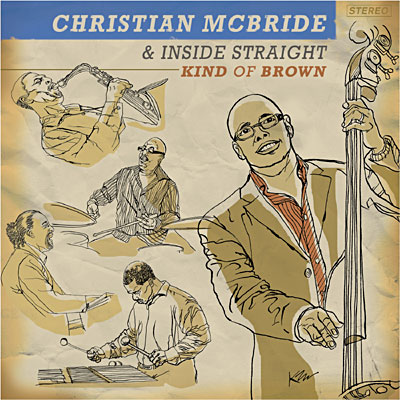
This is the only music that I listened to today, Christian. I have to be honest with you. I’m not keen on “Kind of Brown”, your debut offering for Mack Avenue Records. You enlisted a stellar cast of marquee jazz musicians such as drummer Carl Allen, pianist Eric Reed, saxophonist Steve Wilson, and vibe-man Warren Wilson Jr.

In theory, this album should’ve been ironclad given the sidemen talent an experience. This time around, you set out to make a straight ahead acoustic jazz album, which honestly is worlds apart from the fusion driven music you’ve championed the last five years of your recording career.

“Kind of Brown” proved—it pains me to say this because you are a sincere dude—assembling an all star date does not necessarily guarantee a blockbuster album, or for that matter an interesting one. I can’t endorse this album, and I’ll tell you why. The biggest issue I have with “Kind of Brown”--which I assumed the title was a play on the Miles Davis classic album “Kind of Blue”, and is dedicated in part to your mentor late bassist Ray Brown--is a have heard this album before. I’m sure most of my readers have as well.

"Live at Tunic” was a more ambitious and adventurous album. You reach the zenith of your creativity on the album, and the jazz at the 2008 Detroit International Jazz Festival got a chance to experience that first hand. With this new released, it is obvious you played it safe.

What’s the point of making an album like-minded jazz musicians have made generation after generation? I had grandiose hopes for your Mack Avenue debut. Frankly, you disappointed me. However, there’re a handful of noteworthy aspects that got my attention.

The most noteworthy aspect was the soloing of pianist Eric Reed. On “Theme for Kareem” and “Stick & Move”, Reed played every square inch of the piano. Like Bud Powell, Reed can drag race across the keys, making it appear as though he played with twenty fingers instead of ten. His soloing rescued the album from being a complete bust.

You stayed true-to-form by not hogging the session even though you’re the leader. The band did not deviate much from the course that you mapped out. Maybe that was the problem. Wilson and Allen were apprehensive about being themselves. Wolf Jr. played as if he’d been recruited from the minor leagues. His playing was careful and rather dull. The press release did not reveal what your long term ambitions are for this quintet. If you plan to keep the band running, my I suggest—let me know if I am out of line—you have a pep talk with the guys, and encourage them to loosen up a bit.

Sunday, June 21, 2009

REIGNING KING

Sonny, I promised myself Friday I would not write at all this weekend. For weeks now I’ve been swamped. I wrote an article about Alexander Zonjic. I interviewed pianist Bob James, classic flutist Ervin Monroe, and bassist John Clayton. I posted a blog on “Doin’ the D", Zonjic new album, which will hit the streets this Tuesday. I also reviewed “Brother to Brother, an album Clayton and his younger brother Jeffery released last year.I’m experiencing writer’s fatigue. I thought it best I chill this weekend.

This morning, however, I reneged on my promise. I played you’re newly reissued album "Reel Life” which Concord Music Group just released this month along with classic albums by your former colleagues MilesDavis, John Coltrane and Eric Dolphy. I received your album two weeks ago. I played it today, thinking it would keep my mind off writing. I was wrong.

An hour after listening to “Reel Life”, I was jotting down notes about the tracks that kept my attention. Do you remember making “Reel Life”? You’ve been on the scene over six decades. I wonder if you remember all the albums you made. “Reel Time” was born on August 1982. That makes the album 27-year-old. The album cover is cartoon-like.

At first glance, it appears you’re posed on a huge tire with your arms stretched out, holding your tenor in your left hand. You’re actually sitting on a stereo reel. You employed two, guitarists, a bassist and a drummer. I barely noticed them. You were the star player, indeed. , I finally understand why for decades you’ve been jazz’s reigning king of improvisations.

On the opener and “Sonny Side U” you played some smooth jazz licks. On the latter number, for example, you somehow made your tenor squeak at different intervals of the compositions. I hummed melodies to those cuts damn near all day.

On "Solo Reprise”, you played 2 minute and 17 second of uninterrupted improvisation, taking your own sweet time through the changes, adding nuances here and there for effect. I wish you had played longer. I guess the great jazz musician--which you’re undoubtedly are--keep listeners wanting more. Jazz fans are a greedy lot, inded.

Finally, what would a Sonny Rollin’s album be without you playing a ballad? You only had room to perform one on this album, “My Little Brown Book”. That’s okay. I guess playing the ballad allowed the band an opportunity to catch their breath. You served the tune with such warmth my body went numb.

“Reel Life” is the type of eclectic album that cannot be pigeonholed. The album is part funky; part smooth jazz, and part bop. This album was exceptional enough for me to renege on a promise, which I never do. Now that I commented on your album, I can take the rest of the weekend off.

Thursday, June 18, 2009

FAMILY AFFAIR

Bassist John Clayton Dear John Clayton,

My ears were glued to “Brother to Brother” all day, Terri, the artistic director for the Detroit International Jazz Festival turned me onto the album. By the way, John, I am the jazz journalist scheduled to interview you this evening in Detroit Michigan at the bed and breakfast Inn on Ferry. I wanted to listen to some of your recorded music before the interview.

I heard you and Jeff swing up a storm at the 2008 Detroit jazz fest on the closing night. I wish I had gotten a copy of “Brother to Brother" when it hit the streets last year. The album would’ve knock trumpeter Roy Hargrove’s album “Ear Candy” from the number one spot on my best jazz album of 2008 list.

I liked this album after the first listen. That’s a rarity because usually listen to and album for a week-sometimes longer than that—before commenting. The pianist won me over. Gerald Clayton’s - playing kidnapped my ears. I never knew a youngster could play with such maturity and sophistication. Gerald playing was so decisive. He’s not an overly aggressive pianist that whacks and wails the piano as if mad at it. Gerald has the blues down to a science, too.

On “Big Daddy Adderley”, the tune Jeff wrote honoring the late alto saxophonist Julian “Cannonball” Adderly, Gerald sounded as if he spent his summers studying pianists Walter Bishop Jr. and Gene Harris. When Gerald soloed on “Jive Samba”, I thought Gene Harris' spirit had graced Gerald’s fingers. Jeff’s playing was noteworthy performance as well. Like Cannonball Adderly, Jeff is a human blowtorch on the alto sax.

My favorite selection was “Waling Bass”. The hip and cool poem about your bass you recited. As for your playing,if Oscar Pettiford and Ray Brown were still alive, they would marvel about your command of the bass. Wouldn't that be something memorable if the bassist wanted your autograph, and wanted you to show them some of your?
Your history of accomplishments are massive.Seven Grammy nods and enough award to fill ten trophy cases. I wonder if you get more fulfillment playing with the Clayton-Hamilton Orchestra or playing in a smaller group situation with your family. I am anxious to talk with you at length your and your relationship with Ray Brown.

Someone told me you inherited his bass. Brown must have really loved and had faith in you. He's probably in some corner of jazz heaven bragging about you. You had a lot to live up to, and you did not let him down. I wonder if Brown has a copy of "Brother to Brother". If so, I bet he has burned a few hundred copies for his friends.

Continue to walk that bass,

Charles

Sunday, June 7, 2009

PLAYING MONK

Dear Thelonious Monk,
Are you hip to jazz guitarist Bobby Broom? If you are not, Broom grew up in Harlem. He started playing professionally at 16, and he has the distinction of being the only guitarist to play with Art Blakey and the Jazz Messengers. Broom has built an impressive record of accomplishments and he's made a load of stellar albums as well.

I first heard him at Hill Auditorium in Ann Arbor, Michigan with your close friend tenor saxophonist Sonny Rollins. Rollins is pushing 80 now and he is still going strong. Anyway, I'm writing you because last week I received Broom’s new album, which hits the streets June 16th. “Bobby Broom Plays for Monk” is the title of the album. It’s a sound da-

Broom used the same cover art you did on “Monk’s Music”. There’s one noticeable difference though. Instead of sitting in the red wagon, Broom placed his guitar in it. Did he play the same songs on “Monk’s Music”? The guitarist played just one “Ruby My Dear”, which is my favorite Thelonious Monk composition. Mr. Monk, you wrote such sweet ballads.

Broom covered ten of your popular compositions such as “Ask Me Now”, “Lulu’s Back in Town”, “Bemsha Swing” and “In Walked Bud”. The guitarist played it safe by performing your less complicated compositions, but Broom did a competent job nonetheless. He did not deviate much from the manner you arranged those compositions.

On “In Walked Bud”, for example, Broom let the melody loose for a moment while he improvised. The melody was always near arms reach. It was a memorable take on your ode to be bop pianist Bud Powell.
The selections on “Bobby Broom Plays for Monk” that’ll grabs folks attention are “Ask Me Now” and “Lulu’s Back in Town”. Broom, drummer Kobie Watkins and bassist Dennis Carroll stroll effortlessly through those songs.
Throughout the album, Broom's style is soft and melodic style was evocative of a youthful Kenny Burrell. Broom got to the marrow of your songs. He’s not an ostentatious guitarist at all. He’s straight to the point. Maybe that’s why Sonny Rollins hired him.

I endorse, this album, Mr. Monk., It isn’t another tribute album. Broom comes across as a confident jazz musician. He knew he has what it takes to deal with your work. Broom challenged himself on this recording. He did not setout to refine your compositions,which would’ve been foolish. I wonder if it's possible to refine or improve on perfection Mr. Monk

I don’t know if you listen to a lot of music, or if you enjoy listening to others musicians play your music , but if you have some free time after “Bobby Broom Plays for Monk” hits the streets , you should listen to this album . I guarantee is worthwhile.
Sincerely,
Charles L. Latimer

Saturday, June 6, 2009

OUT THE CLOSET


Alexander, I have a confession. First, you should know I’m a jazz purist. I listen to every form of jazz from be bop to free jazz. For years I disregarded smooth jazz. My outlook on it changed, however, when I heard the new incarnation of the Jazz Crusaders at the 2003 Idlewild Jazz Festival. Saxophonist Everette Harp and keyboards Bobby Lyle man the front line. The only original Crusader was trombonist Wayne Henderson. He looked foolish dressed in a black and white polka-dot apronand matching chef cap. Surprisingly Harp and Lyles swung just a hard as any be bopper I’ve heard. That night, on the drive home I realized that for years I’d unfairly judged smooth jazz.

After hearing Harp and Lyle, I began listening seriously to smooth jazz. I must admit I liked most of it now. Those artists worked with the same level of diligence and commitment as be boppers, hard boppers, and avant-garde musicians. The smooth jazz cats also
have a loyal fan base, which they labored to build. Alexander, that’s my little confession. I’m a closet smooth jazz fan.

I’m certain my jazz purist license will be revoked soon. I’m just kidding. Such a license doesn’t exist. I want my readers to know -- you are one of my favorite. I’ve enjoyed the time I invested new album “Doin’ in the D (the D being Detroit), which Heads Up Records will release June 23rd. Normally, I wait after an album has hit the street before I review it, but with your album I
can’t contain myself. I implore my readers to buy a copy. In fact, they should purchase spare in case they wearout the first.

Before I comment on the album, you should know I’ve never told any of my jazz purist running buddies about my change of heart concerning smooth jazz. Since I’m confessing, should know also once I converted I didn’t defend smooth jazz when my when buddies dogged Kenny G, Boney James, and another prominent smooth jazz players. I should’ve but I refrained because I did not want to shunned by other jazz purists.

I have grown. I’m more courageous. When my buddies dog your contemporaries. Now I defend smooth jazz artists right to make the kind of music they want. I’m no longer afraid to voice my support. Their music is worth defending. That brings me back to your new work.

“Doin’ the D” is rock solid. You assembled a stellar cast. I particularly enjoyed you and saxophonist Kenny G on trumpeter Freddie Hubbard’s ditty “Little Sunflower”. Both of you were in sync. Kenny keeping the melody at arms length while you crafted counter-melody on the spot.

On “Undun”, the voice and flute duet with Maysa was incredible. You transformed the flute into a human voice that was just as sweet and engaging as Maysa’s. The album had plenty more memorable had aspects.


On “Passion Island,” for example, you and pianist Bob James were like to brothers trying to outdo the other. It was harmless fun. I could go on and on about “Doin’ the D”, I’ll stop It’s getting close to bedtime, and I want to listen to “Doin’ the D” one more time before I hit the sack.
I feel relieved I’m finally out the closet about my feeling about smooth jazz music. My jazz purist friends may refuse to hangout with me after they get wind of my comments. Shame on them. Maybe some of them feel the same as I do, and they’ll have the courage to broadcast their true feelings.too.

Continue to swing,

Charles

Sunday, May 24, 2009

JAM SESSION MENTALITY

Dear James Frederick,

Two years have passed since I reviewed the Don Mayberry album release concert. My recollection of that evening is little foggy. I do, however, recall leaving the concert disappointed. Mayberry is one of my favorite jazz bassist. I've heard him perform on many occasions mostly as the late pianist Teddy Harris' right hand man.

Mayberry was always animated when he soloed. He closed his eyes, for example. Sweat beaded
on this forehead as he hummed the chord changes. He put his bass through a heavy workout. His bass was just as sweaty as the bassist's brow. After Mayberry soloed, his bass rested against his shoulder like its just completed its first day of boot camp.

That evening, however, his performance was unorganized, and I held the bassist accountable. It was a free-for-all. I bet I wasn't the only person there who felt that way. It was his special night.
It was his opportunity to introduce his new album "Kaleidoscope", a star studded two disc recording, to his many admirers who concern him one of the top jazz bassist on the planet. I recall writing Mayberry let us down. He could have done a better job.

Mr. Frederick, some Detroit jazz musicians have an unshakable jam session mentality. They treat every performance as if it’s that kind of session. That evening Mayberry it was obvious Mayberry winged it and the bassist did not rehearse with the musicians he assembled, which was unfortunate because there was some grade A jazz musicians in Mayberry's band. They seemed like amateurs and I thought it was necessary to point that out.

That was the first time I heard Kate Patterson sing. She was good I recall. However, it appeared Patterson tried to upstage vocalist Shahida Nurullah. I stand by that observation. In your email, you mentioned Patterson and Nurullah are friends. That night they behaved like rivals.

Mr. Frederick, I was unaware Patterson has been battling Leukemia. Her perseverance is commendable. It’s remarkable she's still able to perform. I apologize because I was unable to accept your invitation to hear Patterson at the Jazz Forum concert series, your yearly jazz series at the Grosse Pointe Unitarian Church, with her own band.

I received the invitation a few days after the fact. Next year, if Patterson is slated to closeout the series, and if your invite me again, I promise to attend. For what it’s worth, Mr. Frederick, save for Mayberry's album release party, I've thoroughly enjoyed every Jazz Forum concert I’ve attended.

Sincerely,
Charles L. Latimer

Monday, May 18, 2009

RISING STAR

Dear Grace,

My name is Charles Latimer. I’m a jazz journalist. I published this jazz blog. I live in Harper Woods, Mi, a small community east of Detroit. I discovered your music last year when Pazz Productions mailed me a copy of “Gracefullee”, the stellar album you made with your mentor alto saxophonist Lee Konitz. The album was one of my favorites of 2008. I was awed. I wondered how such a young person could emote with such depth and feeling.

With that released, you set the bar high. I told a friend it would probably take a decade or so before you could top that album. I was wrong. Last month, I received an advance copy of your new album “Mood Changes”. I’ve invested many man-hours listening and dissecting this album. It’s better than “Gracefullee.

“Mood Changes”, what an appropriated title because the album shows you in many incarnations. It shows you as a writer (four songs on the album you wrote). It shows you're damn good vocalist. I didn’t know you could sing. When I listened to “Comes Love” and “But Life Goes On”, I was shocked how mature you sound. If I wasn’t already hip to your record of accomplishments prior to listening to this album, no one could’ve convinced me you’re just a teenager.

-You have what mystics and spiritualists call an old soul. Grace, that simply means you’ve lived many lives. I don’t want to get too profound or scare you by talking like some nutcase. I ‘m trying to says you definitely have something specials. You’re just a young woman. Trumpeter Wynton Marsalis and pianist Hank Jones have endorsed you. That alone should be enough to motivate my readers to buy a copy of "Mood Changes".

On “Gracefullee”, you hired guitarist Russell Malone and bassist Rufus Reid. They are A-list players, and you sound just as seasoned as they did. After I listened to “Gracefullee”, I became a fan. You appear to be a serious young woman. Do you travel with a tutor like other child stars? It’s probably tough finding time to study when you’re so busy composing and touring. What kind of stuff do you enjoy when you have downtime?

I wonder if you frequent the shopping malls with friends. You’re probably too busy touring to hang out with your friends. Before I started writing this letter, I took a gander at your website. You’re booked solid for the remainder of 2009. It would be a treat if you stopped by Detroit. Have you every played the Motor City? Detroit is a jazz Mecca. Many renowned jazz musicians got their start here. You’d like playing in Detroit. We have our big jazz fest coming up in three months. You’d have a ball playing Orchestra Hall or Hill Auditorium in Ann Arbor, Michigan. The jazz fans there are hip. They’d appreciate good jazz music.

Reading your website, I discovered you released your first album as a leader when you’re 12-year-old. I wondered if that’s a world record. Grace, I apologize for rambling. I want you to know how much I love “Mood Changes”. It’s a perfect jazz album from start to finish. I liked your originals “Happy Theme Song”, “Tender Madness” and “But Life Goes On”.

Your blowing is on par with some of the great alto saxophonists such Jackie McLean, Julian “Cannonball” Adderly, and of course Lee Konitz. I implore my readers to buy “Mood Changes”, and if they enjoy it encourage their friends buy the album.

Grace, I’m amazed you play with such facility and emotion. I’m definitely looking forward to watching you grow as a composer, a vocalist, and a saxophonist. You have to stop by Detroit someday. The jazz folks here are welcoming. They would treat you like royalty.

Continue to swing,
Charles