“Mr.
Hersch, with his fluent exposition, his rapturous clarity, and his elegant
assurance of touch, leads the way. Mr. Hersch has been making acclaimed trio
releases since his debut as a leader 30 years ago.”
“When
it comes to the art of solo piano in Jazz there are currently two classes of
performers: Fred Hersch and everybody else”.
Those are quotes from respected jazz critics Nate Chinen of the New York Times and Dan Bilawsky of All About Jazz lavishing much deserved praise on the jazz pianist Fred Hersch. No doubt Hersch is one of the more elegant jazz pianists around. His playing in any context has such beauty and warmth. Your best bet to get a clear understanding of his gift is to experience Hersch in a solo situation or a trio setting with his trio bassist John Hebert and drummer Eric McPherson. I Strongly recommend Hersch new live trio recording “Sunday Night at the Vanguard” out last month on Palmetto Records. The jazz trio Gods were hanging out with the trio that Sunday night. Each member is of superior form. The ten track album is the epitome of perfection. Hersch is the album’s star. Since he formed the trio, the focus has been largely on Hebert’s and McPherson’s brilliance. This time around, Hersch softness and warmth on “cuts such as “A Cockeyed Optimist,” and “Calligram” is what you’ll wake up thinking about the next morning after experiencing “Sunday Night at the Vanguard”. I Dig Jazz spoke with Hersch via telephone about the album and some other topics dear to him. |
||
I enjoyed your new trio
album “Sunday Night at the Village Vanguard”.
|
||
Thank you so much.
|
||
I
understand it was a special occasion for you, John Hebert and Eric McPherson making the
album, your 60th birthday--
|
||
Actually
no. That didn't have much to do with it honestly. I'd been toying with making
a live record with this band again. I actually
made arrangements to record then canceled the recording. Then put it back on,
then canceled it again. Then I came in on Tuesday night for the sound check, and I don't know, I said, "I just
think we should do this." I felt like we had some nice new material. The
band was in a good spot. Friday and Saturday, frankly, weren't all that
great. I thought "Okay well, we'll throw some money down the drain
here," but Sunday night we just all hit it. Just one of those lucky
things that happen sometimes.
|
||
Do you attribute the outcome of this wonderful
recording to luck?
|
||
Well,
luck and a lot of playing together.
|
||
. How long have you guys been together now?
|
||
About
seven years.
|
||
Is that typically how
long it takes for a band to truly gel?
|
||
Sometimes
bands can be great at the start, like love affairs, they're great. Then you
realize they're not as deep as you thought they would be. This one just seems
to get deeper. We just played a week at the Vanguard. We just closed this
past Sunday night. We are even at a higher level than from the recording in
March. It just keeps getting more interesting.
|
||
What do you attribute
to that? What do you think is the cause
of you guys growing like that?
|
||
I
don't know. I give the guys a lot of freedom to be themselves. I don't make
set lists anymore. I just decide we're going to play, or I'll ask them what do you want to play. There's not a
whole lot of control going on. I don't know how many trio records I've made.
I've made quite a number going back to 1986. 30 years I've been making trio
albums. I think this “Sunday Night at the Vanguard” is among the very best
ones. It shows the trio's range and the way we play with each other, just the
quality of the playing, and the level of attentiveness to the music.
|
||
A
lot of trios are power trios. That's one
kind of format. That goes all the way back to Oscar Peterson, that kind of
power trio. Then there are the conversational trios. I like to play lots of
different kinds of music. Stuff that swings hard and stuff that's a little to
the left. Some things that are very lyrical.
Some things that are, on the surface very simple, but very deep. With Eric
and John, I feel like I can play anything.
|
||
It
feels like breathing up there. It's a wonderful thing.
|
||
Especially
at the Vanguard. There's no better place to play this kind of music. The acoustics,
the history, the level of attentiveness from the audience, the intimacy.
You're not going to find that usually in a club somewhere else or in a more
formal concert hall setting. You don't quite get that. It's a very special
place.
|
||
It sounds as if you guys feed off the audience too?
|
||
Yeah.
People are just so with us, whatever we want
to do. It's become kind of a thing. I play there at least a couple
times a year, sometimes three. It's sounds like my living room. I'm just so comfortable there. I even have my
picture up on the wall. I feel very lucky.
|
||
That's a big thing.
It's more like the Vanguard's wall of fame.
|
||
Yeah,
it is. It's better than a Grammy for me to have my picture up there. It means
more to me.
|
||
How long has it been
there? When they first put it up was there a ceremony or something?
|
||
It's
been there about five, six years maybe. Maybe a little longer. It also happens to be on a great spot on the wall. It's super visible. It's nice
they did that.
|
||
There are piano players who are very percussive piano players. They hammer away at the piano like they're working out some aggression. You have
this very beautifully elegant approach to the piano, almost like a love
affair, a genuine respect for the piano.
Talk about your style of piano playing?
|
||
Everybody
has a different physical approach to the piano.
Everybody has different size hands. Everybody learns a different way.
|
||
I
worked for a long time with a particular teacher who brought out certain
elements in my sound. I play with a very flat hand. Super relaxed. I have a
very active left hand, more than most people. That's just developed over
time. It's just something that always interested me, so I just kept doing it 'til I started having some success.
There might be guys that play more decibels than me, like physically louder,
but I would say that my piano playing is about as clear as anybody.
|
||
Sometimes,
if you go to a Broadway play, and you
see a Hollywood star making their Broadway debut, there's all this hype about
this big film star. A lot of times, they don't know how to do that. They end
up shouting. Stage actors know how to work their voice so you can be in the
back of the theater and you feel like they're talking right to you.
They're projecting. It's technique. I think I'm more of that kind of player. We can certainly get raucous. I try not to make really ugly sounds even when it's a high decibel, I still go for, of course, good rhythm, but clarity. Sometimes people can play a lot of notes and then you don't get the story. You just got a lot of notes. I want to tell stories. That's what I would like to do. |
||
Who were some of your
main influences, or some of the piano players early on during you formative
stage you admired or wanted to emulate?
|
||
Well,
a whole bunch. I grew up in Cincinnati. I just figured out playing jazz by
doing it with older guys. Bought records in used record shops. I didn't know
what I was buying half the time. Certainly,
Ahmad Jamal made me discover the very top end of the piano which I also use
more than a lot of other people. That top octave or octave and a half. He had
a beautiful sound up there.
Earl Hines who's a predecessor of Ellington
and Monk. He's one of my all-time favorites. I was very close to Tommy
Flanagan and Jimmy Rowles when they were alive, so I got to hear them play a
lot. I've also been influenced by Sonny
Rollins, Chet Baker, and Miles
Davis.
|
||
Do
you prefer doing live recordings? Is that a better situation for you to record in
as opposed to doing studio sessions?
|
||
The
last number of years more of my records have been live than in the studio. It's just how it's been. I don't know if it's always going to be that way. The
next album that I have planned will probably be a studio album. It will
probably have to be a studio album. I'll probably do it in a concert hall. It's a
solo project of pop tunes that I grew up with
the Stylistics, Stevie Wonder, Joni Mitchell, James Taylor, Paul
Simon, the Beatles. The songs that I knew before I played jazz. I'm trying to
revisit some of that material to see if I have a record in there. I'm not
sure what it's going to be yet, but we would record in a small concert hall.
I would have the feeling of the live performances as opposed to being in the
studio with close microphones and more of a dead sound.
|
||
Is there any particular
challenges recording or playing solo as opposed to playing in a trio, or a quartet,
or a larger ensemble?
|
||
They're
the same in some ways, and they're
completely different in many other ways.
|
||
Solo,
I am the band. I'm doing everything. If I stop,
there's silence. It all demands concentration, but solo particularly demands
super concentration. I love playing solo. I think I'm kind of a specialist at
it. I love all the duos, people I play duos with all the time. I love doing
that. I love playing with the trio. Adding some horns is another thing, being
more of a band pianist. Even when I play with a quintet, which I'll do at the
Vanguard in January, I don't call it a quintet, I call it the trio plus 2.
It's still the trio, but it's like an expanded trio, not just a quintet.
Sometimes I use the horns just to play melodies and stuff they don't even
solo all the time. I just kind of use them as orchestral elements.
|
||
I
love all of it. Solo, duo, trio are the things I do the most. I get so much from all of them; it's hard to pick.
|
||
If
I do too many solo dates, then I start to get a little crazy. I need to
interact with people.
|
||
In 2008 you had, a serious scare where you were in a coma
for two months and after you came out of that,
you had to learn how to play the piano again.
|
||
Yeah,
that was tricky. I was very weak, and I
didn't have much fine motor coordination, but I was very determined to start
playing again as soon as possible, even if it wasn't my best. People close to
me seemed to be sure that I could do it. I didn't want to wait for the
perfect moment. I just went out there and did it. It wasn't as great at
first, but by January of 2009, I was
leading a quintet at the Vanguard. I got back on the horse pretty fast.
|
||
What was your regimen like? What did you have to do to get your chops back up?
|
||
I
think it was just playing, not doing so much technical stuff, but just
spending time at the piano. I'm not big
on practicing. I just spend time at the instrument, but I don't sit and do
scales and stuff like that. I don't do that right now.
|
||
Coming
back from such a terrible experience, I, first of all, had to lower my
expectations. I had to say, "Well, whatever it is, it's going to be good
enough for now, and it'll get
better." I think once I gave myself permission to just not put any expectations on myself; I think I play much better now than I did before I was
sick. I think right now; I'm playing
the best that I've ever played.
|
||
Not
to be fat-headed but, going into your 60's it's nice to feel like you're
still doing really good work and maybe even getting better. I'm very lucky to
have all the opportunities I have to play around the world, and I have a great job.
|
||
It sounds as if there was never a time during that period that
you believed that you wouldn't play again.
|
||
No.
I was not going to give up. I was determined
in my recovery, physical and mental recovery. I was very, very determined and
that's what it takes. When you come back from something you have to. Your life is different, and some things are easier,
and some things are harder and also I'm getting older. That was now eight
years ago. I was only 52 then. I think certain
things get easier as you get older, and certain things are a little harder.
Travel takes a lot more out of you now than it used to, but that's normal.
|
||
I've
wondered about this for years, is music a form of medicine?
|
||
Oh
yeah. Music is powerful. The things that make me feel best are after a show,
somebody will come up to me and just say they were moved, or it made them
think of this person they lost or made them feel optimistic or happy and if I
can move people, then I feel like I'm doing what I'm supposed to be doing.
If it just becomes an intellectual exercise, playing stuff for other
musicians to check out, I'm not that interested in that.
|
||
When I was listening to “Sunday Night at the Vanguard,” it put me
in a certain state. The playing is just so beautiful, lovely. It
just made me feel a certain way that I haven't felt listening to a jazz
record in a long time.
|
||
I
think the sound if you feel like you're
there. The way it was recorded is
deliberate. I wanted to make it sound like what the Vanguard sounds like. You heard the set more-or-less
as it went down. It has the natural arc of what we usually do in performance.
It's like you got the best seat in the house. That's the idea.
|
||
How are you feeling now
physically?
|
||
I'm
feeling fine. Always playing the lead for the Vanguard,
I need a couple of days to recover.
Just a lot of energy output. I'm working on a memoir that's coming out a year
from September from Random House. I'm out at our place in Pennsylvania
working on the book because it's due November 1st,
so I've got a lot of work to do.
|
||
 |
||
What are some of the
things that you are addressing in the memoir?
|
||
Just
my life in its entirety. Being in New York in the late 70's as a gay jazz
musician, dealing with health issues, and coming out issues, and my thoughts
about music and composing and just some of the experiences that I've been through. Good and funny and also
not-so-good. It's roughly chronological order with some diversions. It's a
heavy lift, but I'm really glad I'm
doing it.
|
||
It's been about 30
years now since you were diagnosed with HIV.
|
||
Yeah,
about 1986.
|
||
Did
you think that you would be here 30 years later?
|
||
No.
Not at all. No way. I didn't think I would live to be 40, and 70's looking pretty possible. I just had some bad luck,
but I've had some good luck, too. I'm still here, and I can't say the same for
many other people I knew who didn't make it. For whatever reason, I've made
it. I'm going to talk about it all.
|
||
All along the way, the music has been right there.
|
||
Yeah,
you’re right. Music has kept me going, and back in the dark days, if it was
March and I had a week at the Vanguard in June, I'd say, "Well, I've got
to be alive to play that week." So I just tried to keep busy, you know?
|
Wednesday, September 7, 2016
FRED HERSCH TALKS ABOUT NEW TRIO ALBUM, FONDNESS FOR THE VILLAGE VANGUARD & WHAT TO EXPECT FROM UPCOMING MEMOIR


Monday, September 5, 2016
JASON MORAN RETURNS TO THE DETROIT JAZZ FESTIVAL WITH LONGSTANDING TRIO THE BANDWAGON
 |
| Jason Moran |
In 2011, the jazz pianist Jason Moran was set to play the Detroit Jazz Festival. Moran’s concert was to follow the Sun Ra Arkestra. A thunderstorm hit, and Moran’s concert was cancelled. Now, five years later the Houston native and MacArthur Fellow returns to the DJF with his longstanding jazz trio. Moran started building his name in the 90’s as a student at the Manhattan School of Music, and as a key member of alto saxophonist Greg Osby’s band. In less than a decade, Moran became one of the more respected pianist of his generation--a generation that includes Geri Allen, Cyrus Chestnut, Eric Reed, Anthony Wonsey, Marc Cary, and Craig Taborn. Moran has cut nine highly regarded jazz albums for Blue Note Records and he's toured extensively. In 2010, he became a MacArthur Fellow. Currently, he’s the artistic director for jazz at the Kennedy Center, and his last album “All Rise: A Joyful Elegy for Fats Waller” was nominated for a Grammy. Over two decades now, Moran has been performing with bassist Tarus Mateen and drummer Nasheet Waits. The trio is known the world over as the Bandwagon, and it isn’t a run-of-the-mill jazz trio. No sir. On a good night, you’re likely to hear a performance mixed with Moran's originals such as "You've Got to Be Modernistic" and "Gangsterism on the Rise," some Thelonious Monk favorites, a gem or two from Fats Waller, plus a time-honored number from hip-hop icon Afrika Bambaataa. Part of Moran's appeal is his use of sound effects while improvising. Hearing Moran improvise to, for example, two women having a telephone conversation, or someone scribbling on a notepad is truly something to behold. No telling what Moran has planned for his DJF show. Nevertheless, bank on being awe inspired.
Jason Moran and the Bandwagon performs Monday 4:15 PM on the Water Front Stage
Sunday, September 4, 2016
TERRI LYNE CARRINGTON'S ENSEMBLE, 'MOSAIC PROJECT,' HAS PRIMO SLOT AT DETROIT JAZZ FESTIVAL
 |
| Terri Lyne Carrington |
Lester
Bowie, Herbie Hancock, Wayne Shorter, Al Jarreau, and David Sandborn are some of
the big-name bandleaders the Grammy-winning jazz drummer Terri Lyne
Carrington has performed with. Carrington
also has an equally vast R&B resume. Carrington grew up in Medford, MA. Carrington is extraordinary. Her parents were musicians. Her grandfather played drums in bands led by Fats Waller and Chu Berry. As a pre-teen, Carrington earned a scholarship to Berklee College of Music. Every since moving to New York in 1983, she has been in demand. "Real Life Story," her debut recording received a Grammy nomination. Her work as a bandleader ranks
among her best given her lengthy track record. Carrington was the first female
jazz musician to win a Grammy for Best Jazz Instrumental Album for “Money
Jungle Provocative In Blue, “a remake of the 1963 classic album co-led by Duke
Ellington, Charles Mingus, and Max Roach. Lately, Carrington has been making wonderful music with a band of female instrumentalists and guest vocalists known
internationally as The Mosaic Project. The band swings like crazy. You can
count the number of female jazz groups of prominence on one hand. Straight Ahead and the Diva Jazz Orchestra come
to mind. It's rare for female groups to get a primo slot at a major international
jazz festival. Nonetheless, Carrington surely has earned it. Not sure if Carrington's set list will only include music from her last album "Love and Soul", or if you play music from her discography. Her set is a
must-see.
Terri Lyne Carrington’s Mosaic Project performs
Monday 3:15 PM on the Carhartt Amphitheater Stage
Sunday, August 21, 2016
JAZZ LEGEND RON CARTER ON DETROIT JAZZ FEST RESIDENCY, WHY THE MILES DAVIS QUINTET WASN'T THE GREATEST BAND HE'S PLAYED IN & ADVICE TO UP-AND-COMING JAZZ MUSICIANS
 |
| Ron Carter |
The jazz bassist Ron Carter, 79, is fifty plus years into his career, and he’s still turning out great jazz music. In June, High Note Records released “Chemistry,” Carter’s sixth duo recording with tenor saxophonist Houston Person. “Chemistry” is the duo’s sweetest session yet. Carter is of excellence form on every cut accompanying Person. Last year, Carter put out another gem “My Personal Songbook Ron Carter and The WDR Big Band”. On that album, Carter is the centerpiece, guiding the WDR to extraordinary realms musically. Getting nothing short of the best from his bandmates is just one of Carter’s gifts.
One of Carter’s accomplishments is having played with nearly every major jazz musician under the sun the past five decades, including Eric Dolphy, Jaki Byard, Roy Haynes, Sonny Rollins, and of course Miles Davis’s highly touted quintet. Listen carefully to the recordings the quintet made you’d have to acknowledge Carter was the soul of that group. Carter has played on a whopping 2,200 albums as a sideman—surely that’s a world record --, and some of Carter’s albums as a leader are classics.
Interviewing Carter has been an item on I Dig Jazz’s bucket list for some time. That item was deleted from the list a few weeks ago when Carter talked with IDJ via telephone after he returned home from touring Europe. Carter talked about what fuels him at this golden stage of his career, if Davis’s quintet was the greatest band he’s been a member of, and why he’s nervous as hell about being the 2016 Detroit Jazz Festival’s artist-in-residence.
Interviewing Carter has been an item on I Dig Jazz’s bucket list for some time. That item was deleted from the list a few weeks ago when Carter talked with IDJ via telephone after he returned home from touring Europe. Carter talked about what fuels him at this golden stage of his career, if Davis’s quintet was the greatest band he’s been a member of, and why he’s nervous as hell about being the 2016 Detroit Jazz Festival’s artist-in-residence.
At this stage of your career, what keeps you inspired?
I play every night. And I try to get better. My job is to make the person I’m playing with want to hire me when they come back to town. That’s a big thing for a musician in my age category.
I asked that question because I recently listened to Chemistry, the duo album you co-led with tenor saxophonist Houston Person-
That’s a great record, man.
It's one of the best I've heard so far this year.
All the music was one take with just two guys making some music. Houston is a great, great player. I get upset that his name isn't mentioned among those very important saxophone players in the history of the music. He belongs up there, man.
You've played with every major jazz musician under the sun from Miles Davis to Eric Dolphy. Is there a musician on your bucket list that you want to collaborate with?
Years ago, when I was getting into this business so to speak, I did an interview with a magazine whose title I forget, but they asked me did I have a list of musicians I wanted to play with before I stopped playing. Well, I explained to them that I don't have an ending set to my career, but I do have a list. On this list, these are the names and to this day I've played with all of them but [pianist] Ahmad Jamal. I was told that he’s retired now, so I have to try to track him down, and make him play with me in his house for one set. One tune.
What is it about Jamal that makes you want to collaborate with him?
He's one of the early piano players that allowed the bass player to be in charge of how the music sounded. There would be piano players along the way don't misunderstand me, but he allowed the bass player to call the shots. That’s very important to the development of the music and the bassist. So I want to see what the old man has to offer [laughs].
Well, I hope that collaboration happens.
If it does, you'll be the second person to know. I'll be the first.
Much has been written about Miles Davis's second quintet, which is regarded as one of the greatest jazz quintets of all times. Was that the greatest band that you’ve played in?
I have to say this out loud. I made over 2,200 CDs. That's 2,200 groups I've played with. And that's about 2,200 groups that had a choice of hiring a different bass player than me. I may not have been their first choice. Having said that those other groups to feel my presence was essential to their music whether I was the first call or the 19th call they're all important to me. They all offered me a different view of music. A different level of responsibility, and of course a different way of learning how best to make the bass be a part of those musical propositions, musical attempts at a sound that they wanted to hear.
So if I say that Miles's band is the best band, that means the other people were half-stepping, and I don't mean that at all. If I were talking to someone else, I would ask them, who was the best band they played with just to see how they would respond to that kind of question. Those who I know and trust would have to mumble for about a half hour, and I'd have to let it go.
Tony Williams, Herbie Hancock, and Wayne Shorter moved into jazz fusion. Why didn’t you follow suit?
Three things were happening during that time. One, I was starting to get really active in the New York recording scene, and I was helping my wife raised two kids in New York. At that time, the education system there were striking every year with people complaining about the lack of equal education for the African-American kids who were in the 4th and 5th grades. Therefore there were a lot of teacher strikes in the early 60s.
I didn’t think it was fair for me to be working in California while my wife was scuffling, trying to work out where the kids could go while the strikes were going on. Number two, I finally started to get an understanding of how a bass could work in a musical organization. I learned all that stuff working with Miles and of course freelancing. That kind of crystalized the magnitude of the bassist influence in the music of that moment. Number three, I was doing pretty good, and I wanted to see if I could live and play without being on the road so much.
I didn’t think it was fair for me to be working in California while my wife was scuffling, trying to work out where the kids could go while the strikes were going on. Number two, I finally started to get an understanding of how a bass could work in a musical organization. I learned all that stuff working with Miles and of course freelancing. That kind of crystalized the magnitude of the bassist influence in the music of that moment. Number three, I was doing pretty good, and I wanted to see if I could live and play without being on the road so much.
Who was the bass player that had the biggest influence on you that you wanted to play like?
Well, none at all. I was influenced most by J.J. Johnson, who I played with a few times, and I was amazed that he could find all of those notes with that kind of fluidity and not go past the bell of the trombone. And there was Cecil Payne when he was with Randy Weston as I was for over a year when I came to New York.
Cecil played the same horn as the major baritone players Harry Carney, Jerry Mulligan, and Pepper Adams. Yet, Cecil found his own sound that was different than those other guys. I thought if I could conceptualize how the bass has its distinct sound, and to have the facility that J.J. Johnson had on trombone maybe I could stumble on to something not just stumble around looking for the right notes.
Cecil played the same horn as the major baritone players Harry Carney, Jerry Mulligan, and Pepper Adams. Yet, Cecil found his own sound that was different than those other guys. I thought if I could conceptualize how the bass has its distinct sound, and to have the facility that J.J. Johnson had on trombone maybe I could stumble on to something not just stumble around looking for the right notes.
How did being from Detroit help shape you musically during your formative years?
I was exposed to all the classical players in Detroit, and I didn't get to the Detroit jazz scene basically until I came home for summer vacation from college. I was working in Rochester, New York as a bass player in a house band. Outside Rochester they had a club called the Ridgecrest Inn a lady would book single acts and play a weekend or a week at this club, and I was in the house band.
I didn't get on the jazz scene in terms of going to the clubs and playing somewhere until I returned to Detroit in 1959. I would come home for vacations and because no one recognized me as being a jazz player I didn't make any gigs. I wasn't called for the jam sessions, or I couldn't sit in with anybody who was in town, and that was okay because I understood the pecking order. If guys don't know you all you can do is buy a ham sandwich and go home.
At some point, that changed, and jazz became your focal point.
Yes, that was because the classical world at that time was not ready to accept an African-American in their orchestras. I was told that twice before I got to age twenty. I believed them the second time. Any group that refuses a talent in their company is missing something whether it's me as a black guy or someone raised in Japan or somewhere else that is not the normal looking person in the orchestra.
You've played the Detroit Jazz Festival many times. What does it mean to you to return this time around as artist-in-residence?
I can't believe that they picked a bass player to do that. Bass players traditionally are kind of the guy hiding behind the palm tree in the band. You know, all you see is the top of his scroll and maybe his glasses and shoes. To have this guy come in front of the bandstand and be in charge is quite an honor and I'm thrilled to be thought of as a guy who can handle this kind of a situation. I’ll do my best.
You've played jazz festivals the world over. How does the Detroit Jazz Fest compare to other major jazz festivals?
Well, it's a weird question because I go to these festivals on the road so to speak, and I'm there just for the festival. I have no personal connection with the environment, you know? Maybe some friends come who I've seen at the same festival five years ago, but with the Detroit jazz fest there’s the more personal connection in that I graduated from Cass Tech, and I expect to see people I know from 1955 who will come to the festival who I will see for the first time since graduation day.
The other festivals don't offer me that excitement to see people I haven't seen in forty, fifty years. The home I grew up in is still standing in Ferndale. Detroit has that personal connection for me. The Detroit Jazz Festival is a really heart pounding festival for me because I expect to be almost too excited to play, but I'll work it out.
The other festivals don't offer me that excitement to see people I haven't seen in forty, fifty years. The home I grew up in is still standing in Ferndale. Detroit has that personal connection for me. The Detroit Jazz Festival is a really heart pounding festival for me because I expect to be almost too excited to play, but I'll work it out.
For an up-and-coming jazz musician wanting to have the type of extraordinary career that you've had, the successes and accomplishments that you've had being on 2,000 records-
2, 220, get it right. I'm just teasing you now but go ahead [laughs].
What advice would you give?
I'd tell him, or her first of all get a teacher because music is really getting complicated. Learn where the notes are on the instrument. It's important to have that skill level. It's not enough to be talented and enthusiastic.
The second thing is to understand the more visible you are, the more active you are, the more you play with different groups, the more complete you become in your concept. You can see how other groups work. How they keep their band members. How their library is, who writes the music.
The third thing I think that's important is to understand that there is a chance to play wonderful music every night in the jazz band. Look forward to that as I still do.
The second thing is to understand the more visible you are, the more active you are, the more you play with different groups, the more complete you become in your concept. You can see how other groups work. How they keep their band members. How their library is, who writes the music.
The third thing I think that's important is to understand that there is a chance to play wonderful music every night in the jazz band. Look forward to that as I still do.
That's a great answer.
I've been working on that answer for 60 years. I got it right I think.Sunday, July 31, 2016
PIANIST DAN TEPFER TREATED DETROIT GROOVE SOCIETY'S AUDIENCE TO A NIGHT OF JAZZ, CLASSICAL MUSIC & A LECTURE ON IMPROVISATION
 |
| Dan Tepfer |
When Andrew Rothman, the founder of the Detroit Groove Society house concert series, introduced jazz pianist Dan Tepfer before his two-hour solo show Friday evening, Rothman noted Tepfer wasn’t a household name yet, but he’s undoubtedly on course to become one. Rothman also talked some about Tepfer’s work history, specifically his collaboration with the legendary alto saxophonist Lee Konitz, and witnessing their memorable duo concert at the Detroit Jazz Festival, and a pair of inspired concerts at Kerrytown Concert House. You could gather from Rothman's intro that booking Tepfer for the DGS series was a big score.
Here's some intelligence on Tepfer: he's 34, grew up in France and started playing classical music at age six. His mom was an opera singer, and his grandfather a jazz musician. On the educational front, Tepfer has a degree in astrophysics and a master degree from the New England Conservatory. Mark Turner, Paul Motian, and Pharoah Sanders are some of the big-name bandleaders Tepfer has worked with. Currently, he has seven jazz albums on the market, “Goldberg Variations/Variations” being the most heralded.
Tepfer’s style can be described as the kind of pianist you’d likely get if Bach and Thelonious Monk adopted a son, and only exposed him to the very best jazz and classical training available.
Tepfer played two on-hour sets Friday, which came across as two completely different concerts interspersed with a master class on the nuances of jazz improvisation.
For the first set, Tepfer opened with standards “Solar” and “All The Things You Are,” and the remainder of the set his music was the focal point. The master class part of the concert happened when Tepfer talked to the audience at length about the nuances of improvisation, and then answered questions about how effortlessly he mixes jazz and classical music, and why he hums while playing.
In layman's terms, Tepfer explained his approach to improvisation. Then he turned his focus back to the piano, closing the set with “He Just Takes,” his nod to jazz icon Thelonious Monk, and a burner of sorts title “Roadrunner,” which he doubled-down on the improvisation and the swing. In Cleveland and Vancouver, Tepfer has upcoming solo concerts, and he’s set to perform music from “Goldberg Variations/Variations”.
The second set of the DGS concert, Tepfer treated the audience to a taste of what he plans for the folks in Cleveland and Vancouver. Forty-five minutes straight he played before coming up for air. The entire set every soul in the audience was spellbound. What's terrific about the DGS concerts is you can bank on having a different musical experience every time you show up.
Monday, July 25, 2016
PRICELESS LIVE ALBUM CO-LED BY TRUMPETER WOODY SHAW & DRUMMER LOUIS HAYES OUT ON HIGH NOTE RECORDS

In 1976, the jazz pianist Cedar Walton fresh from a tour in Europe bumped into drummer Louis Hayes in Brooklyn. Walton told Hayes the jazz scene in Europe was happening, and a booking agent in Holland was serious about keeping the scene thriving. Walton suggested Hayes head over there, but Hayes was reluctant initially because he didn't have a working band back then. After giving Walton’s suggestion careful consideration, Hayes decided to go. Hayes hired two former members of pianist Horace Silver's band trumpeter Woody Shaw and saxophonist Junior Cook. Hayes also hired bassist Stafford James and pianist Ronnie Matthews. In today's jazz world such a line up would be marketed as an all-star jazz group. You'd have to contact Hayes for an accurate account of how many European cities the band performed in, and how long the band stayed together. If you’re curious about how terrific this band was High Note Records, recently put out a live recording Woody Shaw Louis Hayes The Tour Volume One, which captured a priceless sixty-three minutes piece of jazz history delivered by an all-star band that wasn’t seen as such in the late 70’s. There’s no explanation why Shaw received top billing and why Hayes wasn't pictured on the album cover. However, in the liner notes, Shaw's son acknowledged the band was Hayes’s brainchild. The Tour Volume One has six cuts. The opener is The Moontrane, a barn burner that established the album’s momentum. The Moontrane was Shaw’s signature composition, and on this band’s performance of the tune Hayes was the focal point. Hayes was at the apex of his musicianship. The band dove headfirst into every subsequent cut. You'd be hard pressed to pick an MVP on this album because each musician, especially Matthews and James, played as if the world was ending immediately after the band’s performance. Cook wolfed down the changes to Obsequious like birthday cake; Hayes had the drums speaking in tongue the entire concert, and Shaw governed from the upper register of the trumpet.
Sunday, July 17, 2016
NEW MUSIC FROM MATT WILSON, THE POWER TRIO & THE POWER QUINTET
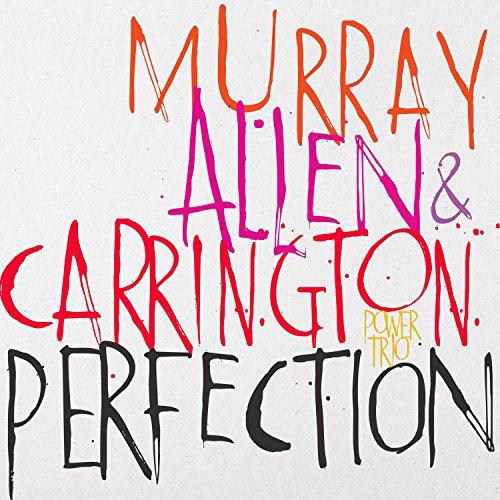
The Power Trio is a new all-star jazz group co-led by saxophonist David Murray, pianist Geri Allen, and drummer Terri Lyne Carrington. "Perfection" is the trio's debut, and they dedicated it to the late free-jazz sage, Ornette Coleman. The album only has one of Coleman's works, the title cut, but this perfectly wrought album is laced with Coleman's spirit. The trio included as guest stars bassist Charnett Moffett and trombonist Craig Harris, who had ties to Coleman. There’s outstanding trumpeting by Wallace Roney, Jr. Murray, Allen, and Carrington are global figures. They played for keeps on each cut. The ones certain to leave a mark are Barbara Allen, Geri-Rigged, and the trio's mission statement The David, Geri & Terri Show. Pray, the Power Trio is blessed with longevity.

Jazz all-star groups are more popular now than ever. They are popping up all over the place. Groups such as the Cookers, the Heads of State, and the Power Trio are making terrific music. The Power Quintet is an all-star group with an imposing presence, staffed with musicians with fat reputations. The members are vibraphonist Steve Nelson, trumpeter Jeremy Pelt, pianist Danny Grissett, drummer Bill Stewart, and bassist Peter Washington. Washington approached Pelt about forming a band with each member writing original music and sharing all the heavy lifting. Washington knew the musicians he wanted. Pelt, one of the top jazz trumpeters breathing, was gamed about bringing a new all-star group into the world. The quintet has already toured Europe and the States. High Note Records released the quintet's first album, High Art, a post-bop extravaganza for the ages. Pelt has major sway, but Nelson is the centerpiece, strutting is virtuosity on Look at Here, Mr. Wiggleworm, and Tincture. Pelt's solo on But Beautiful was so damn good the devil would feel compelled to write Pelt a thank you note. Keep your fingers crossed that the Power Quintet can keep the magic going in the coming years.

In 2104, the jazz drummer Matt Wilson's wife, Felicia, an accomplished violinist, died. For three decades they were one. Palmetto Records released Matt Wilson's Big Happy Family Beginning Of A Memory Wilson's tribute, or his final love letter to Felicia. It’s the most joyous tribute album you are likely to hear in a lifetime. Wilson included seventeen originals on the album. Many of the musicians who have been in and out of his various bands for years Terell Stafford, Larry Golding, Gary Versace, and Chris Lightcap participated in this tribute. The playing on Lester, Searchlight, Request Potatoes, Father of The Year, and 25 Years Of Rootabagathis is stunning. Major props to Wilson for keeping this marvelous tribute to his beloved Felicia spirited
Subscribe to:
Posts (Atom)