Saturday, April 30, 2011

TRUMPET SENSATION

Jazz trumpeter Ambrose Akinmusire
My friend Luis Torregrosa, an avid jazz fan, raved about you. Ambrose, Luis suggested I catch your show at the Detroit Institute of the Arts. Luis emailed me reviews of your past concerts published in the Wall Street Journal and the Village Voice. The reviews were glowing. I also read a story about you in the May issue of Jazz Times. Jazz critic Geoffrey Himes wrote the story. Himes explained how you compose. Yesterday, a few hours before I set sail for your show, I watched video footage of you on YouTube.

The reviews Luis emailed me understated your abilities. Your show in the Rivera Court of the DIA was out of sight. Ambrose, your band bass player Harish Ragavan, piano player Sam Harris, sax player Walter Smith III, and drummer Justin Brown was so engaging and magical the men in the Diego Rivera mural stopped working to hear your band.

Ambrose, the band was tighter than new dress shoes. The original songs your band played were intricate and had as many layers as a wedding cake. The capacity crowd was sucked in right away, loving how you arranged “Confession of My Unborn Daughter” so it smoothly segued into “Few and Far Between”.The crowd didn’t get the “Tear Stained Suicide Manifesto”. Geoffrey Himes touched on the song's evolution in his Jazz Times story. “Tear Stained Suicide Manifesto” was a bit disturbing. On "Kenya, I thought you were going to blow the people in the first three rows out of their seats.

Ambrose, most trumpet players of your elk and generation main influence is obvious. For example, the first time I heard Sean Jones right away I knew he was inspired by Clifford Brown. But, Ambrose, I couldn’t tell who turned you on. I suspect you listened to all the great jazz trumpet players. How could you not and be as magnificent as you are? During intermission, I heard a man compare you to Miles Davis. That was a knee-jerk comparison. Mile Davis influenced most jazz trumpet players. Anyway, thanks for playing all original songs. I get sick and tired of hearing youngsters playing oldies. Luis was right praising you. You are the future of jazz.

Monday, April 25, 2011

LATIN FLAIR

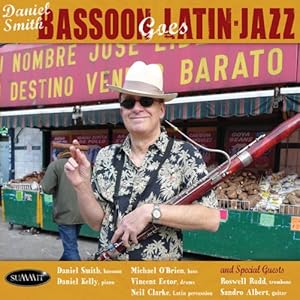
The bassoon is an oblong looking woodwind instrument and a close relative of  double reed instruments. The bassoon plays music composed in the bass and tenor register. The instrument was made in the 1600’s and is mostly used for classical and chamber music. Some noted jazz musician test drove the bassoon.

The instrument surfaced in jazz during 20's. Big band leader Paul Whiteman occasionally employed a bassoon player. Sax men Yusef Lateef, Marshall Allen, and Hugh Lawson played the bassoon. Daniel Smith, a classical trained musician, popularized the bassoon like Eric Dolphy popularized the bass clarinet.

 Smith has made classical and jazz recordings. He’s considered a top bassoon player. Smith’s last jazz album was “Blue Bassoon”. It was an acclaimed jazz-blues date. Summit Records unveil his new album “Bassoon Goes Latin Jazz” last month. Smith gave some well-know jazz songs—“Mr. Kenyetta”, “Watermelon Man, “Yardbird Suite, and “Listen Here”—a Latin makeover. Oddly, Smith didn’t hire any Latin jazz musicians. I guess you don’t really need them to make a convincing Latin jazz album, which Smith succeeded at doing.

Super trombonist Roswell Rudd made a cameo on the album’s best track “Watermelon Man”. Smith knows the Latin jazz language backward and forward. And so does his sidemen. They worked best on up-tempo songs. Pianist Daniel Kelly was the MVP. Kelly’s fingers seemed possessed on up-tempo numbers “Listen Here” and “Come Condela”. Kelly played tenderly on “Black Orpheus” as if his fingers were cashmere. “Bassoon Goes Latin Jazz” isn’t a groundbreaking jazz album. But is an enjoyable one.

Saturday, April 23, 2011

OFFBEAT JAZZ

"Gladwell” could easily be mistaken as an offbeat jazz album. Some old-fashion jazz fans may even question if it’s authentic jazz. I believe the album’s creator jazz guitarist Julian Lage meant for “Gladwell” to be   eclectic. This album is his follow up to the Grammy nominated “Sounding Point”. Emarcy Records unveils to the public “Gladwell” on Tuesday.

Lage’s style is like the gypsy jazz co-creator Django Reinhart. Lage can strum fast as if his fingers are mini-race cars. He can play melodically, too. Lage explains that “Gladwell” is a story driven album with each song representing a fictional character. Labeling “Gladwell,” a musical novel wouldn’t be off base.

On “Gladwell”, Lage mixes an array of his interests jazz, bluegrass, Latin, chamber music and American folk music. Somehow, he makes it work. Cellist Aristides Rivas, bass player Jorge Rodedert, saxophonist Dan Blake and drummer Tupac Mantilla are vital to the album’s appeal.

“Gladwell,” opens strong. The group exerts its will on “233 Butler”. Lage doesn’t allow us to get comfortable. He changes the mood often. “Margaret” is a teddy bear soft ballad. Lage’s guitar blends with the tenor sax and the cello. At the end, Blake and Rivas come up with lighthearted sound effects on their instruments. Lage has a private moment with the Mantilla on “Iowa Taken”. On all 12 cuts, Lage proves he’s an uncommon jazz guitarist, especially on “Cocoon,” which he plays alone. I recommend “Gladwell” if you long for an eclectic jazz album.

Friday, April 22, 2011

SPLITTING THE BILL

Anat Cohen photo by John Rodgers

At Orchestra Hall yesterday evening, the Anat Cohen quartet played a double bill with the Hot Club of Detroit. Unfortunately, there weren’t enough people there to take in the best concert of this year’s Paradise Jazz Series. The HCD performed first. They played songs from their self-titled first album and their current project “It’s About That Time”. 

For years, the HCD has been Detroit’s hottest jazz group, and they’ve built a national following. On the stage, they look like frat-brothers. They’ve put their spin on what’s known as gypsy jazz. Last night, when they performed “It’s About That Time,” they showed how modern and creative they truly are.

The HCD opened ‘It’s About That Time,” with guitarists Evan Perri and Paul Brady passing pieces of the melody back and forth like cheat sheets. After bassist Andrew Kratzat soloed, saxophonist Carl Cafagna rose. He added several choruses of Charles Mingus’ “Nostalgia in Time Square”. It was the highpoint of the HCD’s set. Cafagna an unsung in Detroit. The city is full of brilliant sax players. Cafagna has horsepower. He always uses that power prudently. Never going overboard when soloing and improvising.

Sadly, last night’s set was his last with the HCD for a while. Their touring has picked up. Cafagna is a family man foremost. Touring has taken its toll. He isn’t putting away his horns for good. He will still run his own band and gig with the Metro Jazz Voices. But, with Cafagna gone and until HCD finds a suitable replacement (which will be difficult), the HCD will be like a Bentley without doors.

Anat Cohen followed the HCD. In 2005, Anzic Records made public “Place and Time,” Cohen’s first recording. Since then, the clarinet player has been praised by some noted jazz reporters. Cohen brought a colorful band to Orchestra Hall bassist Joe Martin, drummer Daniel Freedman and pianist Jason Linder.

Cohen’s guys were playful. Freedman is more of a free jazz drummer. The audience was thrilled watching. Freedman played the drums with his hand and his right elbow on “All Brothers”. Cohen is equally playful.
She’s a spirited boss. When her guys soloed, she gravitated to them, egging them on. Cohen is in the same league as fellow clarinet players Wendell Harrison and the late Pee Wee Russell. 

Cohen ended her set by inviting the HDC back on stage to play Django Reinhart’s ditty “Minor Swing”. It was freewheeling, and the audience ate it up. The only shortcoming was the bands blazed through the sets. The sets should’ve been longer. After Cohen signed autographs, she said she isn’t accustom to playing short sets. She wished her band was given more time. Neither band wasted what little time they had.

Tuesday, April 19, 2011

KICKIN' IT OLD SCHOOL

I'm finally caught up. Pepper, I’ve been writing album reviews for the past month or so. Some jazz labels--Dark Key Music, Jazz Legacy Productions and Mack Avenue Records--sent me some choice new releases. The albums were pretty good. Now that my desk is clear, I get to take a break before the mail carrier drops off another stack of new albums. Pepper, I wanted to hear some old school jazz. The kind jazz musicians of your generation made, so I played your album “Encounter!”. One of your best dates in my book. Do you recall making it? Prestige put it out in 1964. 

Your Detroit running buddies Ron Carter, Tommy Flanagan, and Elvin Jones played on "Encounter!". What a star-studded rhythm section that was. The band bounce from cookers to ballads. And you made the occasion  extra special by sharing the front line with fellow saxophonist Zoot Sims. He gave "Encounter!" that West Coast cool flavor. A tenor and baritone on the front line what a novel concept.

"Encounter!" opened with “Inanout”. You and Sims started blowing like mad right away, trading measures like penny stocks, giving the impression “Encounter!” would be a saxophone battle album. Like "Setting the Pace" with Dexter Gordon and Booker Ervin, and the all out blowing sessions Sonny Stitt and Gene Ammons had. But you threw the listeners a curves by following up “Inanout” with the ballad “Star-Crossed Lovers”. You shifted the emphasis from you and Sims to Flanagan. The pianist had a sweet way of playing ballads that would’ve made a mountain lion blush.

You’re also the consummate balladeer, down shifting the baritone to the low register. Doing that made your horn mimic a human voice. I thought the horn would float from your hands on “Serenity" and “I’ve Just Seen Her”. You didn’t neglect your rhythm section either.

Carter, Flanagan, and Jones got a piece of the action. Carter kept time more accurately than a pawnshop Rolex. Jones has the final say on "Verdandi," the album's last song. Jones' sounded was so multi-layered I was convinced Jones was playing multiple solos simultaneously. Pepper, I have to stop now. The mail carrier just pulled up.

Monday, April 18, 2011

FLAWED DEBUT

Trumpeter Laura Kahle is a noted arranger and composer. Kahle has written charts for many popular jazz bands and orchestras--the Branford Marsalis Septet, the Jazz at Lincoln Center Orchestra, and Bill Lee and the Natural Spiritual Orchestra--are some that come to mind. Tuesday, Dark Key Music makes available "Cicular," Kahle’s first album as a leader.

Kahle wrote 11 originals and a bonus song. That song is untitled and is oddly one of the album’s bright spots. Otherwise, "Circular" is a deficient debut given the caliber of talent Kahle signed up.

Kahle put together a tough band. She deserves kudos for pulling that off. Saxophonist JD Allen and Yosvany Terry, bassist Orlando le Fleming, and drummer Jeff “Tain” Watts play on “Circular”. But the date has deficiencies. The most glaring one is Kahle's failure to give her star-studded supporting cast any really interesting songs to play. Kahle plays the pocket trumpet. And she sounds like an amateur, struggling to keep up.

“Circular” has some good things worth pointing out. Allen is one of the top saxophonists alive. He could've burn down the studio on “20/20 Vision”. Allen and Watts get into a spirited exchange on “Touch & Go”. Watts plays an atomic solo after the exchange. That’s it for the album’s highlights.

Saturday, April 16, 2011

GOING TO THE SOURCE

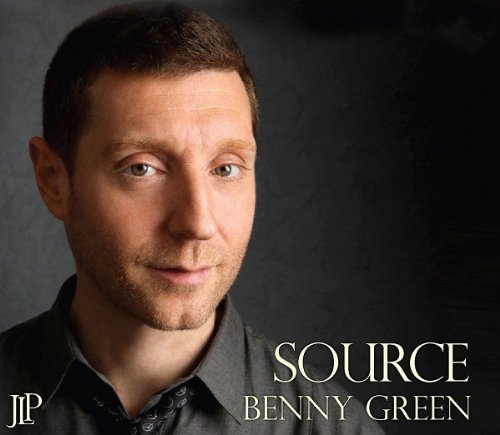
Pianist Benny Green’s natural habitat is the trio. If you want proof, listen to Green's new album "Source" on Jazz Legacy Productions. "Source" is a bona fide trio jazz album, and Green’s first trio date in ten years. Green handpicked ten of his favorite songs by jazz giants such as Dizzy Gillespie, Horace Silver, Mel Torme and Bud Powell. A big undertaking Green pulled off.

His sidemen are drummer Kenny Washington and bassist Peter Washington. Green has teamed up with them before. They’ve a brotherly bond. On “Cool Green,” Peter trots with the bass instead of walking it. Kenny is an uncomplicated drummer. He’s perfect for Green. They volley the notes to “Tempus Fugit” back and forth like tennis pros.

Technically, Green is perfect like pianist Oscar Peterson. Green is not a heavy-handed improviser. Again, if proof is necessary, go to “Blue Minor and “Opus De Funk”. Green is also a terrific balladeer. On “I Wait for You,” “Park Avenue Petite,” and “Born to Be Blue, his fingers melt all over the piano keys like heated chocolate. Instead of remaking the songs on “Source,” Green polishes them.