Tuesday, April 5, 2011

PENNY DOES BURT

In 2004, Penny Wells released “Shine,” her first album. The vocalist co-wrote the songs with pianist Al McKenzie. A brave move considering Wells was still unknown back then. She's from good stock. She's kin to the great jazz pianist Sir Roland Hanna and vocalist Naima Shamborguer. Wells never typecast herself as a jazz or a R&B singer although proficient at both. “Shine” was her’ official coming out party, and regionally it was a big hit. That was seven years ago. 

Last week, Wells unveiled “Close To You”,” her second recording. She escaped the sophomore jinx, the session not measuring up to the promotional hype, and not being as exciting as her first. Wells opted to explore the Burt Bacharach songbook over putting out more originals. Her forte is singing ballads. Bacharach wrote many good ones. Wells picked nine. 

“This Girl’s in Love With You” and “Make it Easy on Yourself" are outstanding. Wells delivers them explicitly. Her alluring voice would give a grizzly bear goose bumps. There's one glaring flaw “I Say a Little Prayer For You”. The song seems out of place, and it doesn't suit Wells' voice. 

Wells has a worthy partner in Al McKenzie, the music director for the Temptations. He's a seasoned producer. When arranging Bacharach's songs, McKenzie was careful to keep the original melodies intact. “Close To You,” feels as if Wells spent the past seven years in the studio perfecting the album, laboring over every small detail. 

EASY LISTENING

Tenor saxophonist Mike Lee and trumpeter Ted Chubb co-lead New Tricks, a quartet they formed with drummer Shawn Baltazor and bassist Kellen Harrison after hooking up at a jam session six years ago. In 2009, the quartet released a self-titled disc. "Alternate Side," an easy to digest post-bop date, is New Tricks' second outing and it's in record stores today. The tunes are originals written by Lee and Chubb. They take a page from Ornette Coleman’s playbook.

"Alternate Side" is similar to Coleman's "Tomorrow is the Question," and "The Shape of Jazz to Come". New Tricks play without a pianist. For such a rambunctious group that's risky. They risk stressing out the drummer and bassist. The pianist is normally shoulders the brunt of harmonic workload. On "Alternate Take," Lee and Chubb assume that responsibility.

A jazz reporter once asked Sonny Rollins why on albums such as “Way Out West” and “The Freedom Suite” he gave the pianist the day off. Rollins explained the fellows in the band rely too much on the pianist. To play in a piano-less situation, a musician must have exceptional chops. Do Lee and Chubb agree with Rollins? That’s unknown. New Tricks piano free rhythm section is exceptional.

"Alternate Side-Parking" and “New Dog are sweltering tunes Lee wrote. Lee--a disciple of the sax apostle Joe Lovano--is aggressive like a storm trooper. Like the late trumpeter Booker Little, Chubb likes to hangout in the upper register of the trumpet. "Vicenza Day" is the only ballad on the disc, giving us a moment to catch our breath before the band takes off again.

You'd think the drummer and bassist would wear out fast without a pianist to help. Neither Baltazor nor Harrison shows any signs of fatigue. Some free jazz music is hard to stomach. The musicians honk, squeal, and thrash as if they’ve lost their minds. On "Alternate Side," New Tricks never go overboard.

Monday, April 4, 2011

BUCK THE STATUS QUO

Gretchen Parlato has a mellow air like Nora Jones and current sensation Esperanza Spalding. They have a buck-the-status quo mentality. Parlato is a California native. When she was a kid, her parents turned her on to various forms of music. In 2003, she moved to New York. The following year she won the Thelonious Monk Institute International Vocal Competition. Her first disc “In A Dream” followed five years after.  

Tuesday, OBLIQ SOUND releases her new disc “the lost and found, a masterpiece some may mistake as neo-soul. That genre may have influenced Parlato some. But, after inspecting "lost and found," you will concluded it's an unconventional and carefully plotted jazz recording. 

Parlato bends many forms and she stays true to her laid-back approach. She covers Lauryn Hill’s “All That I Can Say”, and she restyles “Holding Back the Years,” a hit for Simply Red in 1990. Her soft voice melts in you hands. Parlato wrote lyrics for Wayne Shorter’s pearl “JuJu”. You’ll be unable to tear your ears away from Parlato’s originals.

Spotting talent is her strengths, too. Ace pianist Robert Glasper rearranged Bill Evans’ “Blue in Green”. Glasper fingerprints are on other tunes as well. She hired pianist Taylor Eigsti, drummer Kendrick Scott and bassist Derrick Hodge. “lost and found” will not fly for working-class jazz fans. Nothing is common about Parlato's approach to making music.

Friday, April 1, 2011

JAMMIN' FOR BREAD

Yesterday, Harold, I watched a 30 minute video on You Tube titled Harold McKinney Jazz Master. Radio personality Nkenge Zola interviewed you. You talked about your childhood. Then you explained how you conceptualize music, and the science of improvising. The video reminded me of our interview in 1997 for the Metrotimes, a weekly newspaper.

Do you remember our conversation? I used  to attend your Detroit Jazz Heritage Performance Lab workshop at the SereNgeti Ballroom Thursday nights.  I was the fellow seated at the back table writing in a reporters notebook.

I watched you coach jazz musicians of various ages and levels of talent. You charged them $10.00 per workshop, which was a bargain. Saxophonists, drummers, pianists, trumpeters, vocalists, and even non-musicians were welcomed.Surprisingly, there were more female singers than instrumentalists. You coached pianists how to accompany singers properly.   

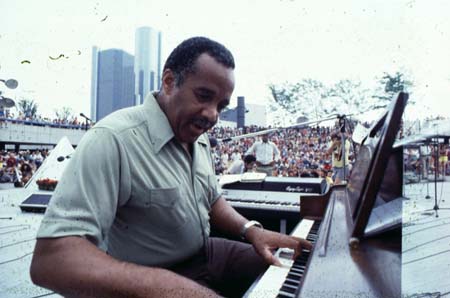
The late pianist Harold McKinney
“You have force her to reach or else she’s going to be self-conscious. I want something underneath her. Build her. Let me hear you articulate every note, “I recall you telling a 16-year-old pianist. When you felt your students were ready, they performed in your annual concert “Jammin’ for Bread”. I asked why you named it that. “Musicians--jazz musicians particularly-- have to jam for their livelihood,” you explained. 

You agreed to an interview you. The Metrotimes wanted me to write about how accomplished Detroit jazz musicians such as Donald Walden, Teddy Harris Jr., and Marcus Belgrave mentored young talent. my editor said the piece would be called: “The Detroit Way: The Masters raise a new generation of jazz musicians”. It was my first article for the newspaper. The interview took place in your living room, and I picked your brain for an hour.

 Weeks later, we had another conversation inside your green Volvo station wagon before the article’s photo shoot. You munched on humus and pita bread. You asked me to include your twin daughters Sienna and Jore in the article. They were good trumpeters and a big part of your weekly workshop.   

By the way, I talked to your daughter, GayeLynn, in November at the Harbor House. She performed with bassist Ralphe Armstrong and vocalist Kimmie Horne. At intermission, GayeLynn told me she planned to raise  some money.  She wants to record an album of your originals. If I were rich, I would bankroll her project.

The “Harold McKinney Jazz Master” video brought back some good memories of the time I spent interviewing you, and hanging out at your workshop, wishing I had some musical talent. I learned a lot about jazz at those Thursday night sessions.  My $10.00 was well spent. Unfortunately, after you died, no one continued the workshop. 

Tuesday, March 29, 2011

STANDARDS REJUVENATED

"Come Fly with Me”, “One Mint Julep”, “Sweet Georgia Brown” and “Body and Soul”. We’ve heard those old world standards before, right? But never the way pianist Monty Alexander handles them on his debut recording for the indie label Jazz Legacy Production.  Music producer John Lee and the pianist handpicked the tunes from some of his recorded live performances.  It's hard to discern "Uplift" is a cut and splice project. Alexander--the mirror image of the late be bop laureate Bud Powell--rejuvenates those timeless gems. Alexander has the disposition of a saloon pianist--in keeping with how he's defined his style the past four decades--on the disc’s shortest tune “Home”.  He blends Calypso and be bop on “Fungh Mama”. Drummer Herlin Riley is a big part of this disc. Long ago, Riley earned his journeyman credentials steering the prestigious Jazz at Lincoln Center Orchestra. Throughout the recording, Riley is on Alexander's tail like a highway patrol car. 

Sunday, March 27, 2011

STRING ALONG

I will keep it short. Tenor saxophonist Steve Cole's new disc “Moonlight” (artistry music) is just as good as “Charlie Parker with Strings” and "Charles McPherson with Strings a Tribute to Charlie Parker". Some be bop savvy folks may consider that statement laughable because  Cole is a smooth jazz figure. Who cares what branch of jazz he favors? The man has an elegant set of chops and they blend nicely with the Millennium Chamber Players of Chicago. “Moonlight” is an attractive recording and Cole spruces up some familiar goodies such as “Cry Me a River” and “The Look of Love”. 

Thursday, March 24, 2011

WINGING IT

I have to level with you, Robert. I disliked your two hour set last night at the Jazz CafĂ©.  It seemed as though you were winging it the entire night. You came to Detroit without a game plan. Yes, there were a few noteworthy moments.

Bassist Derrick Hodge’s slick soloing was one. Your James P. Johnson-like licks on the last tune was another. Your comic bit with Hodge was amusing. The college kids-which seems to be your target audience-had a ball, but some of the old-timers with a discerning ear for jazz became restless as the music dragged on without a clear destination.
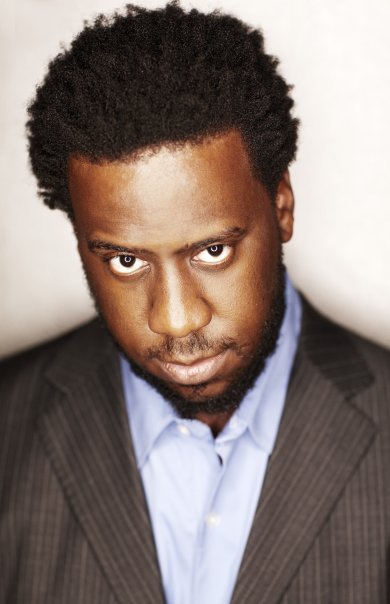
Pianist Robert Glasper