Sunday, June 27, 2021

THE PARADISE JAZZ SERIES REOPENS WITH A LIVELY SET FROM BRIAN BLADE & THE FELLOWSHIP BAND

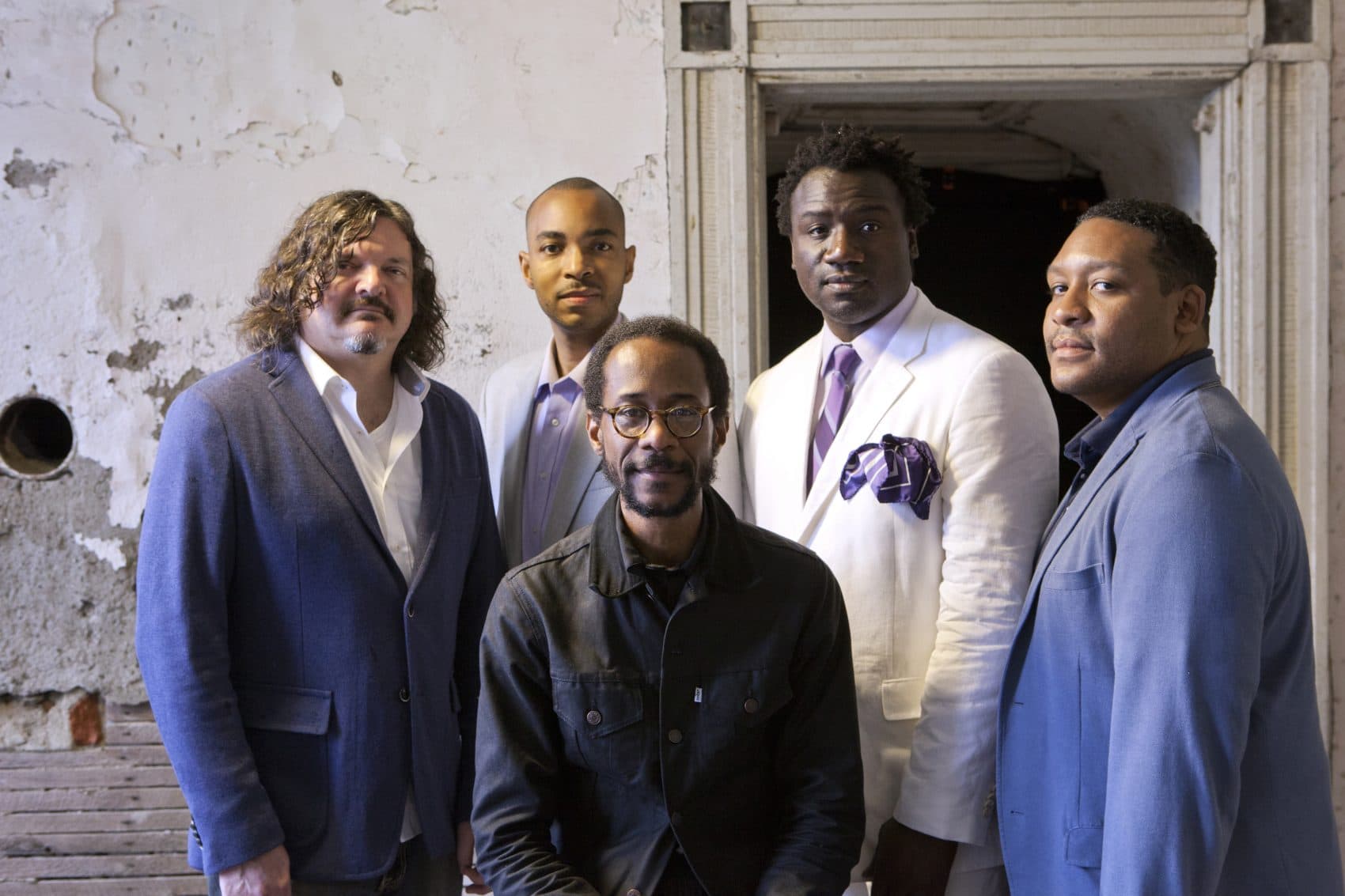
Brian Blade &The Fellowship Band

Seventeen months have passed since the Paradise Jazz Series has put on a live concert. The series returned Friday evening with a memorable set from Brian Blade & The Fellowship Band. The 90-minute set was live-streamed and only available in-person to a limited number of people. Blade is no stranger to the series, having performed there with the Wayne Shorter Quartet and the Chick Corea Trio. Blade is one of the more spirited jazz drummers working. Most know him for his stints with Joshua Redman, Shorter, Corea, and Joni Mitchell. Blade is also a valued bandleader who kept the Fellowship Band running for 24 years. Friday’s night set at Detroit’s Orchestra Hall reaffirmed, for me, his band is unlike any other in jazz I’ve heard. They played cuts from their Blue Note recordings, opening the concert with “Return of the Prodigal Son,” penned by pianist Jon Cowherd. All but one selection Cowherd wrote. Throughout the concert, the band had two identities. Starting out mellow, and midway through a number morphing into a band that straddled the fence of the avant-garde. Saxophonists Myron Walden and Melvin Bulter stood out. Walden wolfed down the changes to “Landmarks,” and “Traveling Mercy like mini-pastries. “The best parts of the concert were Blades improvisational exchanges with Bulter on “Throwing Stones,” and with Cowherd on “Duality. They were the launching pads for Blade’s missile-like rimshots and his goosebump-inducing solos.


Monday, February 17, 2020

TROMBONIST VINCENT CHANDLER BRINGS A HELLUVA EXPERIENCE TO THE CHARLES H. WRIGHT MUSEUM OF AFRICAN AMERICAN HISTORY


Vincent Chandler
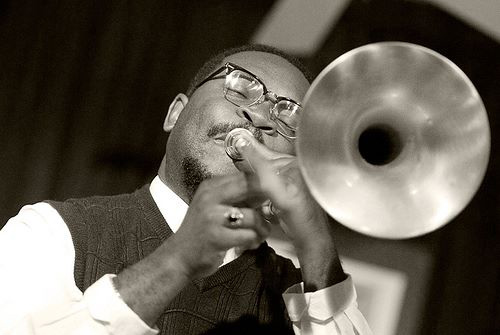
If you’ve caught any of the trombonist Vincent Chandler’s concerts over the years, you may know they are mainly structured as a showcase for the musicians in his bands. He’s always been—as long as I’ve followed his career—a selfless leader and a generous jazz educator to the many established musicians and student musicians who’ve benefited from his passion for jazz. So, Saturday evening at the Charles H. Wright Museum of African-American History it was a pleasure to witness him take time to give himself a humungous shout-out, which he did eloquently and humorously before performing an hour-plus set of original music with six of Detroit's best jazz musicians. In his group were pianist Michael Malis, drummer Sean Dobbins, bassist Josef Deas, trumpeter Dwight Adams, and saxophonists De’Sean Jones and Rafael Statin. That’s a helluva talent pool occupying the bandstand. Before they dove fearlessly into Chandler’s multi-layered tunes, he shared with the near-capacity audience some pivotal chunks of his evolution as a musician, an educator, a son, and a husband. Don’t get it twisted, he wasn’t bragging about his accomplishments, which are considerable. The self-acknowledgment was well-deserved and meaningful. After he finished, his group torched the museum with Minor Blues for Ed Love, So What Now, Do as I Say Not as I Do, and The Essence of a Remorseful Plea. And when the group needed a minute to allow their instruments to cool off after all that swinging. Chandler's wife, an accomplished opera vocalist, floored the audience with her rendering of Duke Ellington’s Come Sunday. After the audience regained its composure, the musicians returned to high-swing mode and didn’t let up. The pure reverence Chandler has for his bandmates was evident on the opening number. The solos appeared to be designed to give the audience a taste of each musician’s genius. Statin’s solo was the most memorable. He damn near blew the light fixtures off the ceiling. He’s reached new plateaus in his playing, and he’s finally purged the Kenny Garrett influence from his system. Dobbins and Deas were fabulous when the zoom lens was pointed on them. They probably understand Chandler’s musical and compositional leanings more than the others because they played and grew with him for years in the hot jazz quintet Urban Transport. There were more concert highlights than there’s room here to discuss. However, the most poignant time of the concert occurred when the group poured their souls into, I Can’t Breathe, Chandler’s artistic statement to the tragic end of Eric Gardner’s life. Chandler played brilliantly the entire concert. As a trombonist, his streetwise tone and aggressive phrasing beg comparison to Curtis Fuller. The concert was billed it as the Vincent Chandler Experience, and Chandler made sure it lived up to that.

Monday, January 27, 2020

THE KRIS JOHNSON QUARTET TREATS CUBE AUDIENCE TO IMPECCABLY EXECUTED STANDARDS & ORIGINALS


Kris Johnson
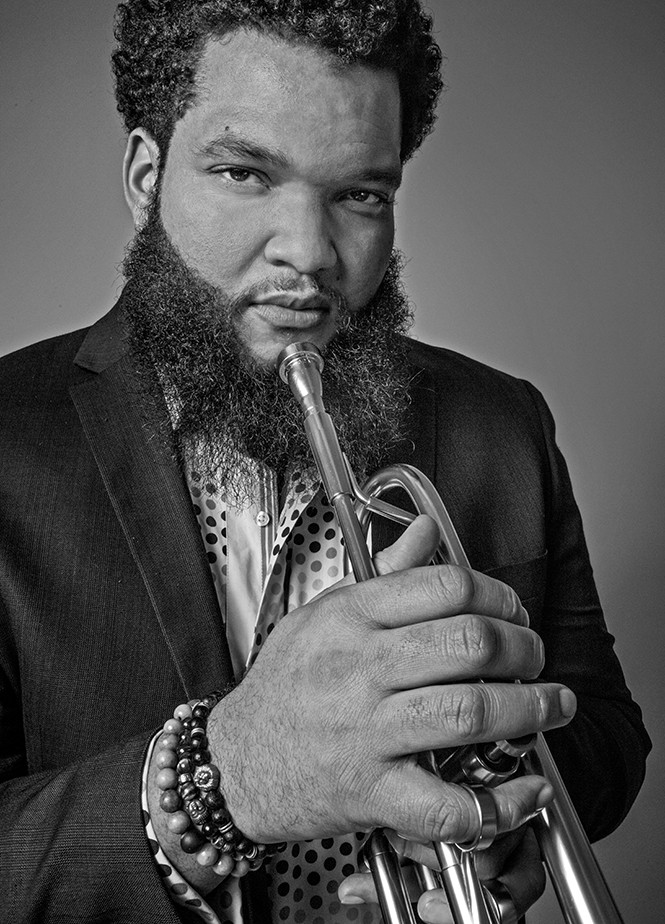
The jazz trumpeter Kris Johnson should do everything humanly possible to keep together the band he premiered on Friday night at the CUBE, comprised of drummer Nate Winn, bassist Jonathon Muir-Cotton, and pianist Alexis Lombre. They proved to be a modern bop driven machine, performing some jazz standards but mostly Johnson’s originals. Johnson is an established musician, music educator, and composer. Years ago, I heard him play in trumpeter Marcus Belgrave’s Trumpet Summit at the Detroit Jazz Festival. Belgrave had assembled a group of rising jazz trumpeters from across the United States, and Johnson stood out and over time became world-class with such honors as a Kresge Fellow, director of the Detroit Symphony Civic Jazz Orchestra, and a key member in the Count Basie Orchestra. Plus, he made recordings as a leader such as “The Unpaved Road” and “Journey Through A Dream” destined someday to be jazz classics. At the CUBE, his band'S treatment of standards such as Miles Davis’ Four was impeccable, but the audience got to witness the breadth of his genius when he soared on originals such as Birth of Angel, My Apology and Morning Dance. On the latter, he blew with such conviction and such force I feared his trumpet was going to explode. There were awe-inspired moments from Lombre and Cotton, two incredible talents. Lombre brings a high grade of enthusiasm to bands she performs in, and Cotton’s understanding of his role in a band and his command of the bass is comparable to Grammy-winning jazz bassist Robert Hurst. In recent years, Nate Winn has become the finest jazz drummer around Detroit, embodying the taste and acumen that helps make Johnson’s quartet special. Lombre’s, Cotton’s and Winn’s musical genius under Johnson’s leadership made for an unforgettable concert. One of the best I’ve attended at the CUBE. Johnson would be wise to keep this quartet going.

Monday, January 20, 2020

THE EMMETT COHEN TRIO MODERNIZES BENNY GOLSON'S HITS AT ST. CECILIA MUSIC CENTER


Pianist Emmett Cohen
Hearing young jazz musicians perform with a jazz legend surely makes for a joyful concert. That’s how I felt Thursday night at St. Cecilia Music Center in Grand Rapids, MI, listening to the Emmett Cohen Trio with special guest Benny Golson, a saxophonist whose career spans six decades, including careers with the Dizzy Gillespie Big Band, the Jazz Messengers, and The Jazztet. He's also worshipped globally as one of jazz’s top all-time composers. For several years now, Cohen, an award-winning jazz pianist, has made albums under the moniker Masters Legacy Series with jazz greats such as George Coleman, Ron Carter, Albert “Tootie” Heath, and Jimmy Cobb.  Cohen established the series to celebrate the musician's contribution to jazz and to document through recordings and video interviews. At the St. Cecilia Music Center, Golson was the attraction, but Cohen’s trio—bassist Russell Hall and drummer Evan Sherman—carried the concert by rejuvenating Golson's work. Before Golson joined the trio, they performed one of Cohen’s originals, showing they have been working together long enough to understand every detail of each other's musical psyche. The trio led with the standard Time on My Hands, and Cohen's playing was vivid and genteel, equal to Tommy Flanagan's and Ahmad Jamal's style. Sherman played drums as though he’d rubbed elbows with Art Blakey’s spirit, and Hall’s bass had the audience spellbound the entire concert. As for Golson, at 90, he looked healthy, and his memory was sharp. He talked way more than he played, explaining the story behind each song performed. He did, however, warn the audience that he loves talking. The stories nonetheless were entertaining, particularly the one about how Art Blakey tricked him into staying with the Messengers longer than he planned. When Golson soloed on Blues March and Killer Joe, he channeled his younger self. Honestly, Cohen’s trio modernizing Golson’s classics would’ve made for a terrific concert by itself. Or Golson spending two-hours talking about his life in music would’ve worked independently as well. Thankfully, the trio modernizing Golson’s work and his storytelling resulted in a gratifying jazz concert.

Tuesday, December 24, 2019

FAVORITE JAZZ ALBUMS OF 2019


Ralph Peterson & The Messenger Legacy Alive Ralph Peterson (Onyx Music 3)


On this homage to the Jazz Messengers, the jazz dynasty that Art Blakey built, drummer Ralph Peterson reunites members of the Jazz Messengers trumpeter Brian Lynch, saxophonists Bobby Watson, Billy Pierce, pianist Geoff Keezer, and bassist Essiet Essiet for this live double-disc. It’s incredible the level of swing the band stirs up and maintains throughout. Peterson is the leader of this wonderful piece of art, but the session’s MVP is Keezer.


Eric Alexander Leap of Faith Eric Alexander (Giant Step Arts)

For my money, Alexander is the premier jazz saxophonist of his generation. Usually, Alexander runs the streets with a quartet or a quintet, and he’s made memorable recordings with alto saxophonist Vincent Herring. This time out, Alexander records with a trio bassist Doug Weiss and drummer Johnathan Blake. The album represents Alexander at his rawest, loyal to his bop pedigree but straddling the boundaries of free-jazz.


James Carter Organ Trio: Live from Newport Jazz James Carter (Blue Note)

Carter’s organ trio has been together for 23 years with only one personnel modification the inclusion of the tasteful drummer Alex White. Over the years, Carter has made many albums. The organ trio dates rank as his best. Live From Newport Jazz is his debut for Blue Note. The trio performs music from Django Reinhardt’s catalog. Playing Reinhardt’s classics has been a pet-project of Carter’s for years now. Organist Gerard Gibbs makes Live From Newport Jazz a delightful listening odyssey. Since the trio’s infancy, Gibbs has been its centerpiece.


Confessions Veronica Swift (Mack Avenue Records)

Music journalist Veronica Johnson turned me on to Confessions Swift’s big-label debut. Johnson went on and on about how dope Swift's singing is and how her voice could fit any music genre. So, I gave Confessions a shot. Johnson's impressions were spot-on. Swift's voice held my ears hostage, and I had a mini-religious experience each time I played the album. Swift is a highly favored jazz vocalist. The spirits of Sarah Vaughan, Ella Fitzgerald, and Sheila Jordan reside in Swift’s voice. 


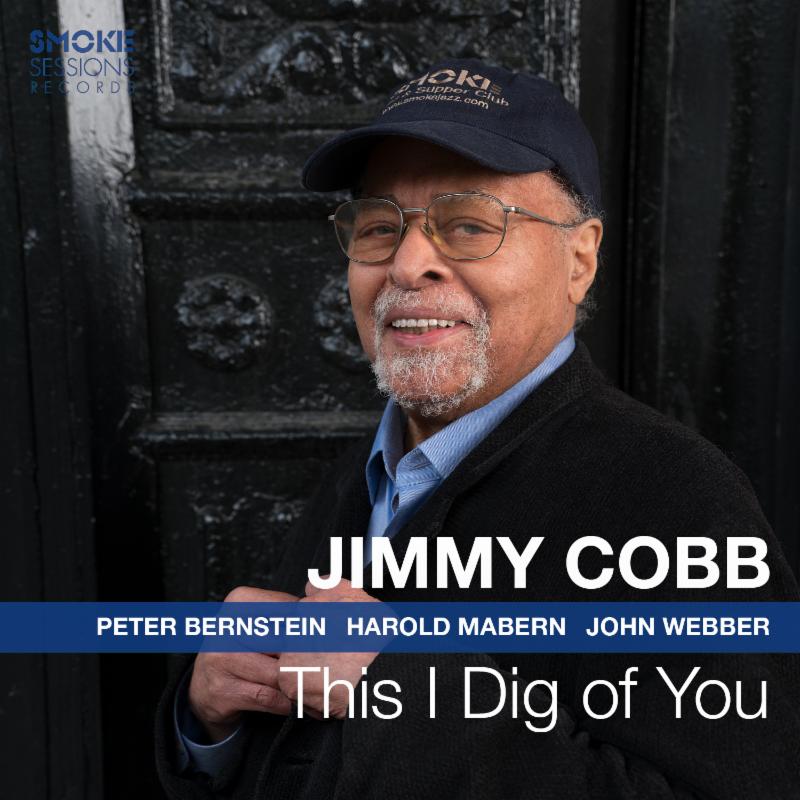
This I Dig of You Jimmy Cobb (Smoke Session Records)

This is the kind of red-blooded American jazz I could hear every day for the rest of my natural life. Cobb has been making pure jazz his entire career, which may be easy for him—at least on this session—given his partners are pianist Harold Mabern, bassist John Webber, and guitarist Peter Bernstein. Although each musician is equally yoked in terms of swing-ability, Bernstein is the obvious crowd favorite throughout the session. 


Detroit Tenors Steve Woods and Carl Cafagna (Detroit Music Factory)

Steve Woods and Carl Cafagna is the Detroit Tenors. The saxophonists are household sensations on Detroit’s jazz scene. Their inaugural self-titled album is the first time their shared genius has been documented for the world to consume. Their teaming generate the same degree of excitement Eddie "Lock Jaw" Davis and Johnny Griffin's collaborations embodied. On The One Before This, ODRP BluesFive Four Thing, Woods and Cafagna are in sync like a seasoned married couple. My favorite performance is their reworking of Blues Up and Down.


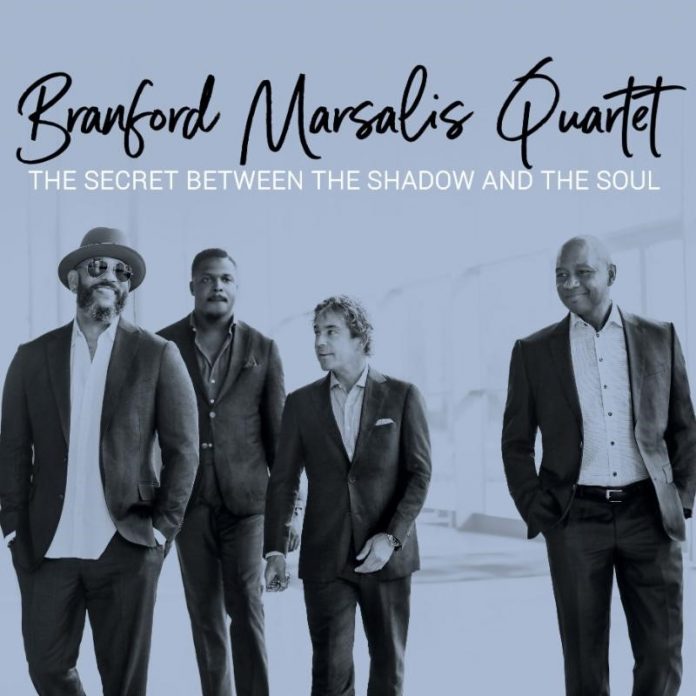
THE SECRET BETWEEN THE SHADOW AND THE SOUL Branford Marsalis Quartet (Marsalis Music OKeh)

The Secret Between The Shadow And The Soul is the Branford Marsalis Quartet’s most avant-garde album yet. There’s some exquisitely rendered abstract playing throughout. Marsalis Quartet has been going strong over two decades and the quartet is incapable of putting out music that dulls the senses. It's a powerful jazz quartet that revels in blowing up boundaries.


connections Diego Rivera (posi-tone)

Diego Rivera is a jazz educator as well as a helluva saxophonist. connections is his third album as a leader. Half the musicians in the band are former students of his. The others are veteran swingers he has collaborated with before. This album is spit-polished and is a continuation of the no-nonsense swing Rivera's reputation is built on. All the musicians contribute mightily here. However, the compositions that stick to my ribs are Rivera’s Mother Nature, Ties That Bind, and Nueva York.


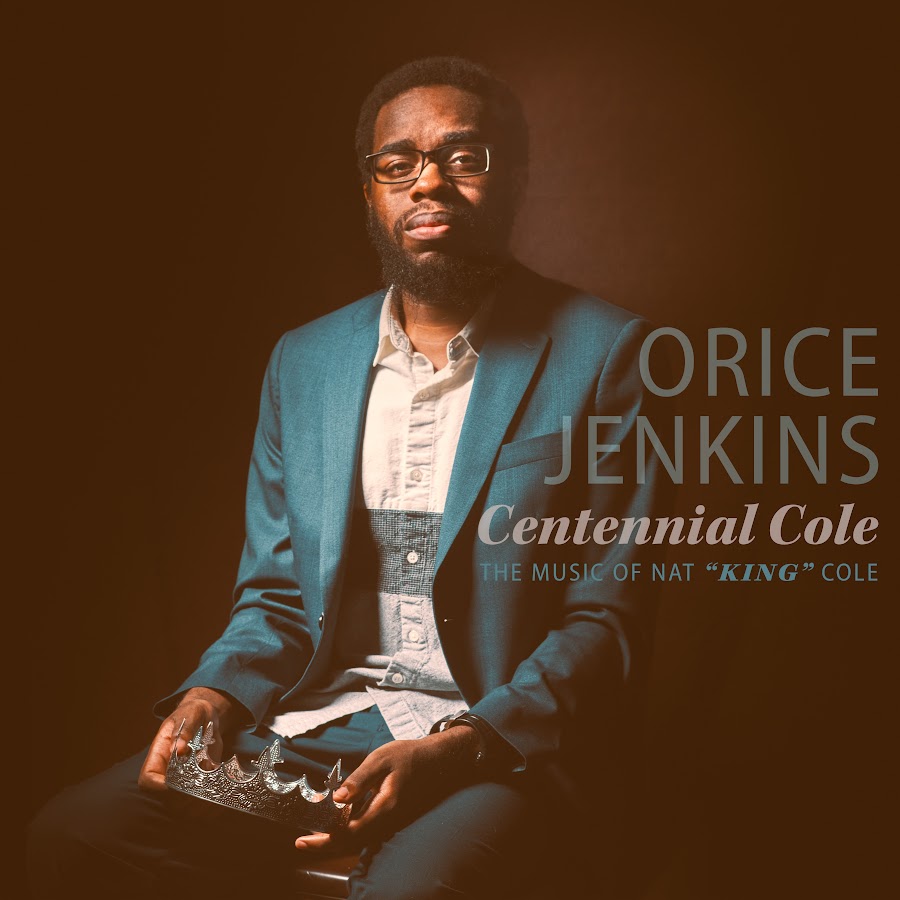
Centennial Cole The Music Of Nat “King” Cole Orice Jenkins (Truth Revolution Record Collective)

2019 is Nat “King” Cole’s centennial, and jazz vocalist Orice Jenkins honored Cole by making this exquisite album, packed with songs Cole long ago immortalized. Centennial Cole The Music Of Nat “King” Cole, is my first-time hearing Jenkins. I became a fan immediately after hearing him sing Let There Be Love and Mona Lisa. He has a respectful and gentle way of handling the songs Cole made classics.


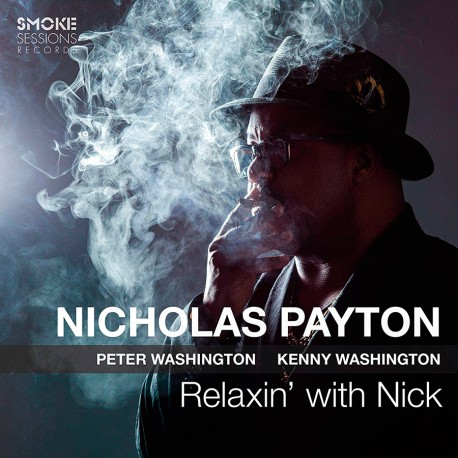
Relaxin’With Nick Nicholas Payton (Smoke Session Records)

If you enter this album expecting the Nicholas Payton of old, you’re going to be disappointed. Relaxin’ With Nick is a representation of where Payton’s heart is nowadays. Add to his track record singing, playing the Fender Rhodes and the acoustic piano. The title track shows Payton is a decent piano player. Endorsing Relaxin’ With Nick is a weird thing for me because I heard Payton perform the music months before its release at the Blue Llama in Ann Arbor, Michigan, and I didn't care for Payton's switching from the piano, to trumpet to the electric keyboard sometimes within the same tune. A lot is happening sonically on Relaxin’ with Nick, but it works for me this time around.
Monday, December 16, 2019

THE CHRISTIAN SANDS TRIO MAKES BLUE LLAMA DEBUT


Christian Sands
Saturday evening, the Christian Sands Trio performed for the first time at the Blue Llama, the popular jazz club in Ann Arbor, Michigan. The pianist, a native of New Haven, Connecticut, is signed to Mack Avenue Records. The late pianist Billy Taylor was his mentor. In 2014, he was a finalist for the American Pianists Association Jazz Fellowship, and he was a key member of bassist Christian McBride's Grammy-winning trio. Sands told the audience he loves the intimacy of the Blue Llama and hopes to be invited back soon. Sands, drummer Jonathan Pinson and, bassist Yasushi Nakamura set the village on fire with music from Sands’ albums Reach and Facing Dragons.  Sands’ current style is a blend of early Herbie Hancock and the great Gene Harris. Harris was probably an indirect influence, but like Harris, Sands can play softly and rambunctiously within the same tune. The audience witnessed that when he stretched the piano to its limits on Rebel Music and Song of the Rainbow People. Mind you, he isn’t all piss and vinegar. Like Billy Taylor and Hank Jones, Sands can swing thoughtfully and elegantly. Their impact surfaced during Sands’ solo on Reaching for the Sun. As a leader, he likes to share the wealth. Midway through the set, he featured Nakamura. Most attendees probably didn’t expect or want to hear a lengthy bass solo, but Nakamura’s feature was jazz improvisation at its best. The trio followed with a reworking of Thelonious Monk’s Blue Monk, played with such raw feeling Monk would’ve gotten choked up hearing it. The set closed with iOyeme! This time around, Sands featured Pinson, who possesses a God-like command of the drums. Saturday was his first time performing with Sands. Sands met Pinson in Paris, and before he turned Pinson loose on the Blue Llama audience, Sands said jokingly he hired Pinson because of his ability to swing and hold his liquor. On iOyeme! Pinson was ferocious. Sands’ trio put on an incredible 90 Minute set and the Blue Llama would be smart to bring the trio back soon.

Monday, December 9, 2019

THE PARADISE JAZZ SERIES AUDIENCE CONSUMES TWO-HOURS OF DUKE ELLINGTON'S HITS, PLUS HIS NUTCRACKER SUITE


Duke Ellington
Mr. Ellington, when you formed the Duke Ellington Orchestra way back in 1923, did you think it would still be thriving 96 years later? I’d bet a month's salary you believed the orchestra would be popular, but not globally revered nine decades after its founding. Mr. Ellington, I heard the latest incarnation of your orchestra Friday night at Detroit’s Orchestra Hall. The orchestra headlined the second concert of the 2019-2020 Paradise Jazz Series and performed a whopping two-hours. Opening the first set with Take the A Train followed by The Cotton Club Stomp, Satin Doll, The New Orleans Suite, Sophisticated Lady, Caravan, Cotton Tail, and Black and Tan Fantasy. Mr. Ellington that was plenty of music for an audience to consume in one set. I loved certain aspects of the concert overall but was anxious to leave midway through the second set. I appreciate the orchestra stuck to the original intent of your music. No soloist showboated when featured. Trumpeter Frank Greene blew with such conviction I believed the late Cootie Williams’s spirit coached Green during his solos. And when saxophonists Shelley Carrol and Morgan Price were called before the congregation, they damn near blew the upholstery off the main floor seats. Mr. Ellington, the audience could’ve left after the first set, satisfied they’d witnessed the best the orchestra had to offer. The history lesson the conductor Charlie Young prefaced each number with was a welcomed bonus. Young talked about your character as an innovator and as a leader. For the second set, the orchestra gave the audience an early Christmas gift, performing your version of the Nutcracker Suite. Honestly, Mr. Ellington, four movements into the suite, I was ready to call it a night. Not because the movements weren’t happening, or the musicians were tired after the energy-draining first set. The second set felt like a separate concert. Before the orchestra started the suite, Young got carried away joking about his obsession with Thanksgiving turkey, a joke surely, he’s told a thousand times over the years. Why, Mr. Ellington, do some jazz bandleaders long to be comics? The first set I enjoyed. The second one was overkill. Many of the attendees will disagree with my outlook. The audience was engrossed throughout, and I bet the orchestra could’ve played two additional hours and the audience would’ve been okay with that.