Sunday, July 31, 2016

PIANIST DAN TEPFER TREATED DETROIT GROOVE SOCIETY'S AUDIENCE TO A NIGHT OF JAZZ, CLASSICAL MUSIC & A LECTURE ON IMPROVISATION

Dan Tepfer

When Andrew Rothman, the founder of the Detroit Groove Society house concert series, introduced jazz pianist Dan Tepfer before his two-hour solo show Friday evening, Rothman noted Tepfer wasn’t a household name yet, but he’s undoubtedly on course to become one. Rothman also talked some about Tepfer’s work history, specifically his collaboration with the legendary alto saxophonist Lee Konitz, and witnessing their memorable duo concert at the Detroit Jazz Festival, and a pair of inspired concerts at Kerrytown Concert House. You could gather from Rothman's intro that booking Tepfer for the DGS series was a big score. 

Here's some intelligence on Tepfer: he's 34, grew up in France and started playing classical music at age six. His mom was an opera singer, and his grandfather a jazz musician. On the educational front, Tepfer has a degree in astrophysics and a master degree from the New England Conservatory. Mark Turner, Paul Motian, and Pharoah Sanders are some of the big-name bandleaders Tepfer has worked with. Currently, he has seven jazz albums on the market, “Goldberg Variations/Variations” being the most heralded. 

Tepfer’s style can be described as the kind of pianist you’d likely get if Bach and Thelonious Monk adopted a son, and only exposed him to the very best jazz and classical training available.

Tepfer played two on-hour sets Friday, which came across as two completely different concerts interspersed with a master class on the nuances of jazz improvisation. 

For the first set, Tepfer opened with standards “Solar” and “All The Things You Are,” and the remainder of the set his music was the focal point. The master class part of the concert happened when Tepfer talked to the audience at length about the nuances of improvisation, and then answered questions about how effortlessly he mixes jazz and classical music, and why he hums while playing. 

In layman's terms, Tepfer explained his approach to improvisation. Then he turned his focus back to the piano, closing the set with “He Just Takes,” his nod to jazz icon Thelonious Monk, and a burner of sorts title “Roadrunner,” which he doubled-down on the improvisation and the swing. In Cleveland and Vancouver, Tepfer has upcoming solo concerts, and he’s set to perform music from “Goldberg Variations/Variations”. 

The second set of the DGS concert, Tepfer treated the audience to a taste of what he plans for the folks in Cleveland and Vancouver. Forty-five minutes straight he played before coming up for air. The entire set every soul in the audience was spellbound. What's terrific about the DGS concerts is you can bank on having a different musical experience every time you show up. 

Monday, July 25, 2016

PRICELESS LIVE ALBUM CO-LED BY TRUMPETER WOODY SHAW & DRUMMER LOUIS HAYES OUT ON HIGH NOTE RECORDS

In 1976, the jazz pianist Cedar Walton fresh from a tour in Europe bumped into drummer Louis Hayes in Brooklyn. Walton told Hayes the jazz scene in Europe was happening, and a booking agent in Holland was serious about keeping the scene thriving. Walton suggested Hayes head over there, but Hayes was reluctant initially because he didn't have a working band back then. After giving Walton’s suggestion careful consideration, Hayes decided to go. Hayes hired two former members of pianist Horace Silver's band trumpeter Woody Shaw and saxophonist Junior Cook. Hayes also hired bassist Stafford James and pianist Ronnie Matthews. In today's jazz world such a line up would be marketed as an all-star jazz group. You'd have to contact Hayes for an accurate account of how many European cities the band performed in, and how long the band stayed together. If you’re curious about how terrific this band was High Note Records, recently put out a live recording Woody Shaw Louis Hayes The Tour Volume One, which captured a priceless sixty-three minutes piece of jazz history delivered by an all-star band that wasn’t seen as such in the late 70’s.  There’s no explanation why Shaw received top billing and why Hayes wasn't pictured on the album cover. However, in the liner notes, Shaw's son acknowledged the band was Hayes’s brainchild. The Tour Volume One has six cuts. The opener is The Moontrane, a barn burner that established the album’s momentum. The Moontrane was Shaw’s signature composition, and on this band’s performance of the tune Hayes was the focal point. Hayes was at the apex of his musicianship. The band dove headfirst into every subsequent cut. You'd be hard pressed to pick an MVP on this album because each musician, especially Matthews and James, played as if the world was ending immediately after the band’s performance.  Cook wolfed down the changes to Obsequious like birthday cake; Hayes had the drums speaking in tongue the entire concert, and Shaw governed from the upper register of the trumpet.

Sunday, July 17, 2016

NEW MUSIC FROM MATT WILSON, THE POWER TRIO & THE POWER QUINTET

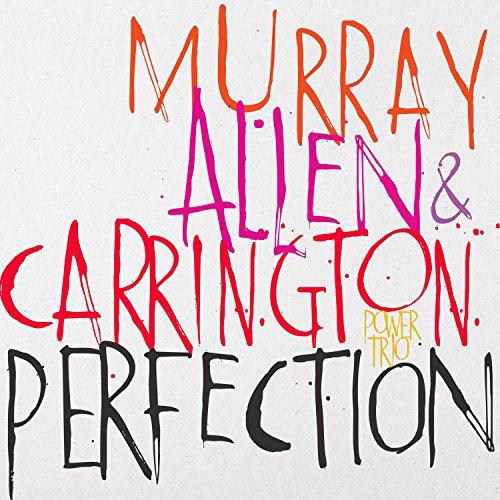
The Power Trio is a new all-star jazz group co-led by saxophonist David Murray, pianist Geri Allen, and drummer Terri Lyne Carrington. "Perfection" is the trio's debut, and they dedicated it to the late free-jazz sage, Ornette Coleman. The album only has one of Coleman's works, the title cut, but this perfectly wrought album is laced with Coleman's spirit. The trio included as guest stars bassist Charnett Moffett and trombonist Craig Harris, who had ties to Coleman. There’s outstanding trumpeting by Wallace Roney, Jr. Murray, Allen, and Carrington are global figures. They played for keeps on each cut. The ones certain to leave a mark are Barbara Allen, Geri-Rigged, and the trio's mission statement The David, Geri & Terri Show. Pray, the Power Trio is blessed with longevity.

Jazz all-star groups are more popular now than ever. They are popping up all over the place. Groups such as the Cookers, the Heads of State, and the Power Trio are making terrific music. The Power Quintet is an all-star group with an imposing presence, staffed with musicians with fat reputations. The members are vibraphonist Steve Nelson, trumpeter Jeremy Pelt, pianist Danny Grissett, drummer Bill Stewart, and bassist Peter Washington. Washington approached Pelt about forming a band with each member writing original music and sharing all the heavy lifting. Washington knew the musicians he wanted. Pelt, one of the top jazz trumpeters breathing, was gamed about bringing a new all-star group into the world. The quintet has already toured Europe and the States. High Note Records released the quintet's first album, High Art, a post-bop extravaganza for the ages. Pelt has major sway, but Nelson is the centerpiece, strutting is virtuosity on Look at Here, Mr. Wiggleworm, and Tincture. Pelt's solo on But Beautiful was so damn good the devil would feel compelled to write Pelt a thank you note. Keep your fingers crossed that the Power Quintet can keep the magic going in the coming years.


In 2104, the jazz drummer Matt Wilson's wife, Felicia, an accomplished violinist, died. For three decades they were one. Palmetto Records released Matt Wilson's Big Happy Family Beginning Of A Memory Wilson's tribute, or his final love letter to Felicia. It’s the most joyous tribute album you are likely to hear in a lifetime. Wilson included seventeen originals on the album. Many of the musicians who have been in and out of his various bands for years Terell Stafford, Larry Golding, Gary Versace, and Chris Lightcap participated in this tribute. The playing on Lester, Searchlight, Request Potatoes, Father of The Year, and 25 Years Of Rootabagathis is stunning. Major props to Wilson for keeping this marvelous tribute to his beloved Felicia spirited

Sunday, July 10, 2016

HOUSTON PERSON TALKS ABOUT DUET WITH RON CARTER, HIS REVERENCE FOR DETROIT, AND PUTTING THE FUN BACK IN JAZZ


Tenor saxophonist Houston Person won’t go on the record to acknowledge if “Chemistry,” his new duet recording with Ron Carter out on High Note Records, is his absolute favorite collaboration with the famed jazz bassist. For many moons now, Houston has been the reigning sage of soul-jazz, quick-witted improvisationally, on top of owning a tone on the sax that’s lush and sophisticated. As for Carter, chief among his legend is having blessed upwards of two-thousand jazz albums as a sideman, and for decades carrying the title of most revered jazz bassist of all times.

 Houston did acknowledge, however, that he loves each duet recording equally. Person and Carter started working together in the early 90’s. Since then they’ve recorded sixth highly-touted duets. On them, the duo used every square inch of their jazz acumen and boundless virtuosity on well-known standards that jazz musicians, according to Person, rarely perform nowadays.

“Chemistry,” has standards such as “Bye Bye Blackbird,” “Young and Foolish,” “I Can’t Get Started,” and “Blue Monk”. Person and Carter are in excellent form, and the standards sound freshly minted in their care. A few weeks ago, Person spoke with I Dig Jazz via telephone about “Chemistry,” his reverence for Carter, and what jazz lacks at the moment.
When did you and Ron Carter start collaborating?

We go way back. I met Ron at one of our union meetings for musicians. I've always been a big fan of Ron. He took his band and me on tour in Japan, and we got to be real good friends. We found out we like a lot of the same things like Scrabble. We'd play Scrabble to pass the time. Warming up before a concert I'd be playing songs, and he would play with me just bass and horn in the dressing room. He knew the lyrics to a lot of tunes. We liked a lot of the standards and the old jazz tunes. We started playing a lot of those tunes. We developed a mutual respect for each other and the music. I'm making it real short and brief for you, but we're just sort of good, good friends.

Chemistry”  is your sixth duo album with Carter.

People like them, people really like them. I have to give praise to the record companies for letting us do them, and the record companies keep asking for them, so Ron and I keep doing them.

You guys performed only standards on this album. Was that a decision you and Carter made not to record any originals?

I would pick the tunes. We would set up the tunes that we wanted to play. Some of our earlier duo albums we did a lot of jazz classics. The last two albums we did standards. We enjoyed that, and Ron being the great accompanist that he is, is the anchor for everything. He adds fresh life into all of those songs. Sometimes, I like to play those tunes that everybody thinks are outdated. I'm still dedicated to the jazz classics too, the real jazz tunes.

How do you and Carter pump new life into standards and classic jazz songs?
One thing is I would play the melody, and the harmonic structure Ron added to it. He can add different harmonies to the tunes. Sometimes, we do different tempos and different rhythms.

Over your career, you've played in a lot of different contexts. Are there particular challenges just playing in a duo situation?
There are no challenges. You see, I got a good partner, that's the first thing you want to do. I was told a long time ago when you get in a band, make sure everybody in the band is better than you. What that meant was make sure you have great musicians with you.

Ron adds so much, so many ideas rhythmically, little motifs then he will give you different little things he will set up for you. You just got to be alert. That's the fun and joy of playing jazz. When you're playing with the great Ron Carter, you find something to play. That's the challenge staying in tune and staying on the message that you're trying to deliver.

What made “Chemistry” extra special was legendary jazz engineer/producer Rudy Van Gelder’s involvement. How excited was he about working with you and Carter?
He loved it, man. We've been together, Rudy and I, for 40 years I've been recording with him. He's just great and still gets excited about doing sessions. I say this all the time; he's the producer. He's my producer because he has helped me throughout the years. He keeps me on the ball. Rudy is a hell of a guy. He's been the world to me; he's been very nice to me over the years and taken care of me.

Is this your favorite duet with Carter of the six?
I'm going to tell you the truth; I like them all.

You’re 81 now, you're still playing a lot of horn, and you're touring like crazy. What keeps you going?
I love playing. I love the music, and I think I'm making a contribution. I like helping the young guys, and giving them advice and mentoring them, and I like meeting people and different cultures, and breaking down barriers. There are so many barriers out there, so musically we try to tear them down.

I read that Detroit is one of your favorite cities. Do you have any fond recollection of working in Detroit?
I love Detroit. When I went to Detroit, when I was pretty much starting out and people stuck with me. The people there, they helped me so much.

Who are some of the people? Are you referring to the musicians there?
I worked at Mozambique, and I did an album featuring Detroit musicians Eli Fountain, then Wild Bill Moore. You got to get a copy of that, man. You will hear the whole feeling that was going on back then. I did some Motown stuff, too. I played Baker’s. Detroit was very good to me. Detroit gave me my first big record. Yeah, so I owe a lot to the people of Detroit.

You've seen jazz go through many changes. What's your thoughts on where the music is today?
I know where it should be.

Where is that?
We need to put the fun back in it. We need to be reaching out to the community more. We need to put the dance back in it. We need to put the Blues back in it.

When did those elements get lost?
I don't know. What do you think?

I like where the music is right now. I think there are some good players out there…
No, I'm not talking about the players. I didn't mean that. I'm not putting any player down. Man, you've got some bad cats out there now. I was just saying we need not be so serious about it. Okay, you can play, now let's have some fun. That's what I'm saying. See, your parents are people who back in the day, they used to go out dancing. They would be dancing and having fun.

Today the emphasis seems to be on virtuosity.
Yeah. That's what happened when we let the dance go. You can't dance. You had to sit and listen. The music stopped being fun, and then people started moving over to rock and roll or something else. You just ask anybody in Detroit about how it used to be there. I was there back in the day. It was different. That's what I'm saying. Put the blues back in there and let's have some fun.

Sunday, July 3, 2016

DOMINICK FARINACCI FED AUDIENCE AT THE DIRTY DOG JAZZ CAFE MUSIC FROM HIS BIG LABEL DEBUT ' SHORT STORIES'

Dominick Farinacci

The first time I caught the jazz trumpeter Dominick Farinacci live was at the 2003 Ford Detroit International Jazz Festival. Back then, he was a sophomore at Julliard, and a member of the late jazz trumpeter Marcus Belgrave’s Trumpet Summit, comprised of Sean Jones, Chris Johnson, Corey Wilkes, Dwight Adams, and John Douglas. Farinacci was a stand out among those then up-and-comers.
Since participating in that summit, Farinacci has built quite a reputation, getting a big break with Jazz at Lincoln Center, touring the Middle East as a jazz ambassador, and making eight well-reviewed jazz albums as a bandleader.
Last month, Mack Avenue Records put out “Short Stories,” his major label debut. Farinacci has traveled the world, absorbing many cultures, and he’s become a pro mixing jazz with his diverse cultural experiences and influences.
A sold-out audience at the Dirty Dog Jazz Café Saturday night experienced Farinacci’s eclectic style of jazz. He was at the cafe promoting “Short Stories,” and he performed with his current band pianist Kevin Bales, drummer Quincy Phillips, bassist Aidan Plank, and percussionist Mathias Kunzli.
Farinacci's band fed the Dirty Dog audience cuts from the new album, opening the concert with “Bamboleo “ followed by a marvelous take on “Black Coffee,” that rivals saxophonist Sonny Criss’s take on his 1966 Prestige Records album “This Is Criss!”.
Farinacci is a showman through and through. His playing can both speed up and slow your heartbeat. The entire concert he served strong solos that’ll surely be talking points in weeks to come. There was also a comedic component to Farinacci’s presentation. He poked fun at his sidemen, prefaced each number with a humorous story of its conception.
During one solo he manipulated a glass in the bell of the trumpet to produce a muted sound. Before the concert commenced, he plugged the new album by walking through the audience holding up a large photo of the cover of “Short Stories”. Farinacci solos on “Tango,” and “Soldier’s Things,” were serious business.
A prize moment came when Farinacci gave the floor to Kunzli and Phillips, on “Senor Blues,” and they pulled off a simultaneous solo. Listening to Farinacci, I imagined how mind blowing it must’ve been to watch trumpeters such as Harry James and Bix Beiderbecke perform in small jazz clubs back in the day.

Monday, June 27, 2016

MUST HAVE ALBUMS FROM BRANFORD MARSALIS, CYRUS CHESTNUT, DAN PRATT, MIKE LUGERNER & SHEILA LANDIS AND RICK MATLE


“Hymn For The Happy Man” is the first time saxophonist Dan Pratt has recorded an album as a leader with a conventional rhythm section. The past eight years, the organ has been the centerpiece of Pratt's band. The change was a good move. The new album which has seven originals and solid contributions from bassist Christian McBride, drummer Gregory Hutchinson, and pianist Mike Eckroth. McBride and Hutchinson are household figures. Eckroth is the band's centerpiece. He played one meaty solo after the next. “Hymn For The Happy Man” is a colossal outing for Pratt, who has a bulletproof track record as a leader, and as a hired gun for outfits such as the Christian McBride Big Band, and the Village Vanguard Orchestra. There's an odd mix of beauty and raw aggression to his playing. He blows with such pure force on  “Gross Blue” and on “Warsaw” it's a wonder his tenor didn't explode in his hands before the songs ended.

Alto saxophonist Jackie McLean was a hard-bopper by nature yet equally proficient in other brands of jazz. He died in 2006, and he left the planet upwards of fifty albums, of which many are now hard-bop classics. Bay Area alto saxophonist Steven Lugerner is an admirer of McLean’s work. Lugerner new album “Jacknife The Music Of Jackie McLean” is his tribute to McLean. As a saxophonist, Lugerner has one foot rooted in post-bop and the other in free-jazz. For this tribute, Lugerner remade “Jacknife,” one of McLean’s best albums for Blue Note Records. Throughout the album, Lugerner blew as if nourished from birth on an exclusive diet of McLean’s music. How good is this remake? If McLean were around to hear it, he’d be damn proud of Lugerner and his top-flight sidemen pianist Richard Sears, bassist Garret Lang, and drummer Michael Mitchell. It was a pleasure listening to them stretch out on McLean's "Das Dat," Melody for Melonae," and Hi.p Strut".

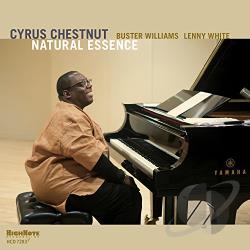
The past decade jazz pianist Cyrus Chestnut has bounced from label to label. Currently, he's signed to High Note Records, and he's made some of his best work there. “Natural Essence" is Chestnut's new trio album, and it’s something to behold. The trio is the best setting to experience Chestnut’s pure virtuosity. Chestnut chose familiar standards such as "It Could Happen To You," "I Cover The Water Front," and "My Romance". To aid in repurposing those standards, Chestnut hired two skilled hands bassist Buster Williams, and drummer Lenny White. The lead off cut "Mamacita" will give your soul goosebumps. Chestnut has a gift for appearing to play two pianos at the same time on up-tempo numbers. Chestnut changes sidemen for each album. The chemistry he has with Williams and White is effortless. Pray Chestnut keeps this trio together.

Vocalist Sheila Landis and guitarist Rick Matle musical loveship has been going strong for nearly three decades, and they have produced a body of outstanding recordings. "Beautiful Things" is the duo's new offspring. There're seventeen songs recorded live. Many of the duo’s recordings have been a showcase for Landis, one of the more dynamic jazz vocalists on the planet. This album contains everything's she’s offered for decades vocally. She has a gorgeous voice. At the drop of a hat, she can change it into a muted trumpet, a trombone, a sax, and even a drum. Her pitch perfect scatting would make Ella, and Armstrong jealous. This time around, Matle's virtuosity, his God-given ability to make his seven string guitar howl, cry, and melt in the palm of his hands is the draw. “Fine Fat Daddy," “Taller In The Morning," and "In a Mellow Tone" are the cuts likely to garnered the most water cooler talk.

When I received word jazz vocalist Kurt Elling was the guest star on a new album by the Branford Marsalis Quartet, I wondered how Elling would fit into the tightest jazz band working. Two cuts into "Upward Spiral," the phenomenal result of the quartet’s collaboration with Elling, I was convinced Marsalis ought to offer Elling a permanent spot in the quartet. Rumor spread Marsalis wanted Elling for this project because of his flexibility. Drop Elling in any musical situation and he’ll succeed. “Upward Spiral” is mostly recrafted golden oldies. What a good fit Elling is in the quartet come through on the "Blue Gardenia," "Doxy," "I am a Fool to Want You," and "Blue Velvet”.

Sunday, June 19, 2016

INTRODUCING COREY KENDRICK: MSU GRAD, FAMILY GUY, AND COMPOSER WITH A TERRIFIC DEBUT 'ROOTLESS' OUT NOW

In a recent interview with this blog, jazz guitarist Randy Napoleon asserted that jazz is in good hands with the current generation of up-and-comers. As a professor of jazz at Michigan State University, Napoleon would certainly know that because he’s helping develop future swingers. If you want some hard evidence that Napoleon knows what the hell he’s talking about, I implore you to get “Rootless,” a self-produced debut album by MSU grad pianist Corey Kendrick.  Kendrick, 31, is a native of Iowa, who left a good paying secure job in Iowa, moved his family to Michigan, studied jazz at MSU, and he’s presently raising holy hell in Detroit as a go-to pianist, composer, and bandleader.

At MSU Kendrick earned a Master’s in Jazz Studies. Jimmy Cobb, Etienne Charles, Jon Faddis, Christian McBride, and Jeff Hamilton are some of the high-end bandleaders Kendrick has performed with. “Rootless,” is a good of a debut you’re likely to hear this year. It has eleven cuts, three standards, and eight originals. There’s beauty at every turn. Kendrick is a dynamic interpreter of standards, proven on the oldies “Nature Boy,” and “In The Wee Small Hours”. His chops are in full bloom on originals such as “Alone In Michigan,” and “Lullaby For A New Mother”.  

Kendrick’s obvious influences are the late greats Bill Evans, and Kenny Kirkland. If they’re around to hear the meticulously wrought music on “Rootless” they’d blush. A big reason the album is a winner is the terrific playing from Kendrick’s  partner's bassist Joe Vasquez, and drummer Nick Bracewell. I Dig Jazz finally tore away from “Rootless” long enough to pick Kendrick’s brain about the album, and the challenges of building a name for himself in a jazz metropolis known for producing many of the planet’s greatest jazz pianists.

Is “Rootless” your mission statement?

The album is reflective of a very specific period of my life.  Before deciding to go back to school in 2013, my wife and I had a house in Iowa with a thirty-year mortgage and we were both at the kind of jobs where we could see spending the next 25, 30, 35 years and then retiring. I thought I could work a day job and play music here and there on nights and weekends, but I was away from music too much.  So we decided to take a risk, go back to school, get my Masters’ and pursue music full-time.  The material on this record is my attempt to put a lot of those feelings into music, loneliness, anxiety, new experiences, new friendships, joy, and new roots.  It’s an album about life in transition.

After listening to just a few cuts, I was convinced you’ve spent many man-hours dissecting Bill Evans’s, Oscar Peterson’s and Kenny Kirkland’s chops. Was either pianist big influences?

It’s hard to say definitively who my biggest influences are because sometimes it feels like that changes from week to week, but they were huge early influences, and I feel like that’s shaped my musical tastes in a big way.  I think, above all other things, I value swing and lyricism/melodicism.  And it’s hard to get more swinging than Oscar Peterson or more lyrical than Bill Evans.

Kenny Kirkland has been an influence, and one of my more recent influences. He was such a monster musician, just an incredible pianist and he wrote some gorgeous tunes. Rhythmically, he would play with odd note groupings, groups of 5's, 7's, etc.

Harmonically, he would play chords that aren't easily defined in terms of traditional Major 7th/Minor 7th/, etc. And compositionally, he wrote such beautiful, interesting tunes. And these are all things I've tried to take from him. I've spent so much time with his 1991 self-titled album. There are certain albums that, to me, are like secret handshakes. They don't make traditional Top 10, 50, 100 lists, but I know that, if you like that album, we're going to be friends. Kenny's album fits into that category.

Did you design “Rootless” to be representative of everything you have to offer the planet musically at this formative stage of your career?

Definitely, quite a few of the tunes started as exercises to work on different musical challenges I was facing with the intent of stretching me in uncomfortable directions.  But by setting a deadline it was a challenge to me to play some of these uncomfortable forms, harmonies, time signatures, and try to rise to the occasion.  I’m looking forward to playing the material live. We have about six or seven dates booked right now, and seeing how they continue to develop.

“Alone In Michigan,” “Julian’s Tune,” and “Lullaby For A New Mother” are songs on the album likely to get played over and over. Can you explain what you were going through when you wrote those songs?

“Alone In Michigan” was written over a particularly lonely weekend.  We hadn’t been living in Michigan long, and I was out on tour over the weekend, so my wife went home to visit her family and took our dog with her.  I returned late to an empty house with no wife and no dog, and I didn’t know very many people yet, so I was trying to capture that feeling of being alone in an unfamiliar place. 

“Julian’s Tune” is a little more academic.  It started as a sketch from another MSU student, Julian Velasco, who is a fantastic jazz and classical saxophonist.  He showed me a tune he was working on, and I loved the first couple chords and asked him if I could borrow them to write something.  I was listening to a lot of Kenny Kirkland at the time, and there’s a beautiful tune by Kenny called 

“Dienda” and I wanted to write something similar, a lyrical waltz with a bit of a “classical” sound. 
 Often in jazz, we use 4 and 8-bar phrases to the point where it becomes expected, but there are a couple of spots in “Dienda” where Kenny uses 5-bar phrases, and by lengthening the phrases, it adds so much drama because the tune just feels like it hangs there, waiting for something to happen.  I’d thought of using melody or harmony for drama, but not form.  So I wanted to write something incorporating all those elements, and I owe a debt to Kenny and Julian.

“Lullaby For A New Mother” is a tune that’s special to me.  It was written last. The trio recorded the record in November of last year, and my son was born just two months prior, in September.  I was sitting at the piano one night not long before the session, and from the bench, I could see my wife and son on the couch.  

The way she was looking down at him, and he back up at her, was so touching.  I wanted to write something that tried to capture that sweetness, but also the full range of emotions experienced as a new parent, especially in those first months.  So it starts out sweet, but by the very end, it’s swung around to the fraught, nervous energy that was characteristic of that period.

Nick Bracewell, Corey Kendrick, and Joe Vasquez
Drummer Nick Bracewell and bassist Joe Vasquez are amazing on “Rootless”. Give some insight on their overall contribution musically and otherwise to this terrific album.

Well, firstly, they’re just fantastic musicians.  When I thought about recording an album, they were the first two people who came to mind.  Joe just finished his Master’s at MSU, studying with bassist Rodney Whitaker, and Nick just finished the first year of his Master’s at MSU as well. I met both of them about three years ago, and the great thing about studying music at a college is how much playing you get to do.  I’d say the three of us probably played together 3 or 4 times a week in one context or another, for two years, and that’s an experience that is becoming rarer now. 

The days of the six-month club residency or even the one or two-week long club engagements seem to have mostly gone, and there’s something a group develops over an extended time playing together. 

You develop a set of musical gestures, a shorthand, and a mutual understanding.  As a result, there were very few fixes that were needed once we went into the studio – for the most part, we were able to play it all live.  Plus, they’re both good friends, and I feel like that adds another dimension to the music. You end up looking forward to a gig as much for the hang as the music.

How supportive has the Detroit jazz community been of your aspirations as a jazz musician?

So many people who I’ve met here have been hugely supportive.  There’s such a strong tradition of mentorship in Detroit.  Rodney Whitaker always talks about “reach one teach one,” and I’ve found that to be true of so many musicians I’ve met here, very giving of their time and always open to talk about music.  It was very evident at the Kenn Cox tribute last year at the Carr Center.  To hear Rodney and Shahida Nurullah talk about Kenn’s mentorship, and then to see the work they’ve done in the Detroit music community, and to see that pass through generations is a beautiful thing.  It becomes evident why there is so much great music in Detroit.

What are some of the challenges you face as a jazz pianist establishing a name for yourself in Detroit where greats such as Tommy Flanagan, Barry Harris, Geri Allen, Teddy Harris Jr., Harold McKinney, Hank Jones, and Gary Schunk set the bar?

Because of the tradition of mentorship, so many amazing musicians have come out of Detroit.  Of course, it’s a challenge when I compare myself to these greats, but it’s also very inspiring having such strong models to aspire to.  Though it may feel like a challenge at times, I think it pushes me to try to play at a higher level.