Monday, June 27, 2016

MUST HAVE ALBUMS FROM BRANFORD MARSALIS, CYRUS CHESTNUT, DAN PRATT, MIKE LUGERNER & SHEILA LANDIS AND RICK MATLE


“Hymn For The Happy Man” is the first time saxophonist Dan Pratt has recorded an album as a leader with a conventional rhythm section. The past eight years, the organ has been the centerpiece of Pratt's band. The change was a good move. The new album which has seven originals and solid contributions from bassist Christian McBride, drummer Gregory Hutchinson, and pianist Mike Eckroth. McBride and Hutchinson are household figures. Eckroth is the band's centerpiece. He played one meaty solo after the next. “Hymn For The Happy Man” is a colossal outing for Pratt, who has a bulletproof track record as a leader, and as a hired gun for outfits such as the Christian McBride Big Band, and the Village Vanguard Orchestra. There's an odd mix of beauty and raw aggression to his playing. He blows with such pure force on  “Gross Blue” and on “Warsaw” it's a wonder his tenor didn't explode in his hands before the songs ended.

Alto saxophonist Jackie McLean was a hard-bopper by nature yet equally proficient in other brands of jazz. He died in 2006, and he left the planet upwards of fifty albums, of which many are now hard-bop classics. Bay Area alto saxophonist Steven Lugerner is an admirer of McLean’s work. Lugerner new album “Jacknife The Music Of Jackie McLean” is his tribute to McLean. As a saxophonist, Lugerner has one foot rooted in post-bop and the other in free-jazz. For this tribute, Lugerner remade “Jacknife,” one of McLean’s best albums for Blue Note Records. Throughout the album, Lugerner blew as if nourished from birth on an exclusive diet of McLean’s music. How good is this remake? If McLean were around to hear it, he’d be damn proud of Lugerner and his top-flight sidemen pianist Richard Sears, bassist Garret Lang, and drummer Michael Mitchell. It was a pleasure listening to them stretch out on McLean's "Das Dat," Melody for Melonae," and Hi.p Strut".

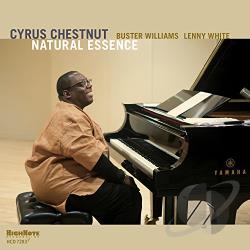
The past decade jazz pianist Cyrus Chestnut has bounced from label to label. Currently, he's signed to High Note Records, and he's made some of his best work there. “Natural Essence" is Chestnut's new trio album, and it’s something to behold. The trio is the best setting to experience Chestnut’s pure virtuosity. Chestnut chose familiar standards such as "It Could Happen To You," "I Cover The Water Front," and "My Romance". To aid in repurposing those standards, Chestnut hired two skilled hands bassist Buster Williams, and drummer Lenny White. The lead off cut "Mamacita" will give your soul goosebumps. Chestnut has a gift for appearing to play two pianos at the same time on up-tempo numbers. Chestnut changes sidemen for each album. The chemistry he has with Williams and White is effortless. Pray Chestnut keeps this trio together.

Vocalist Sheila Landis and guitarist Rick Matle musical loveship has been going strong for nearly three decades, and they have produced a body of outstanding recordings. "Beautiful Things" is the duo's new offspring. There're seventeen songs recorded live. Many of the duo’s recordings have been a showcase for Landis, one of the more dynamic jazz vocalists on the planet. This album contains everything's she’s offered for decades vocally. She has a gorgeous voice. At the drop of a hat, she can change it into a muted trumpet, a trombone, a sax, and even a drum. Her pitch perfect scatting would make Ella, and Armstrong jealous. This time around, Matle's virtuosity, his God-given ability to make his seven string guitar howl, cry, and melt in the palm of his hands is the draw. “Fine Fat Daddy," “Taller In The Morning," and "In a Mellow Tone" are the cuts likely to garnered the most water cooler talk.

When I received word jazz vocalist Kurt Elling was the guest star on a new album by the Branford Marsalis Quartet, I wondered how Elling would fit into the tightest jazz band working. Two cuts into "Upward Spiral," the phenomenal result of the quartet’s collaboration with Elling, I was convinced Marsalis ought to offer Elling a permanent spot in the quartet. Rumor spread Marsalis wanted Elling for this project because of his flexibility. Drop Elling in any musical situation and he’ll succeed. “Upward Spiral” is mostly recrafted golden oldies. What a good fit Elling is in the quartet come through on the "Blue Gardenia," "Doxy," "I am a Fool to Want You," and "Blue Velvet”.

Sunday, June 19, 2016

INTRODUCING COREY KENDRICK: MSU GRAD, FAMILY GUY, AND COMPOSER WITH A TERRIFIC DEBUT 'ROOTLESS' OUT NOW

In a recent interview with this blog, jazz guitarist Randy Napoleon asserted that jazz is in good hands with the current generation of up-and-comers. As a professor of jazz at Michigan State University, Napoleon would certainly know that because he’s helping develop future swingers. If you want some hard evidence that Napoleon knows what the hell he’s talking about, I implore you to get “Rootless,” a self-produced debut album by MSU grad pianist Corey Kendrick.  Kendrick, 31, is a native of Iowa, who left a good paying secure job in Iowa, moved his family to Michigan, studied jazz at MSU, and he’s presently raising holy hell in Detroit as a go-to pianist, composer, and bandleader.

At MSU Kendrick earned a Master’s in Jazz Studies. Jimmy Cobb, Etienne Charles, Jon Faddis, Christian McBride, and Jeff Hamilton are some of the high-end bandleaders Kendrick has performed with. “Rootless,” is a good of a debut you’re likely to hear this year. It has eleven cuts, three standards, and eight originals. There’s beauty at every turn. Kendrick is a dynamic interpreter of standards, proven on the oldies “Nature Boy,” and “In The Wee Small Hours”. His chops are in full bloom on originals such as “Alone In Michigan,” and “Lullaby For A New Mother”.  

Kendrick’s obvious influences are the late greats Bill Evans, and Kenny Kirkland. If they’re around to hear the meticulously wrought music on “Rootless” they’d blush. A big reason the album is a winner is the terrific playing from Kendrick’s  partner's bassist Joe Vasquez, and drummer Nick Bracewell. I Dig Jazz finally tore away from “Rootless” long enough to pick Kendrick’s brain about the album, and the challenges of building a name for himself in a jazz metropolis known for producing many of the planet’s greatest jazz pianists.

Is “Rootless” your mission statement?

The album is reflective of a very specific period of my life.  Before deciding to go back to school in 2013, my wife and I had a house in Iowa with a thirty-year mortgage and we were both at the kind of jobs where we could see spending the next 25, 30, 35 years and then retiring. I thought I could work a day job and play music here and there on nights and weekends, but I was away from music too much.  So we decided to take a risk, go back to school, get my Masters’ and pursue music full-time.  The material on this record is my attempt to put a lot of those feelings into music, loneliness, anxiety, new experiences, new friendships, joy, and new roots.  It’s an album about life in transition.

After listening to just a few cuts, I was convinced you’ve spent many man-hours dissecting Bill Evans’s, Oscar Peterson’s and Kenny Kirkland’s chops. Was either pianist big influences?

It’s hard to say definitively who my biggest influences are because sometimes it feels like that changes from week to week, but they were huge early influences, and I feel like that’s shaped my musical tastes in a big way.  I think, above all other things, I value swing and lyricism/melodicism.  And it’s hard to get more swinging than Oscar Peterson or more lyrical than Bill Evans.

Kenny Kirkland has been an influence, and one of my more recent influences. He was such a monster musician, just an incredible pianist and he wrote some gorgeous tunes. Rhythmically, he would play with odd note groupings, groups of 5's, 7's, etc.

Harmonically, he would play chords that aren't easily defined in terms of traditional Major 7th/Minor 7th/, etc. And compositionally, he wrote such beautiful, interesting tunes. And these are all things I've tried to take from him. I've spent so much time with his 1991 self-titled album. There are certain albums that, to me, are like secret handshakes. They don't make traditional Top 10, 50, 100 lists, but I know that, if you like that album, we're going to be friends. Kenny's album fits into that category.

Did you design “Rootless” to be representative of everything you have to offer the planet musically at this formative stage of your career?

Definitely, quite a few of the tunes started as exercises to work on different musical challenges I was facing with the intent of stretching me in uncomfortable directions.  But by setting a deadline it was a challenge to me to play some of these uncomfortable forms, harmonies, time signatures, and try to rise to the occasion.  I’m looking forward to playing the material live. We have about six or seven dates booked right now, and seeing how they continue to develop.

“Alone In Michigan,” “Julian’s Tune,” and “Lullaby For A New Mother” are songs on the album likely to get played over and over. Can you explain what you were going through when you wrote those songs?

“Alone In Michigan” was written over a particularly lonely weekend.  We hadn’t been living in Michigan long, and I was out on tour over the weekend, so my wife went home to visit her family and took our dog with her.  I returned late to an empty house with no wife and no dog, and I didn’t know very many people yet, so I was trying to capture that feeling of being alone in an unfamiliar place. 

“Julian’s Tune” is a little more academic.  It started as a sketch from another MSU student, Julian Velasco, who is a fantastic jazz and classical saxophonist.  He showed me a tune he was working on, and I loved the first couple chords and asked him if I could borrow them to write something.  I was listening to a lot of Kenny Kirkland at the time, and there’s a beautiful tune by Kenny called 

“Dienda” and I wanted to write something similar, a lyrical waltz with a bit of a “classical” sound. 
 Often in jazz, we use 4 and 8-bar phrases to the point where it becomes expected, but there are a couple of spots in “Dienda” where Kenny uses 5-bar phrases, and by lengthening the phrases, it adds so much drama because the tune just feels like it hangs there, waiting for something to happen.  I’d thought of using melody or harmony for drama, but not form.  So I wanted to write something incorporating all those elements, and I owe a debt to Kenny and Julian.

“Lullaby For A New Mother” is a tune that’s special to me.  It was written last. The trio recorded the record in November of last year, and my son was born just two months prior, in September.  I was sitting at the piano one night not long before the session, and from the bench, I could see my wife and son on the couch.  

The way she was looking down at him, and he back up at her, was so touching.  I wanted to write something that tried to capture that sweetness, but also the full range of emotions experienced as a new parent, especially in those first months.  So it starts out sweet, but by the very end, it’s swung around to the fraught, nervous energy that was characteristic of that period.

Nick Bracewell, Corey Kendrick, and Joe Vasquez
Drummer Nick Bracewell and bassist Joe Vasquez are amazing on “Rootless”. Give some insight on their overall contribution musically and otherwise to this terrific album.

Well, firstly, they’re just fantastic musicians.  When I thought about recording an album, they were the first two people who came to mind.  Joe just finished his Master’s at MSU, studying with bassist Rodney Whitaker, and Nick just finished the first year of his Master’s at MSU as well. I met both of them about three years ago, and the great thing about studying music at a college is how much playing you get to do.  I’d say the three of us probably played together 3 or 4 times a week in one context or another, for two years, and that’s an experience that is becoming rarer now. 

The days of the six-month club residency or even the one or two-week long club engagements seem to have mostly gone, and there’s something a group develops over an extended time playing together. 

You develop a set of musical gestures, a shorthand, and a mutual understanding.  As a result, there were very few fixes that were needed once we went into the studio – for the most part, we were able to play it all live.  Plus, they’re both good friends, and I feel like that adds another dimension to the music. You end up looking forward to a gig as much for the hang as the music.

How supportive has the Detroit jazz community been of your aspirations as a jazz musician?

So many people who I’ve met here have been hugely supportive.  There’s such a strong tradition of mentorship in Detroit.  Rodney Whitaker always talks about “reach one teach one,” and I’ve found that to be true of so many musicians I’ve met here, very giving of their time and always open to talk about music.  It was very evident at the Kenn Cox tribute last year at the Carr Center.  To hear Rodney and Shahida Nurullah talk about Kenn’s mentorship, and then to see the work they’ve done in the Detroit music community, and to see that pass through generations is a beautiful thing.  It becomes evident why there is so much great music in Detroit.

What are some of the challenges you face as a jazz pianist establishing a name for yourself in Detroit where greats such as Tommy Flanagan, Barry Harris, Geri Allen, Teddy Harris Jr., Harold McKinney, Hank Jones, and Gary Schunk set the bar?

Because of the tradition of mentorship, so many amazing musicians have come out of Detroit.  Of course, it’s a challenge when I compare myself to these greats, but it’s also very inspiring having such strong models to aspire to.  Though it may feel like a challenge at times, I think it pushes me to try to play at a higher level.  

Saturday, June 18, 2016

PARADISE JAZZ SERIES ENDED SEASON WITH SFJAZZ COLLECTIVE'S TAKE ON MICHAEL JACKSON'S HITS

SFJazz Collective
Yearly, the SFJazz Collective, an all-star octet perform music of iconic musicians past and present. In the octet’s twelve you history, it has performed the music of greats such as Ornette Coleman, John Coltrane, Thelonious Monk, and Stevie Wonder. Friday evening, before a sold-out audience at Orchestra Hall in mid-town Detroit, the octet closed the Paradise Jazz Series season with a two-hour presentation of the King of Pop, Michael Jackson’s, hits arranged for a discriminating jazz demographic. The octet also presented original compositions. Sean Jones, Robin Eubanks, David Sanchez, Miguel Zenon, Warren Wolf, Edward Simon, Matt Penman, and Obed Calvaire are the current members of the SFJC. That’s some major muscle. Each musician is an accomplished bandleader with solid discographies. So, how was the octet’s presentation of Jackson’s hits “The Love You Save,” ”Blame It on The Boogie,” “Don’t Stop Until You Get Enough,” ”Thriller,” “Human Nature,” and “This Place Hotel”? If Jackson had attended the concert, he would’ve been moonwalking up and down the aisles until his feet were blistered. The concert had many high points, Sanchez’s pit-bull mean soloing on his arrangement of “Don’t Stop ‘Til You Get Enough,” Wolf stretching out on “Human Nature,” and Jones and Eubank trading measures on “Thriller”. The octet’s originals “Fall Prelude,” “Beauty of Space,” and “Franklin & Fell” made the concert extra special. When the octet switched from Jackson’s hits to its originals it appeared the audience was being treated to two concerts for the cost of one

Monday, June 13, 2016

JD ALLEN TREATED HIS HOMETOWN FANS TO MUSIC FROM 'AMERICANA' AND SAMPLINGS FROM HIS VAST CATALOGUE


Tenor saxophonist JD Allen
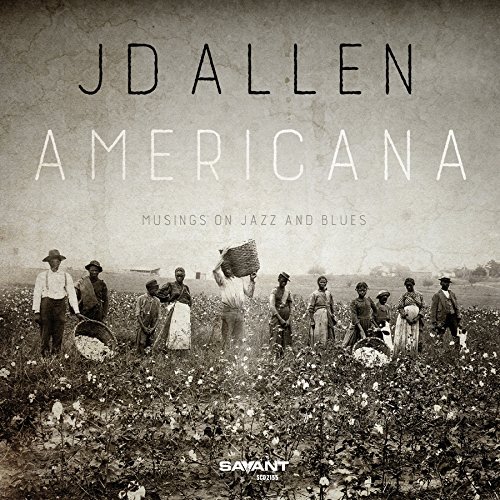
The jazz saxophonist JD Allen said in a recent Q&A with a popular jazz blog that whenever he plays Detroit, his hometown, he’s nervous as hell because you can’t bullshit Detroit jazz fans. When a jazz band hits the D, the band has to come hard with an all-out blue collar work ethic. Sunday, evening at Cliff Bell’s, Allen’s trio swung with all their might for two awe-inspired sets. If Allen was nervous, it was impossible to tell. Allen came home in part to push his fantastic new album “Americana Musings On Jazz and Blues” out last month on Savant Records and hailed by many jazz critics and jazz bloggers as Allen’s most formidable recording to date. Allen treated the packed house not only to cuts from “Americana” but also a variable sampling from his prodigious catalogue. If there was one disappointment, it was the absence of Allen’s longstanding running buddies bassist Gregg August and drummer Rudy Royston. However, the backup Allen hired drummer Jonathan Barber, and bassist Joseph Lepore were terrific replacements. The musicians played their asses completely off both sets, particularly Barber who struck the drums with bolts of lightning, it seemed, instead of drumsticks. Barber was drumming with such fury during the first set I wondered if he’d have enough gas left to get through the second set.  Obviously, Allen has an affinity for Barber ferocious style of drumming. It’s just a matter of time before Allen has Barber on the payroll full time. The trio played for one-hour and fifteen minutes straight the first set before coming up for air. They let the audience ears cool down by playing the ballad “Stardust”. The second set was equally awe-inspiring as the first. It was a smart move having the concert Sunday evening instead of a Friday or Saturday evening when Cliff Bell’s is so noisy it’s hard to enjoy the jazz.  People in attendance came out to experience one of the top jazz saxophonist blowing on the planet these days, and Allen’s performance was epic. 

Tuesday, May 31, 2016

JD ALLEN ON HIS NEW ALBUM 'AMERICANA', HIS BLUE COLLAR APPROACH TO MAKING MUSIC, AND ALWAYS BEING A NERVOUS WRECK PERFORMING IN HIS HOMETOWN


JD Allen
The consensus among many JD Allen enthusiasts, jazz critics, and jazz bloggers is “Americana (Musing on Jazz And Blues) is the saxophonist’s best creation to date. “This record is, to me, an instant classic, right up there with “A Love Supreme,” and “Glass Bead Games,” and the like. First of all, the music is completely honest, without guile, straight from the heart. There is no agenda here, nothing slick or contrived. Just the heart of jazz, which is the blues.” that’s a piece of a quote that the founder of the Detroit Groove Society house concert series Andrew Rothman posted on Facebook a day after hearing “Americana”(Musing on Jazz and Blues). 

Allen is forty-three, a native Detroiter, and he got his start in the D with a jazz group named Legacy years before he moved to New York. The depth of Allen’s imagination coupled with his boundless prowess on the tenor sax has drawn comparison to greats such as Sonny Rollins and John Coltrane. Allen hasn't achieved the celebrity those jazz icons have, but he’s well on his way. Among discriminating jazz people, Allen is already a household name. Right now, he has ten albums to his credit. Since joining Savant Records in 2012, he’s made a recording yearly.

Allen acknowledges jazz saxophonists worth their weight in gold tackles the blues at some point in their development. John Coltrane, Branford Marsalis, Booker Ervin,  and Gene Ammons did it. A few Sundays ago, I Dig Jazz talked with Allen via telephone about “Americana (Musing on Jazz And Blues,” his admiration for his longstanding trio, and other topics dear to the saxophonist’s development as a musician.

I want to start by putting you on the spot. Is "Americana (Musing on Jazz And Blues)" your favorite JD Allen record?
Well, each record that I make it's usually me advancing as a musician. At this moment, this is the better version of what I'm doing now. The next one will be better. Hopefully, the goal is to be better every time. At this moment, this is the best version of me for 2016.

You've been with your current trio drummer Rudy Royston and bassist Gregg August for a very long time. It seems as if the trio is intimately familiar with each other's psyche.
It’s basically what you said. We've gotten to the point where we're all pretty familiar with each other, so the fact that I don't have to say much in the studio. I trust them enough with whatever material I bring in. That's Important because we usually have a day of recording. The last few records, we haven't rehearsed. A lot of times, we go to the studio, and Gregg and Rudy would have just seen this material for the first time.

In that type of situation, you need people that you're familiar with and that you're comfortable with. People that can also push and challenge you. That’s why you want to keep a band together as long as possible. It helps you grow, and it helps the music go forward. That's basically all that is. If you look at history, a lot of the great bands had usually been together for a while. I'm just trying to follow along in that part of the tradition.
I'm not a project-oriented type guy. You won't get an experiment from me in terms of this is the JD Allen experiment. It's not a knock against anyone else who does that. I just try to develop a sound and improve with each recording. Rudy and Gregg, help me do that.

Did you have to test drive a lot of musicians before you found Gregg and Rudy?
Gregg was a neighbor of mine in Brooklyn. I used to see him walking his dog. I had played with Gregg first in his band. It was kind of like one day I ran into Gregg in the neighborhood, and I told him I was working on some trio stuff. He suggested Rudy to me. Back then, I hadn't met Rudy yet.

At the first rehearsal, man, I felt this was the unit. I won't say that we gelled immediately, but I was like, Yeah, this is a good situation. It was a good fit. It was like trying on shoes. Shoes that feel so good and that look so good. You’re going to wear them as long as possible.
That's a great analogy.

That was it. I would say that I think by the time we came out with this recording called "Victory!” we started to gel. We started to come together. We’re still improving. Like I said, the trio should get better with every recording. When you listen to a musician, you should hear progress.

What's the ingredient that keeps Rudy and Gregg coming back, and that keeps the music interesting?

I don't know the ingredient. When I'm the leader of a situation, I ask that musicians not get comfortable. I feel if you are not walking off the stage sweating, then you didn't play hard. I try to keep a blue collar mentality towards playing live and recording.
Rudy and Gregg, they fit the bill. They never relax, it's never a situation where we relax and are just dialing it in or phoning it in. We just play as hard as possible. Branford Marsalis said that you have to beat people over the head with jazz. You have to hit them with energy and power for them to appreciate it.

I think in my heart of hearts it's the energy that people want. That's what they want to get from music. Jazz can provide that.
I don't know if that attracts Rudy and Gregg to the situation. I haven't thought about why they still play with me. I hope that it is interesting to them. I hope that would be their answer if someone had asked them that question.

I hear Booker Ervin and Branford Marsalis in your playing. Were either big influences on you?
Branford is a super big influence on me. I think he was the first guy that I’d heard in my younger days who had that cry in his playing, maybe that's the blues. What drew me to his playing, he had sensibilities of both Mr. Rollins and Mr. Coltrane in his playing, but yet he was still himself in that.

That attracted me to him as a younger player because, before that, I was checking out saxophonists Albert Ayler and David Murray and then cats like Frank Lowe. I was a James Carter clone in Detroit. I wanted to be James Carter.
Listening to Marsalis that introduced me to Ornette Coleman and a lot of other people. You're right to say that Branford is an influence of mine.

 Anybody worth his salt should listen to Booker Ervin. He has that cry also, and he's one of the Texas tenors, who every tenor saxophone player should check out.

What was the impetus for making “Americana (Musing on Jazz And Blues)” at this stage of your career?
Well once again, it was something for growth. In a way, I guess there's a selfish element to making a record. When you make a recording, you're documenting your growth and where you're at that time. I felt developing a closer relationship to the blues would make me a better player. It was purely selfish, man. I want to be a better musician. To do that, I had to get into the blues.

Examples that made me look in that direction, of course, "Coltrane Plays the Blues". That's one of my favorite records. Branford Marsalis’s "I Heard You Twice the First Time" is another one. Years ago that kind of hip me to the fact that man, maybe at some point I have to deal with the blues. My heroes are dealing with the blues, and they can all play their asses off, so maybe that'll help me get to that.

I tried my hand at it because the guys I look up to, who I've just named, have done recordings like that. I had an opportunity to record, so I gave it a shot not knowing if people were going to like it. I was pretty afraid before I did it. I thought maybe it wouldn't be interesting enough to people; maybe it's not flashy enough. It was something that I wanted to do for development. It wasn't anything like this is a good marketing idea. It was just purely selfish. I wanted to grow.

One of the standout songs on the album is "Bigger Thomas"…
Now see, that was the one I didn't think anybody was going to dig.

Was the song inspired by your investigation of Richard Wright's novel "Native Son"?
Yeah, I love Richard Wright. 

Talk some about the song’s evolution.
It's not a blues per se, but there is a blues section to it. You have a certain maze of chords that you got to go through that some people would associate with John Coltrane’s “Giant Steps” chords, which I stretched out. I'm not going to get too technical, but the last eight or sixteen bars is in C-sharp minor, which I do play the blues on top of.

Okay, where it's placed in the record starts out with the straight up slow blues, and you get into the spiritual blues, and then you get into folkloric type blues and then "Bigger Thomas" was to represent the city blues.

I'm a big Richard Wright fan, man. I love his stuff. To me, that name fit that song in the sense of it is an urban thing, but yet as sophisticated as it's trying to be the result is it gets back to the blues. 
The last time you were in Detroit, you performed at the Detroit Groove Society house concert series. The trio tore it up.

Oh, we tried, man. We tried to burn the house down, in a good way.
When you return to Detroit for your concert on June 12th at Cliff Bell's, will the set list include music from “Americana?

Yeah, we're going to play something from "Americana". I usually play something from every record. I have a book that's huge, and I never know what I'm going to play. I just get a feel for what the audience is feeling and what I'm feeling being in that room. I just go for it.
Whatever we play, we're going to play as hard as possible, man. That's my motto. If we play "Mary Had a Little Lamb", we're going to try to burn that down.

What does it mean to you when you have an opportunity to return home to perform?
To play at home is very nerve wrecking because I know I can't bullshit anybody in Detroit. I come from a town with a rich history of great saxophonists. I mean, you got Larry Smith there, you got James Carter and Vincent Bowens there.  I mean all types of people come out of Detroit.

I usually get nervous. I have to close my eyes and just block everybody out just to play. Sometimes I'm scared, man. I hope the people come out. You never know if anybody at home is going to come. The show I did last year at the Detroit Groove Society, I was surprised to see anybody there, man. It made me feel great. I was worried nobody was going to show up. I'm happy to play at home. It's a good time to see family, to see Detroit. That's always a good feeling, and a chance to recharge.

I have to go home and recharge and remember why I'm making music. You can get away and forget why in the hell you did this in the first place. When I go home, people remind me, and certain things I see in Detroit remind me this is why I’m a musician. This is what being a musician is about. You got to keep that spirit that we have in Detroit in you. That's important. You never want to get highfalutin where you get away from what it is that made you. I wish I could play in Detroit more.

We wish you could play here more often, too.
I would love to get to the kids there, man. I see this Detroit scene with younger musicians. If there was some way, I could get to them. If I could see the younger people there just once a month, man, I would do it. If there were a situation that opened up for me to do that, I would be more than happy than to come home and deal with that. People like Harold McKinney and Donald Walden helped me. If they had not been born, man, I probably would have ended up in Jackson State Penitentiary, the way I was going.

Wow!
I'm an Eastside boy. I'm from Mack Avenue. If I didn't run into Ali Jackson or James Carter, Alex Hardy or Ernie Rogers at Northwestern High School, I could’ve had a different path. It was laid out for me to go a different route, but thank God I found the horn, and I was blessed to go somewhere else. I love Detroit. I love the musicians there. If I could be an influence to somebody there, I would jump on that. I try to reach out to some of the younger guys on Facebook, but I haven't had the opportunity to sit down and chat with them. Maybe I can hook something up when I get home. I'll come in a day early, and we can all get together and just play. I love it, man. I'm proud to be from the D. Every opportunity I get to say that, I say it.

The JD Allen Trio performs at Cliff Bell's Sunday June 12th 7:00 PM - 10:00 PM  $25.00. 2030 Park Ave. Detroit, MI 48226 (313) 961-3543


Monday, May 23, 2016

MACK AVENUE RECORDS WILL RELEASE NEW MUSIC BY WARREN WOLF, DOMINICK FARINACCI, AND KENNY GARRETT JUNE 10TH

Vibraphonist Warren Wolf has made his best album for Mack Avenue Records yet “Convergence “. Wolfe is joined on this terrific album by bassist Christian McBride, drummer Jeff “Tain” Watts, pianist Brad Mehldau, and special guest guitarist John Scofield, marking the first time Wolfe and Scofield have swung together, and their pairing is a blind date that paid off big time. Wolf has two other albums on Mack Avenue. “Convergence” is the first that shows every square inch of his genius. The album opens with “Soul Sister”. Scofield and Wolf have back-to-back solos that will satisfy your sweet tooth. You could stop playing the album after listening to that cut, confident the money paid for it was well spent. Other winners on “Convergence” are “King Of Two Fives,” Wolf’s duet with McBride, and “Cell Phone”. The cuts, however, that will have you begging for seconds is Wolf’s complete redo of Stevie Wonder’s “Knock Me Off Of My Feet, “ and “Stardust/The Minute Waltz”.

“Short Stories” is jazz trumpeter Dominick Farinacci’s major label debut. Although his reputation as a major trumpeter of his generation is well-known, “Short Stories” sound very much like his official coming out party. This is an unflawed album. It will be shameful if “Short Stories” isn’t in the running for the best jazz album of 2016. Stylistically, Farinacci is akin to greats Harry James and Wynton Marsalis. Like them,  Farinacci knows how to cut to the marrow of a song. It doesn’t matter the order in which you listen to the ten tracks on "Short Stories. You’re assured a joyous voyage. I suggest, however, when you play the album go straight to the ballad “Soldier’s Things”. From there play “Senor Blues”. Then check out how he sicced his horn on "Doha Blues” and “Sunshine Of Your Love”.   Farinacci deserves a medal for his reworking of “Black Coffee”.


Fans of alto saxophonist Kenny Garrett know his playbook top to bottom. Garrett wants listeners to have a grand time with his music, and that’s apparent on “Do Your Dance” Garrett’s fifth outing for Mack Avenue Records. The album has the energy of his live shows, particularly the conclusion of his concerts when he plays “Happy People” and the audience goes nuts. “Philly,” and “Backyard Groove” are standouts that will make you want to boogie hard. The best cut of the bunch “Waltz (3 Sisters)”will leave footprints on your soul. The album has a flaw unfortunately, the inclusions of a rapper on the title cut, and “Wheatgrass Shot (Straight To The Head).  

Monday, May 16, 2016

JAZZ GUITARIST RANDY NAPOLEON ON HIS NEW ALUBM 'SOON', HIS INFLUENCES, AND INSPIRING THE NEXT GENERATION


Randy Napoleon
Thanks for taking the time to talk to I Dig Jazz

Man, it's totally my pleasure. Thanks for having some interest in my album “Soon”. I appreciate it. It means a lot.

“Soon” is a wonderful album. How long was it in the making?  

For me, I've been thinking about doing a trio record for a long time, but you have to be an illusionist to take trio work because you need to feel and hear the harmony as if there were a piano player. It was something that for a long time, I didn't feel I could pull off. It’s something I've been thinking about as a musical challenge I didn't feel ready for.

Sometimes the only way you can deal with something is you just make yourself do it. So, all signs pointed to that for me. I had this incredible opportunity to be able to record with two of my heroes, bassist Rodney Whitaker and drummer Gregory Hutchinson, and one of the top trumpeters in jazz, Etienne Charles. 

The actual creation of the record was pretty quick and more informal than the other records I've done. There were less detailed arrangements. I didn't give a lot of instructions to the musicians. I just said we are going to play these tunes, these are the chord changes I like. Then we went for it. It was a real kind of organic, spontaneous record date.

That’s interesting because “Soon” is meticulous. It doesn't come off like it was done quickly. The album sounds as if you guys labored over it for months.

Well, thank you for that. I so appreciate that. For me, it was super easy to play with Rodney and Greg. Rodney, I've gotten to play with a lot, and he's my long-term mentor. I listened to Greg and Rodney play together a lot over the years, and I had that sound in my mind. And, I've spent so many years imagining what it would feel like to play with that kind of groove and soul. So it's very natural for me to play with them even though we hadn't played together a whole lot. We did one gig the night before the recording session, and then we did the record, and that was it.

What pushed you to the point where you said, "Okay, I'm just going to go for it"?

It was like those guys who want to climb Mount Kilimanjaro. There’s something out there that you haven't done, and you're not going to feel satisfied until you do it. And also, it was something that I just really wanted to hear because most of my favorite guitarist made trio records many years ago. Wes [Montgomery] made just a couple of trio tracks one record where there's a piano, and there're some overdubbed strings. 

Joe Pass, there's a great trio record that he did with Ray Brown and Mickey Roker. And Barney Kessel did a lot of trio records, but there haven't been as much straight-ahead jazz guitar records the last 30 to 40 years. There's a handful of good ones, but I felt like it was something that needed to happen

Now that you've got this one out of your system are you planning another trio album?

I want to do more. I am going to keep on shaking things up. I want to continue playing as much as possible in the trio setting. This is an exciting summer coming up for me because I've been able to line up some trio gigs. I've spent so much time playing with so many great pianists, and they just make you sound beautiful all the time. I'm trying to explore all the chords I can get out of the guitar. There's so much sonic capability there and so many different textures you can get combining chords and melodies. That was a little bit of a rambling answer; I do want to make trio a bigger part of my life and playing duos, too. That was the other part of the record.

Your duet with trumpeter Etienne Charles on “Body and Soul” was my, favorite cut on the album. I wish you and Etienne had included a few more duets on the album.

Well, next time.

The duet felts so organic. How did you and Etienne pull that off? Or was that something you guys plotted before hitting the studio?

That one wasn’t planned. I recorded a track for Etienne's Christmas record.  I said you know as long as we've got the tape rolling, let's call a couple of tunes. And so we just played, and we went with the spirit. I think jazz is a language, and it's just an amazing feeling. I wanted a record that felt like jazz, so we just played, we just did what we always do. And you know, we left the tape running, and then we played “Body and Soul” and it came out great. I asked Etienne if he minded if I put this on my record. It was great. So that was how that went.

I had a conversation with Sonny Rollins once about playing with a piano-less band. He said to pull that off you had to be an exceptional musician because a pianist can cover up a lot of the things that are not going right on the bandstand. What are some of the challenges you face playing without a pianist?

It's half-challenge and half-opportunity. Everything is a little bit more exposed. Between the bass, drums, and guitar there’s more potential opportunity to use that space or just leave it open, which the great guitarist Bobby Broom told me one time about playing in a trio. He said you had to trust the space, which I thought was very good advice. 

There is a little bit more you know, openness when you have three instruments instead of four. There's something just beautiful about the symmetry of three. I mean if you think about the strength of a tripod. Three people can all look at each other at the same time. It's a really strong and a magical connection playing with three people.

Seems as if you have a direct line to the ghost of Wes Montgomery listening to you play "First Love, Only Love," and "So In Love".  

Wes is my number one influence, so thank you.  I mean, the funny thing about the jazz guitar tradition is everyone's connected and everyone has shades of the same thing. I love Wes Montgomery for everything. I love the way everything was melody with him. His spirit was just so joyful and outgoing and positive. I love his drive and the thrilling excitement of when he played block chords or octaves. He was just so exciting and satisfying. Every solo, every track, and every record are a little bit different.

Who were some of the other jazz guitarists that influenced you most?

 I love Kenny Burrell. I get this liquid feeling when he plays. I love his warmth and beauty and his sound. That always inspiring to me. I love Grant Green. He’s one of my top guys. The thing I love about him is there's no pretense. He goes straight to the center of the groove, and he stays there.  He was not trying to shock anyone with something that's so wild. His playing felt so good, and he has the spirit of the blues in every note he played.

Were you thinking about him when you guys played C.C. Rider?

For sure.  I was also thinking about Russell Malone. When we played that because I love the way Russell plays those slow low-down blues. He’s someone who's been a mentor and an influence for me.

Peter Bernstein is another one who is a huge influence for me of the contemporary guitarists. The interesting thing is when I trace things back those guys are interesting, but Peter has been, I don't know, how to describe it. I hear traces of the guys I loved from earlier generations with Peter and Russell.

So it's all kind of mixed up in my mind and in my ears, which I think it is how it is supposed to be because hopefully you input a lot of people and it comes out like yourself.

When you graduated from college, you played in the Clayton-Hamilton Orchestra, after which you joined Freddy Coles’ band. How influential was it having those two outlets early in your career?

Touring with them taught me everything I know about professionalism musically. My professionalism comes from those people who raised me on the road. John and Jeff Clayton, and Jeff Hamilton, who run the Clayton-Hamilton Orchestra, they’re role models. The Clayton Brothers are just out of sight, soulful, hyper-creative in terms of writing, arranging, leading groups everything I wanted to accomplish. 

So, I was able to start working with them when I was twenty-two. I didn't know a whole lot. Seeing the seriousness they had on and off the bandstand, I remember Jeff Hamilton straightening my tie a little bit before going on stage. It was that attention to detail and reverence for what happens on the bandstand that stays with me.

 Freddy, at this point, is a member of the family. I've been with Freddy now for nine years. We’ve been on the road a lot together 100 to 150 days a year. My relationship with him is like a family member.

The things I have learned from Freddy had to do with patience. He’s never in a hurry when he sings or when he plays the piano. He gives you the least amount of notes and gets the most groove and the most meaning out of them. He’s like that as a person, too. I ‘m an intense personality. Freddy has helped me mellow.  He’ll tell me things like no one is bullet proof, and you can't do everything all at once. Plus, I love the way he treats people.

I always really felt a part of his band. I felt actually like part of his family. I mean, we would go to Atlanta, and we would stay at his house, and cook some food, hang out. That’s the kind of relationship I try to have with my students. I try to treat them like that. I want them just to feel comfortable with me, and spend a lot of time with me because that's a big thing spending time with someone who is older than you and who has a lot of perspective on life,  music. I am rambling, but I could talk about Freddy all day.

Do you feel that old-school, upbringing for jazz musicians, is still around today? What you described is the kind of relationships that veteran musicians had with younger musicians.  I see that lacking now; it's as if young musicians on the scene now can play and they are serious about the music, but there is no apprenticeship for them.   

I know what you’re saying. The way you laid it out is just exactly the way I think about it. I agree with you that these young musicians coming out are very serious. A pet peeve of mine is sometimes the older musicians are grumpy, and they say young musicians are not serious. And they don't respect the music. I am teaching at Michigan State University now. I am working with young musicians. I can tell you that they are serious.

They love the music. They are intense. They listen to a lot of records, and they are going for it. I think the music is in very good hands.

There are fewer bands, however, working where a young musician could go on the road for many, many days out of the year, but I will say one positive thing is more seasoned musicians are involved in schools. There are more high-quality music programs now than there ever were. I can speak from my experience. 

Most of my gigs this summer are involving at least one of my students. I am not trying to be charitable. They are ready. All they need at this point is an outlet. They just need to play. So my goal now being middle-aged is trying to keep the continuity going. I am trying to create more gigs and bring some of the young talents to the forefront because they are ready.

Back in the day, a lot of the mentoring took place in a veteran jazz musician homes, or wherever they could find a facility to teach. Now the mentoring is happening in academia primarily. Do you consider that a positive?

It's a real positive thing. It gives us structure. There is pressure for all of us to produce. I take the formal structure very seriously, preparing students for juries, tests, and recitals. It’s a really good thing. Young musicians need to play. They need to get out there. They need to play for people. We need to train these young musicians in a formal kind of way that helps prepare them for the bandstand. 

There's more kind of non-profit art centers now that are starting to present jazz. The music is going to be okay. I think we've got some incredible young artists coming up. I believe that the audience will keep on coming because there is something that jazz has that nothing else can provide.