Monday, June 29, 2015

A BRIEF INTERVIEW WITH TERELL STAFFORD ABOUT 'BROTHERLEE LOVE'

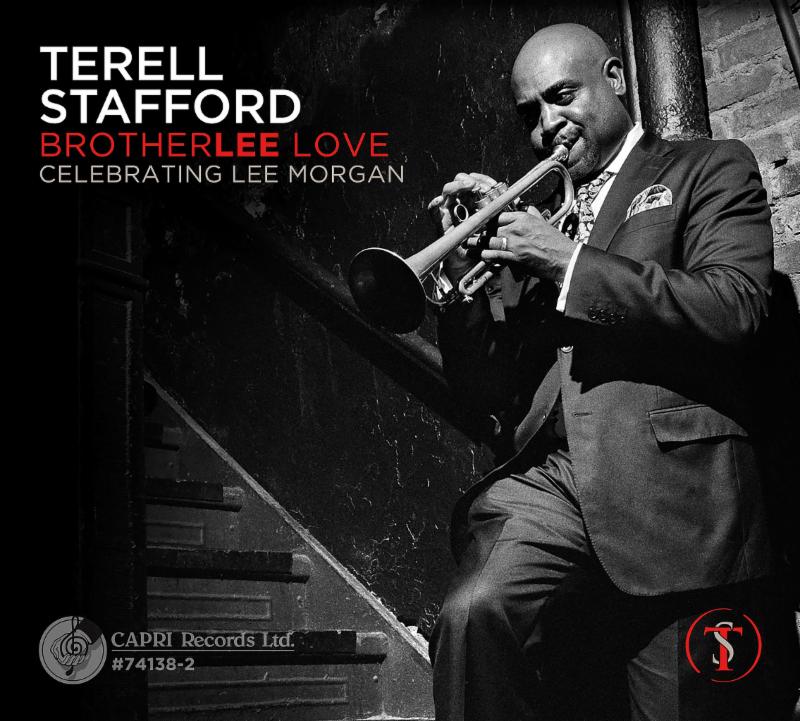
If the late jazz trumpeter Lee Morgan, a key figure of hard-bop jazz, had a grandson who played jazz trumpet, chances are he’d sound a lot like Terell Stafford. Stafford, a native Chicagoan, is in spirit a descendant of Lee Morgan. Like Morgan, Stafford playing is powerful and inspiring. BrotherLee Love Celebrating Lee is Stafford's new album. 

BrotherLee Love has seven well-known Lee Morgan compositions and two Stafford originals. The trumpeter performs with his long-standing band saxophonist Tim Warfield, pianist Bruce Barth, bassist Peter Washington, and drummer Dana Hall. How good is BrotherLee Love? If Morgan were alive and heard this album, he’d brag about it to his family and his friends. I Dig Jazz asked Stafford six questions about the album. Here is what he had to say.  

What inspired BrotherLee Love?

I have always been a fan of Lee Morgan. I presented a concert three years ago of Lee Morgan’s music, and the response to the concert was that you need to record this.  

What were some of the challenges you faced making this album?

Facing the genius of Lee Morgan, not only in his playing, but also in his compositions. The spirit he put into the music is untouchable. 

Why did you choose well-known Lee Morgan compositions such as Hocus Pocus, Mr. Kenyatta, Petty Larceny, Yes I Can Do, No You Can't, Stop Start, Carolyn, and Speedball?

I chose them because I love the melodies. They are fun to play over and over, they are extremely soulful and funky, and they contrast one another.

Can you recall the first Lee Morgan album you heard and how it affected you?

The first album was Candy, and I was inspired by his soulfulness, melodicism and energy. This was in the early 90’s.

How has Morgan's style influenced your style?

I love his soulfulness, his energy, his articulation, and the spirit in which he played the music.

Was Morgan's spirit with you during the making of this album?

Totally, his spirit is in my mind and soul every time I pick up the trumpet.

Monday, June 22, 2015

CHARLES MCPHERSON STICKS TO HIS BOP PEDIGREE ON 'THE JOURNEY' & MUST HAVES BY TERELL STAFFORD, JD ALLEN

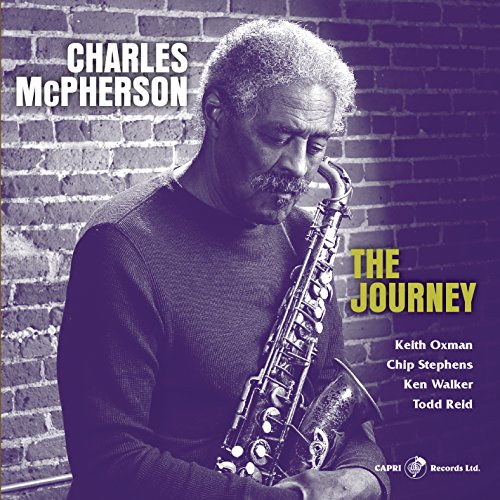
On the frontline with alto saxophonist Charles McPherson on his new album “The Journey,” is Keith Oxman. McPherson is a lifelong bebopper and Oxman is a swing savvy tenor player with a sharp eye for the mechanics of improvisation. They decided to collaborate while participants in a jazz clinic in Denver, Colorado. “The Journey” is the offspring of that collaboration. It's a joyful jazz album tailor-made for folks with discerning bop and post-bop ears. Pianist Chip Stephens, bassist Ken Walker, and drummer Todd Reid are the lynchpins. Some posit that McPherson is a Charlie Parker copycat. Indeed, Parker had a big influence on McPherson. However, McPherson hand built his own sound way back. It’s a gorgeous sound and immediately recognizable. That’s what make cuts such as “Elena” and “I Should Care” so unforgettable. Besides that, at 75, McPherson still has the hunger of a young lion. If in doubt, spend some time with “The Decathexis From Youth” and “Au Privave”.

Not often do you hear about a Lee Morgan tribute album. When you learn there’s one in the making, it’s reasonable to have high expectations for it. Terell Stafford -- a magnificent jazz trumpeter with history with the Clayton Brothers, the Jazz at Lincoln Center Orchestra, McCoy Tyner, Steve Turre and Bobby Watson -- dropped a Lee Morgan tribute album on Capri Records last week. “BrotherLee Love" is the title. “Hocus Pocus,” “Mr. Kenyatta,” “Carolyn,” “Speedball,” and.“Petty Larceny” are some well-known Morgan compositions that Stafford plays on "BrotherLee Love,".an extremely hot jazz album that’ll burn up your eardrums if you aren’t careful with it. Stafford finest moments are on the ballads “Candy” and “Carolyn”. The album works primarily because Stafford avoids emulating Morgan’s style, and due to the exceptional playing of pianist Bruce Barth, the cornerstone of this date.


Tenor saxophonist JD Allen loves working in the trio setting. During his recording career, he’s become masterful at it. On Detroit’s jazz scene back in the 80’s, Allen cut his teeth, in the early 90’s he moved to New York, and there he built an international reputation. To date, Allen has made ten albums, dropping an album per years since 2008. Allen’s new baby is “Graffiti” made available nationwide recently by Savant Records. The nine songs on “Graffiti” Allen wrote. Compositionally, he has a God-given proclivity for getting to the point. Allen isn’t a swing-driven tenor player by nature. Surprisingly, there’s more swinging on “Graffiti” than on many of his previous jewels. Allen plays with his trusted, longtime running-buddies bassist Gregg August and drummer Rudy Royston. They are skilled at being in the moment. Royston is the quintessential trio drummer, and he's the album’s MVP.

Sunday, June 14, 2015

PAMELA WISE EXPLAINS WHAT INSPIRED 'KINDRED SPIRITS'

Jazz pianist Pamela Wise is a Detroiter, music educator, mentor, a proponent of Afro-Cuban jazz, and a gifted pianist with history and all types of musical spirits coursing through her  fingers. Kindred Spirits is her new recording. Eight years has passed since her last studio recording Pamela’s Club. That’s a long time to keep her fan base waiting. However, 10 minutes into Kindred Spirits you’ll feel it was worth the wait. The album is phenomenal and cuts such as Hometown, Danis’s Bounce, and Ancestors will stay in your system for weeks. There’s swing, poetry, and even chunks of African-American history worked in. Last week, I Dig Jazz asked Wise some questions about the inspiration behind Kindred Spirits. Here’s how Wise broke it down.

Your last album, Pamela’s Club, was released eight years ago. Why did you wait so long to make Kindred Spirits?

I wanted to take my time to think about what my next project would be. In addition, most jazz listeners are at least 10 years behind in terms of listening to any new music, let alone new releases. So, I wasn't really thinking about how long it had been since my last release.

What is the overall message you wanted to convey?

The message of Kindred Spirits is basically getting back to unity in the community and addressing some of the needs and concerns of our people.  Some of the tracks such as Farewell To The Welfare, Can't Use A Sellout, and What We Need are from the concept of Wendell, Marcus Belgrave and Phil Ranelin's Tribe band and record label. Kindred Spirits continues that trend, conveying the 70's vibe of poetry, jazz, funky beats that reflect the political climate of that time. The track Hometown is a song about Detroit bankruptcy, corruption, etc.

Phil Ranelin's What We Need  speaks to the issues of community needs including knowledge, true education, love for ourselves and our brothers and sisters; Harrison's Can't Use A Sellout, even though written in the 70's is certainly right on time. (I am sitting here LMAO just thinking about it). My good friend and poet master Pastor Mbiyu Chui highlights the accomplishments and teachings of our great leader Marcus Garvey.

Ode To Black Mothers speaks about the positive images and appreciation we should have about our women. Word Masters speaks to our highly intellectual abilities to communicate. Vocalist Ashaki Zeigler performs the lyrics of Vanessa Rubin’s Speak No Evil by Wayne Shorter, which states we should treat each other a little better. The drum and percussion work of Mahindi, Akunda, Greg and Uche on the track Ancestors is dedicated to those who have gone before us. In the African tradition, we pour libations and to those we say Ashe’ and Amen. 

What were some of the challenges you faced making such a multi-layered album?

Actually, it was no problem as a creative artist. I am a product of the late 60's and 70's. I grew up listening to everything and was also inspired by artists from that time period who performed and recorded more than one style of music such as Kool & The Gang, Earth Wind & Fire, the O Jays and many more. As far as marketing, I think variety is good because there is something for everyone.  I also thought I would have a hard time with marketing, specifically because of its Afro-Centric content, but it is black art and anyone who embraces our culture will like it.

Some damn good Detroit jazz musicians such as John Douglas, Ralphe Armstrong, Djallo Djakate, and your husband Wendell Harrison are on the album. Will you talk about your affinity for Detroiters?

It goes without saying that I have an affinity for artists that live in Detroit. First of all, I have created a sound over the years with these artists.  Detroit has its own groove and sound that is identifiable and I wanted to capture that sound. Everyone wants to get someone who is internationally known, but I will let you in on a secret: Wendell and Ralphe are known all over the world. 

They just happen to live in Detroit. I have been working with percussionists Djallo Djakate, Mahindi, Akunda and Greg Freeman for a very long time and we have developed a sound with the Detroit Afro-Cuban style. John Douglas and Damon Warmack were students of mine long ago during a Summer Youth Arts program and we have been working together since. 

Vocalists Ashaki Zeigler and Ping Spells are some friends that I have been working with for a very long time, so I knew we wouldn't have any problem doing this project. Wayne State grads bassist Mike Palazoola and guitarist Jacob Schwandt are setting the pace for the next generation of jazz players from Detroit that have been on the scene for the last couple of years working in the trenches with Wendell, myself and others.The project would have been different without the above-mentioned artists because the result of having played with these musicians for a number of years. You develop a musical relationship and language with one another.

Pamela Wise
What is your take on the state of jazz in Detroit?

I think the state of Jazz and the whole concept of music in Detroit is under recognized. I am executive director of a non-profit arts organization founded by Wendell and Harold McKinney called Rebirth Inc.. We obtain grant funding to perform Jazz concerts at schools, community centers in the Detroit Metropolitan area. I find in visiting the schools, the children really like jazz, but many have not been exposed to it. Experiencing jazz performed live by professional artists gives our youths insight and generates enthusiasm. More of a collaborative effort is needed between our school administrators and arts organizations to make jazz music and other art forms available to our children, resulting in building an appreciation and future audience for the arts in general. Participation in art activities also helps to foster lasting relationships between youths and caring adults.

How has Detroit's jazz scene changed in the last decade?

I have noticed more young lions on the scene that have a passion for jazz, which is great!  These young lions will seek out master musicians such as Wendell and the late Marcus Belgrave to further learn outside of school. Kudos go to organizations such as Rebirth, Arts League of Michigan-Virgil Carr Center, and Detroit Jazz Fest/Mack Avenue to name a few. These organizations are a team of dedicated music educators that venture where no other man has gone before to teach our children. Often, they are faced going into a school that has no music curriculum or any interested students.I have noticed a decline in jazz venues, which limits the ability for young artists to grow. It's a tough game for club owners as they struggle to keep their doors open and a tough game for the artists who struggles to make a living at their craft.

You and Wendell have been putting out your own music independently for decades. How difficult is it nowadays to continue that?

Tools such as cdbaby are very helpful in putting music by independent artists in the market place and will assist in digital distribution.  It is a little easier nowadays than it was before. The use of social media is also helpful. However, there are things that you have to watch out for because just the other day I viewed a site where someone was selling my music without permission.Wendell and Phil Ranelin have worked relentlessly for over 30 years to build contacts all around the world that started with Tribe Records. To this day, those relationships continue. Kindred Spirits will be released in Japan in July and prospects in the UK linger.  However, the effort to build new contacts must be concentrated on as well as recording new artists to keep the conversations between our partners fresh and new.
Sunday, June 7, 2015

TENOR HOOD, NOTHING BUT SOUL ARE RECENT RELEASES FROM IVO PERELMAN & TIFFANY AUSTIN

It is rare for tenor saxophonist Ivo Perelman to go a long stretch without releasing an album. From 2010 to 2013, for example, Perelman put out a whopping 20 albums. In 2014, he took a break because of health issues, but this year he made up for lost time by putting out three albums simultaneously "Callas", "Counterpoint," and "Tenor Hood". Each is free-jazz jewels. If your budget only allow you to purchase one, I’d go with Tenor Hood. Perelman teamed with drummer Whit Dickey. Both musicians are alumni of pianist Matthew Shipp’s band. For this studio date, Perelman channeled the ghosts of his ancestors Ben Webster, John Coltrane, Hank Mobley, and Sonny Rollins who is still alive and blowing. Perelman and Dickey made the compositions off-the-cuff, and the titles are the aforementioned saxophonist’s surnames. Jazz purists heavily into the various branches of bop may want to take a sick day because Perelman made "Tenor Hood" it seems for free-jazz purists. Perelman and Dickey wailed like hell while the ghosts of Webster, Coltrane, and Mobley cheered them on.

Californian Tiffany Austin is an authentic go-getter. The vocalist earned a degree in creative writing, sang professionally in Japan for five years, returned stateside earned a Juris Doctorate at the University of California Berkeley’s Boalt School of Law, and became a vocalist of note on the West Coast. Austin passed on a potentially lucrative career in law to sing. Man, Austin can really sing. Get this, she started Con Alma Music and released her debut "Nothing But Soul" June 2ndThe album is mostly an homage to Hoagy Carmichael. Six of the nine songs on it are his. "Nothing But Soul" won’t have to grow on you. You’ll be hooked after the initial listen. The boldest numbers on the album are "I Get Along Without You," and "Georgia". On the former, Austin sent three members of her band -- saxophonist Howard Wiley, bassist Ron Belcher, and drummer Sly Randolph -- on a Starbucks run while she performed a duet with pianist Glen Pearson. Austin’s version of "Georgia" would make Ray Charles blush if he were still alive.

Sunday, May 31, 2015

MARCUS BELGRAVE'S LIFE CELEBRATED

Marcus Belgrave
Trumpeter Marcus Belgrave was known as a music educator, a mentor, and a jazz giant. Saturday, afternoon his family, friends, former students and jazz musicians from Detroit and across the nation packed Greater Grace Temple on Detroit’s Westside to celebrate his life.
   
Belgrave, 78, died of congestive heart failure May 24th at Glacier Hill, a continuing care facility in Ann Arbor, Mi. For years, Belgrave battle chronic obstructive pulmonary disease yet never allowed it to hinder his passion for teaching and performing jazz globally.
  
He was a native of Pennsylvania. Five decades ago, he established roots in Detroit. Largely, a self-taught musician, his extended musical education took place is bands run by Ray Charles, Charles Mingus, and one on one sessions with the great trumpeter Clifford Brown.
   
Weeks could be spent running down Belgrave’s accomplishments as a bandleader and music educator. His discography includes gems like “Gemini,” “Live at Kerrytown Concert House,” “Working Together,” and Marcus Charlie & Joan Once Again…”.
   
Belgrave's funeral was more of a celebratory jazz festival. After people lined up to express their condolences to the Belgrave family, the celebration began with a processional dirge fronted by the Gabriel Brass Band, followed by a lot of good jazz music interspersed with remarks about Belgrave’s infectious humanity. The Poet Melba Boyd, who knew Belgrave for decades, touched on how incandescent Belgrave was.
   
“Marcus was a happy person. I don’t ever remember seeing him without a smile on his face,” Boyd said. Then she read a poem about Belgrave titled “Blow Marcus Blow”.
   
The collective sadness was lifted after the Motown Legends of Gospel Choir, led by vocalist Hazelette Crosby, performed “Bridge Over Troubled Water”. 

Pianist Geri Allen fought back tears as she talked about meeting Belgrave in 1970 at Cass Technical High School. At his Jazz Development Workshop, Belgrave exposed Allen and other budding musicians to the nut and bolts of jazz.
   
Bassist Robert Hurst another of Belgrave’s protégés almost woke Belgrave up soloing on “Number Three”. Saxophonist James Carter received the first ovation after closing out the ballad “Tenderly” with one of his trademark cadenzas.
   
The most heartrending moment came when Belgrave’s wife, Joan, was escorted on stage. Before she sung “Crazy He Calls Me,” which felt like a final love letter to her beloved husband, she thanked the musicians who played with Belgrave while he was in Glacier Hill. “Thanks for helping Marcus keep his chops up,” she said.    

Before Rev. Daniel Aldridge’s eulogy, there was a trumpet salute with trumpeter Rayse Biggs, Dwight Adams, John Douglas, and Allan Denard. Aldridge’s eulogy was humorous and anecdotal. People applauded when Aldridge said a statue of Belgrave should be erected in Detroit. 

He also talked about how joyful Belgrave was and how he could play damn near every genre of music jazz, the blues, free jazz, funk, and reggae. Aldridge joked that he once saw Belgrave performing in a circus band.

“I couldn’t have that much joy at gunpoint,” Aldridge said. The overwhelming sentiment throughout the celebration was Belgrave spent the better part of his life giving. 


Monday, May 25, 2015

A BRIEF LOOK AT THE LATEST STUDIO RECORDINGS FROM RUSS NOLAN, REGGIE QUINERLY & DAVID BERKMAN

 
Deep down saxophonist Russ Nolan is a savant of  Latin jazz and of authentic post-bop. Nolan stayed loyal to that comfort-zone on his latest recording "Call It What You Want". He moves from acoustic-bop to various forms of Latin jazz. The acoustic-bop stuff probably won’t broaden your attention span, but the Latin goodies such as “MI Remedio,” “Cancion Sabrosa” and “Las Tecias Negras” will. Those are numbers played at a tempo that won’t have your shirt drenched with sweat after you have finished dancing to them.
  
“Invictus” is jazz drummer Reggie Quinerly’s second album as a session leader. Quinerly composed 10 of the 11 songs. To perform them, he hired vibist Warren Wolf, guitarist Yotam Silberstien, pianist Christian Sands and bassist Alan Hampton, equally yoked musicians who at heart are rugged swingers. It appears, however, they popped a chill-pill before the session. “Invictus” is mellower than Quinerly’s 2012 debut “Freedom Town”. That date was primarily a platform for his prodigious skills as a jazz drummer. Like his forefathers drummers Jimmy Cobb and Lewis Nash, Quinerly has an aggressive streak but overall is uniquely tasteful, which manifest more on "Invictus". On the debut, it was obvious Quinerly was the leader. On "Invictus," Wolf has the most sway. It seemed as he bogarted the session. That's not the case at all. Zero in on "Light Work," "The Star, The Crescent and The Police Captain," and the "Lester Grant" and you'll realize Quinerly designed this album, in part, with the intent of giving Wolf the lion share of the spotlight. 
  
The recent release of “Old Friends And New Friends marks pianist David Berkman’s return to Palmetto Records after an 11-year absence. From 1998 to 2004, Berkman was on a winning streak with the label. On this album, Berkman wrote nine new compositions. He invited saxophonists Billy Drewes, Dayna Stephens, Adams Kolker, bassist Linda Oh and drummer Brian Blade over to make the homecoming celebration grand. With three strong-willed saxophonists on the frontline, you would expect a lot of hand-to-hand combat. The saxophonists blended nicely on “No Blues No Really No Blues” and “Past Progressive”. What force of nature kept them in check? The excellent drumming of Brian Blade. 

Monday, May 11, 2015

EDDIE HENDERSON, STEVE TURRE & WES MONTGOMERY LATEST ALBUMS ARE MUST HAVES

Collective Portrait, Eddie Henderson’s latest album on Smoke Session Records, is a thorough representation of his net worth as a jazz trumpeter and bandleader. Henderson has an eclectic track record in jazz. He played with Herbie Hancock’s jazz fusion group three years, migrated to Art Blakey’s Jazz Messengers, and currently is on the front line of the jazz ensemble the Cookers. Henderson was also a big follower of Miles Davis. Throughout “Collective Soul” Davis’s spirit runs deep in Henderson’s horn as he moves effortlessly from jazz fusion to some aggressive post-bop. This 10-track album is a brilliant portrait of Henderson’s eclecticism. There’s some outstanding workmanship from saxophonist Gary Bartz on “Morning Song,” and “Zoltan,” and from pianist George Cables throughout.

Trombonist Steve Turre has an innate understanding of the inner dynamics of post-bop, the blues, and Afro-Cuban jazz. This album is a hybrid of those genres. Spiritman is his latest gem. Turre brings a shaman's spirit to his musical projects. If you go beneath the surface of his music, especially the cuts on this album it is clear Turre loves to swing foremost. His soloing on “Bu,” “Funky Thing,” and “Blues for Trayvon” is sufficient proof of that. This is an album devoid of imperfections. Some of the love should go to Turre’s pit crew pianist Xavier Davis, saxophonist Bruce Williams, bassist Gerald Cannon, drummer Willie Jones III, plus a cameo by percussionist Chembo Corniel. With that kind of muscle, hell was bound to break loose on this album.


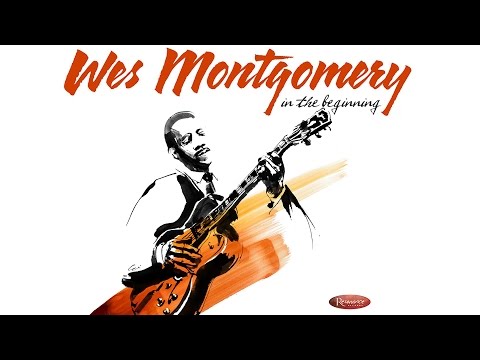
 Wes Montgomery in the beginning, a two-disc set soon to be released by Resonance Records, has some of Wes Montgomery's recordings with the Montgomery-Johnson Quintet Buddy Montgomery, Monk Montgomery, Alonzo “Pookie” Johnson and Sonny Johnson. The first disc was recorded live in 1956 at the Turf Club and the second disc in 1958 at the Missile Lounge. The sound quality is such you feel as if you’re present, listening to Montgomery pour his heart all over his guitar. “Wes Montgomery in the beginning” is worth standing in line for. You get to experience Montgomery as a wet-behind-the-ears-hell-raiser and bandleader. Also, the set comes with an informative companion booklet. While you listen to  selections such as “After You Have Gone,” “Going Down to Big Mary’s,” and “Carlena’s Blues,” you can read about Montgomery’s early years before he was a household icon.