Sunday, May 31, 2015

MARCUS BELGRAVE'S LIFE CELEBRATED

Marcus Belgrave
Trumpeter Marcus Belgrave was known as a music educator, a mentor, and a jazz giant. Saturday, afternoon his family, friends, former students and jazz musicians from Detroit and across the nation packed Greater Grace Temple on Detroit’s Westside to celebrate his life.
   
Belgrave, 78, died of congestive heart failure May 24th at Glacier Hill, a continuing care facility in Ann Arbor, Mi. For years, Belgrave battle chronic obstructive pulmonary disease yet never allowed it to hinder his passion for teaching and performing jazz globally.
  
He was a native of Pennsylvania. Five decades ago, he established roots in Detroit. Largely, a self-taught musician, his extended musical education took place is bands run by Ray Charles, Charles Mingus, and one on one sessions with the great trumpeter Clifford Brown.
   
Weeks could be spent running down Belgrave’s accomplishments as a bandleader and music educator. His discography includes gems like “Gemini,” “Live at Kerrytown Concert House,” “Working Together,” and Marcus Charlie & Joan Once Again…”.
   
Belgrave's funeral was more of a celebratory jazz festival. After people lined up to express their condolences to the Belgrave family, the celebration began with a processional dirge fronted by the Gabriel Brass Band, followed by a lot of good jazz music interspersed with remarks about Belgrave’s infectious humanity. The Poet Melba Boyd, who knew Belgrave for decades, touched on how incandescent Belgrave was.
   
“Marcus was a happy person. I don’t ever remember seeing him without a smile on his face,” Boyd said. Then she read a poem about Belgrave titled “Blow Marcus Blow”.
   
The collective sadness was lifted after the Motown Legends of Gospel Choir, led by vocalist Hazelette Crosby, performed “Bridge Over Troubled Water”. 

Pianist Geri Allen fought back tears as she talked about meeting Belgrave in 1970 at Cass Technical High School. At his Jazz Development Workshop, Belgrave exposed Allen and other budding musicians to the nut and bolts of jazz.
   
Bassist Robert Hurst another of Belgrave’s protégés almost woke Belgrave up soloing on “Number Three”. Saxophonist James Carter received the first ovation after closing out the ballad “Tenderly” with one of his trademark cadenzas.
   
The most heartrending moment came when Belgrave’s wife, Joan, was escorted on stage. Before she sung “Crazy He Calls Me,” which felt like a final love letter to her beloved husband, she thanked the musicians who played with Belgrave while he was in Glacier Hill. “Thanks for helping Marcus keep his chops up,” she said.    

Before Rev. Daniel Aldridge’s eulogy, there was a trumpet salute with trumpeter Rayse Biggs, Dwight Adams, John Douglas, and Allan Denard. Aldridge’s eulogy was humorous and anecdotal. People applauded when Aldridge said a statue of Belgrave should be erected in Detroit. 

He also talked about how joyful Belgrave was and how he could play damn near every genre of music jazz, the blues, free jazz, funk, and reggae. Aldridge joked that he once saw Belgrave performing in a circus band.

“I couldn’t have that much joy at gunpoint,” Aldridge said. The overwhelming sentiment throughout the celebration was Belgrave spent the better part of his life giving. 


Monday, May 25, 2015

A BRIEF LOOK AT THE LATEST STUDIO RECORDINGS FROM RUSS NOLAN, REGGIE QUINERLY & DAVID BERKMAN

 
Deep down saxophonist Russ Nolan is a savant of  Latin jazz and of authentic post-bop. Nolan stayed loyal to that comfort-zone on his latest recording "Call It What You Want". He moves from acoustic-bop to various forms of Latin jazz. The acoustic-bop stuff probably won’t broaden your attention span, but the Latin goodies such as “MI Remedio,” “Cancion Sabrosa” and “Las Tecias Negras” will. Those are numbers played at a tempo that won’t have your shirt drenched with sweat after you have finished dancing to them.
  
“Invictus” is jazz drummer Reggie Quinerly’s second album as a session leader. Quinerly composed 10 of the 11 songs. To perform them, he hired vibist Warren Wolf, guitarist Yotam Silberstien, pianist Christian Sands and bassist Alan Hampton, equally yoked musicians who at heart are rugged swingers. It appears, however, they popped a chill-pill before the session. “Invictus” is mellower than Quinerly’s 2012 debut “Freedom Town”. That date was primarily a platform for his prodigious skills as a jazz drummer. Like his forefathers drummers Jimmy Cobb and Lewis Nash, Quinerly has an aggressive streak but overall is uniquely tasteful, which manifest more on "Invictus". On the debut, it was obvious Quinerly was the leader. On "Invictus," Wolf has the most sway. It seemed as he bogarted the session. That's not the case at all. Zero in on "Light Work," "The Star, The Crescent and The Police Captain," and the "Lester Grant" and you'll realize Quinerly designed this album, in part, with the intent of giving Wolf the lion share of the spotlight. 
  
The recent release of “Old Friends And New Friends marks pianist David Berkman’s return to Palmetto Records after an 11-year absence. From 1998 to 2004, Berkman was on a winning streak with the label. On this album, Berkman wrote nine new compositions. He invited saxophonists Billy Drewes, Dayna Stephens, Adams Kolker, bassist Linda Oh and drummer Brian Blade over to make the homecoming celebration grand. With three strong-willed saxophonists on the frontline, you would expect a lot of hand-to-hand combat. The saxophonists blended nicely on “No Blues No Really No Blues” and “Past Progressive”. What force of nature kept them in check? The excellent drumming of Brian Blade. 

Monday, May 11, 2015

EDDIE HENDERSON, STEVE TURRE & WES MONTGOMERY LATEST ALBUMS ARE MUST HAVES

Collective Portrait, Eddie Henderson’s latest album on Smoke Session Records, is a thorough representation of his net worth as a jazz trumpeter and bandleader. Henderson has an eclectic track record in jazz. He played with Herbie Hancock’s jazz fusion group three years, migrated to Art Blakey’s Jazz Messengers, and currently is on the front line of the jazz ensemble the Cookers. Henderson was also a big follower of Miles Davis. Throughout “Collective Soul” Davis’s spirit runs deep in Henderson’s horn as he moves effortlessly from jazz fusion to some aggressive post-bop. This 10-track album is a brilliant portrait of Henderson’s eclecticism. There’s some outstanding workmanship from saxophonist Gary Bartz on “Morning Song,” and “Zoltan,” and from pianist George Cables throughout.

Trombonist Steve Turre has an innate understanding of the inner dynamics of post-bop, the blues, and Afro-Cuban jazz. This album is a hybrid of those genres. Spiritman is his latest gem. Turre brings a shaman's spirit to his musical projects. If you go beneath the surface of his music, especially the cuts on this album it is clear Turre loves to swing foremost. His soloing on “Bu,” “Funky Thing,” and “Blues for Trayvon” is sufficient proof of that. This is an album devoid of imperfections. Some of the love should go to Turre’s pit crew pianist Xavier Davis, saxophonist Bruce Williams, bassist Gerald Cannon, drummer Willie Jones III, plus a cameo by percussionist Chembo Corniel. With that kind of muscle, hell was bound to break loose on this album.


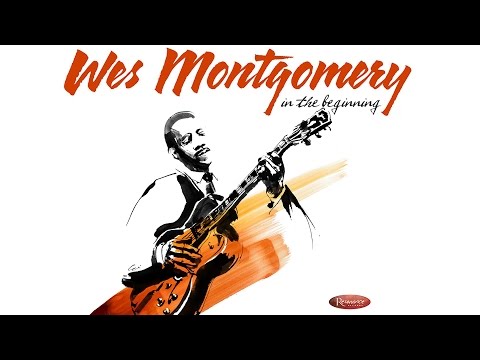
 Wes Montgomery in the beginning, a two-disc set soon to be released by Resonance Records, has some of Wes Montgomery's recordings with the Montgomery-Johnson Quintet Buddy Montgomery, Monk Montgomery, Alonzo “Pookie” Johnson and Sonny Johnson. The first disc was recorded live in 1956 at the Turf Club and the second disc in 1958 at the Missile Lounge. The sound quality is such you feel as if you’re present, listening to Montgomery pour his heart all over his guitar. “Wes Montgomery in the beginning” is worth standing in line for. You get to experience Montgomery as a wet-behind-the-ears-hell-raiser and bandleader. Also, the set comes with an informative companion booklet. While you listen to  selections such as “After You Have Gone,” “Going Down to Big Mary’s,” and “Carlena’s Blues,” you can read about Montgomery’s early years before he was a household icon.

Saturday, May 2, 2015

ANOTHER ECLECTIC LINEUP FOR THE DETROIT JAZZ FESTIVAL

Pat Metheny
From now to Labor Day weekend, you have enough time to grow an extra pair of ears. Lord knows, you will need them to hear the performances on tap for the 36th Annual Detroit Jazz Festival, the biggest in North America. On April 28th, the lineup was announced at the Detroit Athletic Club. 

The lineup has an eclectic mix of mainstream and swing-outside-the-box performers and bands such as Ron Carter, Steve Turre, Carmen Lundy, Rene Marie, Christian Scott, Rudresh Mahanthappa, Monty Alexander, Brian Blade & His Fellowship Band, and Charlie Haden’s Liberation Music Orchestra. The festival runs from September 4th thru 7th.

Guitarist Pat Metheny is this year’s Artist-in-Residence. The 60-year-old Missouri native has put out 50 plus albums, won 17 Grammies, andhe has freelanced in bands led by jazz luminaries such as Gary Burton, Ornette Coleman, and Herbie Hancock. 

Metheny residency will likely have as many surprises as the former DJF’s Artist-in-Residence, which includes Joshua Redman, Jeff “Tain” Watts, Danilo Perez, and Christian McBride. Metheny will perform four sets during the festival, plus beforehand participate in some pre-festival programs. For a complete list of the scheduled performers click on http://www.detroitjazzfest.com/.

Sunday, April 26, 2015

A LOOK AT NEW ALBUMS BY HAROLD MABERN, ASHAKI ZEIGLER, JACKY TERRASSON & VINCENT HERRING

To call the jazz pianist Harold Mabern a legend is a gross understatement. Piano God would be a more fitting distinction. Mabern's musical history would take weeks to adequately breakdown. Worth touching on, however, is his affinity for accompanying vocalists. Chances are vocalists from all walks of life have Mabern on speed dial. At the center of his new album “Afro Blue,” are some of today’s top-tier jazz vocalists. Smoke Sessions Records made it available April 14th. Mabern invited to the studio jazz vocalists Gregory Porter, Kurt Elling, Norah Jones, Alexis Cole, and Jane Monheit. The result is a house party of sorts. Porter gets the party rolling on the title cut and “The Man from Hyde Park”. Elling is the life of the party, which isn’t surprising, he stands toe-to-toe with Mabern on “Billie’s Bounce”. Jones pour her voice all over Mabern’s piano on “Fools Rush In” and on “Don’t Misunderstand”.  
   
Detroit vocalists Ashaki Zeigler started hand stitching her career in the mid-90’s in the late jazz pianist Harold McKinney’s workshop The Detroit Artist and Jazz Performance Lab at the Serengeti Ballroom. Then she moved to the late pianist Teddy Harris’s jam session at Baker’s Keyboard Lounge. Often she was the only vocalist present. She held her own amidst a bunch of grandstanders. Over the years, Zeigler continued to grow artistically.Unfortunately Zeigler isn’t a household name yet as some of Detroit’s high echelon jazz female vocalists like Ursula Walker, Barbara Ware, and Audrey Northington. What Zeigler shares in common with those greats is class. Zeigler’s self-produced duet album “Remember The Way” shows she is comfortably proficient in jazz, R&B, smooth jazz, too. On top of that, she has the kind of voice you’d love to sing you to sleep every night. For proof, listen a few times to the title cut, which closes the album. The cuts likely to get the most water cooler talk are “Bye Bye Blackbird” and “Shakin’ It Off,” “The Nearest of You,” and Zeigler’s duet with bassist Ralphe Armstrong, the album’s co-producer.   
   
“Take This” is pianist Jacky Terrasson’s first album for Impulse Records. Terrasson made three dazzling trio albums for Blue Note Records. He is uninterested in making run-of-the-mill jazz albums it seems. “Take This” has the pianist diving deep into that freaking glorious imagination of his and returning to the surface with fresh takes on some jazz oldies like “Un Poco Loco,” “Blue In Green” and two extraordinary takes of “Take Five”.

  
Alto saxophonist Vincent Herring has a blow-the-roof-off-the-sucker mentality, which is in plain view on his new album “Night and Day” Smoke Sessions Records will release the gem May 12th. Herring covers some familiar ground, stretching out on “Fly, Little Bird, Fly,” “Wabash,” “There Is Something About You (I Don’t Know). These selections sound even grander with Herring support staff pianist Mike LeDonne, bassist Brandi Disterheft, drummer Joe Farnsworth, and trumpeter Jeremy Pelt.    

Thursday, April 23, 2015

'SPHERICAL' TIM WARFIELD'S NEW RECORDING IS ALL ABOUT MONK

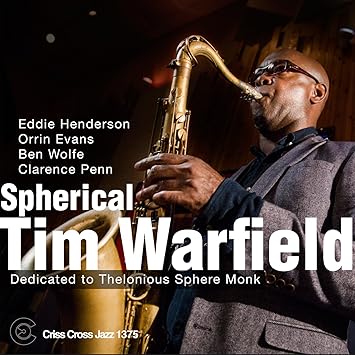
“Spherical” is saxophonist Tim Warfield’s eighth album for Criss Cross Records. The album is dedicated to the iconic pianist Thelonious Sphere Monk. Bassist Ben Wolfe, pianist Orrin Evans, drummer Clarence Penn, and trumpeter Eddie Henderson are Warfield’s kindred sidemen on the date, working out on some of Monk’s lesser-recorded material.

As a saxophonist, Warfield has substance, style, and chops galore. On top of that, Warfield has a gift for drawing brilliant feats of improvisation from his sidemen. Listen to how Warfield inspires the great trumpeter Eddie Henderson on “Off Minor Two”. Just last week, I Dig Jazz picked Warfield’s brain about “Spherical,”  his admiration for Henderson, and his loyalty to Criss Cross Records.

What inspired this Monk Tribute?

Pianist, Orrin Evans. This recording could not exist, without his conceptualized approach, which requires a "cubist" like methodology to blues and swing, to create idiosyncratic improvisations.

What impact did Monk’s music have on you?

I've been listening to Thelonious Monk's music since birth, as well as Miles Davis, Art Blakey, John Coltrane, Horace Silver and a plethora of other artists whose recordings were part of my parent's collection. My father loved Monk's music, but it was probably the least appealing to my ears, in early years. Back in the days when Monk was more of an enigma, I believe his music was much more of an acquired taste. It sounded wild to my young ears, and the dissonance was a bit agitating. I didn't find a deeper appreciation until around my early twenties when I began to study music in more depth.

Trumpeter Eddie Henderson is a standout on this album. What is your association with him, and what did he bring to the project musically and otherwise?

I've known Eddie Henderson for a few years now. The first time I heard him live was in 2001 in Copenhagen. I was performing at the Copenhagen Jazz Festival with Nicholas Payton. On our day off we went to go see Herbie Hancock's band perform music from his recording Gershwin's World." I was not only floored by Eddie's command of the instrument, but the huge core quality of "vocalism" he was able to execute through his horn. I actually contacted him in 2003, to play with a configuration of my sextet that featured Stefon Harris, Cyrus Chestnut, Vicente Archer and Rodney Green.

As far as the day of the recording, everyone, collectively speaking, came to play, as they always do. The music would have changed drastically with the removal of any one of the personalities. All their contributions were invaluable, but the seasoned maturity that Eddie brought to the session, to quote a common phrase used by Orrin Evan's, "was deep." He's an honest and selfless improviser, encompassing a thoughtfulness and daring all at the same time.

“Gallop’s Gallop”, and “Coming on the Hudson” are two of Monk’s lesser-known works. Why did you include them on the album?

Actually, I believe a good majority of the material chosen, were songs less frequently recorded. I researched the music with that intent. organist Shirley Scott once had a conversation with Terell Stafford and me, about all the great songs at our disposal, outside the obvious overplayed "oldie but goodies." I try to stand by that approach.

What was going through your head while you wailed on “Off Minor II”?

Listen and react appropriately. I know they are perceived as opposites, but I try my best to be both cognitively, yet viscerally connected to the music, hoping to play with a focus on what is required in the moment. 

You have made a bunch of albums for Criss Cross Records. Why have you stuck with the company for so long?

I actually have recorded 13 albums with Criss Cross with "Spherical," being my 8th date as a leader.

Criss Cross has allowed me to carve out a niche, without any artistic interference, not to mention the recordings have the absolute best sound quality in my opinion. Time permitting, I usually participate in every aspect of my recordings, allowing me the opportunity to freely conceptualize. It's, therefore, an easy relationship that I have with Gerry Teekens {the founder of Criss Cross}He allows me to be me, and I believe that's what folks expect me to be.


Saturday, March 21, 2015

WAYNE SHORTER'S QUARTET RETURNED TO THE PARADISE JAZZ SERIES

Brian Blade, Wayne Shorter, Danilo Perez, John Patitucci
Several things are apparent when you catch the Wayne Shorter Quartet live. One, the quartet never announces the title of tunes they play, nor in any way do they engage their audience. I’ve caught four of the quartet’s shows in recent years and neither member spoke more than a handful of words to the audience. OK, so Shorter is not a talker nor it seems is drummer Brian Blade, pianist Danilo Perez, and bassist John Patitucci.

One other thing worth noting is some of the music the quartet presents is rather heavily abstract, leaving you wondering if the quartet has a target demographic in mind when they composed their music.

Though the quartet has been together now approaching two decades and has made three excellent albums “Algeria,” “Beyond the Sound Barrier,” and “Without a Net,” the quartet isn’t a swing conscious group as other longstanding groups are, for example, the Branford Marsalis Quartet. Shorter’s music is heady and abstract.

The quartet presented much of that sort of music Friday evening at the Paradise Jazz Series at Detroit’s Orchestra Hall. The first half of the hour-plus set was heavy on abstract music the quartet specializes in. If you had a big meal prior to the concert, you could’ve dozed off during the first half of the show.

The quartet came off during that stretch as a tad self-indulgent. The music was wondrous in spots and melancholic in others. Each member virtuosity was on point. The quartet has a knack for giving the impression of creating precious works of arts on the bandstand right before your eyes.

At 81, Shorter still has an abundance of pep in his playing. He showed that during the second half of the set where the quartet deconstructed a Thelonious Monk number and the quartet surprised the audience by horsing around with a handful of Shorter’s classics.

Shorter let the fellows open up and have a little fun in the second half, particularly Blade, the most animated member of the quartet. Shorter still has one of the greatest minds in jazz. He doesn’t squander notes or grandstand. The quartet is tighter than banjo strings. Surely, some members of the near capacity crowd were disappointed because the quartet didn’t play music from its albums.

You can never bank on anything remotely conventional from the quartet. The Shorter fans and supporters in attendance understand his nature and musical idiosyncrasies and they seem to relish in them.