Wednesday, February 23, 2011

IS ESPERANZA SPALDING THE REAL DEAL?

A few days, after you won the Grammy for best new artist, I had a debate with several jazz musicians and respected jazz authorities on facebook. Esperanza, we agreed you are a wonderful bassist with a promising future, but we disagreed when I commented you are not a jazz musician. That sparked the debate. The pointed I tried to convey was you did not deserve the Grammy because you have been on the music scene since 2006, and you have released three albums “Junjo,” “Esperanza,” and “Chamber Music Society”. None of which are jazz albums.

Esperanza Spalding
During the discussion, your supporters overlooked those points. They focused on my questioning you. Some cited your work as a side-woman with saxophonist Joe Lovano proves you are the real deal. One musician stated Lovano hired you because you are a great jazz bassist. I countered the saxophonist hired you simply because you are a competent bass player. Many jazz fans were hyped when Herbie Hancock's album "River: The Joni Letters" won the Grammy for album of the year.

They believed Hancock winning the Grammy was good for jazz. Believing that was silly. Although the album was flawless, it was not a jazz album, and Hancock given his crossover track record is no long regarded a jazz musician. Years before he won that Grammy, many record companies closed their jazz division, leaving many jazz musicians without deals. 

Because Hancock won the coveted award did not alter how the music industry treats jazz. Those record companies never reopened their jazz divisions or resigned the jazz musicians they fired. Jazz is still viewed as the bastard child of the music industry.

A few weeks ago, pianist Vijay Iyer ended his performance at the Power Center in Ann Arbor, Mi with Michael Jackson’s “Human Nature”. Playing that song did not make Iyer a pop artist. On James Carter’s live date “Out of Nowhere”, Carter and sax man Hamiet Bluiett battled on R. Kelly’s “I Believe I Can Fly”. Doing so did not qualify the saxophonists as R&B artists. Herbie Hancock performed with Christina Aguilera on one of his cross over recordings. That did not make the pop star a jazz vocalist.

 Esperanza, the discussion about you lasted most of the day. We remained at loggerheads. However, I believe you are a dynamic bass player and good vocalist. You are still searching. The music industry and maybe even your handlers want to pawn you off as the next Norah Jones. For the record, Jones is not a jazz musician either.

Sunday, February 13, 2011

AN EVENING WITH VIJAY, RUDRESH, & BUNKY

Bunky and Rudresh I was thrilled you guys decided to test-drive your jazz quintet, Apex, in Ann Arbor Saturday evening as part of a double bill with the Vijay Iyer trio. Man, want an inspired night of music. Many jazz aficionados were excited about it. You and Rudresh have similar styles, and I now understand  Bunky’s influence on Rudresh, Greg Osby and Steve Wilson. Their styles are rooted in hard bop with a touch of free jazz. Of the three alto sax players, Rudresh sound has more of a tangible free jazz dynamic.

Rudresh is the first alto saxophonist I’ve heard in a long time who chews up chord changes as greedily as the great Charlie Parker. Saturday evening, he made switching tempos on the spot and playing counter-melodies seems effortless. Moreover, his way of composing is akin to Iyer his musical soul mate of 15 years. The pianist had an awesome opening set.
alto saxophonist Bunky Green and Rudresh Mahanthappa

Did you and Bunky catch Iyer’s take on Michael Jackson’s “Human Nature”? How about the young drummer Marcus Gilmore and his sophisticated phrasing. Also, bassist Stephen Crump gave a solid performance. Crump has a sensual way of handling the bass almost as if he’s seducing it. Rudresh and Iyer have to be the most imaginative jazz composers in the game. Their composing is multi-layered and intricate a la Charles Mingus. Rudresh and Iyer love to load their compositions with an abundance of counter-melodies and tempo alterations.
On Rudresh’s originals, for instance, “Welcome,” The Summit,” and “Playing with Stones” the band made it seem as if they were playing mini-compositions within the main composition. Iyer is guilty of the same on his originals “Cardio,” and “Abundance”. Iyer’s phrasing is gentle, and his fingers seemed to be made from cotton. On medium and quick tempo numbers, he has a rambunctious streak. Bunky, I guessed you and Rudresh were going to open for Iyer, but the pianist played the first set. Iyer explained the trio had to split after the set and the autograph signing. They’re scheduled to perform at the Grammys' pre-show Sunday. Apex had a wonderful piano player as well.

Detroiter Craig Taborn is a quite the jazz rebel. I became a lifelong fan when Taborn was a member of saxophonist James Carter’s band. Apex’s drummer Damion Reid, who Rudresh jokingly referred to as his rhythmic instigator, sounded as if he made his bones in a funk band. He was plenty loud and powerful. At times, he overpowered Taborn because of Reid’s banging and clanging. At 74, Bunky, your sound still has that hard bop grit, and on your signature tune “Little Girl I’ll Miss You”, which the late Abbey Lincoln wrote lyrics for, sounds new every time you perform it.

Saturday, February 12, 2011

HIGH WATTAGE


Tain, allow me the opportunity to welcome you to my blog I Dig Jazz, and to congratulate you on becoming the Artist in Residence for the 32nd Detroit International Jazz Festival. I hope you know what you’re in store for. Your predecessors Mulgrew Miller, John Clayton, Christian McBride, and Regina Carter set the bar high. They worked non-stop. I’m not trying to frighten you, Tain, so I’m get to why a invited you over. Last night, at the Charles H. Wright Museum of African-American History, I caught your two-hour concert, and I want to discuss it with you. It ranks as the best concert I’ve attended this year. I know we’re only two months into 2011, and there’s a super concert tonight at the Power Center in Ann Arbor, MI, featuring a double bill with pianist Vijay Iyer’s trio, and alto saxophonist Rudresh Mahanthappa’s band. Many regional jazz geeks expect it to be one of the top jazz concerts of the year. I admit I’m excited about it as well.
Drummer Jeff "Tain" Watts

Anyway, your concert last night was the second annual Freedom concert celebrating African-American history month, and it was better than last year’s spectacle at this mega church on the eastside of Detroit. I forgot the name of church. Bassist Christian McBride wrote the music and arrangements, which I thoroughly enjoyed, but there was too much overkill with the big gospel choir and the recitations of excerpts from speeches by Martin Luther King, Malcolm X, and Ali. Tain, your gig was small in comparison although I was disappointed you took the least number of solos. The concert was half over before you unleashed your inner swinger. There’re other shortcomings worth mentioning.

I never thought I would write this but the concert had too much music. The second have was unnecessary. Frankly, Tain, it wasn’t as thought out as the first half, the vocalist Mavis Swan Poole had an Erykah Badu vibe, and Poole wasn’t in the same league as the other members of the band pianist Geri Allen, bassist Robert Hurst, trumpeter Nicholas Payton, and alto saxophonist Wessell “Warm Daddy” Anderson. The second have felt rushed and thrown together. However, the highlights outweighed the shortcomings.

Tain, you were right praising Hurst as the top modern jazz bassist. The bassist is the workhorse the rhythm section and responsible for all the grimy chores. The jazz world is overstocked with run-of-the-mill bass players, but Hurst sets himself a part. Anderson earned his keep as well with some pointed soloing on “Return of the Jitney Man” and “Dancing for Chicken”.

Anderson is as one of the top jazz alto saxophonists working. Allen is a great jazz pianist, and she released two fine albums last year, which made many notable jazz critic’s best jazz albums of 2010 list, but last night Allen, a respectable and economical, improvised, was inhibit. I waited and waited for her to let loose of inner swinger. She never did. Nevertheless, there’s a noteworthy moment where you and Allen traded measures like a brother and sister trade insults. The star attraction was Payton. He hit a high note while soloing on with “Dancing for Chicken” that literally lifted the roof off the museum. Payton is from a remarkable lineage of New Orleans trumpet players. They have something special other trumpeters lack. Tain, save for the rushed second set, the concert was a fitting inauguration for your post as Artist in Residence.

Monday, February 7, 2011

FOR MILES

Trumpeter Miles Davis
At Orchestra Hall Friday evening, the lady seated next to me asked midway through the "Four Generations of Miles” concert how I felt about the performance. Drummer Jimmy Cobb not announcing the tunes bothered me. She told me she has attended one of your concerts years ago. To her surprise, you played with your back facing the audience. I explained you did that whenever you chastised your band-mates for messing up. I read that in your autobiography. 

Anyway, Miles, I said the first half of the concert was cool, but it petered near the end. It was impolite the band, which included trumpeter Wallace Roney, bassist Buster Williams, alto saxophonist Sonny Fortune and pianist Larry Willis never acknowledged the audience or announced the tunes they played. The latter did not bother the audience. They knew every selection, so maybe they felt introducing every number was unnecessary.

The band performed songs you immortalized years before you crossed over. Or, as jazz critic, Stanley Crouch, characterized your playing pop music selling out. Labeling you a sell-out was unfair. You had every right to make any kind of music. However, I do agree with Crouch that making big bucks was your real motivation.

For many years, Roney copied your style. I wondered if he would ever find his own voice. Roney is a wonderful trumpeter, and Friday night his soloing was decisive. He can still channel your spirit at will, which he did on “So What”, and “Kind of Blue”. Williams soloing was noteworthy as well.

When jazz journalists and critics talk about great jazz bass players, Williams’ name is rarely mentioned. Williams has always been a superb bassist, and he has played with many jazz great of our time. Friday evening, the man was more than a timekeeper. He was the crowd favorite, handling the upright bass like a masseur a tense body. He carried Willis, who solos were basic at best, the entire night.

Miles, I wondered who assembled the band. Save for Cobb the others only had a passing relationship with you. Fortune played with you a year. I also wondered if the band would have been more exciting with musicians that spent more time with you.

Friday, January 28, 2011

PASSING THE HAT


This is your sixth album. That’s a big deal given you’re still a teenager. I wonder if that’s a world record. I’ll have to investigate that. “Man with the Hat” is a solid addition to your growing discography , and I was taken by the album after the first listen. I’ve played it many times since. It says volumes about your talent that legendary saxophonist Phil Woods decided to co-lead this project, and the great pianist Monty Alexander participated as well.

Grace, you are a superb alto saxophonist and singer. You’re going to be a great jazz musician someday after you’ve had more life experiences. Right now, you have all the technical know how, but you’re still some years away from telling stories on your instrument. That will come with age and life experience. Some people familiar with your work have labeled you a musical prodigy. That’s false.

Such a label implies playing comes easily. Apparently, you've invested a lot of time listening to great alto saxophonists. Listening to “Man with the Hat”, I could tell you spent time honing and polishing your chops. I doubt if alto saxophonists Lee Konitz, who appeared on your fourth recording "Gracefullee" and Woods would’ve bothered with you if they didn’t believe you’re a dedicated musician.

Honestly, Grace, I’ve never been a big fan of Woods, especially after I read when Charlie Parker died Woods assumed his life. Woods inherited Parker's wife, his horn, and his sound. Chan Parker, who was married to Parker and Woods, wrote about it in her autobiography “My Life in E Flat”. That was a long time ago, and undoubtedly Woods has distinguished himself, and on this recording his chops are still in mint condition.

It was the grown folk’s material on “Man with the Hat” that held my attention “People Time”, “Ballad for Very Tired and Very Sad Lotus-Eater” and “Gone”. You delivered those songs with feeling, and you could’ve been easily mistaken for someone years older. You have a delicate singing voice.

On the up-tempo numbers, I had a hard time distinguishing between you and Woods. I mean that as a compliment. The standouts on “Man with the Hat” are “Gone” and your duet with bassist Evan Gregor on “Every Time We Say Goodbye” That was a nice moment, and it demonstrated the depth of your technical know how.

Tuesday, January 25, 2011

BLOWING SESSION


"Where’ve you been, man”?” I asked my friend Cory the barber. In the background, I heard saxophonist Cliff Jordan’s album “Cliff Craft” playing. This was the first time I talked to Cory since Christmas. I called to find out if he was okay.
“I’ve been dealing with some stuff. Be bop’s mother got a new job in Atlanta, which starts next month, and she planning to uproot my daughter.
“Atlanta is not a bad place to start over, and I hear they have a pretty good public school system.”
“Be bop, is all that I got in the world, man. I’m not going to allow her mom to take her away. I fought too hard to get partial custody“.
“I remember what you went through. I know you don’t want to relive that.”
“I’ll fight to keep my daughter here,” Cory said.
“You have to think about what’s best for her”.
“That’s easy for you to say. You don’t have kids”.
“That’s true but…”
“Look man, you didn’t call to hear me bitching and moaning about my personal problems”.
“You can’t keep that kind of stuff all bottled up inside you, man. It will drive you nuts”.
“I hear you. Change the subject. What have you been listening to”?
“All kinds of good stuff. Some of James Carter’s earlier recordings, the new album by the Yellow Jackets, and a date co-led by Phil Woods and Grace Kelly, a young alto saxophonist. She’s pretty good to only be 18-year-old”.
“Didn’t she make her first album when she was 12-year-old”?
“I believe so, but don’t quote me on it”. Her playing is still remedial. She’s a really good singer. She worth following. By the time, she hits her thirties, she’s going to be a household name. Is that Cliff Jordan you’re playing”?
“Yeah. I’ve been listening to it for a few days”.
“I’ve also been listening to Johnny Griffin’s album ‘A Blowing Session’ that I picked up at Borders.
“I have that album. The sidemen are Art Blakey, Wynton Kelly, Lee Morgan, John Coltrane and Hank Mobley.”
“That right”.
“But I thought given the talent pool on the album would’ve been more powerful like a cutting contest”.
“Now that I think about it the album wasn’t really a powerhouse”.
“Maybe because all the guys save for Art Blakey were still wet behind the ears at the time. They were outstanding players, but neither had really cemented their reputations. Coltrane was on the cusp, and Morgan was still sort of honing his sound”
“The album was still worthwhile. I think although it was pretty straight forward”.
“The albums Griffin made with Eddie “Lockjaw” Davis was better”.
“Those two cats were blowing their butts off, man.”
“That’s the kind of energy missing from ‘A Blowing Session’. Hold on for a second I have another call coming through.
The cell phones went dead. A few minutes later Cory came back online.
“It’s my daughter on the other line. I have to call you back later. I really need to talk to her. It was good talking to you. I was in the dumps, but I feel much better now”.

Wednesday, December 29, 2010

TOP 10


I Dig Jazz top ten jazz albums of 2010.

1.) Geri Allen, Geri Allen and Time Line Live (Motema)
Throwing a tap dancer into the rhythm sections, Allen proves she's not afraid to take big risk. Allen did not mind that the tap dance stole the show.

2.) Tia Fuller, Decisive Steps, (Mack Avenue Records)
Fuller’s break out album that announced to the jazz world that Fuller is a clever and formidable saxophonist.

3.) The Clayton Brothers, The Same Old Song and Dance (Artist Share)
The Clayton's are the first family of jazz. I'd take them over the Marsalis clan any day. This album is a straight up swing fest from start to finish.

4.) Azar Lawrence, Mystic Journey (Furthermore Records)
Often, compared to the great John Coltrane. This spiritually driven jazz album shows Lawrence is his own man.

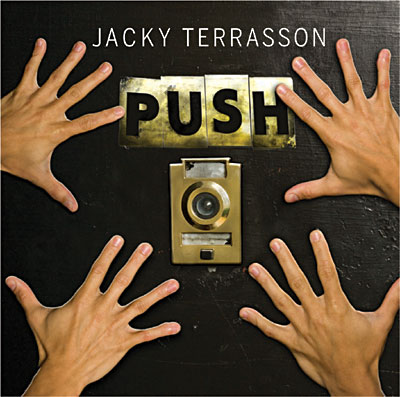
5.) Jacky Terrasson, Push (Concord Jazz)
The best rendition of Thelonius Monk's Ruby My Dear and 'Round Midnight I've ever heard. Terrason has been unsung for too long.

6.) Marc Cary, Focus Trio Live 2009 (Motema)
I can't say for sure civil rights advocates Martin Luther King Jr. and Malcolm X were jazz fans, but I bet they would've loved how Cary improvised around excerpts of their speeches. Cary is the most creative jazz pianist to every sit at a piano.

7.) The Asian American Orchestra, India & Africa: A Tribute to John Coltrane Live @ Yoshi (Water Baby Records)
This is best Coltrane tribute album since saxophonist Archie Shepps Four Trane. The AAO put their twist on some latter day Coltrane classics.

8.) Milton Suggs, Things to Come (Skiptone Music)
Suggs is the kind of jazz vocalist you would get if you mixed Johnny Hartman's and Kevin Mahogany's DNA. Suggs version of We Shall Overcome and Lift Every Voice and Sing made my pitbull cry.

9.) James Moody, Moody 4B (IPO Recordings, Inc.)
My sentimental favorite. The recently departed saxophonist was a blue-collar jazz musician who knew how to make good down home swing.

10.) Benito Gonzalez, Circles (Furthermore Records)
A percussive pianist in the tradition of McCoy Tyner. This is album is a bombshell. Then again, it’s impossible to blew it with a supporting cast of Ron Blake, Myron Walden, Azar Lawrence, Christian McBride, and Jeff -“Tain” Watts.