Monday, February 23, 2009

KENN'S MUSE

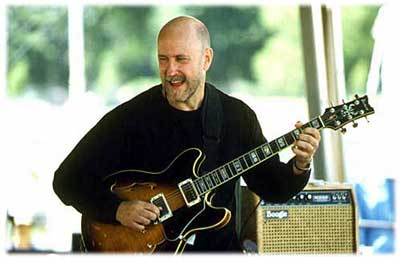
Pianist Kenn Cox and Marion Hayden

Kenn-

I hope you’re having a ball in heaven with pianist Teddy Harris, drummer Roy Brooks, and saxophonist Donald Walden. By the way, how are they doing? I’m sure they were elated when you joined them. Did they give you a big welcome home jam session? Kenn, I would’ve contacted you sooner, but I wanted you to settle in first. I hoped you’re not upset I missed your home going celebration. I planned to attend. The night before I even picked out the outfit I planned to wear: black slacks, a shirt white spread collar dress shirt, a Camelhair blazer, a solid black necktie and polished black Chelsea boots.
That night I had insomnia. I finally drifted off around 3:00am. I overslept. I woke up at noon the next day; an hour after the celebration commenced. Days later, I heard the church overflowed with, your friends, your former students and your peers wanting be a part of you sendoff. Kenn, I hate that I missed out.

Kenn, yesterday, I attended a tribute concert in your honor held at the Jefferson Avenue Presbyterian Church organized by bassist Marion Hayden. She did a stellar job. As an attendee, I finally got the chance to participate in an event honoring and celebrating your contribution to Detroit music culture. After Marion introduced the all-star band she handpicked, the bassist said she hoped for a modest crowd, but the horde of people showed up exceeded her expectations. I estimated well over 100 people attended.

Last Wednesday, the Metrotimes, a weekly newspaper in Detroit, published an article I wrote about Marion’s music career. A month ago, I spent a few hours interviewing Marion, and she talked about her relationship with you. Did you know when you guys were band-mates in Donald Walden’s band over twenty years ago Marion believed you hated her. She said you gave her some discouraging feedback about her playing. She asked me not to reveal what she thought about you back than.I convinced Marion to allow me use those recollections.
The tribute concert was a hit. To make it memorable, Marion assembled members of the various bands you led during your storied career, which included vocalist Shahida Nurullah, drummer Djallo Djakate, pianist Buddy Budson, and a wonderful percussionist who name I can’t remember. He was a member your last band Kenn Cox and Drum. I used to see him regularly at the Om Café. Save for the Duke Ellington’s composition “Caravan,” and a obscure ditty composed by George Gershwin the tribute band played your compositions “Mandela’s Muse,” “What Other One,” “Trance Dance,” and “Bridges”.

Poet Melba Boyd read poems she wrote about you and Donald Walden. Saxophonist Anthony Holland and Marion accompanied her. Boyd is a good jazz poet. She nailed you and Donald’s personalities. I must say something about how Holland. He’s a sweet saxophonist, and he sounds better every time I hear him. Playwright Bill Harris, an admirer of jazz musician from Chicago told me after the concert Holland has ties to Chicago. Harris was uncertain if the saxophonist was born in Chicago and relocated to Detroit or vice versa.

I talked with jazz historian Jim Gallert and his wife Dawn. I sat behind them when the concert started. Jim looked as if he wanted to cry. His cheeks were flush. I could tell Jim really loved you. A few years ago, I had dinner with Jim. He said you taught him about jazz. He also mentioned you’re his best man when he married Dawn. At that dinner, I got the impression Jim considered you a father figure.
The music was inspiring, Kenn. I thought the church’s pastor was into it. I thought he was going to start moonwalking and break dancing when Holland soloed on “Trance Dance”. I wonder if your spirit was there holding your wife’s hand. Kenn, I won’t consume more of your time. You’re probably busy composing new music. Heaven must be a swell place to make music. You don’t have any distractions. I had fun last night. Kenn,you don’t have to worry about your musical legacy because Marion is making sure it lives on.
Charles

Saturday, February 21, 2009

STOMPIN' AT ORCHESTRA HALL

I had to soak my feet in Epson salt, and had my wife massage my neck late Friday night after your concert at Orchestra Hall. John, you put on a memorable show. (The best I experienced so far this year). I’m certain other attendees had to soak their feet too. I bobbed my head; I patted and stomped my feet non-stop. Your music was the engaging and eclectic.

You had the crowd pumped on “Green Tea” and “You Bet”. Then you calmed them when you played a ballad softly like a lullaby. You forgot to announce the title, and tell us which of your many albums the ballad appeared. You concluded the first set with a fast tempo number, which I thought was a taste of how hard you, the drummer and the bassist planned to swing during the second set. You and bassist Matthew Penman worked feverishly on the closer like ditch digger’s shovels.

During the intermission, I noticed that I had worn an hole in the left sole of my left leather boot I sported, stomping like a lunatic when drummer William Stewart played soloed on” Strangeness in the Night,” which changed tempos as many times as a runway model switched outfits. I enjoyed William the most. The drummer never abused his drums. William’s lush and sophisticated matter was comparable to drummer Joe, a session drummer for Blue Note Records during it heyday. Chambers had a soft drumming style.

Frankly, John, I was glad you gave the audience a twenty-minute breather before you started the next set. We needed the time to recoup. So did my left foot and ears. The cashier in Orchestra Hall’s gift shopped noted I was physique. She asked if I had enough stamina left to hear the second set. My left foot was definitely ready to split, but my ears begged for more.

You started the second set with a ballad. That caught me off guard. Then you guys played an obscure Charlie Parker composition titled “Wee,” which some jazz authorities claim be bop drummer Denzil Best actually wrote. Although my overworked left foot throbbed, I continued stomping my left foot and wiggling in my seat. The second set was satisfying like the once. You showed you are comfortable effectively fuse Jazz, Funk, and Rock, making the mix danceable and listenable.

John you guys deserved the lengthy ovation. The audience wanted a bonus set. Of course, you couldn’t oblige, but they appreciated the encore you played.

Saturday, February 14, 2009

PREFECT BREW

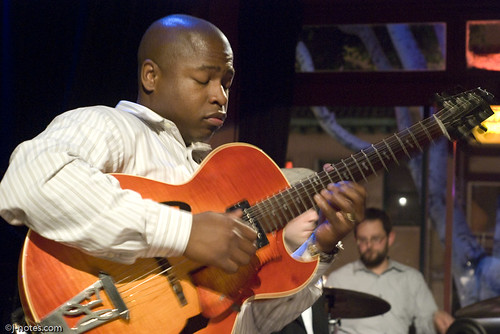
Terrence Brewer/Photo by J-notes.comI listened to your new album “Groovin’ Wes” everyday since I received it last week. Honestly, Terrence, it was the first time I’ve heard your work, and I couldn’t tear my ears always from the album. “Groovin’ Wes” impressed me that much. You put your heart and skills into every square inch of this recording, and I’m sure your fans appreciated you more for making this prefect tribute album. You can add me to your fan base. After I listened to “Groovin’ Wes,” I wanted to know more about your life. I searched the web for biographical information.

I read several articles that raved about your talents, but none offered basic information such as how you got started, who taught you to play, and who other than Montgomery influenced you musically. The biography on your website only cited your accomplishments, and excerpts from music critics who critiqued some of your live performances.

I read similar information on the trustworthy jazz website Allaboutjazz.com. I’m familiar with your accomplishments, but I’m still unfamiliar with your personal life. Are you married? Do you have kids? Were your parents musicians? What did you fall in love with first Jazz or the guitar? I found out you reside in Alameda, California, and you own a record labeled Strong Brew Records, which released your albums “The Calling Volumes One and Two,” and “Quintessential”.

Your plan for “Groovin’ Wes” was simple: “Lots of guitarist can imitate Wes Montgomery. I wanted to pay tribute to him with my own voice,” you said in the album’s press release. You kept your word, and somehow, you managed to channel Montgomery’s spirit. Throughout “Groovin’ Wes”, you played as if the guitarist was inside the recording studio coaching you. On “Road Song,” your staff organist Wil Blades and drummer Micah McClain were spunky as they raced up and down every chord change. You sound like you played two guitars at once on “Speak Low” and “Bumpin”. The ballad “In Your Own Sweet Way” was the showstopper. You damn near made your guitar cry.

You took on a big challenge, Terrence, tackling the music your idol immortalized. “Groovin Wes” made me reminisce about the first time I heard Montgomery. It was in the late 90’s. I was in the music department of the Detroit Public Library on Woodward Ave. I found a jazz album titled “Bags Meets Wes” by vibe player Milt Jackson and Montgomery. On the cover photo, both men wore hats, wool overcoats, and they hugged. I played that album over and over, trying to figure out how the musicians made the guitar and the vibraphone mesh. I never discovered how, but I admired the musicians anyway.

Yesterday, I purchased the current issue of Downbeat magazine. Montgomery graced the cover. I also bought two albums Montgomery made for Riverside Records “Boss Guitar” and “Full House Wes Montgomery Recorded Live at Tsubo-Berkeley, California”. I devoured both albums today. I ate the first album for breakfast and had the live one for lunch.

Downbeat magazine featured the 75 great guitarists, and Montgomery led the pack. The editors omitted many accomplished guitarists who deserved recognition. The editors re-published an article the jazz critic Ralph J. Gleason wrote in 1961, about Montgomery musical evolution and the guitarists Montgomery admired such as Charlie Christian, Barney Kessel and Tal Farlow. Terrence, if Montgomery was still alive and, had listened to “Groovin’ West,” I guarantee he would’ve loved it, and appreciated the care you employed honoring and perpetuating his music.


Sunday, February 8, 2009

WATTS' SWING TONE

Normally, Jeff, I try not to make predictions. Rare instances have occurred, and I couldn’t resist. I listened to your sixth album “Watts” recently. The band you assembled cast a spell on me, and I told friends “Watts” would be number one on jazz aficionado’s best album of 2009 list. I felt that strongly about your new album. I know, we’re only two months in 2009, and there will certainly be other worthwhile jazz recordings released this year, but none that’ll measure up to the swinging captured on “Watts”.

You’ve performed with saxophonist Branford Marsalis, bassist Christian McBride, and trumpeter Terrence Blanchard many times before. You guys always seem to have loads of fun making music. “Watts” came off like a jam session not the typical everyday studio session. I must say, I had ball listening to “Watts,” and you inadvertently disproved my belief for a band to swing hard it must have pianist. I find piano-less jazz bands hard to digest.

You only used a pianist Lawrence Fields on “Owed…”. On the other selections, you and McBride shouldered the manual labor. The band swung so hard on “Return of the Jitney Man,” Dancin’ 4 Chicken,” and “The Devil’s Ring Tone” I didn’t noticed the pianist let off early.

“Watts” could’ve easily turned into an ego fest with the future Hall of Fame jazz musicians on the album, but you all didn’t waste time jockeying for the spotlight. The band was in harmony throughout. Marsalis has received accolades for his fiery work on the soprano and tenor saxophone. The saxophonist is an exceptional balladeer as well, and he showed his softer size on the ballad “Owed”.

“Katrina James” should be required listening for budding jazz musicians with aspirations of one day becoming a bandleader. The teamwork the band displayed on “Katrina James” alone would be good source material on how a band should click. I listened to “Dancin’ 4 Chickens,” and “Brekky with Drecky” with my eyes shut, imagining I was inside the studio watching the band create the music while I soaked up every note and chord change.

On “Wry Köln,” you had your hey-mom-watch-me moment. The band stepped dutifully aside, encouraging you to swing freely. You covered a lot ground, indeed. I thought you were playing three drum kits at once. Jeff, I’m going to stick with my prediction “Watts” will be the top jazz album of 20009.

Saturday, February 7, 2009

NEW VOCALIST ON THE BLOCK

Jaimee, I promised Stephanie Brown, a publicist for DL Media, I would spend time with your new album “At Last” this weekend. Brown mailed me an advance copy in January, and I wanted to experience it sooner, but I was sidetracked. Yesterday I finally listened to “At Last”. Frankly, I neither loved the album nor hated it. I was conflicted, and wished you'd made the album without an orchestra. It was overkill and disrupted the overall flow.

It was an ambitious endeavor, indeed. Covering classics songs immortalized by vocalists Etta James, Peggy Lee, Dinah Washington, and other Hall-of-Fame worthy vocalists. “At Last” was a nice homage to those women. However, some parts of the album irked me. The orchestra hindered you. The album would’ve been nearly flawless with just you and a rhythm section. You’re voice was that engaging.

On “Sentimental Journey”, you’re inviting; on “You Didn’t Do Right By Me" and “Over the Rainbow” your voice was cozy and comfortable like a winter sweater. Would I recommend “At Last”? Sure, on the strength of your voice alone, but I would have to add the orchestra was an eyesore, and the album would’ve flowed better without those strings instruments backing you.

Sunday, January 25, 2009

'I'M NOT JUDGING YOU'

I promised to stop the exchange of dissenting opinions with drummer Leonard King, but a few days ago, I received a lengthy comment from Annette Wecker LeDuff about a blog I posted titled “Hitting After The Bell”. The post was my final response to King, who accepted the truce I proposed, but thought it necessary to call me a coward. In the comment, LeDuff, who sounds as if she an intelligent person defended Leonard and sort of tacitly criticized me for posting an unflattering review of the Lyman Woodard album release party. I’ve posted LeDuff’s comments chastising me, and my response.

Charles L. Latimer


Hello Charles,

I want to comment on the continuing blogs between you and Leonard King.
Since I’ve read your brief bio, it’s fair that I share a short summation of mine with you. I am a self-employed artist, gemologist, and jewelry designer and sales rep in telecommunications and IT. I have a Bachelor of Studio Arts from Oakland University and a Master of Fine Arts from Cranbrook Academy of Art. I like diversity, enjoy learning and sharing. I really do like people and culture.I happened across your blog while doing an image search of Detroit musicians.

You’ve posted some terrific photos. I didn’t notice any photographic credits, however. Did I miss a citation reference on your site? If so, please tell me. Certainly as a professional, you understand the need to cite sources. Photographs aside, I have a different motivation for writing today.

I am writing in reference to your blog entitled “Lyman’s Huge Organ” (11-23-2008) and subsequent postings between you and Leonard King on the subjects of music and music criticism. Note plurality and the separation of the words by “and”: they are not the same thing, not even close.

Critiques were an integral part of my formal education in the arts, so I enjoy participation in a critique. Many people may not understand this because the meaning of the word "critique" has become misunderstood. Let me explain: A critique (from the original French and Greek, prior) is a skilled critical analysis of a work, performance, craft etc. Here the use of “crit” emphasizes the level of skill deployed in understanding, discussing and possibly providing a review of the work.

This terminology never demands a narrow or selective valuation of the work, and does not imply that the reviewer or participants in a critique must find fault in the work. The burden of quality lies on the shoulders of the critic, not the presenter. Thus, the role of the critic should demand a great (possibly greater) knowledge of what is needed for a successful presentation.

Understanding this, Leonard King was not out of place when he suggested that you study and play music. He was telling you that you should consider the original intent of the production (CD release party) which was conceived, developed and produced by Leonard King. You never conceded that you overlooked the original intent of the production. By doing this, you invalidated your critique.You argued that you did not need to be a musician because you are a critic. The

Online Etymology Dictionary has a wonderful quotation supporting their definition of the word critic:"A perfect judge will read each work of witWith the same spirit that its author writ;"[Pope, "An Essay on Criticism," 1709]Summation: A critic employs his/her skills of observation and understanding of a craft, work or art, always keeping in mind the ORIGINAL INTENT of creation in order to provide a valuable analysis of that which was presented.

A valuable critique should provide the one whose work was criticized with options or suggestions for improving the presented work without significantly changing his/her original intent. If there is no consideration for the original intent, it is not a critique, but merely a suggestion of an alternative choice. There is quite a difference.

I think it was unnecessary for you to discuss Leonard’s spelling or grammar mistakes in his email to you. You did comprehend what was intended in his email, didn’t you? He does not claim to be a writer or critic. Fair Warning! My husband jokes that I must be a reincarnated English teacher. I did happen to notice that there were significantly more spelling and grammar mistakes in your blogs than Leonard’s, but I wasn’t counting.

They were simply more apparent and significant since writing is your profession. Example: ban NOT band; banned NOT banded. Just as you believe that open criticism is fair when applied to professional musicians, grammatical criticism is fair when applied to professional writers.You do have a right to call yourself a critic and I support your right.

There are no legal or educational requirements in our society to prevent this. One may state critic as a vocation or avocation without the need for proof. Is “critic” ever listed in a checklist of hobbies? A lot of people could check that box and some really enjoy it. That should qualify. After all, music is listed as a hobby in checklists.I know that you write that you “love jazz”, but that is not necessary for you to establish yourself as a critic of jazz. After all, there are many people employed in occupations that they simply don’t like. Who would question it? My point is that a good writer should be able to write about anything, even if he/she doesn’t like it.

Quality is only limited by the writer’s skill level, not his emotional involvement. You don't have to "love" to clean to do a good job scrubbing the floor.All We Need is LoveI am not a critic, and I am not judging you. You've convinced me that you ARE really interested in jazz. I think that you are sincere.

I have a little trouble with the “I Love Jazz” statement though. Many people state their "Love" for a person, an activity or a thing. “Love” is meant to be a positive emotion, but “Love” is often misunderstood and “Love” can be very damaging. Too much “Love” could smother or kill that thing that you “Love.” Couples fall in “Love” but a few years later, divorce. I just don’t think that “Loving” something justifies anything including criticism of that object of affection. These are not semantics, just truths. Now pull up a chair and get comfortable.Let’s discuss your blog “Lyman’s Huge Organ” which takes the form of a letter written to Lyman Woodard, whose CD release party did not meet your expectations.

I did not appreciate the title you selected for your blog: “Lyman’s Huge Organ”. (Yes, I know you wrote "Gibbs' Big Organ" prior to this.) Just as I am not a critic, I am not a psychiatrist, so I won’t presume your intent in selecting the title. A good writer selects a title with a specific intent. Please tell us, what did you intend when you selected these titles?The letter format seems inappropriate (I know it's your theme throughout your blog), as I didn’t see any evidence that you actually emailed Lyman Woodard, providing him an opportunity to reply.

It’s presumptuous to think that a person will read your blog about him/herself just because it is posted online.As to your displeasure of the CD Release Party, herein lies the problem: you came to Cliff Bell’s that night with a preconceived vision of jazz “a la Lyman Woodard” in the perfect, studious, purist jazz lover’s club paradise where all the audience quietly listens and the band features Lyman. You unfortunately gave yourself a handicap that affected the outcome. Your critique failed because you assigned your own values to the performance and the production. You were so displeased that you left after the first set, which was one-third, not one-half of the venue as you stated in your blog.

You elected to employ your critical experience and skill on a skewed, obscured and limited view of Leonard King’s production. On the positive side, I think it’s terrific that you have mellowed. I recall that you said you didn’t punch somebody out that night.(Do the math: one set of music = ?? OR three sets of music = full experience)I think that your decision to write your critique on one set is irresponsible. Even great “A List” musicians are known to “warm up” on the first set and really kick it after that. You should know this. In A Different WorldIf we knew each other, you could have called me the following day (after 11 a.m. because it was a late night for me!) I could then share my observations and impressions of the remaining two-thirds of the evening that you missed.

I am not a critic, but just imagine. Go with me on this, Charles. I was at Cliff Bell’s that night one hour earlier than the first set started, and I left one hour later than the last set ended. That call could have changed it all. You would have been appropriately equipped to skillfully employ your critic’s craft and finesse your analysis of the Lyman Woodard CD Release Party at Cliff Bell’s. Your blog would be the text version of my photos.

Cool!If you called, I would have emailed you some of the photos that I took that evening. I just looked at my folder entitled “Lyman Woodard Organization 11-22-2008”. After editing, the folder is pared down to 387 photos. I trashed the rest in editing. I’m an amateur photographer but I do have a Master in Fine Arts so I think some of my photos are pretty good. Fond memories do alter our perception and I have some good musical memories of the evening.

I will admit that perhaps not all 387 photos are good. I can accept that.I’ve decided to upload more of these photos onto my husband’s music myspace so that you, your readers and music lovers on the internet may enjoy them. (Link: Jerry LeDuff Music http://www.myspace.com/jerryleduffmusic)

I'll do this tonight, so look for them tomorrow.Perhaps my online pictorial documentation will outweigh the negativity of your blog. The photos provide truthful insight into the exciting, creative, wonderful and HISTORICALLY SIGNIFICANT evening at Cliff Bell’s. The place was packed, people were standing close together and the crowd was really pleasant. Sorry you couldn’t stay. You missed a great party and really great music.
“A picture’s worth a thousand words…”Sincerely, Annette Wecker LeDuff

Mrs. LeDuff,

Would I be wrong to assume you and Leonard King are friends, or you’re one of his admirers? I ask because you’ve taken his side. I’m glad Leonard has a fan willing to defend him. He can’t do so without name-calling. Yes, I love jazz music, and that’s partly why I'm qualified to write about jazz music and jazz musicians. During my career as a jazz journalist, I’ve interviewed and written articles about such jazz greats as Sonny Rollins, Wayne Shorter, Horace Silver, Kenny Garrett, Branford Marsalis and Regina Carter. Those accomplished musicians wouldn’t have given me the time of day if they suspected I didn’t love music just as much as they do.

Mrs. LeDuff, whenever I criticize a jazz musician their initial reaction is to question my credentials. Then they ask if I can play music. No I can't play an instrument, and it shouldn't be mandatory a jazz journalist or critic should know how. My stellar track record writing about the jazz greats I mentioned qualifies me to tell the reads of I Dig Jazz, and the people who read my articles in the Metrotimes why I like or dislike the music I’m invited to hear, or that I pay for. If I love a performance or an album, I explain why. If I hate a performance or an album, I'll say why. It’s that simple, and my readers trust I’ll give them an honest assessment of what I hear.

There’re a few things about my blog I should explain. The photos I used I normally upload from Google, Ask, and Yahoo. Most of the time, the photos I select don’t name the photographers. When I use a photo and I know the photographers’ name, I credit him or her. Lately, most of the blogs I write in the form of a letter because doing so is easier for me to express myself. I know some of my reader’s get it, and others don’t. Most of my blogs are positive. I’ve praised more albums and concerts than I’ve trashed. My blogs are honest, and I know I’ll hurt some musician's feelings although that’s never my intent. Also, Mrs. LeDuff, I try hard to make sure my blogs have no misspelled words, misspelled names, and any grammatical mistakes. Occasionally, a few mistakes slip by. Fortunately, I have grammar savvy readers who’re won’t hesitate to point out mistakes. I appreciate those readers.

You should know, I pointed out Leonard’s misspellings and grammatical errors because he lambasted me when I misidentified a jazz musician. Leonard tried to use the mistake as proof I’m ill equipped to write about jazz. I thought Leonard’s statement was ridiculous. That’s like me concluding Leonard is unqualified to be a jazz drummer because he played a wrong note.

Mrs. LeDuff, I standby my every blog I write, and I’ll fix any grammatical, spelling or factual mistakes. By the way, I fixed a handful of grammatical mistakes you made.( I’ve discovered It’s easier to catch other mistakes. Would you agree?). I’m sure you’ll welcome my help given how quickly you pointed out my typos.

I didn’t criticize the album release party because I dislike Leonard. He promoted the event as the Lyman Woodard album release party. I felt mislead because Woodard only played once, and Leonard hogged the spotlight. Yes the place was full, but I wondered how many people came to hear the music, and how many were there just hanging out. I stood near the bandstand. I was next to the woman selling Lyman’s albums. The crowd behind me, at the bar and in the adjoining room was loud and disinterested. I wasn’t the only person to split after the first set.

Charles

Wednesday, January 21, 2009

HITTING AFTER THE BELL

Drummer Leonard KingLeonard King accepted the truce I proposed, which will end what turned into a frivolous exchange of dissenting opinions. I never bulked and neither did King. Before, he consented, however, King took one last potshot. He called me a coward because I never introduced myself to him before I wrote a thumbs down review of the Lyman Woodard album release party, which King organized and hogged the spotlight. My review touch a nerve, and and King lashed out. He banned me from any of his concerts. He implied I'm a charlatan, and I'm unqualified to critique his work. I decided not to post or response to his last comment. But, after mulling over my decision for two days, I changed my mind. I posted his sarcastic comment, and I wrote a response. I promise my reader's this will be our last exchange.

HELLO CHARLES,

YOU MISSED MY SUGGESTIONS OF YOUR BEING A WRESTLER OR A POLICE OFFICER IN ONE OF MY EARLIER POSTS. YOU KNOW...A PERSON WHO LOVES TO MESS WITH PEOPLE. AS FOR JUMPING OFF THE STAGE AFTER YOU? VISIONS OF GRANDEUR, CHARLES. TAKE A DEEP BREATH AND RELAX--IF YOU CAN. I'LL ACCEPT THE TRUCE. SINCE YOU WERE TOO COWARDLY TO IDENTIFY YOURSELF TO ME YEARS AGO BEFORE POSTING ANY 'BLOGNIFICANT' MEANDERINGS, WE CAN KEEP IT THAT WAY. YOU'LL PROBABLY HAVE TO HAVE THE LAST RESPONSE AFTER READING THIS--SO BE IT. AND REMEMBER--DON'T YOU EVER MENTION MY NAME IN ANYTHING AGAIN!

Leonard-

This is my final reply. Yes, I feel it’s necessary I have the last word. My readers are fed up with our juvenile bickering. They want me to move on, and deal with more pressing matters. I have trombonist Clifford Anderson's new album "Decade," saxophonist Benny Golson's album "New Time New' tet," and the "Blue Note 7" new release. My readers are anxious for my commentary. Soon I will have to explain why I engaged in a frivolous argument. Before I replied to your first email, I asked my editor if I do so. He said to ignore you, but I replied anyway, and I squandered a lot of time. Time I could've used reviewing the stack of new albums I received last week.

When I read your latest comment, calling me a coward, I decided to ignore it. You love hitting me after the bell. If our exchange continued you’d keep hitting below the belt. There several things you should discontinue immediately.

First, stop sending nasty emails to jazz critics before you’ve proofread the emails. Emails fraught with typos and misspelled words make you like look a dummy. Secondly, stop calling jazz critics who dislike some of your music cowards, and bastards. Name calling is childish. I'm curious, do you actually have a PhD; are you really a professor; or are you a self-anointed PhD? Do you know where I can go to verify your credentials?

Lastly, stop picking on jazz historians Ira Gitler and Joe Goldberg. I have old issues of Down Beat and Metronome. The issues I have were published in the early 50's and the late the 60's. Neither historian wrote one negative sentence or paragraph about the jazz musicians they covered. If you believe I misread Gitler and Goldberg work, when you have some spare time stop by my house. I'll spread the magazines and their books out so you can show me in what issues they disparaged jazz musicians.

Charles