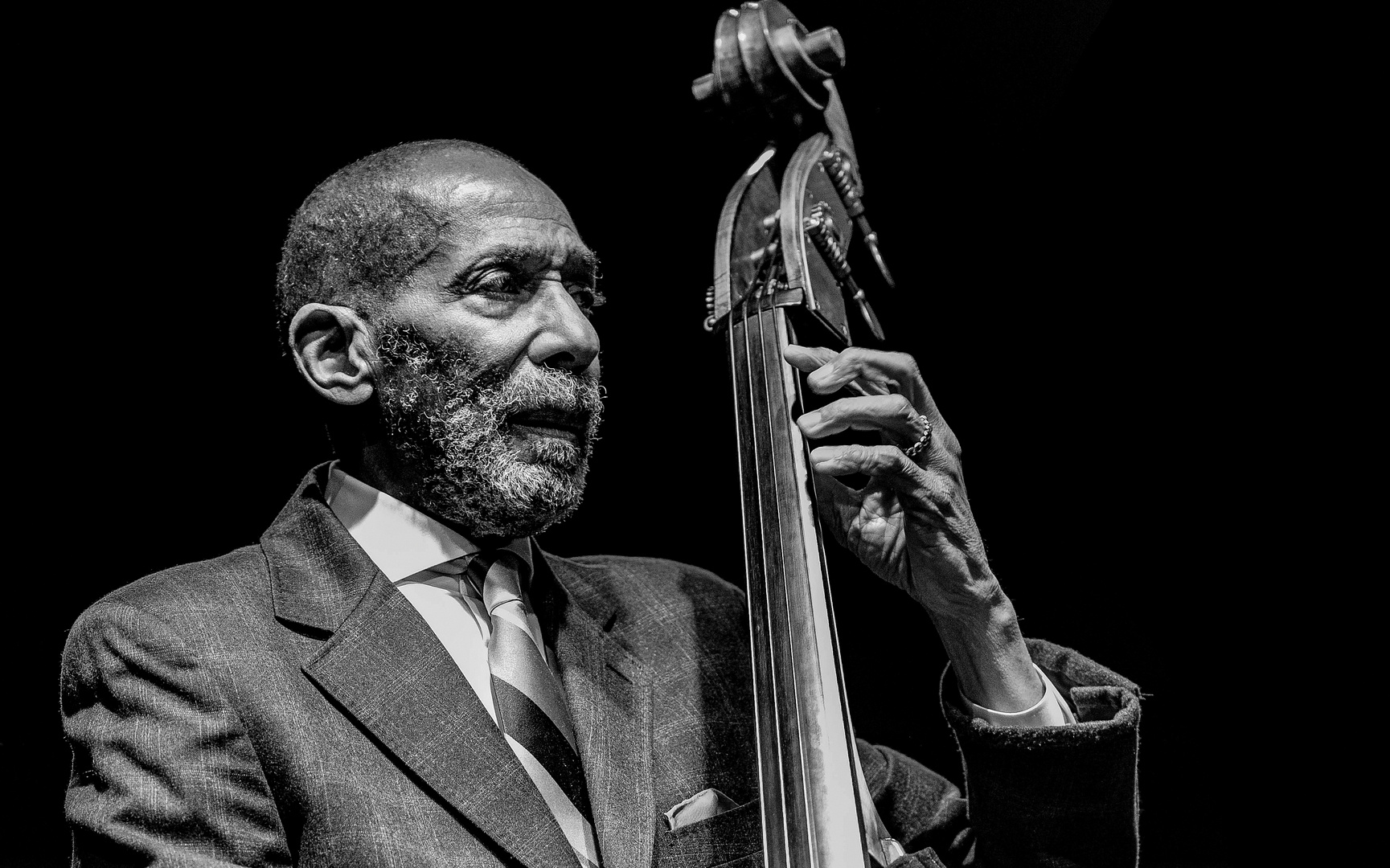
Bandleader & Drummer Tariq Gardner

Bandleader & Drummer Tariq Gardner
![]() |
| Vocalist Naima Shamborguer |
The
jazz vocalist Naima Shamborguer's voice wraps around you like an expensive quilt.
I experienced that firsthand Sunday evening, listening to her perform standard songs
from the American songbook at the Blue Llama in Ann Arbor, MI. At times, the
warmth of her voice made me want to climb on the bandstand and snuggle up next
to her. At her concerts, you’ll experience pure singing that draws you in and
makes you feel instantly connected to her. Her knack for conveying
vulnerability, beauty, and strength in a single phrase is remarkable. One thing
you won’t encounter, thankfully, is a bunch of gratuitous scatting; unlike many
of her peers, who rely heavily on that. Shamborguer is always the consummate
professional, understanding her audience pays good money to experience the fullness
of her gift. Unfortunately, she doesn’t perform around the state as often as
she should. However, she has an impressive discography, so if you can’t
experience her live as often as you’d like, at least you have the wonderful
albums that she’s released, like “Naima,” “Round Midnight,” and “A Blossom
Sings” to quench your desire to hear her singing. She opened her hour-long set Sunday
with the classic “Autumn Leaves,” moved gracefully to a heartwarming version of
“Song for My Father,” then showed the depth of her gift on Geri Allen’s
“Unconditional Love.” Shamborguer sang the notes just as Allen originally conceived
them. The highlight of the set was Shamborguer inviting two of her family
members, vocalists Penny Wells and Michael Hanna, the late pianist Sir Roland
Hanna’s son, on stage to sing with her on “Feelings.” The vocalists were of good
form, adding rib-sticking nuances to Morris Albert’s classic. The downside was that
they only performed that number. Not that Shamborguer needs any help serving a
marvelous set. Bassist Jaribu Shahid and pianist Sven Anderson backed her.
Shamborguer voice melted over Anderson’s fingers. The set would’ve been
incomplete without the inclusion of a reworking of Thelonious Monk’s “Rhythm-A-Ning.”
One of her best albums is her interpretation of some of Monk’s signature compositions.
The Monk gem was the song the trio had the most fun reinventing. Although Shamborguer’s setlist featured songs that have
been performed for decades, her trio’s take made each seem fresh from the
showroom floor.
![]() |
| Saxophonist Wendell Harrison |
Those familiar with jazz
saxophonist Wendell Harrison's history know he wears many hats: the co-founder of the iconic band Tribe, composer of classics like “Dreams of a Love
Supreme,” music educator at Metro Arts, mentor to generations
of jazz musicians, and business executive behind independent jazz label, WenHa. His discography is populated with jewels like “Get Up Off Your
Knees,”"Rush and Hustle," “Fly by Night,” and “Wait Broke the Wagon Down.” His Moma's Licking Sticks Clarinet Ensemble became one
of the more acclaimed jazz ensembles regionally. In 2018, he received the
highest honor given to a Michigan artist, the Kresge Eminent Artist award. Saturday
night, key areas of his accomplishments and genius were highlighted during a
two-hour tribute to him at the Carr Center. The
center was packed with admirers, family, and young and accomplished musicians
whom Harrison has influenced. The celebration offered musical performances,
poetry, and testimonials. Saxophonist Stephen Grady Jr. and pianist Jacob Hart
opened the evening with “Stablemates,” “Take the Coltrane,” and “Peace,” recreating
much of the magic that Harrison and the late pianist Harold McKinney summoned
up on their duet album “Something for Pops.” Grady, Jr. has a clean and
uplifting tone, as well as a command of the tenor saxophone akin to Joe Henderson. Hart—who’s
still a high schooler—has already made a name for himself, headlining top jazz clubs
around Detroit. For a teen jazz pianist, he has an OG’s ability to efficiently groove
and move through chord progressions. And he demonstrated that he’s a thoughtful
accompanist. Grady, Jr, and Hart’s terrific opening set was augmented by poetry
from wordsmiths Professor Gloria House and the pastor of the Shrine of the
Black Madonna Church, and a short but soul-soothing number from pianist Pam
Wise, trumpeter Ingrid Racine, and saxophonist Salim Washington. Harrison schooled him, and although he's now a world-renowned bandleader
and music educator, he still considers Harrison to be his north star. After the
great performances and anecdotes by bassist Ralphe Armstrong and Carr Center
President Oliver Ragsdale, Harrison took the stage, obviously touched and
appreciative of all the love lavished on him. Harrison
discussed the origins of his organization, Rebirth, and its cultural impact in
Detroit. He also shared stories about meeting his wife, the accomplished and
woefully underpraised jazz pianist Pam Wise. Together, they performed a duet on
her original piece, “Fly by Night.”
It was a
pleasure listening to them swing lovingly and showing their fondness for each
other and the music. The celebration ended with Harrison and Hart performing a
blues. Here’s where I gained a deeper sense of Hart’s true potential, particularly in his ability to expose the marrow of the blues, as if he had vast life
experience. The tribute’s only shortcoming was that none of Harrison’s
signature compositions were performed. Still, it was a fitting celebration for
a musician, educator, mentor, and business executive who’s been a cultural
force in Detroit for decades.
![]() |
| Bassist Marion Hayden |
![]() |
| Pianist Geri Allen |
![]() |
| Pianist Jason Moran |
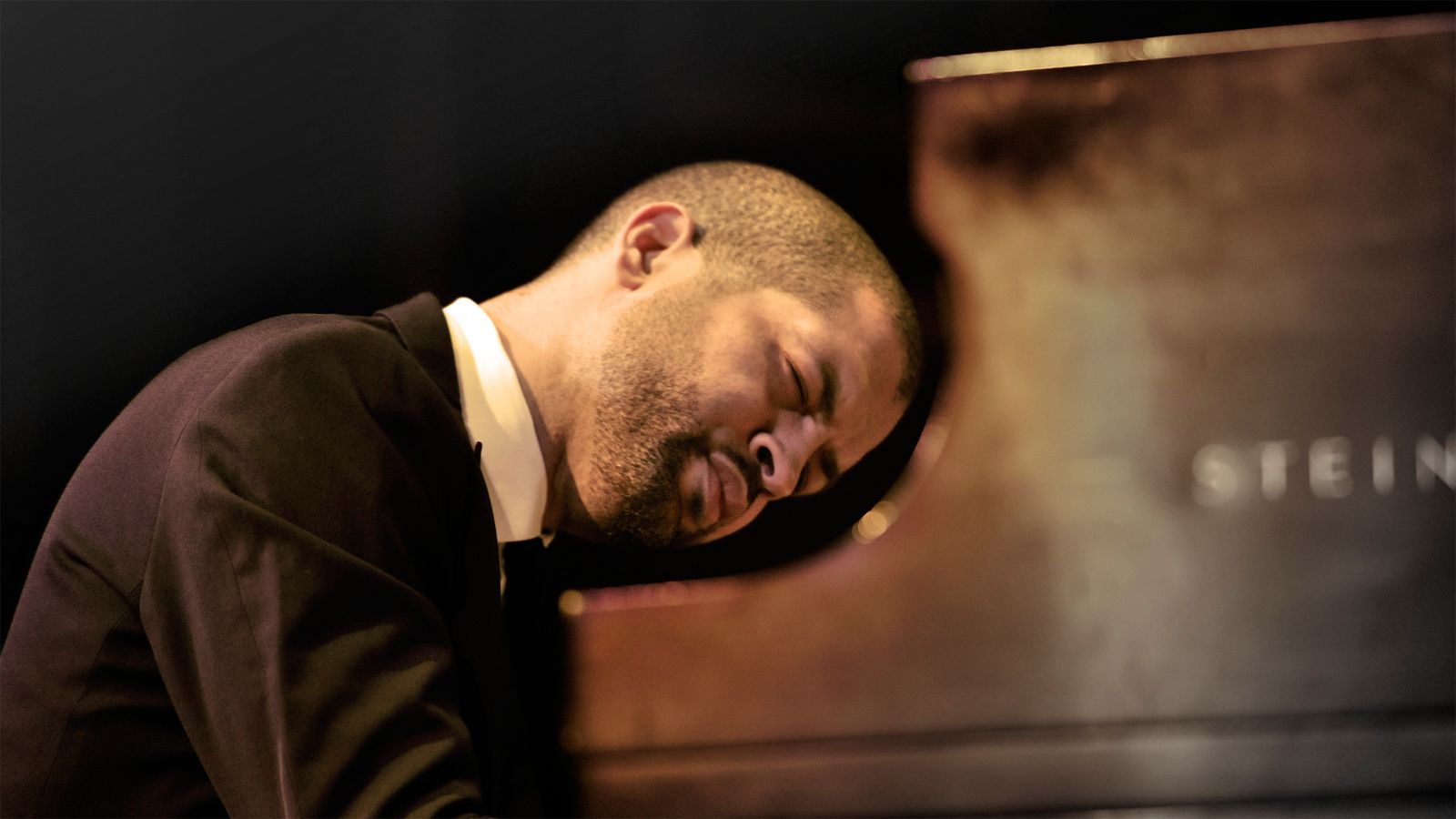
Jason Moran and Jeff Mills
with special guest Jessica Care Moore (Friday Carhartt
Amphitheater Stage)
I believed wholeheartedly
this opening night performance was one of the more inventive in recent years
and set the tone for how special this year’s Detroit jazz fest was going to be.
Moran is a worldwind force in jazz, Mill is one of the founding fathers of
Techno music, and Moore is one of the best writers Detroit has ever produced.
Mixing their respective talents was pure delight. And Moore’s culturally and
politically conscious poems mixed beautifully with the improvisational magic
Moran and Mills created.
![]() |
Listening to Potter’s
Saturday afternoon set, I couldn’t help thinking about something that
saxophonist Sonny Rollins told me. That you must be an exceptional musician to
play in a band without a pianist. No one in their right mind would argue that
Potter, Brewer, and Scott aren’t world-class jazz musicians who could swing in
whatever musical situation they are in. A whole lot of swinging was exactly
what the Potter trio served up, moving proficiently from standards to original
material. Potter is a tenor saxophonist with a
substantial discography and mastery of his instrument. Solo after solo, Potter
gobbled up the music changes like Halloween candy.
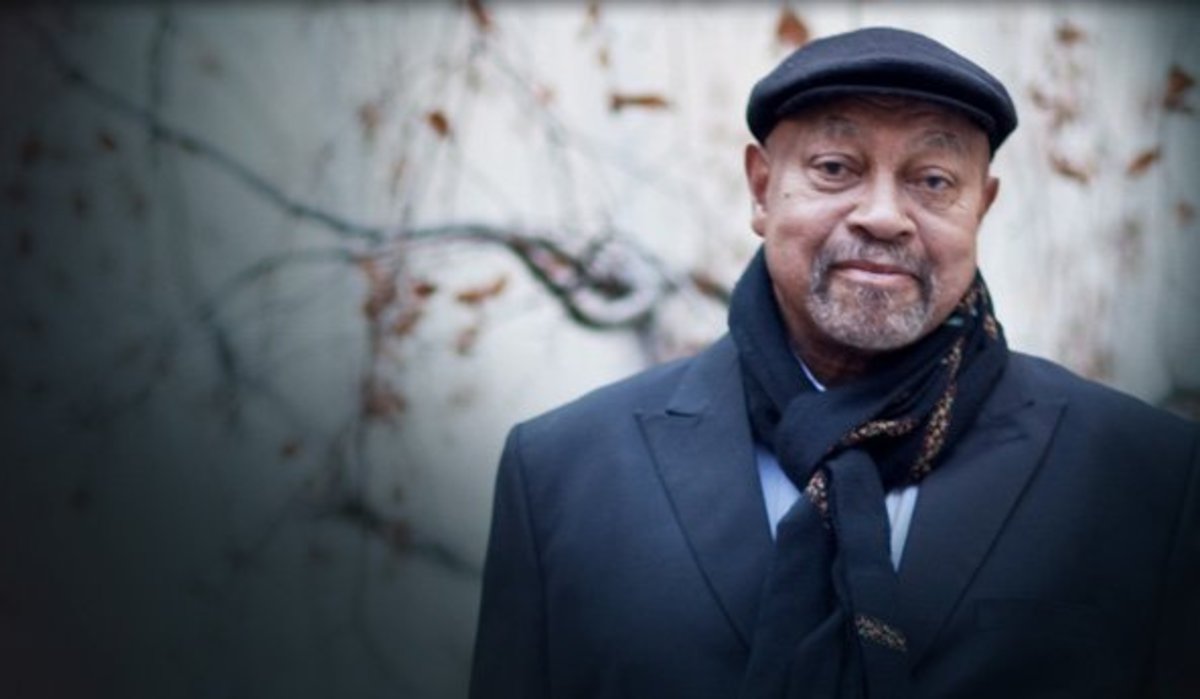
| Pianist Kenny Barron |
Kenny Barron is one of the
best jazz pianists in the history of jazz, and he doesn’t need to bring any
extras during a performance because his playing is so soul-grabbing that any
extras are overkill. For his Detroit fest performance, Barron offered more than
himself this time around. He introduced to the jazz fest a magnificent young
vocalist named Tyreek McDole, who had the audience eating out of his hands a
short time after he began singing. Two of my jazz friends, Ronald Lockett and
Debbie Tent, implored me to catch this set, and I'm glad that I listened to
them. Barron, of course, was amazing, and McDole's mature and enticing voice
melted in the audience’s ears.
![]() |
| Pianist Hiromi |
Hiromi’s performance was a fitting follow-up to Jason Moran’s opening night set, although it wasn’t designed to be. Hiromi is an energetic pianist and a creative dynamo, rare these days in jazz circles. She raced up and down the piano like a madwoman, even at times banging the keys with her elbows. Her brand of swing may not appeal to the average jazz purist, but it would appeal to a listener searching for a pianist who is comfortable swinging outside the lines.
![]() |
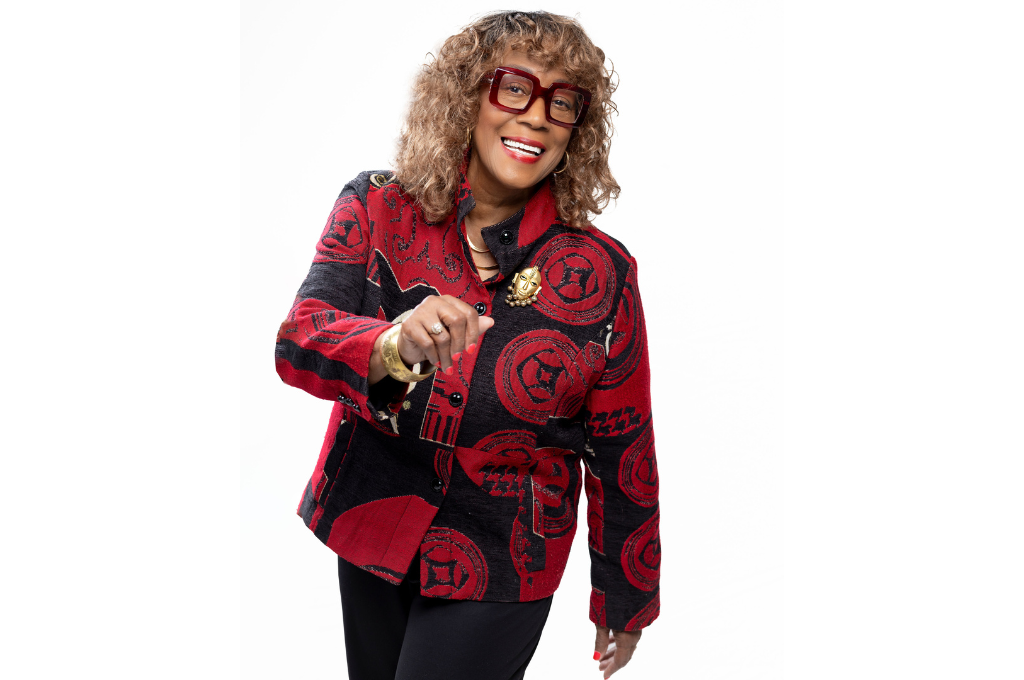
| Vocalist Joan Belgrave |
This set was a beautifully
produced homage to four jazz vocalists who had a lasting impact on the music. And a
tribute of this magnitude could have only been pulled off by vocalists who also profoundly impacted the music: Joan Belgrave, Joan Crawford, Diane Mathis, and
Tonya Hood. The wonderful thing about this set was that neither of the
vocalists attempted to emulate the style of the vocalists they were honoring.
Belgrave, Crawford, Mathis, and Hood brought their own uniqueness to the songs
that Ella, Nancy, Dinah, and Etta immortalized. This set was unadulterated
vocal jazz at its absolute finest.
![]() |
| Saxophonist Lakecia Benjamin |
I had my fingers crossed
for years that the organizers of the Detroit jazz fest would book saxophonist
Lakecia Benjamin. I have experienced her twice before in Detroit. The last time
at a church. She couldn’t cut loose like she usually does. I felt the Detroit
jazz fest would be a good place for her to be herself, and her Sunday afternoon
set didn’t disappoint. She opened the set with an ode to John Coltrane, nearly
blowing the sun out of the sky. Then she moved to selections from her
Grammy-nominated albums. The best part of the set was her band stretching out
on “My Favorite Things” and the dynamic exchange between Benjamin and drummer
Terreon Gully, a newcomer to her band.
![]() |
| Pianist Jason Moran |
For the past few years,
pianist Jason Moran has been immersed in the music of Duke Ellington, and he
let the Detroit jazz festival audience in on the extent of his immersion with
Ellington's music by performing many of Ellington’s signature compositions with
the Detroit Jazz Festival Collegiate Jazz Orchestra. In the hands of Moran and the collegiate musicians, Ellington's music was
expertly performed, and it was good to hear the next generation swing their way
through the music. The highlight of the set was the orchestra burning through
Ellington’s “Bragging in Brass.” Jason was so taken with how the orchestra
handled that complicated piece, Moran surprised the orchestra and the audience
by having the orchestra perform it again.
![]() |
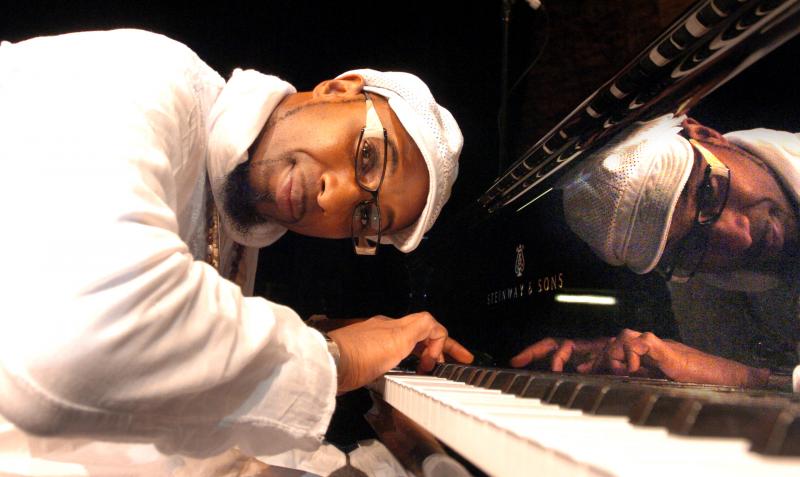
| Pianist Omar Saso |
Pianist Omar Sosa is the
reigning king of Afro-Cuban jazz, and he proved why that title is apropos. Sosa
had the piano sweating like a personal trainer. Sosa delivered an hour-plus of
feel-good swing.
![]() |
| The Branford Marsalis Quartet |
This was Marsalis' first
set at the Detroit jazz festival in 15 years. It was a set that I’ve seen
Marsalis deliver many times, and yet his band pianist, Joey Calderazzo, bassist
Eric Revis, and drummer Justin Faulkner never disappoint. The set opened with
“The Mighty Sword” followed.
by “There’s No Sweet Man
Worth the Salt of My Tears.” Here’s where you get to see the best pianist and
drummer duo in the business show their ass. Witnessing
the two music soulmates trading is always engaging. Marsalis surprised the
audience by inviting Lakecia Benjamin to join his band. I thought Benjamin
needed at least 24 hours to recover from her thunderous set.
| Bassist Rodney Whitaker |
Rodney Whitaker, a jazz
bassist, played music from his new album “Mosaic: The Music of Gregg Hill” at
the Dirty Dog Jazz Café over the weekend. I caught the late show on Friday and
noticed something about Whitaker that people don’t often talk about. Those who
know his background are aware of his time with Jazz at Lincoln Center, his
success as a bandleader, and his role in making the jazz program at Michigan
State University one of the best in the world. He is also great at putting
together top-notch bands, often mixing his students, local Detroit musicians,
and well-known jazz musicians. This was clear at Friday’s show. His band
featured trumpeter Dwight Adams, drummer Dana Hall, pianist Brendon Davis,
saxophonist Allen Paige, and special guest Rockelle Whitaker, his daughter, who
was the star of the band. The set began with a Joe Henderson classic. Then,
Whitaker led the band through songs from “Mosaic,” featuring Gregg Hill’s music.
Hill’s work has been on albums by guitarist Randy Napoleon and trombonist
Michael Dease. Hill started his music career later in life, but he quickly
became a sought-after composer. Whitaker has been a great promoter of Hill’s
music. The concert’s highlights were solos from Adams, Detroit’s top trumpeter,
and Davis, one of the best pianists of his generation. Adams’s soloing on songs
like “Slow Gin Fizz” shook the Dog’s foundation. I only get to hear Adams once
or twice a year, but he always manages to sound better each time. This is impressive
since his skills are already comparable to those of great trumpeters like
Donald Byrd and Freddie Hubbard. Davis’s playing has grown a lot in the brief
time he’s been in the Detroit jazz scene. He swung on Friday night as if playing
in Whitaker’s band was a major goal on his career vision board. What is
striking about his playing is his control and his ability to dazzle without
being overly showy. Rockelle Whitaker is always delightful when she joins in. She
came on stage after the fourth song and captivated the audience with her first
song. She is a pure vocalist with a calm stage presence, like Shahid Nurullah.
The hour-long concert was nourishing and satisfied my week-long craving for
good jazz.
![]() |
| Bassist Marion Hayden |
In April, I wrote an essay about young Detroit jazz musicians' lack of professionalism and indifference toward dressing well during their performances. A close friend in the jazz community recommended that I refrain from publicly sharing these opinions to avoid upsetting young musicians trying to build their careers. While many veteran musicians agreed with my viewpoint after reading the essay, younger musicians were not pleased with my comments. One well-known trumpeter checked me indirectly at a recent Dirty Dog Jazz Café concert, accusing me of hating his generation of jazz musicians, which is untrue. The young musicians can swing; I've written about that numerous times. I hate how his generation carries itself and their collective lack of professionalism. A displeased young saxophonist explained his choice of sneakers and jeans at jazz venues, attributing it to hip-hop's relaxed fashion rather than the polished sophistication of jazz musicians such as Terrell Stafford, Tim Warfield, and Jeremy Pelt. Some readers called me old-fashioned, questioning the relevance of attire to a musician's music. It's a valid question to ask. Young musicians dressing poorly for a concert disrespect the audience, venue, and music. Isn't it honorable to dress up for music? Jazz musicians traditionally dressed well as part of their professional persona. I shared insights from renowned jazz musicians on the importance of stage appearance. For example, Art Blakey advised Ralph Peterson that audiences judge musicians by their appearance before listening to them. I questioned whether jazz educators in Detroit emphasize this to young musicians.
My essay sparked a lively
discussion. Vocalist Bettye LaVette mentioned she joined show business to dress
up. One reader argued about the stagnant pay for jazz musicians at local clubs
like Baker's Keyboard Lounge and Bert's Marketplace since the early 1980s. The comment
that motivated me to write this follow-up essay questioned why I did not
criticize female jazz musicians in Detroit. There was no need for criticism. Over
the past 20 years, the female jazz musicians I have written about have
consistently demonstrated professionalism. They are accomplished musicians who
conduct themselves appropriately and merit acknowledgment.
![]() |
| Pianist Joey Alexander |
![]() |
| Bassist Ron Carter |
Musicians don't always have
to wear suits and ties, but they should at least be well put together. The
tenor saxophonist Donald Walden was stylish. No fan of his would deny that. I
caught many of his local gigs. I don't recall him ever sporting a suit. Yet,
his appearance was always impeccable. Decades ago, jazz musicians were written
about in national magazines such as GQ and Esquire for their stylishness. Miles
Davis, Duke Ellington, Roy Haynes, and Coleman Hawkins were fashion icons
always on someone's best-dressed list. Non-musicians tried to mimic the style
of jazz musicians. My mentor, who introduced me to jazz, once told me that when
he proposed to his wife of 60 years, he wore a tailored suit like the one
trumpeter Lee Morgan wore as a Jazz Messenger. Jazz musicians of the past
possessed a certain dignity. Yes, they had struggles with addiction and other vices,
but it meant something to be a jazz musician. How they talked, walked, and
dressed spoke to that reality. It was easy to distinguish between jazz
musicians and other musicians. You wouldn’t be wrong to mistake a jazz musician
now for rock & roll or hip-hop musicians.
Last week, I saw the famous
Great Day in Harlem photo. On a hot summer day in 1958, all the male
musicians pictured were dressed like leading men. There are all sorts of jazz
lore about how meticulous jazz musicians were about their clothes. For example,
trumpeter Miles Davis said the great tenor saxophonist Dexter Gordon wouldn't
allow musicians to hang around him if they weren't dressed right. In his
autobiography, Miles wrote that Gordon told him he couldn't be seen with Miles
until he got some vines (clothes). Trumpeter Rex Stewart noted in his book "Jazz
Masters of the 30s," which documented some of the quirks of famous jazz
musicians, that Duke Ellington was so fussy about his clothes that he wouldn't
wear a suit coat if any of the buttons were slightly loose. The Jazz at Lincoln
Center Orchestra’s appearance is always polished. Its leader, Wynton Marsalis, joked that if the music isn't happening, at least the band looks good.
![]() |
| Trumpeter Miles Davis |
![]() |
| Pianist Jason Moran |
If you attended the Detroit
Jazz Festival press conference on Tuesday evening at the Gretchen C. Valade
Jazz Center, stayed for Jason Moran's short concert, and two hours later left still
doubting he is the most exciting jazz pianist of his generation, which includes
Benny Green, Cyrus Chestnut, and Charles Craig, I would have to respectfully
question your taste and sanity. Moran was there as the DJF’s 2025
Artist-in-Residence. Before Chris Collins, the festival’s president,
announced the performers, Moran shared his thoughts on Detroit's rich music
history, his love for the festival, and his mixed feelings of honor and fear
about being the Artist-in-Residence. He then gave a spellbinding solo concert. I
have been attending this jazz festival’s annual press conference for twenty years. Usually, the Artist-in-Residence plays three songs. He played six
solo songs, starting with a medley of Duke Ellington tunes, followed by
“Melancholia,” Geri Allen’s “Feed the Fire,” mixed with Moran’s “Retrograde.”
His original “Barbershop” earned the first of three ovations. He played brilliantly,
fiddling with the piano strings with one hand while the other raced across the
keys like a child running after an ice cream truck. He made the piano echo the
sounds of a bustling Manhattan street. This short concert was just a taste of
what he will bring to the festival, starting with a must-see duet with techno
music founder Jeff Mills and Detroit’s Poet Laureate Jessica Care Moore, a
tribute to Duke Ellington, and a set with his long-time group Bandwagon
featuring Meshell Ndegecello. The press conference was a showcase of his vast skills.
Every Moran live concert or recording presents music that captivates, whether he
is blending jazz with hip-hop, playing behind the backdrop of two women in a
casual conversation, or someone scribbling on a notepad. His gift is convincing
you that every sound can be music, setting him apart from other pianists. What
is truly special about the jazz festival’s Artist-in-Residence position is the
outreach programs at high schools and colleges. These programs allow music students to gain experience from a worldly musician like Moran.
![]() |
| Saxophonist Kenny Garrett |
Sunday afternoon, when
trombonist Vincent Chandler, the founder of the Detroit Jazz Preservation
Concert Series, told the crowd at Schaver Music Recital Hall that the concert celebrating
saxophonist Kenny Garrett’s music was the second-to-last in the series this season,
there was a collective sigh. Their disappointment showed how important the jazz
series had become in just two short years. I bet most who showed up wished
Chandler could find money to keep the series going year-round. No one knows if he
will, but I pray that he does. Sunday’s nod to Garrett was another well-plotted
set with a strong lineup of saxophonists Rafael Leafar and De’Sean Jones, drummer
Sean Dobbins, bassist Josef Deas, and pianist Roger Jones II. I never knew Garrett
was such an outstanding composer. Chandler was smart in choosing to steer the frontline with Leafar and Jones. During the early stage of Leafar’s career, he
sounded like Garrett and even swayed back and forth during solos. Listening to
Leafar blow up and down Sunday afternoon, I felt he had finally come into his
own. Leafar and Jones had their horns honking, screaming, and squealing with
such raw force that Chandler should have warned the crowd before the set
started to protect their ears. Mine were burning midway through the set. Chandler
enjoys scat singing when the spirit hits him. I am not a fan of scatting. However,
he always manages to sound damn good. He started “Happy People,” which Garrett
usually ends his concerts with, by scatting and drawing the crowd in, but was
overshadowed when Jones and Leafar began trading measures. Garrett is all fire,
and Jones and Leafar captured that side of his blowing well. Dobbins was the
motor pushing the saxophonists to great improvisational depths. At the end of
the set, Dobbins probably had to soak his drumsticks in Epson salt to reduce
the swelling, given the workout he put them through. I wondered though why
Chandler did not choose a heavy-handed piano player, as Garrett likes that type. Jones II is a sharp pianist with chops suited for a trio but never matched the
bombs the saxophonists dropped. The sighs heard at the start of the set were
replaced with applause as the band moved through Garrett’s “Wayne’s Thang,”
“Wooden Steps,” and “Sing a Song of Song.” Give Chandler a pat on the back for giving
Jones and Leafar the room to stick and jab. Of the concerts put on so far, this
one should have been recorded for future nationwide release.
![]() |
| Payton Crossley, Renee Rosnes, Ron Carter & Jimmy Greene |
![]() |
| Trumpeter Benny Benack III |
Benny Benack III, a jazz
trumpeter from Pittsburgh, reminds me of the late Chet Baker with his trumpet
and singing style. I don't know if he means to copy Baker, or if he looks up to
him. Benack has played with stars like Christian McBride and Emmet Cohen and released two albums. When I heard Benack sing and blow Saturday
night, I could not stop thinking of Baker during his heyday. However, Benack sings better than Baker did. Benack III performed with his band,
including pianist Tyler Henderson, drummer Charles Goold, and bassist Caleb
Tobocman. They were there to start a new concert series by the Midwest Jazz
Collective, a group of jazz clubs and promoters in the Midwest that organize
tours for leading jazz musicians. Benack III had performed at Blue Llama before
and even recorded a live album there last year, set for release this summer. The
band played standards and originals, starting with "Kiss the Good Life
Goodbye" and then "The Sound of Music." The band sounded best on songs from Benack's
albums “Third Times The Charm,” “One of a Kind,” and “A Lot of Livin’ to Do.”
Benack's singing was soothing, making you wish he would never stop. His
pianist, Tyler Henderson, a Juilliard graduate, played perfectly behind him,
demonstrating how selfless a pianist must be when supporting a singer. During
the 90-minute performance, it was surprising to see that Benack, who has such a
smooth singing voice, could also play the trumpet so powerfully. He showed this, especially on the song “Catching Drift,” which was a twist on “My Favorite
Things.” Here, Goold and Tobocman really carried the heavy parts. Tobocman,
only twenty-two, is already making a name for himself. Throughout the set, he
strolled with his bass rather than walking it. Goold's drumming was powerfully
beautiful, like his peers Nasheet Waits and Brian Blade. At the end of the set,
Benack III invited a singer friend to join him for a restructured take of
“Willow Weep for Me,” ending the show beautifully and marking a great start for
the Midwest Jazz Collective's concert series.
| WJZZ's Rodger Penzabene Jr. |
WJZZ
celebrated its 66th birthday with an exclusive party Tuesday night at Baker's
Keyboard Lounge in Detroit, MI, which included a guest list of notable Detroiters
like fashion laureate Chuck Bennett, renowned photographer Monica Morgan, fashionista
Fast Freddy Anderson, jazz vocalists Naima Shamborguer, Sky Covington, Joan
Belgrave, celebrity journalist Greg Dunmore, and some elected city officials. The
drummer and Kresge Fellow Aisha Ellis and her quartet provided the music. Before
the quartet launched the two-hour performance with tracks from Ellis’s new
album "Luck or Favor," WJZZ's president, Rodger Penazbene Jr.,
thanked his sponsors and team for organizing the celebration and shared
insights into the station's history and its new direction. He then handed the
stage back to Ellis's group, whose performance mixed funk and smooth jazz. This
style of music, although different from what I usually write about here, aligns
with WJZZ's shift from traditional acoustic jazz. The quartet included
keyboardist Jame Shelton, bassist William Pope II, and flutist Deblon Jackson
played most songs in the same key and at a lively pace, captivating the
audience and even me at times. It has been a while since I last visited Baker's.
I was a regular at the late pianist Teddy Harris Jr.'s weekly jam sessions
years ago. It is surprising that Baker's no longer has a piano, especially
since it is known as the world's oldest jazz club—a claim disputed by some jazz
historians. During the celebration, I found myself—despite my allegiance to
straight-ahead acoustic jazz—lost in the music along with everyone else. Ellis
is a witty and exciting drummer, reminiscent of Gaylynn McKinney in her
textured rim shots and self-assurance in the pocket, shouldering the bulk of
the workload. Jackson, on the flute, was exceptional, though sadly unsung
despite her long history of putting out good music. I only hear her play at her
annual street performances during the Detroit Jazz Festival. Her talent is
remarkable, and I wonder why the festival has not booked her or she has not
been featured at any of the jazz clubs in Detroit. Shelton, the keyboardist,
played energetically, though his rambunctious style made his bandmates labor
harder than they should have at times. Halfway through the set, Ellis was sweating
like a construction worker on a hot August day. Shelton might have forgotten he
was not leading the quartet. Over the years, I have come to understand that
smooth jazz keyboardists are prone to grandstanding. It is an unshakable part of
their nature. Overall, the 66th birthday bash was a perfect tribute
to WJZZ, an important part of Detroit's cultural scene. There is good reason to
cheer Rodger Penzabene Jr. for his dedication to revitalizing WJZZ.
![]() |
| Pianist William Hill III |
I owe the young jazz
pianist William Hill III a heartfelt apology for only staying for half his trio
set Friday evening at the Friday Night Live concert series at the Christ Church
Cranbrook. Hill’s trio includes drummer Samuel Melkonian and bassist Langston
Kitchen. Hill is a Detroit School of the Arts graduate who now studies at the
Manhattan School of Music and performs regularly around New York. I left midway
through the set because my partner’s seasonal allergies flared up, causing her
eyes to swell. Fortunately, the four compositions I heard convinced me that after
hearing him for the first time as part of the Detroit Jazz Preservation concert
series, my initial impression of him as a force to be taken seriously was
accurate. His trio opened Friday night with his original “Keep It Moving,” showing
he’s a gifted composer, and the trio is as polished as any professional trio currently
working. They followed the opener with a hip take of Thelonious Monk’s classic
“’ Round Midnight.” Pianistically, he runs lines with the sophistication and
aplomb of a veteran sharpshooter like Cyrus Chestnut, and Hill possesses the
piss-and-vinegar swagger of the late Jaki Byard, who could touch on the history
of African American music in a single solo. Hill denies that Chestnut and Byard
weren’t immediate influences. He attributes that to Wynton Kelly and Oscar
Peterson. After the trio’s modernized rendering of the Monk classic, Hill cast
the spotlight on bassist Langston Kitchen on the goose-bump-inducing “Alone
Together.” Kitchen has a mean left hook and his soloing on the tune was awe-inspired.
Melkonian drumming could’ve made the devil blush. Hill didn’t announce how long
his trio had been together. The trio is professional from top to bottom. I
appreciated that William required his bandmates to wear suits. He understands
the significance of first impressions. So many of his peers don’t care how they
look on stage, but not Hill. He treated the bandstand as if it were sacred
ground. I hated that I couldn’t stay for the entire concert, but what I
experienced was top-notch enough to convince me the sky is the limit regarding Hill’s future.
![]() |
| Ron Carter |
Whenever jazz bassist Ron
Carter comes up in conversation, it often centers on his numerous achievements,
such as his contributions to over 2,000 recordings, his decades as a leading
jazz educator, and his membership in Miles Davis’s second iconic quintet.
However, fans and critics seldom discuss him as a composer. His compositions
took center stage on Sunday evening at the Detroit Jazz Preservation Concert
Series in Schaver Music Recital Hall. Trombonist Vincent Chandler, the series
founder, chose nine of Carter’s compositions and assembled a cross-generational
band that included pianist Gregory Burk, drummer Louis M. Jones III, bassist
Michael Abbo, saxophonist Vincent Bowens, and percussionist Mahindi Masa. The
evening began with Carter’s “Uptown Conversation." Although it’s an upbeat
piece, the band didn’t allow its nuances to overwhelm the audience. The various
bands Chandler has assembled for the DJPS seldom rehearse the music they
present. That’s hard to tell and shows the elevated level of musicianship in
Detroit that Chandler is helping cultivate. Next, the band performed one of
Carter’s ballads, “3 More Days," with patience and warmth, and it’s
doubtful that there was a dry eye in the hall when the band finished. In all
the years I’ve followed Chandler, this was the first time I remember hearing
him perform a ballad. It felt like a love letter to the audience. Chandler was
in top form during the concert. As the leader, I’ve never seen him focus the
spotlight solely on himself; he’s about laying the groundwork and encouraging
his bandmates to build upon it. However, he did mention something that annoyed
me while providing context about his touring stint with the Jazz at Lincoln
Center Orchestra, implying he isn’t on the same level as trombonist Wycliffe
Gordon, who Chandler subbed for in the JLCO. Of course, Chandler was being
modest, but I know his chops and feel confident in asserting that he is in the
same league as Gordon or any prominent jazz trombonist performing today. This
time, his standout selection was the veteran saxophonist Vincent Bowens, who
has the softest tone of any professional tenor player I’ve ever encountered.
When Bowens soloed on “Aromatic” and “Fill in The Blanks,” I felt his tenor sax
might float out of his hands at any moment. Bowens is neither average nor
overly muscular as a saxophonist; sophistication is his trademark. The rest of
the band was marvelous as well. Burk is a sophisticated pianist who follows the
tradition of Kenny Barron. He doesn’t believe in taking out his aggression on
the piano and has a light touch as if feathers are attached to his fingertips.
Abbo was a crowd favorite, walking his bass like a prom date. When he performed
on Carter’s “Little Waltz” and “117 Special,” I understood Chandler’s affinity
for him. His style resembles bassist Josef Deas, who played with Chandler in
the popular jazz ensemble Urban Transport. And for such a young drummer, Jones
III displays a remarkable command of the kit. His solos are concise and
impactful. Listening to his drumming, I wondered if his biggest inspirations
were drummers Bert Merrick and Sean Dobbins. What stands out most about this
incredible concert series is the respectful handling of the music presented.
![]() |
| The SFJAZZ Collective |
The SFJAZZ Collective, an
all-star ensemble, commemorated 20 years of music on Saturday night at the
Paradise Jazz Series with a commissioned suite in seven movements. Since its
inception in 2004, the collective has featured renowned jazz musicians,
including Joshua Redman, Sean Jones, Rene Rosnes, and Bobby Hutcherson. The
collective has showcased music from the great American songbook, pop songs, and
original works by various members. For the Paradise Jazz Series presentation,
the group performed a suite in which vibist Warren Wolfe, saxophonists David
Sanchez and Chris Potter, pianist Edward Simon, trumpeter Mike Rodriguez,
bassist Matt Brewer, and drummer Kendrick Scott contributed individual
movements. The suite could have felt disjointed with so many hands in the pot,
with one or two movements overshadowing the others. However, that wasn’t the
case here. All seven movements were equally captivating, featuring standout
solos by Wolfe and Potter. The 90-minute concert was my first time hearing
Potter live. I’m familiar with his studio recordings, but there’s nothing like
witnessing the gunslinger perform live with similarly skilled musicians. Potter
embodies a massive tone on the tenor saxophone, drawing you in just a few
choruses into one of his gorgeous solos. On Saturday night, he was the crowd
favorite. This was the first live concert I attended, where every moment felt
like it could make the highlight reel. This performance was undeniably better
than the last time the group performed at the Paradise Jazz Series, where they
played music by Michael Jackson. That was my least favorite jazz concert of all
time. The reason being, there’s nothing sadder than a group of jazz musicians playing pop
music—that’s more than my jazz purist heart can bear. This time, the collective
was masterful in presenting the seven-movement suite, making it a fitting way
to celebrate 20 years of swinging at the highest level.
![]() |
| Branford Marsalis, Justin Faulkner, Eric Revis & Joey Calderazzo |
On Wednesday night at the
Michigan Theatre in Ann Arbor, MI, the Branford Marsalis Quartet debuted in the
University Music Society concert series. As I enjoyed one of the best jazz
bands around, I couldn’t help but wonder why it took the UMS organizers so long
to bring Marsalis, pianist Joey Calderazzo, bassist Eric Revis, and drummer
Justin Faulkner to town. The quartet performed hits from past recordings and
their upcoming Blue Note Records debut, “Spiral Dance," as if being part
of the series was a top priority on the quartet’s vision board. Unfortunately,
Marsalis did not discuss the new recording. The quartet has been together for
about 30 years, with just one personnel change: Justin Faulkner took over for
Jeff “Tain” Watts in 2009. Faulkner quickly emerged as the guiding light of the
quartet. His drumming on Wednesday was soul-stirring. The quartet began the
90-minute set with Calderazzo’s burner “The Mighty Sword.” Right from the
start, one could sense the band’s cohesion and their ability to comfortably
explore the nooks and corners of each other’s musical psyches. Marsalis is the
pilot, but by the time the quartet powered through Keith Jarrett’s “Long as You
Know You’re Living Yours” and Paul Whiteman’s “There Ain’t No Sweet Man Worth
the Salt of My Tears,” it became clear that Calderazzo and Faulkner are more
than just the band’s copilots. Their chemistry is unmatched. Often, they get so
fired up that one might easily mistake their back-and-forth trading for
showboating. In reality, it’s simply two professional swingers doing what
swingers do: satisfying the cravings of an audience eager for great jazz. Rest
assured, no one left with an empty belly after the quartet finished performing.
It’s easy to become entranced watching Calderazzo’s hands race across the piano
keys and his feet flop like a fish out of water. The individual play on Revis’s
“Love/Stranger,” which Marsalis jokingly called Revis’s take on a modern love
song, was the highlight of the set. Each member soloed as if it were the last solo
they would ever play. Revis writes eccentric songs, and Marsalis often
playfully teases him about them. At a Paradise Jazz Series concert several
years ago, Marsalis described one of Revis’s abstract songs, telling the
audience that this is the kind of music you play when you don’t want to get
paid. What’s interesting about Revis’s songs is their complexity, which allows
musicians to expand their virtuosity. Marsalis paraded the breadth of his chops
on this number with a controlled intelligence he has cultivated over time.
Marsalis’s quartet delivered an outstanding debut, which is no surprise. The
UMS organizers should consider bringing the quartet back to the series at least
every other year.
| Kamau Kenyatta |
Trumpeter Wynton Marsalis
Trumpeter Wynton Marsalis and his Jazz at Lincoln
Center Orchestra are best when performing the music of legendary jazz musicians
like Duke Ellington, Miles Davis, Horace Silver, Wayne Shorter, and Lennie
Tristano with crisp arrangements from orchestra members. Such was the case Saturday
evening at Hill Auditorium on the campus of the University of Michigan. It was
the orchestra's annual University Music Society concert, and it was more invigorated
and youthful than I remember them being, which could rightly be attributed to
the excellent soloing of new members, saxophonists Adbias Armenteros, Chris
Lewis, Alexa Tarantino, and trombonist Micheal Dease. This time out, the
orchestra performed music from the Cool and Hard bop genres, opening with Gerry
Mulligan's arrangement of "Godchild" from Miles Davis's landmark album
"Birth of the Cool." Marsalis played the changes with such vigor and
sophistication God would've had chill bumps listening to him blow. After that opener,
the orchestra exposed the heat sources of Horace Silver's "Senor Blues"
and Lennie Tristano's "Wow." The orchestra performed new arrangements of well-known jazz standards during the set's second half. The jazz
pianist Benny Green composed a song," For Duke Pearson, " honoring
Duke Pearson." I prayed the night before the concert that Green would be a
surprise special guest, but that didn't happen. Instead, the orchestra's
longstanding pianist, Dan Nimmer, was featured, and his fingers danced and dashed
across the keys as if their tips were on fire. Nimmer's style is akin to
Pearson and Green, and he played the song as if Green composed the song in his
honor instead of Pearson. There were more memorable features like the Gerry
Mulligan and Chet Baker-inspired version of "Star Dust, " featuring trumpeter
Ted Nash and baritone saxophonist Paul Nedzela playing counter melodies. Trumpeter
Marcus Printup had the devil in tears during his remake of Benny Golson's "I
Remember Clifford." The orchestra kept the audience belly full with picturesque
offerings of Elmo Hope's "Minor Bertha" and Luther Allison's "Milk
Route." The concert ended with Wayne Shorter's "Backstage Sally."
The JLCO's presentation might've appeared all over the place to the untrained and
unsophisticated ear. The orchestra is world-class and staffed with
sophisticated swingers. There was an undeniable beauty to this cool school
hard-bop performance.
![]() |
| Trumpeter Etienne Charles |
Listening to "Earth Tones," an ambitious statement
on climate change by trumpeter and composer Etienne Charles, Friday evening at
the Lydia Mendelssohn Theatre on the campus of the University of Michigan, I wondered
how unique and unforgettable this project would be if Charles's group had performed
it over an extended period. He told the near-capacity audience he's only performed
it twice live. Unfortunately, that was apparent, given the presentation's
blandness and lack of cohesion. Instead of being a tight unit that such a considerable
work mandates, the octet came off like a collection of jam session musicians, which
was a shame given all the stars Charles assembled, like saxophonist Marcus
Strickland, bassist Jonathon Muir-Cotton, and vibist Warren Wolf. It seems
impossible to go wrong, including such capable shooters. Anyway, the hour-plus mix-media
presentation embodied all the potential of one of pianist Jason Moran's mix-media
offerings. The video footage that Charles played in the background showed the impact
of climate change in places like Houston, Louisiana, and Puerto Rico. The
footage was disheartening, but the music that followed didn't do anything to boost
my spirits. For the record, Charles is a terrific trumpeter and composer with
an impressive work history and growing discography—his blowing is warm and pristine,
ala Little Johnny Cole and Art Farmer. However, Charles's presentation, as
well-intended as it was, was bland and could've benefited from a dash of salt
and a pinch of swing here and there. The individual soloing was worth
reporting, particularly Wolf, who played vibes, keyboard, Marimba, and piano.
Charles spent the concert switching from trumpet to percussion. No, the
presentation wasn't a bust. However, to pull off such an ambitious work as "Earth
Tones," an ensemble must be as tight as the seat of a fat man's dress
slacks. For those who agree with my review, please don't give up on this work. The
project is worth revisiting after Charles patches all the surface cracks and tours
for at least a year. Friday's offering was, at best, a competent dry run.

Baritone Saxophonist Pepper Adams
Listening to the baritone saxophonist Pepper Adams
tribute Sunday afternoon at the Detroit Jazz Preservation Concert Series, I
wondered if three baritone saxophonists on the frontline of a jazz ensemble were
the first time such a formation has happened in Detroit, or better yet, in the
history of jazz. Research must be done to answer that. Anyway, what transpired
at Schaver Music Recital Hall Sunday during Adams's tribute was brilliant in
its execution. Alex Harding, Joshua James, and Garrett Gaina were the high-tier
baritone saxophonists the series' founder, trombonist Vincent Chandler, picked to
perform Adams's compositions such as "Philson," "Binary, Ephemera,
""Freddie Froo," and "Muezzin'." The saxophonists
opened the set full throttle with "Jirge" and "A Witches' Pit"
and didn't let up even during a lineup shift when Chandler and trumpeter Ingrid
Racine joined in. Racine is in a league of her own, accustomed to blowing
sweetly and with an architect's adherence to detail. Harding, James, and Gaina
were admirers of Adams's wit and meticulousness, particularly James. Fortunately,
however, neither saxophonist tried to copy Adams's grassroots style during the
concert. Their styles were sufficient to play Adam's music pleasingly. Staying
true to the styles they have labored to establish, I've noticed, is the
collective behavior of the musicians who participate in the DJPCS. Never have
they emulated the styles of the legends the series has honored. Harding was the
crowd-favorite of the three saxophonists, bulldozing through the chord changes
like a union operator. Harding can be a ham when feeling the music, but his
showboating is done tastefully. Of course, the three baritone players were star
attractions. The ensemble's centerpiece, however, was pianist William Hill III,
who ran up and down the keys with self-assurance and the swing-driven
consciousness of the great pianist Jaki Byard. When introducing the rhythm
section, which included the world-class bassist Marion Hayden and Detroit's most
significant living jazz drummer Gayelynn McKinney, Chandler gave Hill III a
heartfelt compliment, pointing out that like saxophonist James Carter—who
attended the concert—Hill III has a journeyman's understanding of the music,
and he never has to be taught. There are talented young and hungry jazz pianists
in Detroit. The difference between them and Hill III is that they have G league
chops, and Hill III has a command of his instrument that defies his age and a
high improvisational IQ. Unsurprisingly, he's a product of the Detroit Civic
Jazz program, where aspiring jazz musicians were exposed to professionals like
Chandler, Kris Johnson, Sean Dobbins, Rayse Biggs, Marcus Elliot, and Rodney
Whitaker. Will III has fashioned a name for himself, touring with award-winning
vocalist Jazzmeia Horn. His soloing throughout the concert made the hair on the
devil's neck stand up. He played rhythmic lines with verve, sophistication, and
care. When Hayden soloed, his comping was comparable to pianist Jason Moran.
Who would've imagined that a young musician could make Hayden sound more otherworldly
than she always does? So far, the Pepper Adams tribute was the best Detroit
Jazz Preservation concert I've experienced. And history might have been made
with three baritone saxophonists occupying the frontline.