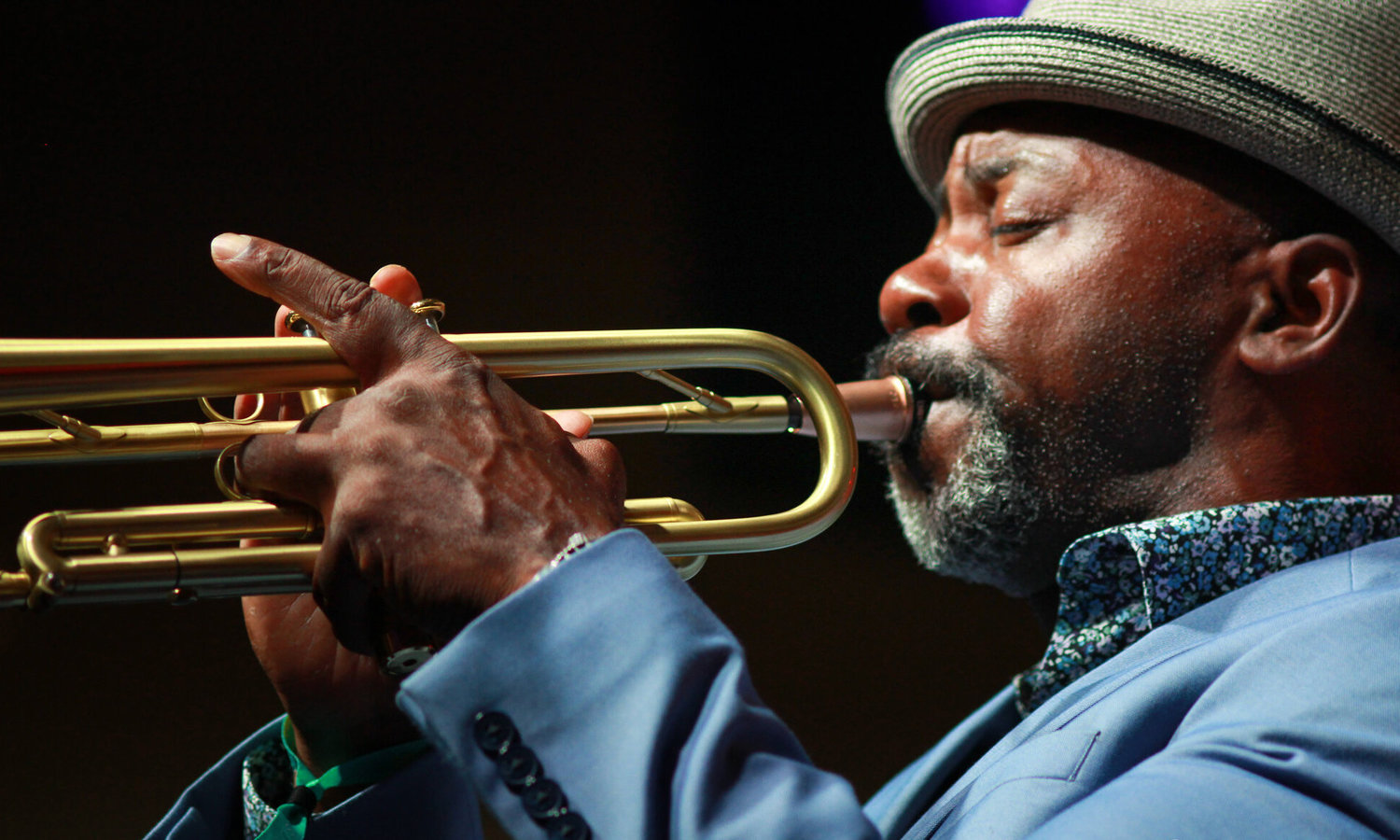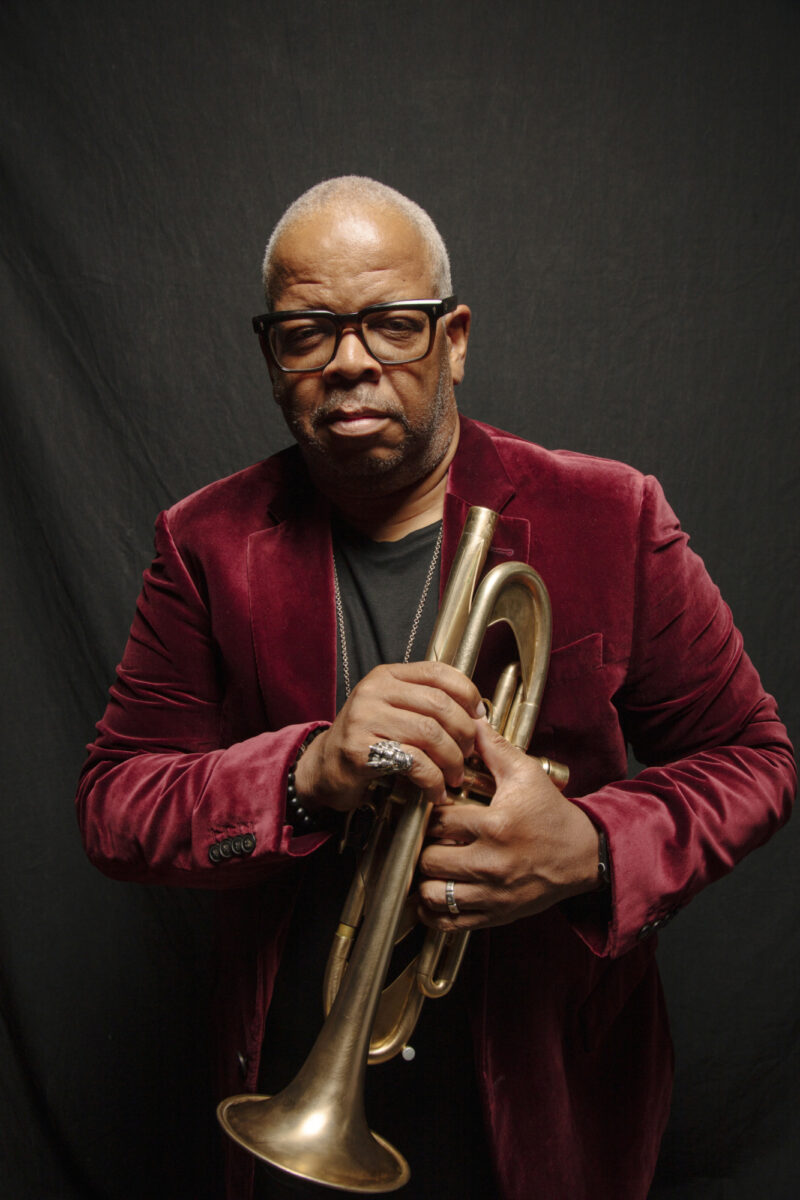
Bandleader & Drummer Tariq Gardner
A jazz reporter's notebook...

Bandleader & Drummer Tariq Gardner
![]() |
| Vocalist Naima Shamborguer |
The
jazz vocalist Naima Shamborguer's voice wraps around you like an expensive quilt.
I experienced that firsthand Sunday evening, listening to her perform standard songs
from the American songbook at the Blue Llama in Ann Arbor, MI. At times, the
warmth of her voice made me want to climb on the bandstand and snuggle up next
to her. At her concerts, you’ll experience pure singing that draws you in and
makes you feel instantly connected to her. Her knack for conveying
vulnerability, beauty, and strength in a single phrase is remarkable. One thing
you won’t encounter, thankfully, is a bunch of gratuitous scatting; unlike many
of her peers, who rely heavily on that. Shamborguer is always the consummate
professional, understanding her audience pays good money to experience the fullness
of her gift. Unfortunately, she doesn’t perform around the state as often as
she should. However, she has an impressive discography, so if you can’t
experience her live as often as you’d like, at least you have the wonderful
albums that she’s released, like “Naima,” “Round Midnight,” and “A Blossom
Sings” to quench your desire to hear her singing. She opened her hour-long set Sunday
with the classic “Autumn Leaves,” moved gracefully to a heartwarming version of
“Song for My Father,” then showed the depth of her gift on Geri Allen’s
“Unconditional Love.” Shamborguer sang the notes just as Allen originally conceived
them. The highlight of the set was Shamborguer inviting two of her family
members, vocalists Penny Wells and Michael Hanna, the late pianist Sir Roland
Hanna’s son, on stage to sing with her on “Feelings.” The vocalists were of good
form, adding rib-sticking nuances to Morris Albert’s classic. The downside was that
they only performed that number. Not that Shamborguer needs any help serving a
marvelous set. Bassist Jaribu Shahid and pianist Sven Anderson backed her.
Shamborguer voice melted over Anderson’s fingers. The set would’ve been
incomplete without the inclusion of a reworking of Thelonious Monk’s “Rhythm-A-Ning.”
One of her best albums is her interpretation of some of Monk’s signature compositions.
The Monk gem was the song the trio had the most fun reinventing. Although Shamborguer’s setlist featured songs that have
been performed for decades, her trio’s take made each seem fresh from the
showroom floor.
![]() |
| Saxophonist Wendell Harrison |
Those familiar with jazz
saxophonist Wendell Harrison's history know he wears many hats: the co-founder of the iconic band Tribe, composer of classics like “Dreams of a Love
Supreme,” music educator at Metro Arts, mentor to generations
of jazz musicians, and business executive behind independent jazz label, WenHa. His discography is populated with jewels like “Get Up Off Your
Knees,”"Rush and Hustle," “Fly by Night,” and “Wait Broke the Wagon Down.” His Moma's Licking Sticks Clarinet Ensemble became one
of the more acclaimed jazz ensembles regionally. In 2018, he received the
highest honor given to a Michigan artist, the Kresge Eminent Artist award. Saturday
night, key areas of his accomplishments and genius were highlighted during a
two-hour tribute to him at the Carr Center. The
center was packed with admirers, family, and young and accomplished musicians
whom Harrison has influenced. The celebration offered musical performances,
poetry, and testimonials. Saxophonist Stephen Grady Jr. and pianist Jacob Hart
opened the evening with “Stablemates,” “Take the Coltrane,” and “Peace,” recreating
much of the magic that Harrison and the late pianist Harold McKinney summoned
up on their duet album “Something for Pops.” Grady, Jr. has a clean and
uplifting tone, as well as a command of the tenor saxophone akin to Joe Henderson. Hart—who’s
still a high schooler—has already made a name for himself, headlining top jazz clubs
around Detroit. For a teen jazz pianist, he has an OG’s ability to efficiently groove
and move through chord progressions. And he demonstrated that he’s a thoughtful
accompanist. Grady, Jr, and Hart’s terrific opening set was augmented by poetry
from wordsmiths Professor Gloria House and the pastor of the Shrine of the
Black Madonna Church, and a short but soul-soothing number from pianist Pam
Wise, trumpeter Ingrid Racine, and saxophonist Salim Washington. Harrison schooled him, and although he's now a world-renowned bandleader
and music educator, he still considers Harrison to be his north star. After the
great performances and anecdotes by bassist Ralphe Armstrong and Carr Center
President Oliver Ragsdale, Harrison took the stage, obviously touched and
appreciative of all the love lavished on him. Harrison
discussed the origins of his organization, Rebirth, and its cultural impact in
Detroit. He also shared stories about meeting his wife, the accomplished and
woefully underpraised jazz pianist Pam Wise. Together, they performed a duet on
her original piece, “Fly by Night.”
It was a
pleasure listening to them swing lovingly and showing their fondness for each
other and the music. The celebration ended with Harrison and Hart performing a
blues. Here’s where I gained a deeper sense of Hart’s true potential, particularly in his ability to expose the marrow of the blues, as if he had vast life
experience. The tribute’s only shortcoming was that none of Harrison’s
signature compositions were performed. Still, it was a fitting celebration for
a musician, educator, mentor, and business executive who’s been a cultural
force in Detroit for decades.
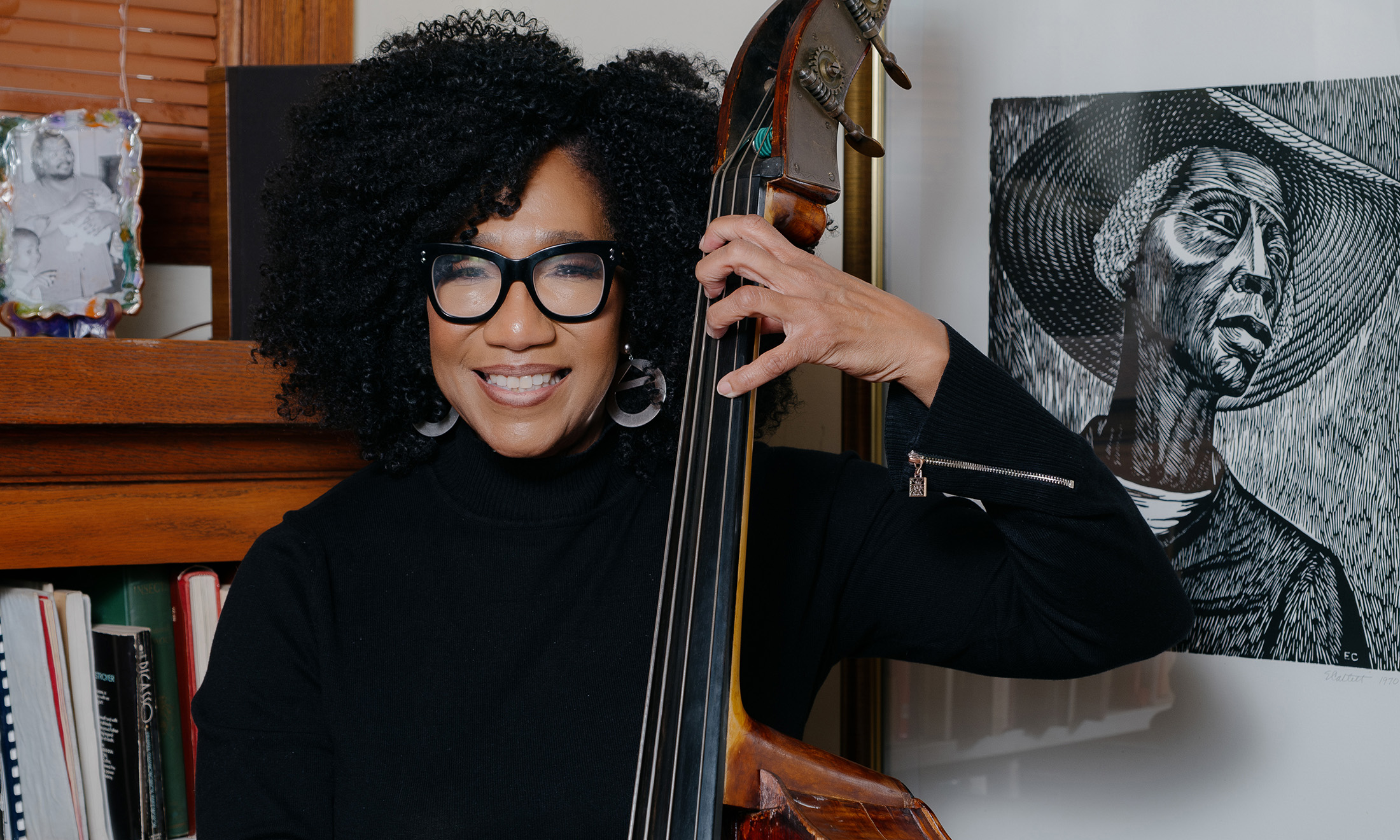
![]() |
| Bassist Marion Hayden |
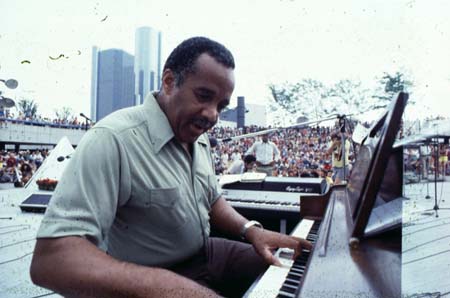
![]() |
| Pianist Geri Allen |
![]() |
| Pianist Jason Moran |
Jason Moran and Jeff Mills
with special guest Jessica Care Moore (Friday Carhartt
Amphitheater Stage)
I believed wholeheartedly
this opening night performance was one of the more inventive in recent years
and set the tone for how special this year’s Detroit jazz fest was going to be.
Moran is a worldwind force in jazz, Mill is one of the founding fathers of
Techno music, and Moore is one of the best writers Detroit has ever produced.
Mixing their respective talents was pure delight. And Moore’s culturally and
politically conscious poems mixed beautifully with the improvisational magic
Moran and Mills created.
![]() |
Listening to Potter’s
Saturday afternoon set, I couldn’t help thinking about something that
saxophonist Sonny Rollins told me. That you must be an exceptional musician to
play in a band without a pianist. No one in their right mind would argue that
Potter, Brewer, and Scott aren’t world-class jazz musicians who could swing in
whatever musical situation they are in. A whole lot of swinging was exactly
what the Potter trio served up, moving proficiently from standards to original
material. Potter is a tenor saxophonist with a
substantial discography and mastery of his instrument. Solo after solo, Potter
gobbled up the music changes like Halloween candy.
| Pianist Kenny Barron |
Kenny Barron is one of the
best jazz pianists in the history of jazz, and he doesn’t need to bring any
extras during a performance because his playing is so soul-grabbing that any
extras are overkill. For his Detroit fest performance, Barron offered more than
himself this time around. He introduced to the jazz fest a magnificent young
vocalist named Tyreek McDole, who had the audience eating out of his hands a
short time after he began singing. Two of my jazz friends, Ronald Lockett and
Debbie Tent, implored me to catch this set, and I'm glad that I listened to
them. Barron, of course, was amazing, and McDole's mature and enticing voice
melted in the audience’s ears.
![]() |
| Pianist Hiromi |
Hiromi’s performance was a fitting follow-up to Jason Moran’s opening night set, although it wasn’t designed to be. Hiromi is an energetic pianist and a creative dynamo, rare these days in jazz circles. She raced up and down the piano like a madwoman, even at times banging the keys with her elbows. Her brand of swing may not appeal to the average jazz purist, but it would appeal to a listener searching for a pianist who is comfortable swinging outside the lines.
![]() |
| Vocalist Joan Belgrave |
This set was a beautifully
produced homage to four jazz vocalists who had a lasting impact on the music. And a
tribute of this magnitude could have only been pulled off by vocalists who also profoundly impacted the music: Joan Belgrave, Joan Crawford, Diane Mathis, and
Tonya Hood. The wonderful thing about this set was that neither of the
vocalists attempted to emulate the style of the vocalists they were honoring.
Belgrave, Crawford, Mathis, and Hood brought their own uniqueness to the songs
that Ella, Nancy, Dinah, and Etta immortalized. This set was unadulterated
vocal jazz at its absolute finest.
![]() |
| Saxophonist Lakecia Benjamin |
I had my fingers crossed
for years that the organizers of the Detroit jazz fest would book saxophonist
Lakecia Benjamin. I have experienced her twice before in Detroit. The last time
at a church. She couldn’t cut loose like she usually does. I felt the Detroit
jazz fest would be a good place for her to be herself, and her Sunday afternoon
set didn’t disappoint. She opened the set with an ode to John Coltrane, nearly
blowing the sun out of the sky. Then she moved to selections from her
Grammy-nominated albums. The best part of the set was her band stretching out
on “My Favorite Things” and the dynamic exchange between Benjamin and drummer
Terreon Gully, a newcomer to her band.
![]() |
| Pianist Jason Moran |
For the past few years,
pianist Jason Moran has been immersed in the music of Duke Ellington, and he
let the Detroit jazz festival audience in on the extent of his immersion with
Ellington's music by performing many of Ellington’s signature compositions with
the Detroit Jazz Festival Collegiate Jazz Orchestra. In the hands of Moran and the collegiate musicians, Ellington's music was
expertly performed, and it was good to hear the next generation swing their way
through the music. The highlight of the set was the orchestra burning through
Ellington’s “Bragging in Brass.” Jason was so taken with how the orchestra
handled that complicated piece, Moran surprised the orchestra and the audience
by having the orchestra perform it again.
![]() |
| Pianist Omar Saso |
Pianist Omar Sosa is the
reigning king of Afro-Cuban jazz, and he proved why that title is apropos. Sosa
had the piano sweating like a personal trainer. Sosa delivered an hour-plus of
feel-good swing.
![]() |
| The Branford Marsalis Quartet |
This was Marsalis' first
set at the Detroit jazz festival in 15 years. It was a set that I’ve seen
Marsalis deliver many times, and yet his band pianist, Joey Calderazzo, bassist
Eric Revis, and drummer Justin Faulkner never disappoint. The set opened with
“The Mighty Sword” followed.
by “There’s No Sweet Man
Worth the Salt of My Tears.” Here’s where you get to see the best pianist and
drummer duo in the business show their ass. Witnessing
the two music soulmates trading is always engaging. Marsalis surprised the
audience by inviting Lakecia Benjamin to join his band. I thought Benjamin
needed at least 24 hours to recover from her thunderous set.
| Bassist Rodney Whitaker |
Rodney Whitaker, a jazz
bassist, played music from his new album “Mosaic: The Music of Gregg Hill” at
the Dirty Dog Jazz Café over the weekend. I caught the late show on Friday and
noticed something about Whitaker that people don’t often talk about. Those who
know his background are aware of his time with Jazz at Lincoln Center, his
success as a bandleader, and his role in making the jazz program at Michigan
State University one of the best in the world. He is also great at putting
together top-notch bands, often mixing his students, local Detroit musicians,
and well-known jazz musicians. This was clear at Friday’s show. His band
featured trumpeter Dwight Adams, drummer Dana Hall, pianist Brendon Davis,
saxophonist Allen Paige, and special guest Rockelle Whitaker, his daughter, who
was the star of the band. The set began with a Joe Henderson classic. Then,
Whitaker led the band through songs from “Mosaic,” featuring Gregg Hill’s music.
Hill’s work has been on albums by guitarist Randy Napoleon and trombonist
Michael Dease. Hill started his music career later in life, but he quickly
became a sought-after composer. Whitaker has been a great promoter of Hill’s
music. The concert’s highlights were solos from Adams, Detroit’s top trumpeter,
and Davis, one of the best pianists of his generation. Adams’s soloing on songs
like “Slow Gin Fizz” shook the Dog’s foundation. I only get to hear Adams once
or twice a year, but he always manages to sound better each time. This is impressive
since his skills are already comparable to those of great trumpeters like
Donald Byrd and Freddie Hubbard. Davis’s playing has grown a lot in the brief
time he’s been in the Detroit jazz scene. He swung on Friday night as if playing
in Whitaker’s band was a major goal on his career vision board. What is
striking about his playing is his control and his ability to dazzle without
being overly showy. Rockelle Whitaker is always delightful when she joins in. She
came on stage after the fourth song and captivated the audience with her first
song. She is a pure vocalist with a calm stage presence, like Shahid Nurullah.
The hour-long concert was nourishing and satisfied my week-long craving for
good jazz.